
Platform
6 min read
Education Outcomes Platforms: Connecting Employability Support to Measurable Results
Synopsis
An education outcomes platform links employability support to destination data, helping UK providers demonstrate impact, satisfy compliance, and continuously improve learner results.
Education providers face a fundamental tension. They must deliver personalised employability support to diverse learners while demonstrating that this support produces measurable results.
Most providers manage these functions separately. Career tools exist in one system. Outcome tracking happens through another. The connection between what support learners receive and what destinations they achieve remains unclear.
An education outcomes platform bridges this gap. It combines the employability tools learners need with the tracking and reporting infrastructure that institutions require. When a learner builds a CV, develops interview skills, or explores career pathways, that activity connects directly to outcome measurement.
This integration matters because accountability for career outcomes in education continues to intensify. Ofsted examines destinations. Funders tie payment to employment rates. Prospective learners and parents make choices based on outcome data. Providers who cannot demonstrate impact face real consequences.
Key Insight
An education outcomes platform is not just tracking software. It connects the employability support that improves outcomes with the measurement that demonstrates they have improved.
What Makes an Outcomes Platform Different
The market offers many tools that address parts of the employability and outcomes challenge. Understanding what distinguishes a genuine outcomes platform helps inform selection.
Beyond Career Tools Alone
An employability platform for education provides learner-facing tools: CV builders, skills assessments, interview preparation. These tools are valuable, but they do not automatically connect to outcome measurement.
An outcomes platform extends this by:
- Tracking which learners engage with support
- Recording what activities they complete
- Following up after programme completion
- Capturing destination data
- Connecting support received to outcomes achieved
This connection enables analysis: Do learners who complete CVs have better employment rates? Does interview preparation correlate with successful job offers? Which interventions produce the strongest results?
Beyond Tracking Alone
Conversely, tracking systems that capture destination data without providing support miss the intervention opportunity. Knowing that outcomes are poor does not improve them. Providers need tools to act on insights, not just measure problems.
An outcomes platform provides both: the employability support that drives improvement and the tracking that demonstrates it.
Integration as Core Design
The distinction is not just functional but architectural. In outcomes platforms, support and tracking are designed together. Learner activity automatically generates tracking data. Outcome follow-up builds on relationships established during support. Reporting draws on both activity and destination information.
Bolting tracking onto separate career tools, or adding support features to tracking systems, rarely achieves the same integration quality.
Core Capabilities
Effective education outcomes platforms share several core capabilities.
Learner-Facing Employability Tools
Learner-facing employability tools are the resources learners interact with directly to prepare for work and career progression.
CV and profile building tools support structured creation, templates, and ATS optimisation. Their impact is typically measured through completion rates and quality scores. Skills assessment tools help learners identify gaps and plan development, with outcomes tracked through evidence of skills growth over time.
Career exploration tools provide pathway information and labour market data, helping learners develop clearer and more realistic goals. Interview preparation tools offer practice questions and technique guidance, with outcomes reflected in interview performance and offers received.
For detailed guidance on selecting these tools, see our guide on choosing an education employability platform.
Activity Tracking
Behind the scenes, the platform tracks learner engagement:
- Login frequency and session duration
- Tools accessed and features used
- Content completed versus abandoned
- Progress milestones achieved
- Support requests and interventions received
This tracking happens automatically through normal platform use, not requiring manual data entry.
Pro Tip
Look for platforms that track engagement passively. Systems requiring staff to manually record learner activity create administrative burden and produce incomplete data.
Outcome Data Collection
After programme completion, platforms must capture destination information:
- Automated follow-up: Scheduled surveys sent at appropriate intervals (3 months, 12 months, etc.)
- Multiple contact methods: Email, SMS, and potentially phone to maximise response rates
- Structured questions: Capturing employment status, role relevance, satisfaction, and other outcome dimensions
- Response management: Tracking who has responded, following up with non-respondents
Analysis and Reporting
The platform should connect activity data with outcome data to generate insight:
- Cohort dashboards: Overall outcome rates with trends over time
- Disaggregated analysis: Outcomes by learner characteristics, programme, support received
- Correlation analysis: Which activities predict better outcomes?
- Compliance reports: Formatted for Ofsted, funders, or governors
Supporting Gatsby Benchmark Compliance
The updated Gatsby Benchmarks require evidence of effective careers provision. An education outcomes platform supports compliance across multiple benchmarks.
Benchmark 1: Stable Careers Programme
Platforms provide infrastructure for consistent, documented provision:
- Structured support available to all learners
- Clear programme design embedded in platform
- Evidence of what provision exists
Benchmark 3: Addressing Individual Needs
Tracking enables demonstration of personalised provision:
- Data showing different learners receive tailored support
- Intervention records for those needing additional help
- Outcome analysis by learner group to identify gaps
Benchmark 8: Personal Guidance
While platforms do not replace qualified advisers, they support guidance effectiveness:
- Preparation tools so learners arrive ready for guidance conversations
- Recording of guidance received
- Outcome tracking to evaluate guidance impact
For detailed guidance on benchmark implementation, see our article on training provider employability which addresses how ITPs specifically meet these requirements.
Hint
The Careers & Enterprise Company's Compass+ tool helps providers self-evaluate against Gatsby Benchmarks. Outcomes platform data can feed directly into this evaluation.
Implementation Considerations
Selecting and implementing an education outcomes platform requires attention to several factors.
Data Integration
Outcomes platforms work best when connected to existing institutional systems:
- MIS integration: Importing learner demographics, programme enrolment, and completion status reduces duplicate data entry and ensures consistent records.
- Single sign-on: Learners accessing the platform through existing credentials improves uptake and reduces friction.
- Reporting exports: Data should export in formats compatible with institutional reporting systems and external requirements.
Privacy and Consent
Outcome tracking involves contacting learners after they have left. This requires:
- Clear consent at enrolment for post-completion contact
- Transparent privacy information about data use
- Secure data storage and appropriate retention periods
- Mechanisms for learners to update or withdraw consent
Build these requirements into implementation from the start rather than retrofitting later.
Staff Capacity
Platform adoption requires staff development:
- Technical training on platform operation
- Process training on integrating platform into workflows
- Analytical training on interpreting outcome data
- Strategic training on using insights for improvement
Budget time for this development. Assuming intuitive interfaces require no training consistently proves wrong.
Recommended approach
✔ Clear implementation timeline with defined milestones
✔ Dedicated implementation support from the vendor
✔ Phased rollout starting with a pilot cohort
✔ Regular review points to identify and resolve issues early
Risky approach
✖ Immediate institution-wide launch
✖ Minimal staff training
✖ No integration with existing systems
✖ Unclear data ownership and retention policies
Measuring Platform Value
An outcomes platform represents investment. Demonstrating value requires measuring what it achieves.
Process Improvements
Has the platform improved operational efficiency?
- Time saved on manual tracking and reporting
- Consistency of provision across learner groups
- Staff capacity released for direct learner support
- Completeness of activity and outcome data
Outcome Improvements
Has the platform improved learner destinations?
- Employment rates compared to pre-implementation baseline
- Relevance of employment to training completed
- Progression to further study where appropriate
- Learner satisfaction with support received
Compliance Improvements
Has the platform strengthened compliance position?
- Gatsby Benchmark achievement levels
- Inspection readiness and evidence availability
- Funder reporting completeness and accuracy
- Governance reporting quality
Important
Establish baseline measurements before implementation. Without baselines, you cannot demonstrate that the platform has produced improvement, even if current results are positive.
s, you cannot demonstrate that the platform has produced improvement, even if current results are positive.
Selecting a Platform
The evaluation process should be systematic and evidence-based.
Requirements Definition
Before speaking with vendors, document what you need:
- Which learner populations will use the platform?
- What employability tools are priorities?
- What outcome measures must be tracked?
- What reporting is required for compliance?
- What existing systems must integrate?
A clear requirements document prevents scope creep and ensures evaluation focuses on your needs.
Vendor Evaluation
For shortlisted vendors, assess:
- Capability fit: Does the platform address your documented requirements?
- Evidence of effectiveness: Can the vendor demonstrate outcomes improvements at similar institutions?
- Implementation support: What assistance is provided during setup and beyond?
- Total cost: Including licence, implementation, training, and ongoing support
- Reference quality: What do current customers report about their experience?
Pilot Testing
Where possible, pilot platforms with a subset of learners before committing institution-wide:
- Test learner engagement with tools
- Verify tracking data accuracy
- Assess staff administrative experience
- Identify integration issues
- Generate early outcome data
Pilots reduce risk and generate evidence for broader rollout decisions.
A career platform for education guide provides detailed evaluation criteria if you are earlier in the selection process.
Platform Options
The market includes various approaches to education outcomes:
- Specialist outcomes platforms: Purpose-built for education outcome tracking with integrated support tools.
- Career platform add-ons: Tracking features added to existing employability tools.
- MIS modules: Destination tracking within broader student information systems.
- Custom builds: Institution-developed solutions using general software.
Each approach has trade-offs in functionality, integration, cost, and maintenance requirements.
Yotru's platform for educators takes the specialist approach, combining AI-powered employability tools with institutional tracking designed specifically for UK education contexts. The platform connects learner-facing support with outcome measurement, enabling providers to both improve and demonstrate improvement in learner destinations.
About the Author

Team Yotru
Employability Systems
Team Yotru
Employability Systems
We build practical career tools for training providers and workforce programs, combining labor market insights with real employment outcomes. Follow us on LinkedIn.
Frequently Asked Questions
n education outcomes platform combines employability support tools (CV builders, skills assessments, interview preparation) with tracking and reporting infrastructure that measures learner destinations after programme completion. It connects what support learners receive to what outcomes they achieve.
Yotru Platform
Employer-Ready Resume Solutions Hub
- Career Development Platform— AI platform for compliant, employer-ready resumes.
- Employer Hiring Signals— Standardized resumes with clear pre-interview hiring signals
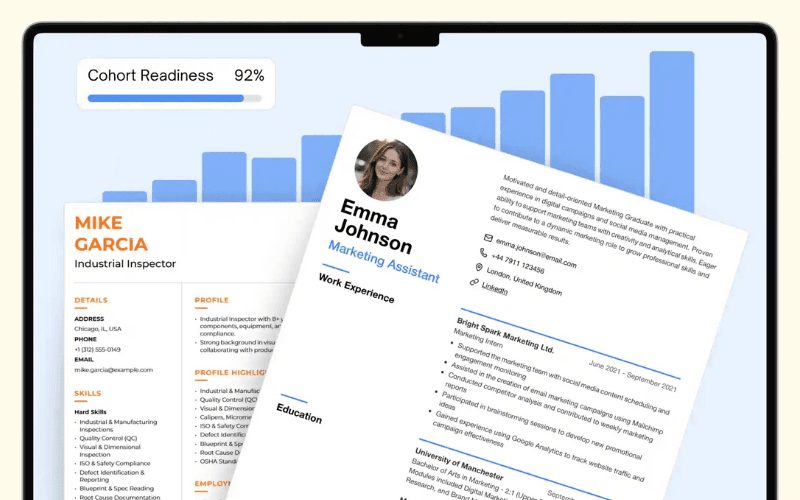
- Educator Resume Platform— Standardize learner resumes and track cohort readiness.
- Workforce Resume Builder— Employer-ready resumes for workforce clients with tracking.
- Outplacement Resume Support— Support transitions with standardized, employer-ready resumes.
- Recruitment Resume Signals— Role-aligned resumes plus readiness scores for recruiters.
Audience Context
This article is written for UK education professionals responsible for measuring, reporting, or improving learner career outcomes. It addresses practical challenges in outcome tracking while acknowledging methodological limitations.
Research Methodology
Analysis draws on published HESA Graduate Outcomes survey methodology and findings, Department for Education destination measures guidance, and academic literature on education outcome measurement. Recommendations reflect established practice in the education sector.
Editorial Standards
Yotru maintains Editorial Policy standards requiring accuracy, neutrality, and regular review. Content is updated as methodology and reporting requirements evolve.
Disclaimer
This article provides general information about career outcomes measurement in education. Specific approaches should consider individual institutional circumstances and regulatory requirements. Outcomes reflect multiple factors beyond provider control.
Related Resources
Related Yotru Articles
- How Employability Platforms Transform Education Outcomes – Understanding platform capabilities for tracking and improving learner destinations
- Career Platforms in Education: What Works and Why – Comprehensive guide to selecting career technology for educational settings
- Choosing an Education Employability Platform – Practical procurement and implementation guidance
- Building Effective Training Provider Employability – How ITPs deliver employability support that produces strong outcomes
- Education Outcomes Platforms: Connecting Support to Results – Technology that links employability provision to measurable destinations
Platform and Product Resources
- Yotru Platform Overview – Complete platform capabilities for education and workforce organisations
- Yotru for Educators – Tools designed for UK schools, colleges, and training providers
- Yotru for Workforce Development – Supporting regional skills and employment programmes
Additional Resources
- Applying Gatsby Benchmark 3 in Adult and Vocational Education – Personalising guidance in post-16 settings
- How Training Providers Can Evidence Gatsby Benchmarks Without Overloading Careers Teams – Practical approaches to compliance
- Why University Career Services Teams Are Loving Yotru's AI Resume Builder – Higher education applications
- Resume Outcomes for Training Providers – Measuring the impact of CV support
- Why Libraries Are Key to Career Building – Community partnerships in careers provision
References
- HESA. (2025, July). Graduate Outcomes 2022/23: Summary Statistics. https://www.hesa.ac.uk/news/17-07-2025/sb272-higher-education-graduate-outcomes-statistics
- Universities UK. (2025). Graduate outcomes: What the latest data reveals about employment, pay and job quality. https://www.universitiesuk.ac.uk/latest/insights-and-analysis/graduate-outcomes-what-latest-data
- Department for Education. (2024). Graduate labour market statistics, Calendar year 2024. GOV.UK. https://explore-education-statistics.service.gov.uk/find-statistics/graduate-labour-markets/2024
- Gatsby Charitable Foundation. (2024). Good Career Guidance: The Next Ten Years. https://www.gatsby.org.uk/education/programmes/good-career-guidance
- Department for Education. (2025, May). Careers guidance and access for education and training providers. GOV.UK. https://www.gov.uk/government/publications/careers-guidance-provision-for-young-people-in-schools
- Ofsted. (2023). Independent review of careers guidance in schools and further education and skills providers. GOV.UK. https://www.gov.uk/government/publications/independent-review-of-careers-guidance-in-schools-and-further-education-and-skills-providers
- HESA. (2025). Graduate Outcomes open data repository. https://www.hesa.ac.uk/data-and-analysis/graduates/releases
- Luminate. (2025). What do graduates do? 2025/26. https://luminate.prospects.ac.uk/what-do-graduates-do
- Department for Education. (2024). Skills bootcamps starts, completions and outcomes. GOV.UK. https://explore-education-statistics.service.gov.uk/find-statistics/skills-bootcamps-starts-completions-and-outcomes/2023-24
- The Careers & Enterprise Company. (2025). Updated Gatsby Benchmarks adopted into latest government guidance. https://www.careersandenterprise.co.uk/news/updated-gatsby-benchmarks-adopted-into-latest-government-guidance-for-schools-colleges-and-itps/
Maintained by: Workforce Practice Group at Yotru
Review cycle: Reviewed periodically to reflect evolving hiring trends
Last updated: February 2, 2026
Questions or Need Support?
If you are working on employability programs, hiring strategy, career education, or workforce outcomes and want practical guidance, you are in the right place.
Yotru supports individuals and organizations navigating real hiring systems. That includes resumes and ATS screening, career readiness, program design, evidence collection, and alignment with employer expectations. We work across education, training, public sector, and industry to turn guidance into outcomes that actually hold up in practice.