
Platform
6 min read
Choosing an Education Employability Platform: A Practical Guide
Synopsis
Selecting an education employability platform requires understanding your institution's needs, learner requirements, and compliance obligations. A practical guide for UK providers.
When learner outcomes data lands poorly, questions follow quickly. Governors want explanations. Funders question value. Ofsted takes note.
Most education providers recognise that employability support matters. The challenge lies in delivering it consistently, at scale, with evidence of impact.
An education employability platform offers a systematic approach. Rather than fragmented resources and manual tracking, these platforms consolidate career tools, skills development, and outcome measurement into unified systems.
But not all platforms deliver equal value. This guide helps UK education providers evaluate options, avoid common mistakes, and implement solutions that actually improve learner outcomes. For a broader overview of how these platforms transform educational provision, see our guide on employability platforms for education.
Key Insight
An education employability platform succeeds or fails based on implementation, not features. The best software, poorly implemented, produces worse results than simpler tools used effectively.
Why Education Providers Need Dedicated Platforms
The case for dedicated employability platforms rests on three interconnected challenges.
Challenge 1: Scale and Consistency
A college with 3,000 learners cannot deliver personalised employability support through manual processes alone. Spreadsheets break down. Individual attention becomes impossible. Some learners receive intensive support; others receive none.
Platforms enable consistent baseline provision. Every learner can access CV building, career exploration, and skills assessment. Staff attention then focuses on those who need more than the baseline.
Challenge 2: Evidence and Accountability
Ofsted's Education Inspection Framework examines personal development, including careers education. The updated Gatsby Benchmarks require evidence of tailored provision and measurable impact. Funders increasingly tie payment to demonstrated outcomes.
Manual evidence collection is time-consuming and often incomplete. Platforms generate evidence automatically through normal use. When inspectors ask what provision looks like for different learner groups, data is available immediately.
Challenge 3: Integration with Curriculum
Employability skills do not develop in isolation. They connect to vocational learning, work experience, and personal development programmes. Fragmented tools create fragmented experiences for learners.
Platforms that integrate with learning management systems, MIS, and other institutional infrastructure support coherent provision rather than adding another disconnected system.
Understanding Your Requirements
Before evaluating platforms, define what your institution actually needs. Generic feature checklists lead to purchasing software that solves the wrong problems.
Learner Profile Analysis
Different learner groups require different platform capabilities. One-size-fits-all rarely works in education.
School leavers
- First CV and career exploration
- Strong guidance and clear templates
Career changers
- Translate existing skills
- Tools for experience mapping
ESOL learners
- Language support and context
- High accessibility and clarity
Learners with SEND
- Adapted interfaces
- Strong accessibility support
Platforms built for graduate recruitment often fail in adult education. Match capabilities to your actual learners.
Operational Requirements
Consider how the platform must fit your operations:
- Staff capacity: How much time can careers staff dedicate to platform management? Some systems require substantial ongoing administration.
- Technical infrastructure: What existing systems must the platform integrate with? What technical support is available for implementation?
- Compliance obligations: What reporting is required for funders, regulators, and inspectors? Can the platform generate these reports directly?
- Budget constraints: What is the total available budget including implementation, training, and ongoing costs?
Pro Tip
Create a requirements document before speaking with vendors. Circulate it to stakeholders for input. This prevents scope creep and ensures you evaluate platforms against your needs rather than their marketing.
Core Platform Components
While specific features vary, education employability platforms generally include several core components.
Resume and CV Building
The CV remains central to most job applications in the UK. Effective platforms guide learners through structured creation rather than presenting blank documents.
Template & Formatting Checklist
Look for
- Templates designed for the UK job market
- ATS-compatible formatting
- Skills-based and chronological options
- Multiple export formats, PDF and Word
- Version management for different applications
Avoid
- US-focused templates and terminology
- Complex interfaces requiring design skills
- Single template with no customisation
- Formats that fail ATS screening
Skills Assessment and Development
Helping learners understand their existing skills and identify development needs supports both job search and career planning.
Look for assessments that:
- Map to recognised frameworks
- Connect to labour market demand
- Generate actionable development recommendations
- Track progress over time
Labour Market Information
Learners making education and career decisions need accurate information about employment prospects, salary expectations, and skills demand.
Effective platforms integrate:
- National and regional employment data
- Sector-specific trends
- Qualification requirements by occupation
- Salary benchmarking
Progress Tracking and Reporting
The administrative component often determines whether platforms deliver value. Tracking must be:
- Automatic: Data captured through normal learner activity, not requiring manual entry.
- Comprehensive: Covering engagement, completion, and outcomes across learner groups.
- Actionable: Enabling identification of learners needing intervention before outcomes suffer.
- Reportable: Generating outputs aligned with funder and inspector requirements.
For providers prioritising outcome demonstration, our guide on education outcomes platforms examines this integration in depth.
Evaluation Process
A structured evaluation process helps identify the right platform and prevents procurement regret.
Step 1: Shortlist Development
Research available options through:
- Peer institution recommendations
- Sector body resources
- Professional network discussions
- Published case studies
Aim for a shortlist of 3-5 platforms that appear to meet your core requirements.
Step 2: Demonstration and Trial
Request demonstrations focused on your specific scenarios, not generic capability tours. Prepare realistic use cases:
- A learner with no work experience creating a first CV
- A staff member tracking engagement across a cohort
- Generating an outcome report for a funder
Where possible, conduct pilot trials with actual learners. Staff demonstrations reveal interface; learner trials reveal effectiveness.
Hint
Ask vendors for references from similar institutions. Contact these references independently. Ask specifically about implementation challenges, ongoing support responsiveness, and whether outcomes improved.
Step 3: Total Cost Analysis
Platform costs extend beyond licence fees. Consider the full operational impact.
Licence / subscription
- Per learner, institutional, or usage-based?
Implementation
- Vendor support and internal staff time
Training
- Initial onboarding and ongoing refreshers
Integration
- Effort to connect existing systems
Ongoing support
- Included or additional cost?
A lower licence fee can still cost more overall if support is limited and staff time increases.
Step 4: Contract and Data Review
Before committing, review:
- Data ownership: Who owns learner data? What happens to data if you leave the platform?
- GDPR compliance: Is the platform compliant with UK data protection requirements? Where is data stored?
- Service level agreements: What uptime is guaranteed? What support response times apply?
- Exit provisions: What notice is required? How is data exported?
Important
Data portability matters. If the platform relationship ends, you need learner data in usable formats. Ensure contracts specify data export rights and formats.
Implementation Best Practice
Platform selection is only the beginning. Implementation determines whether the investment delivers value.
Phased Rollout
Resist the temptation to launch institution-wide immediately. Phased rollout enables:
- Identifying issues before they affect all learners
- Refining processes based on initial experience
- Building internal expertise before scaling
- Demonstrating success to secure broader buy-in
Start with a single department, course, or cohort. Expand based on evidence of effectiveness.
Staff Development
Staff require training not just on platform operation but on integrating it into their practice. Questions include:
- How does the platform fit within existing tutorial or PSHE time?
- What guidance conversations become possible with platform data?
- How do we identify and support learners who are not engaging?
- What does effective platform-supported careers provision look like?
Budget time for initial training and ongoing development as staff encounter new situations.
Learner Introduction
Learners engage more when they understand why they are using a tool and what benefits it provides. Introduction should cover:
- What the platform offers
- How it connects to their career goals
- Where to get help if they struggle
- How their engagement will be monitored
Embedding platform introduction into induction processes normalises use from the start.
Continuous Improvement
Establish regular review cycles to assess:
- Engagement rates and patterns
- Learner feedback on usefulness
- Staff feedback on administration
- Outcome data as it becomes available
Use findings to refine how the platform is deployed, not just whether it is working.
Training providers have specific implementation considerations, which we address in our guide on building effective training provider employability.
Measuring Impact
Demonstrating that an education employability platform improves outcomes requires systematic measurement. For detailed guidance on outcome measurement methodology, see our article on measuring career outcomes in education.
Short-Term Indicators
These appear quickly and indicate whether the platform is being used effectively:
- Learner registration and login rates
- CV completion rates
- Time spent on platform
- Staff use of tracking features
Low short-term indicators suggest implementation problems requiring attention.
Medium-Term Indicators
These emerge over weeks and months:
- Quality of CVs produced (assessed through sampling)
- Learner confidence in job search (self-reported)
- Application activity
- Interview attendance
Long-Term Indicators
These require tracking learners after programme completion:
- Employment rates at 3, 6, and 12 months
- Relevance of employment to training
- Progression into further study
- NEET reduction
The HESA Graduate Outcomes survey methodology, which contacts graduates 15 months after completion, offers a useful model for capturing meaningful employment outcomes.
Platform Selection for Specific Contexts
Different educational settings have different requirements.
Further Education Colleges
FE colleges typically need platforms supporting:
- Large, diverse learner populations
- Multiple qualification levels
- Strong Gatsby Benchmark alignment
- Integration with MIS systems
- Ofsted inspection evidence
Independent Training Providers
ITPs often prioritise:
- Employer engagement features
- Apprenticeship programme integration
- Funder outcome reporting
- Flexibility for varied provision
Adult and Community Learning
ACL settings may need:
- Strong accessibility features
- Support for learners with low digital confidence
- Flexible progression pathways
- Community-based delivery support
Yotru's platform for educators supports these varied contexts with AI-powered employability tools designed for UK educational settings. The platform combines learner-facing features with the institutional tracking and reporting that providers require.
For broader context on career technology options, our guide to career platforms in education examines the full landscape.
About the Author

Team Yotru
Employability Systems
Team Yotru
Employability Systems
We build practical career tools for training providers and workforce programs, combining labor market insights with real employment outcomes. Follow us on LinkedIn.
Frequently Asked Questions
An education employability platform is software that helps educational institutions deliver and track employability support for learners. It typically includes tools like CV builders and skills assessments for learners, plus administrative and reporting features for staff.
Yotru Platform
Employer-Ready Resume Solutions Hub
- Career Development Platform— AI platform for compliant, employer-ready resumes.
- Employer Hiring Signals— Standardized resumes with clear pre-interview hiring signals
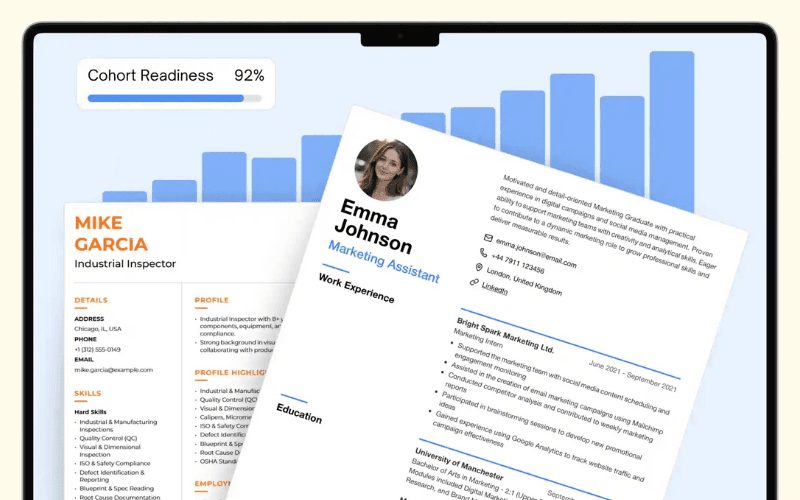
- Educator Resume Platform— Standardize learner resumes and track cohort readiness.
- Workforce Resume Builder— Employer-ready resumes for workforce clients with tracking.
- Outplacement Resume Support— Support transitions with standardized, employer-ready resumes.
- Recruitment Resume Signals— Role-aligned resumes plus readiness scores for recruiters.
Audience Context
This article is written for procurement and leadership staff in UK further education colleges, training providers, and workforce development organisations evaluating education employability platform options.
Research Methodology
Analysis draws on published guidance from the Department for Education, Ofsted, and the Gatsby Charitable Foundation. Platform functionality analysis reflects common features across the education technology sector.
Editorial Standards
Yotru maintains Editorial Policy standards requiring accuracy, neutrality, and regular review. Content is updated as guidance and best practice evolve.
Disclaimer
This article provides general information about selecting education employability platforms. Procurement decisions should consider individual institutional circumstances, available budget, and specific learner needs.
Related Resources
Related Yotru Articles
- How Employability Platforms Transform Education Outcomes – Understanding platform capabilities and learner-facing features
- Career Platforms in Education: What Works and Why – Comprehensive guide to career technology selection
- Building Effective Training Provider Employability – How ITPs deliver employability support under Gatsby requirements
- Measuring Career Outcomes in Education – Understanding outcome measurement methodology and data interpretation
- Education Outcomes Platforms: Connecting Support to Results – Technology that links employability provision to measurable destinations
Platform and Product Resources
- Yotru Platform Overview – Complete platform capabilities for education and workforce organisations
- Yotru for Educators – Tools designed for UK schools, colleges, and training providers
- Yotru for Workforce Development – Supporting regional skills and employment programmes
Additional Resources
- Applying Gatsby Benchmark 3 in Adult and Vocational Education – Personalising guidance in post-16 settings
- How Training Providers Can Evidence Gatsby Benchmarks Without Overloading Careers Teams – Practical approaches to compliance
- Why University Career Services Teams Are Loving Yotru's AI Resume Builder – Higher education applications
- Resume Outcomes for Training Providers – Measuring the impact of CV support
- Why Libraries Are Key to Career Building – Community partnerships in careers provision
References
- Gatsby Charitable Foundation. (2024). Good Career Guidance: The Next Ten Years. https://www.gatsby.org.uk/education/programmes/good-career-guidance
- Department for Education. (2025, May). Careers guidance and access for education and training providers. GOV.UK. https://www.gov.uk/government/publications/careers-guidance-provision-for-young-people-in-schools
- Ofsted. (2023, September). Independent review of careers guidance in schools and further education and skills providers. GOV.UK. https://www.gov.uk/government/publications/independent-review-of-careers-guidance-in-schools-and-further-education-and-skills-providers
- The Careers & Enterprise Company. (2025). Updated Gatsby Benchmarks adopted into latest government guidance. https://www.careersandenterprise.co.uk/news/updated-gatsby-benchmarks-adopted-into-latest-government-guidance-for-schools-colleges-and-itps/
- Department for Education. (2025). Post-16 education and skills white paper. GOV.UK. https://www.gov.uk/government/publications/post-16-education-and-skills-white-paper
- Career Development Institute. (2020). Framework for Careers, Employability and Enterprise Education. https://www.thecdi.net/CDI/media/Write/Documents/CDI-Framework-Jan2020-web.pdf
- Department for Education. (2024). Skills bootcamps starts, completions and outcomes. GOV.UK. https://explore-education-statistics.service.gov.uk/find-statistics/skills-bootcamps-starts-completions-and-outcomes/2023-24
- HESA. (2025). Graduate Outcomes 2022/23: Summary Statistics. https://www.hesa.ac.uk/news/17-07-2025/sb272-higher-education-graduate-outcomes-statistics
- Gatsby Benchmarks. (2025). About the Gatsby Benchmarks. https://www.gatsbybenchmarks.org.uk/about-the-gatsby-benchmarks/
- Department for Education. (2024). Graduate labour market statistics, Calendar year 2024. GOV.UK. https://explore-education-statistics.service.gov.uk/find-statistics/graduate-labour-markets/2024
Maintained by: Platform & Systems Group at Yotru
Review cycle: Reviewed periodically to reflect evolving hiring trends
Last updated: February 2, 2026
Questions or Need Support?
If you are working on employability programs, hiring strategy, career education, or workforce outcomes and want practical guidance, you are in the right place.
Yotru supports individuals and organizations navigating real hiring systems. That includes resumes and ATS screening, career readiness, program design, evidence collection, and alignment with employer expectations. We work across education, training, public sector, and industry to turn guidance into outcomes that actually hold up in practice.