
Market
5 min read
Why Resume Outcomes Are Now a Risk for Training Providers
Synopsis
For training providers and colleges, resume outcomes now affect employability results, employer trust, and funding. This article explains why CV quality has become an institutional risk.
Resume outcomes for training providers are no longer just about helping individual learners polish their CVs before job applications. They've become a measurable indicator of program quality, institutional effectiveness, and employability readiness.
For years, training providers treated resume support as a learner-facing service—optional workshops, one-on-one feedback sessions, or downloadable templates. If a graduate's CV underperformed, that was their responsibility to fix. But the accountability framework has shifted. Employers, funders, and oversight bodies now view CV quality as evidence of whether your programs actually prepare people for work.
Poor resume outcomes increasingly affect employer trust in your institution, influence funding decisions, and shape your reputation with inspectors and auditors. This article explains why this shift is happening, what training leaders need to understand about the institutional implications, and why resume quality can no longer be treated as a learner-only problem.
Key Insight
Resume outcomes for training providers are now treated as evidence of program quality, not just individual learner effort. Poor CV performance increasingly affects employer trust, funding decisions, and institutional credibility.
Why Resume Outcomes Have Become an Institutional Metric
Employability outcomes are tracked, reported, and scrutinized more rigorously than ever before. Funding bodies, accrediting organizations, and government programs increasingly require detailed placement data, progression metrics, and employment outcomes within specific timeframes after program completion.
Resumes sit at the critical juncture between training completion and employment. They're the first artifact employers see, the first filter candidates must pass, and the first measurable touchpoint in the progression pathway. When your graduates can't get interviews, the problem often starts with their CVs—and that interview failure rate becomes part of your institutional outcome data.
CV quality affects aggregate results because employers use resumes to decide who advances. If 60% of your graduates have ATS-incompatible formatting, missing keyword optimization, or unclear skill descriptions, their interview rates drop. Lower interview rates mean fewer job placements. Fewer placements affect your reported outcomes. Poor reported outcomes influence funding renewals, program approvals, and institutional reputation.
Pro Tip
Treat CV quality like any other core outcome: define standards, build repeatable processes, and monitor them, instead of hoping individual tutors can fix everything ad‑hoc.
How Employers Interpret CV Quality From Education Programs
Recruiters who regularly hire from training providers develop pattern recognition quickly. When they receive five resumes from graduates of the same program and all five have identical formatting problems, unclear skill descriptions, or ATS parsing failures, they draw conclusions about program quality.
Employers assume that well-run programs teach professional standards, including how to present qualifications effectively. When they don't see that consistency, they question whether the program adequately prepared candidates for employment.
Repeated poor CVs from your institution create long-term partnership damage. An employer who consistently experiences resume quality issues with your graduates will eventually stop reviewing applications from your programs. They'll prioritize candidates from other providers whose graduates demonstrate more consistent professional standards. You lose access to hiring pipelines, employer engagement opportunities, and placement pathways that took years to build.
The Hidden Cost of Inconsistent CV Quality
Beyond external reputation, inconsistent resume outcomes create significant internal operational costs that most training providers underestimate.
Operational burden on staff: When learners produce poor-quality resumes, staff spend disproportionate time on reactive corrections. Career advisors become CV editors, conducting emergency revisions before job fairs or employer visits. This reactive support model drains staff capacity from strategic activities like employer relationship development, curriculum improvement, or proactive career guidance.
Reputational risk with employers and funders: Every substandard resume that reaches an employer or appears in a funding review reflects on your institution. Funders conducting quality audits often request sample graduate CVs as evidence of program effectiveness. If those samples reveal formatting inconsistencies or poor professional presentation, it damages credibility during critical evaluation moments.
Learner confidence and progression impact: Graduates who receive repeated rejections often don't realize their resume is the problem. They internalize failure as personal inadequacy rather than correctable formatting or keyword issues. This confidence erosion affects their job search persistence and overall career progression.
Common mistakes compound at scale:
Don't Allow These to Persist:
- Inconsistent CV formats across graduates from the same program
- ATS-unreadable layouts that fail parsing before human review
- Generic skill descriptions that don't reflect specific competencies learned
- Unverified learner claims about experience or certifications
Important
If you don’t define a minimum CV standard, employers will define it for you—by quietly preferring candidates from institutions whose resumes already ‘look right’ and parse cleanly in ATS.
Why Traditional Resume Support Models No Longer Scale
Most training providers still use resume support models designed for small cohorts and individualized attention. These approaches break down under volume, creating the quality inconsistencies that damage institutional outcomes.
One-to-one CV reviews require enormous staff time and produce variable results depending on which advisor conducts the review. This inconsistency means graduates from the same program submit dramatically different quality CVs to employers.
Ad-hoc tools create additional problems. When learners use whatever resume builder they find online, you get dozens of different formats, layouts, and quality levels. Staff can't quality-control what they don't control systemically.
Staff time increases without outcome improvement because reactive individual support doesn't address root causes. The fundamental mismatch is treating resume outcomes as an individual service issue when they're actually a systems-level infrastructure problem.
Hint
Resume problems almost never stay ‘just’ resume problems. They show up later as weaker employer trust, slower progression, and more difficult conversations with funders and inspectors.
What Strong Resume Outcomes Signal to Funders and Inspectors
During program reviews, funding audits, or accreditation evaluations, inspectors assess whether your graduates demonstrate employment readiness. Resume quality serves as tangible evidence in these assessments.
Strong, consistent CV outcomes signal that your institution has embedded employability standards throughout programs, not just offered optional support at the end. The signals reviewers look for include formatting consistency across graduate samples, clear alignment between stated program outcomes and resume skill descriptions, ATS compatibility and professional presentation standards, and evidence of industry-appropriate keyword usage.
These signals don't guarantee employment outcomes, but they demonstrate institutional competence in preparing work-ready graduates. Conversely, inconsistent CV quality signals gaps in program delivery, lack of employability standards, or insufficient quality control systems.

What Training Providers Should Reframe Moving Forward
The institutions that successfully improve resume outcomes make three fundamental reframes in how they approach CV quality.
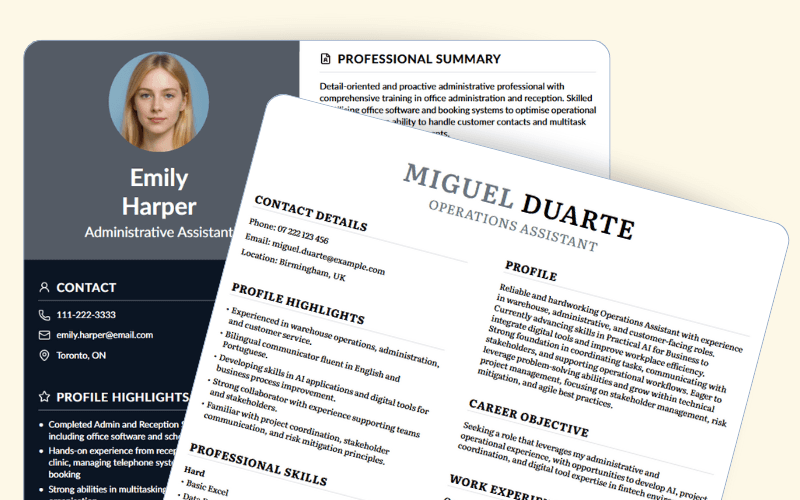
Resume quality as infrastructure, not advice. Treat CV production as essential program infrastructure, like learning management systems or assessment platforms. Build resume development into core program delivery rather than offering it as optional support. Ensure every graduate produces a baseline-quality, ATS-compatible CV as part of program completion requirements.
Outcomes as systems-driven, not learner-driven. Accept that individual learner motivation will always vary, but institutional outcomes shouldn't depend on which learners happen to seek CV help. Create systems that produce consistent minimum quality standards regardless of individual initiative.
Accountability aligned with control. If you're being held accountable for employment outcomes that depend on resume quality, you need systematic control over CV production. You can't be responsible for outcomes you only influence through optional workshops and reactive individual feedback.
These reframes acknowledge that resume outcomes have become an institutional performance metric, not a learner responsibility issue. Training providers that align their systems with this reality position themselves for stronger outcomes, better funder relationships, and more sustainable employer partnerships.
About the Author

Team Yotru
Employability Systems
Team Yotru
Employability Systems
We build practical career tools for training providers and workforce programs, combining labor market insights with real employment outcomes. Follow us on LinkedIn.
Frequently Asked Questions
Resume outcomes for training providers refer to how effectively learner resumes lead to interviews, placements, and employment. They are increasingly used as indicators of program quality and employability impact rather than individual effort alone.
Related Resources
Continue exploring related perspectives on career development, hiring trends, and workforce change.
Market and Research
- Hiring Trends in the UK— UK job market outlook examining sectors hiring international workers, language requirements, and skilled migration pathways.
- Hiring Trends in Ireland— Ireland job market guide for international professionals, including tech sector demand and English-language opportunities.
- Hiring Trends in the United States— U.S. labor market conditions showing easing demand and persistent sectoral shortages.
- Hiring Trends in Canada — Canadian labor market outlook examining regional variations and skill requirements.
- Why It Feels So Hard to Get a Job Right Now— Research-backed explanation of current hiring dynamics and employer selectivity.
Resume Building and Optimization
- 7 of the best Resume Traits— Make a resume stand out to both hiring managers and ATS
Audience Context
This article is written for training providers, colleges, and adult education leaders responsible for learner employability outcomes. Many are under pressure to demonstrate job results and employer confidence while managing large cohorts with limited staff time.
Research Methodology
Insights are based on analysis of hiring trends, applicant tracking system behavior, recruiter screening patterns, and employability reporting practices observed across education and workforce programs. The approach prioritizes real world outcomes over theory and reflects how resumes are evaluated in practice.
Editorial Policy
This content follows an evidence-based editorial process focused on accuracy, neutrality, and clarity. Claims are grounded in observed hiring behavior and labor market research, with human review applied to ensure balanced and practical guidance.
Disclaimer
This article is for informational and educational purposes only. It does not guarantee employment outcomes or funding results. Hiring practices and employability metrics vary by employer, program, and jurisdiction.
Further Insights
Employability Systems and Outcomes
- How ATS Screening Affects Education Programs – Explains how automated screening impacts learner progression and reported outcomes.
- Why Resume Standardization Improves Employer Trust – Shows how consistent CV quality influences recruiter confidence.
Resume Quality and Structure
- Minimalist Resume Design for Education Programs – Explores why simple formatting scales better across cohorts.
- Skills Based Resumes in Modern Hiring – Connects curriculum outcomes to employer expectations.
References
- National Association of Colleges and Employers. (2024). Job Outlook 2024. https://www.naceweb.org
- Society for Human Resource Management. (2023). Applicant Tracking Systems Overview. https://www.shrm.org
- OECD. (2023). Education and Employment Outcomes. https://www.oecd.org
- UK Department for Education. (2024). Post‑16 Skills and Outcomes Framework. https://www.gov.uk
- Office for National Statistics. (2025). Labour market overview, UK. https://www.ons.gov.uk
- Gatsby Charitable Foundation. (2014). Good career guidance. https://www.gatsby.org.uk
- Quality Assurance Agency for Higher Education. (2022). Enterprise and entrepreneurship education: Guidance for UK higher education providers. https://www.qaa.ac.uk
- Careers & Enterprise Company. (2022). Achieving Gatsby Benchmarks: Employer engagement and careers outcomes. https://www.careersandenterprise.co.uk
- Office for Students. (2023). Graduate employment and skills: Outcomes and measures. https://www.officeforstudents.org.uk
Maintained by: Labor Intelligence Group at Yotru
Review cycle: Monitored as market conditions evolve
Last updated: January 29, 2026
Questions or Need Support?
If you are working on employability programs, hiring strategy, career education, or workforce outcomes and want practical guidance, you are in the right place.
Yotru supports individuals and organizations navigating real hiring systems. That includes resumes and ATS screening, career readiness, program design, evidence collection, and alignment with employer expectations. We work across education, training, public sector, and industry to turn guidance into outcomes that actually hold up in practice.