
Practice
3 min read
Applying Gatsby Benchmark 3 in Adult and Vocational Education: Personal Guidance at Scale
Synopsis
For careers teams in adult and vocational education. A practical look at applying Gatsby Benchmark 3, delivering personalised guidance at scale without overwhelming staff.
Gatsby Benchmark 3 focuses on addressing the needs of each learner. On paper, this sounds straightforward. In practice, delivering genuinely personal careers guidance at scale is one of the most complex challenges facing adult and vocational education providers.
Further education colleges, independent training providers, and adult learning organisations work with learners who arrive with very different experiences, responsibilities, and goals. Personal guidance is essential, but time, staffing, and reporting pressures make it difficult to deliver consistently across large and diverse cohorts.
Understanding how Gatsby Benchmark 3 works in real settings is key to delivering meaningful careers support without overwhelming careers teams.
What Gatsby Benchmark 3 requires
Gatsby Benchmark 3 asks providers to ensure that careers guidance reflects individual learner needs. This includes personal circumstances, prior experience, aspirations, and realistic next steps.
For adult and vocational learners, this often means moving beyond general advice. Many learners are not choosing between abstract pathways. They are navigating career change, redundancy, return to work, or progression within a specific sector.
Effective delivery of Benchmark 3 depends on understanding where each learner is starting from and what support will help them move forward.
Why personal guidance is more complex in adult and vocational education
Adult learning environments are shaped by diversity of experience. Two learners on the same course may be at very different stages in their careers and lives.
Some may be confident but unclear on direction. Others may have clear goals but lack confidence, recent experience, or knowledge of how their skills translate into current labour market expectations.
Careers teams must balance empathy with clarity. This work takes time and professional judgement. It does not fit neatly into standardised processes.
The challenge of delivering personal guidance at scale
As learner numbers increase, maintaining consistency becomes harder. Careers teams often support hundreds or thousands of learners across multiple programmes.
Time constraints mean guidance conversations must be focused and purposeful. At the same time, providers are expected to evidence that support has been personalised and effective.
This creates a tension between depth and scale. Without the right structure, personal guidance risks becoming inconsistent, while excessive structure risks reducing it to a checklist.
What personal guidance looks like in practice
In adult and vocational education, personal guidance is often practical and outcome focused.
It may involve helping a learner clarify realistic job options, translating previous experience into employable skills, or aligning qualifications with employer expectations.
CV development plays a central role here. As learners refine their CVs and job targets over time, careers teams gain insight into how guidance is landing and where further support is needed.
These small, iterative steps are often more meaningful than one off interventions.
Balancing personalisation with consistency
Personal guidance does not mean starting from scratch with every learner. Consistency comes from shared frameworks rather than rigid scripts.
Clear guidance touchpoints, repeatable questions, and structured reflection points help careers teams deliver personalised support without losing coherence across cohorts.
When learners can see how guidance connects to tangible outputs, such as clearer CVs or focused job applications, engagement improves and outcomes become easier to track.
Supporting careers teams without replacing professional judgement
No system can replace the judgement and experience of careers practitioners. However, the right support can help structure guidance work so that personalisation is visible and sustainable.
At Yotru, our work with adult and vocational providers focuses on supporting this balance. Structure exists to help careers teams deliver consistent, personalised guidance while keeping the learner at the centre of the process.
The aim is not to standardise careers conversations, but to ensure that meaningful guidance can be delivered and evidenced across large and varied learner groups.
Making Personal Guidance Work at Scale
Gatsby Benchmark 3 sits at the heart of effective careers education. For adult and vocational learners, personal guidance is not optional. It is what enables informed decisions and realistic progression.
Delivering this at scale requires support that respects professional judgement while providing structure and clarity. When careers teams are supported in this way, personal guidance becomes both impactful and sustainable.
Applying Gatsby Benchmark 3 well is less about compliance and more about creating the conditions for learners to move forward with confidence.
About the Author

Team Yotru
Employability Systems
Team Yotru
Employability Systems
We build practical career tools for training providers and workforce programs, combining labor market insights with real employment outcomes. Follow us on LinkedIn.
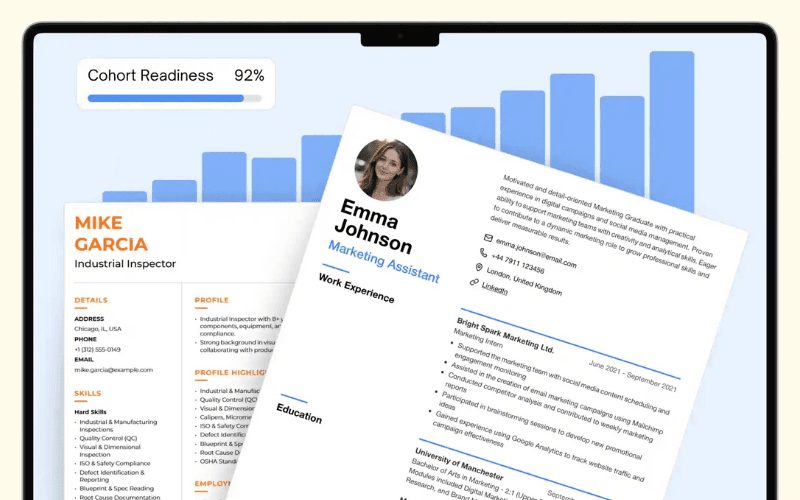
Standardize Resume Quality Across Your Cohorts
Yotru helps educators, workforce programs, and employers deliver consistent, ATS-ready resumes at scale while tracking learner readiness and outcomes.
Continue Reading
More insights from our research team

AI in Career Services: Practical Use Cases That Don't Replace Advisors
AI in career services isn't about replacing advisors. It's about handling baseline tasks so career professionals can focus on coaching and relationship building.
7 min read

Resume Builder for Laid Off Workers: Turning Job Loss Into a Fresh Start
For laid-off workers, getting back to work starts with a strong resume. This guide explains how a resume builder for laid-off workers helps you handle employment gaps, highlight transferable skills, and create an ATS-ready document that gets you in front of employers.
2 min read
What “Job-Ready” Actually Means for Early-Career Candidates
Job-ready isn’t about grades anymore. What actually gets early-career candidates hired is real-world experience, initiative, and proof you can deliver from day one.
4 min read

Gatsby Benchmarks in Practice: What Careers Teams Actually Experience
For careers teams in FE, adult learning, and vocational training. A grounded look at how the Gatsby Benchmarks show up in real guidance work, beyond policy and paperwork.
14 min read