
Platform
5 min read
How an Employability Platform Transforms Education Outcomes
Synopsis
An employability platform helps education providers track learner progress, improve career outcomes, and meet Gatsby Benchmarks. Built for UK educators and training organisations.
Education providers across the UK face mounting pressure to demonstrate learner outcomes. Ofsted inspections, Gatsby Benchmark compliance, and funder requirements all demand evidence that careers programmes actually work.
Generic advice and outdated resources no longer meet these expectations. Careers leaders need tools that track progress, support diverse learners, and produce measurable results. An employability platform for education addresses these challenges directly by combining resume building, skills tracking, and outcome reporting in one system.
This guide explains how employability platforms work, what features matter most, and how UK education providers can use them to improve career outcomes for learners. For guidance on evaluating specific platform options, see our companion guide on choosing an education employability platform.
Key Insight
An employability platform for education connects careers guidance to measurable outcomes, helping providers meet Gatsby Benchmarks while giving learners practical tools they can use immediately.
What Is an Employability Platform for Education?
An employability platform for education is software designed to help learners develop job-readiness skills while giving educators tools to track and report on progress.
Unlike generic resume builders or careers websites, these platforms are built specifically for educational settings. They support multiple learners simultaneously, integrate with institutional workflows, and produce the reporting data that funders and inspectors require.
Core functions typically include:
- Resume and CV building with ATS-optimised templates
- Skills assessment and gap identification
- Progress tracking across cohorts
- Interview preparation resources
- Outcome reporting aligned with funder requirements
The distinction matters. Consumer-facing tools focus on individual job seekers. Education-focused platforms prioritise institutional needs: scalability, oversight, and evidence of impact. For a broader view of career technology options, our guide to career platforms in education examines the full landscape.
Why Education Providers Need Specialised Tools
Careers teams in schools, colleges, and training providers often rely on a patchwork of resources. Word templates, generic websites, and manual tracking spreadsheets create administrative burden without producing consistent results.
The updated Gatsby Benchmarks, adopted into government guidance from September 2025, place greater emphasis on measurable outcomes and personalised support. Benchmark 3 (Addressing the needs of each pupil) and Benchmark 8 (Personal guidance) both require evidence that provision is tailored and effective.
An employability platform centralises this work. Careers leaders can see which learners have completed their CVs, identify those who need additional support, and generate reports without manual data entry.
Key Features of an Effective Employability Platform
Education providers should focus on features that support delivery, oversight, and reporting, not just resume creation.
ATS-compatible templates
- Pass employer screening systems
- Tested against major ATS tools?
Bulk learner management
- Manage cohorts in one place
- Single dashboard for staff?
Progress tracking
- Spot learners needing support
- Flags incomplete profiles?
Outcome reporting
- Supports funders and Ofsted audits
- Exportable compliance reports?
Resume Building That Works
The CV remains central to most job applications. Yet many learners produce documents that fail basic screening because they use incompatible formats, lack relevant keywords, or present information poorly.
Effective employability platforms guide learners through structured CV creation. Rather than presenting a blank document, they ask questions about experience, skills, and goals, then generate properly formatted content.
Checklist for Evaluating Employability Platforms
Look for
- Structured input process that reduces errors
- Templates designed for the UK job market
- Skills matching aligned to job descriptions
- Multiple export formats including PDF and Word
Avoid
- Platforms offering only US-focused templates
- Tools with little or no content guidance
- Systems that require design skills from learners
Pro Tip
Look for platforms that allow learners to create multiple CV versions. Different roles require different emphasis, and the ability to tailor applications significantly improves success rates.
Tracking and Reporting
Ofsted's 2023 review of careers guidance found that the most effective provision included systematic tracking of learner engagement and outcomes. Inspectors look for evidence that careers programmes reach all learners, not just those who self-select.
An employability platform should provide:
- Engagement data: Which learners have logged in, completed profiles, and used resources.
- Progress indicators: Where each learner sits in their job-readiness journey.
- Outcome tracking: Employment, further study, or other positive destinations after programme completion.
- Cohort comparisons: How different groups perform, supporting equality monitoring.
This data serves multiple purposes. It informs day-to-day support decisions, satisfies inspection requirements, and helps secure continued funding by demonstrating impact. For deeper exploration of outcome measurement, see our guide on measuring career outcomes in education.
Aligning Platform Use with Gatsby Benchmarks
The updated Gatsby Benchmarks provide a framework for world-class careers guidance. An employability platform can support compliance across several benchmarks, though it works best as part of a broader careers programme.
Benchmark 2: Learning from Career and Labour Market Information
Effective platforms incorporate labour market data into their guidance. When learners build CVs, they should see which skills employers are seeking and how their experience aligns with market demand.
Benchmark 3: Addressing the Needs of Each Pupil
Personalisation is central to the updated benchmarks. Platform analytics can identify learners who are disengaged or struggling, enabling targeted intervention before outcomes suffer.
Benchmark 8: Personal Guidance
While platforms cannot replace qualified careers advisers, they can make guidance sessions more productive. If learners arrive with completed CV drafts and skills assessments, advisers can focus on strategic career planning rather than basic document creation.
Hint
The Careers & Enterprise Company provides free Compass+ self-evaluation tools that help careers leaders assess their provision against the Gatsby Benchmarks. Use these alongside platform data to identify gaps.
Implementation Considerations
Adopting an employability platform requires planning. The technology alone does not improve outcomes; effective implementation does. Training providers face particular considerations, which we address in our guide on building effective training provider employability.
Staff Training
Careers teams need to understand both the platform's features and how to integrate it into existing workflows. Budget time for initial training and ongoing support as staff become familiar with the system.
Learner Onboarding
Clear introduction processes help learners understand why they are using the platform and what benefits it provides. Resistance often stems from confusion rather than opposition.
Integration with Existing Systems
Consider how the platform will fit with your current careers programme, MIS, and reporting processes. The best tools reduce administrative burden rather than adding another system to manage.
GDPR and Data Protection
Employability platforms hold personal data including contact details, employment history, and potentially sensitive information about barriers to employment. Ensure any platform complies with UK data protection requirements and that appropriate data processing agreements are in place.
Data & Compliance Checklist
- Clear data retention policies
- UK-based or GDPR-compliant data storage
- Built-in learner consent mechanisms
- Data export options for portability
Measuring Success
An employability platform should improve outcomes, but defining and measuring success requires clarity about goals.
- Process metrics track engagement: how many learners complete CVs, how often they log in, how many use interview preparation resources.
- Outcome metrics track destinations: employment rates, further study progression, and learner satisfaction with support received.
Both matter. High engagement with poor outcomes suggests the platform content needs improvement. Good outcomes with low engagement might indicate the platform is helping those who use it, but too few learners are being reached.
The HESA Graduate Outcomes survey methodology offers useful principles. Surveying learners 15 months after programme completion captures meaningful employment outcomes rather than immediate but potentially unstable placements. For providers wanting to connect support directly to destination data, an education outcomes platform integrates tracking throughout the learner journey.
Important
Outcome measurement requires baseline data. Before implementing a new platform, document current employment rates and learner satisfaction so you can demonstrate improvement.
Getting Started
For education providers considering an employability platform, the evaluation process should include:
- Needs assessment: What specific challenges does your careers provision face? Which learner groups need the most support?
- Stakeholder input: Involve careers advisers, tutors, and learners in platform selection. Their buy-in affects implementation success.
- Pilot testing: Trial the platform with a small cohort before full rollout. Identify friction points and address them before scaling.
- Success criteria: Define what success looks like before implementation, so you can measure progress objectively.
Yotru's platform for educators is designed specifically for UK training providers, colleges, and workforce development organisations. It combines AI-powered resume building with the tracking and reporting features that education providers need.
About the Author

Team Yotru
Employability Systems
Team Yotru
Employability Systems
We build practical career tools for training providers and workforce programs, combining labor market insights with real employment outcomes. Follow us on LinkedIn.
Frequently Asked Questions
An employability platform for education is software that helps learners develop job-readiness skills while giving educators tools to track progress and report outcomes. Unlike consumer CV builders, these platforms are designed for institutional use with features like bulk learner management, cohort tracking, and compliance reporting.
Yotru Platform
Employer-Ready Resume Solutions Hub
- Career Development Platform— AI platform for compliant, employer-ready resumes.
- Employer Hiring Signals— Standardized resumes with clear pre-interview hiring signals
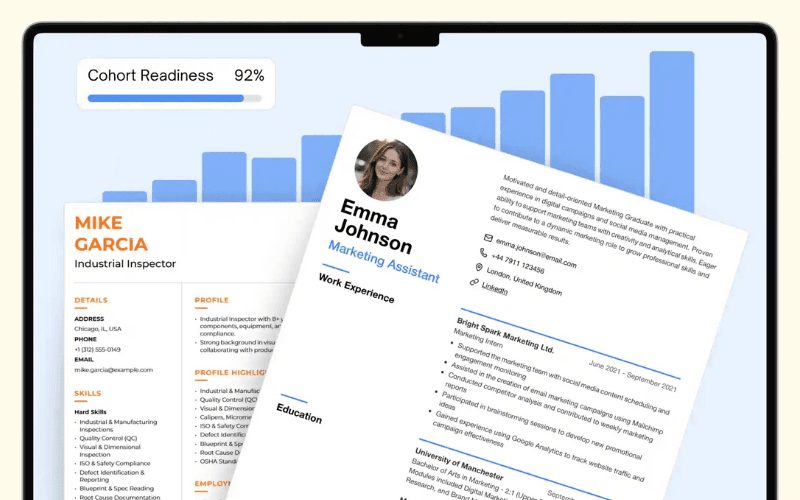
- Educator Resume Platform— Standardize learner resumes and track cohort readiness.
- Workforce Resume Builder— Employer-ready resumes for workforce clients with tracking.
- Outplacement Resume Support— Support transitions with standardized, employer-ready resumes.
- Recruitment Resume Signals— Role-aligned resumes plus readiness scores for recruiters.
Audience Context
This article is written for UK education providers, training organisations, and workforce development professionals evaluating employability platform options. It addresses the practical considerations of selecting and implementing these tools within institutional settings.
Research Methodology
Analysis draws on published government guidance including the updated Gatsby Benchmarks (2024), Ofsted's Independent Review of Careers Guidance (2023), and the Department for Education's careers guidance statutory requirements. Platform feature analysis reflects common functionality across the education technology sector.
Editorial Standards
Yotru maintains Editorial Policy standards requiring accuracy, neutrality, and regular review. Content is updated as guidance and best practice evolve.
Disclaimer
This article provides general information about employability platforms for education. Specific implementation decisions should consider individual organisational circumstances. Outcomes vary based on implementation quality, learner engagement, and labour market conditions.
Related Resources
Related Yotru Articles
- Career Platforms in Education: What Works and Why – Comprehensive guide to career technology selection for educational settings
- Choosing an Education Employability Platform – Practical procurement and implementation guidance for UK providers
- Building Effective Training Provider Employability – How ITPs deliver employability support under new Gatsby requirements
- Measuring Career Outcomes in Education – Understanding outcome measurement methodology and using data for improvement
- Education Outcomes Platforms: Connecting Support to Results – Technology that links employability provision to measurable destinations
Platform and Product Resources
- Yotru Platform Overview – Complete platform capabilities for education and workforce organisations
- Yotru for Educators – Tools designed for UK schools, colleges, and training providers
- Yotru for Workforce Development – Supporting regional skills and employment programmes
Additional Resources
- Applying Gatsby Benchmark 3 in Adult and Vocational Education – Personalising guidance in post-16 settings
- How Training Providers Can Evidence Gatsby Benchmarks Without Overloading Careers Teams – Practical approaches to compliance
- Why University Career Services Teams Are Loving Yotru's AI Resume Builder – Higher education applications
- Resume Outcomes for Training Providers – Measuring the impact of CV support
- Why Libraries Are Key to Career Building – Community partnerships in careers provision
References
- Gatsby Charitable Foundation. (2024). Good Career Guidance: The Next Ten Years. https://www.gatsby.org.uk/education/programmes/good-career-guidance
- Department for Education. (2025, May). Careers guidance and access for education and training providers. GOV.UK. https://www.gov.uk/government/publications/careers-guidance-provision-for-young-people-in-schools
- Ofsted. (2023, September). Independent review of careers guidance in schools and further education and skills providers. GOV.UK. https://www.gov.uk/government/publications/independent-review-of-careers-guidance-in-schools-and-further-education-and-skills-providers
- The Careers & Enterprise Company. (2025). Updated Gatsby Benchmarks adopted into latest government guidance for schools, colleges and ITPs. https://www.careersandenterprise.co.uk/news/updated-gatsby-benchmarks-adopted-into-latest-government-guidance-for-schools-colleges-and-itps/
- Career Development Institute. (2020, January). Framework for Careers, Employability and Enterprise Education. https://www.thecdi.net/CDI/media/Write/Documents/CDI-Framework-Jan2020-web.pdf
- HESA. (2025, July). Graduate Outcomes 2022/23: Summary Statistics. https://www.hesa.ac.uk/news/17-07-2025/sb272-higher-education-graduate-outcomes-statistics
- Department for Education. (2025). Post-16 education and skills white paper. GOV.UK. https://www.gov.uk/government/publications/post-16-education-and-skills-white-paper
- Gatsby Benchmarks. (2025). Understanding the Gatsby Benchmarks. https://www.gatsbybenchmarks.org.uk/understanding-the-gatsby-benchmarks/
- Department for Education. (2024). Graduate labour market statistics, Calendar year 2024. GOV.UK. https://explore-education-statistics.service.gov.uk/find-statistics/graduate-labour-markets/2024
- Universities UK. (2025). Graduate outcomes: What the latest data reveals about employment, pay and job quality. https://www.universitiesuk.ac.uk/latest/insights-and-analysis/graduate-outcomes-what-latest-data
Maintained by: Platform & Systems Group at Yotru
Review cycle: Reviewed periodically to reflect evolving hiring trends
Last updated: February 2, 2026
Questions or Need Support?
If you are working on employability programs, hiring strategy, career education, or workforce outcomes and want practical guidance, you are in the right place.
Yotru supports individuals and organizations navigating real hiring systems. That includes resumes and ATS screening, career readiness, program design, evidence collection, and alignment with employer expectations. We work across education, training, public sector, and industry to turn guidance into outcomes that actually hold up in practice.