Employability
5 min read
Best Resume Builder for USA
Synopsis
American employers have specific expectations around resume format, length, and content. This guide covers what the best resume builder for USA applications needs to handle — from ATS compliance to regional hiring norms.
Job seekers applying for roles in the United States face a particular set of resume expectations. American employers have established conventions around format, length, and content that differ from other English-speaking markets. Getting these right is the baseline requirement for any competitive application.
This guide explains what the U.S. job market expects from a resume, what a resume builder needs to handle to produce compliant and competitive applications, and what distinguishes strong U.S.-formatted documents from weak ones.
How U.S. Resume Standards Differ from Other Markets
U.S. resume conventions are worth understanding before selecting a tool, particularly if you're applying from outside the country or transitioning from a different market.
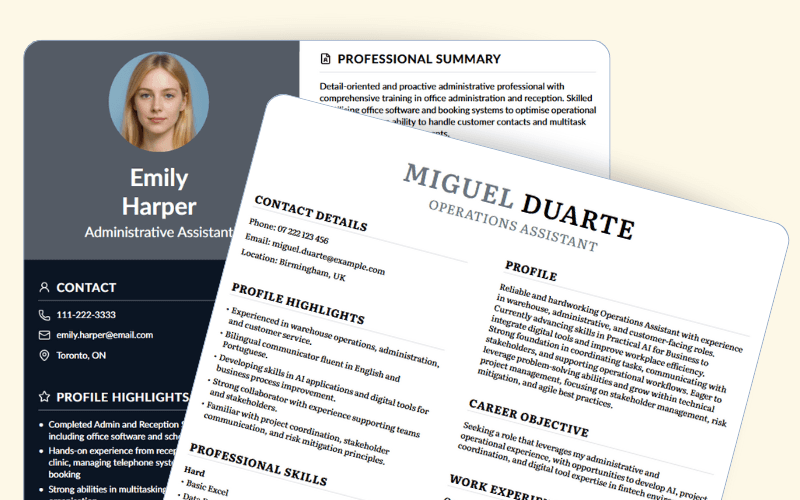
- No photos. U.S. employers do not expect, and many actively discourage, resume photos. Including a photo can create legal concerns for employers under anti-discrimination law. Any resume builder intended for U.S. applications should use templates without photo placeholders.
- No date of birth, marital status, or nationality. Unlike many other countries, U.S. resumes do not include personal identifying information beyond contact details. Builders that include fields for these items are not calibrated for the American market.
- Resume, not CV. In the U.S., a CV (curriculum vitae) is a different document used almost exclusively in academic, research, and medical fields. For most employment applications, the correct document is a resume — typically one to two pages. Do not use a builder that defaults to CV formatting for standard job applications.
- One to two pages maximum. U.S. hiring culture favors concise documents. For most professionals with fewer than 15 years of experience, one page is standard. Two pages are appropriate for senior roles with substantial experience to document. More than two pages is generally considered too long for any non-academic submission.
- Achievement-oriented bullet points. American hiring managers consistently prefer bullet points that describe accomplishments and outcomes rather than job duties. "Reduced customer churn by 18% through proactive outreach program" outperforms "Responsible for customer retention."
The hiring trends in the United States guide provides broader context on what American employers are prioritizing in the current labor market.
Important
If you're an international applicant applying for U.S. roles, remove any information from your resume that reveals nationality, age, or immigration status. U.S. employment law prohibits discrimination on these grounds, and including such details can create complications for both you and the employer.
ATS Compliance in the U.S. Job Market
The U.S. market has one of the highest rates of ATS adoption globally. Large American employers — and a growing number of small and mid-size companies — use applicant tracking systems to manage incoming applications.
This means the structural requirements for ATS compliance aren't optional. A resume that looks good but fails ATS parsing won't reach a human reader in most application pipelines.
The requirements are consistent with general ATS best practices:
- Single-column layout
- Standard section headers (Work Experience, Education, Skills)
- No graphics, text boxes, or tables for main content
- Clean font — Arial, Calibri, Georgia, or similar
- Contact information in the document body, not the header or footer
- Keywords matched to the job description
One area where the U.S. market is particularly keyword-sensitive is skills sections. American job postings often list required and preferred skills explicitly, and ATS platforms are configured to match against these terms. Reviewing your skills section against the job description for terminology alignment is a high-value activity before any U.S. application.
The ATS-friendly resume builder guide covers the full compliance checklist in detail.
What to Include in a U.S.-Format Resume
A well-structured U.S. resume includes the following sections in this general order:
- Contact information. Full name, professional email address, phone number, city and state (full street address is no longer standard), and LinkedIn profile URL if relevant.
- Professional summary (optional but recommended). A two to three sentence statement at the top that frames your experience and value. This replaces the outdated "objective" statement. It should be tailored to the role.
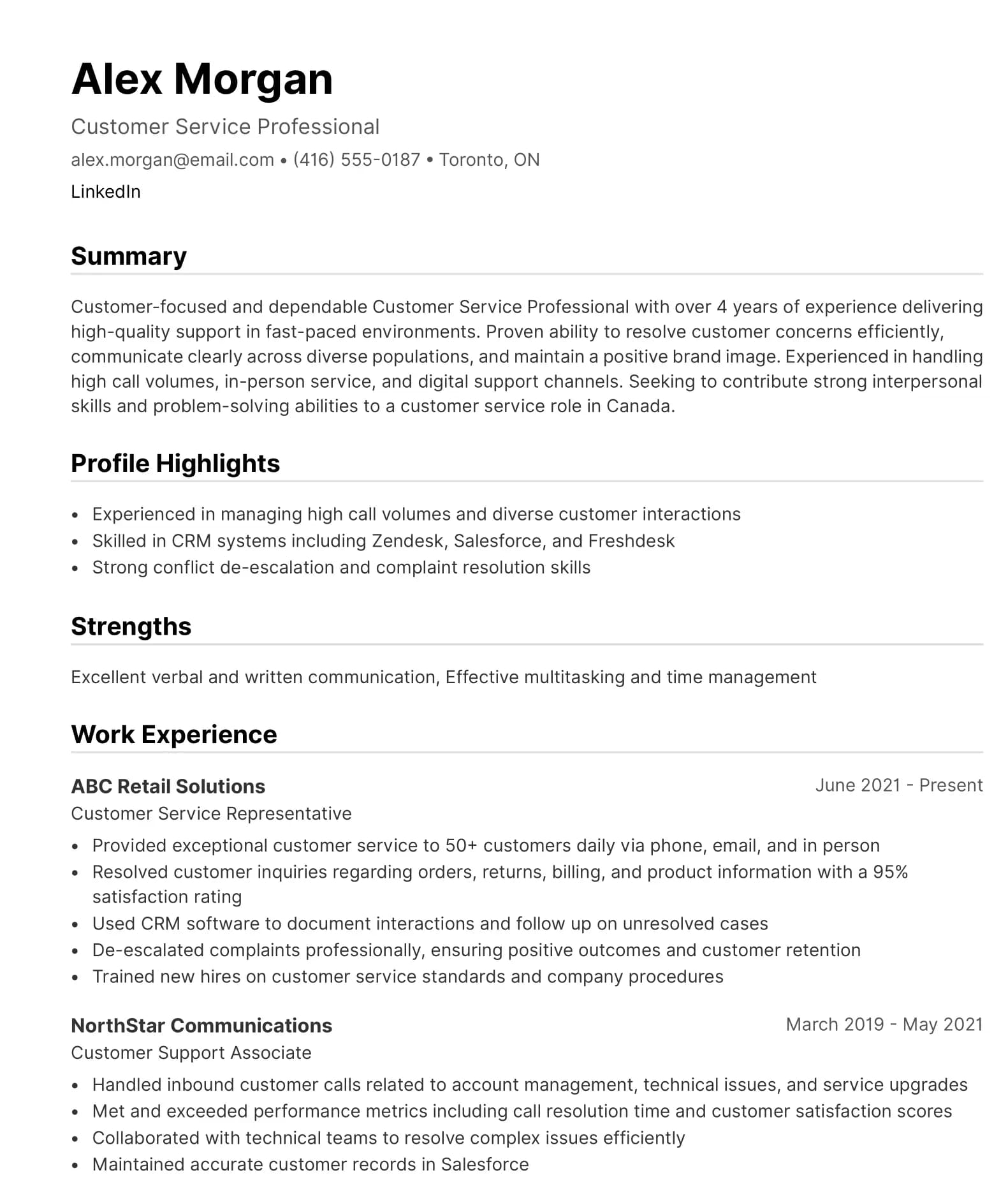
- Work experience. Listed in reverse chronological order. Each entry includes company name, job title, dates of employment (month and year), and three to five bullet points describing accomplishments. Quantify results where possible.
- Education. Degree, institution, graduation year. For recent graduates, GPA above 3.5 is worth including. For professionals with more than five years of experience, education typically appears at the bottom of the document.
- Skills. A concise list of relevant technical skills, tools, certifications, and competencies. This section is heavily parsed by ATS and should reflect the specific language of your target role.
- Certifications and licenses. If relevant to the role, list these separately or within the skills section.
The job search strategies guide covers complementary steps beyond the resume itself.
Hint
U.S. employers expect your resume to tell a story of progression. If your titles or responsibilities have grown over time, make sure that's visible. Lateral moves or gaps should be addressed briefly in a cover letter rather than left unexplained.
Choosing a Resume Builder for U.S. Applications
Several characteristics make a resume builder well-suited for the U.S. market:
- Templates built for U.S. conventions. Look for templates without photo fields, personal detail prompts, or CV-style formatting. The default output should be a one to two page document in reverse-chronological or hybrid format.
- AI assistance for achievement-based writing. Because U.S. hiring culture places a premium on quantified accomplishments, a builder that helps you phrase bullet points as outcomes rather than duties adds direct value.
- Keyword optimization against job postings. The U.S. ATS market is competitive. A builder that lets you paste a job description and identifies missing keywords is a practical advantage.
- Clean, ATS-compliant export. The export should produce a PDF that parses correctly across the major ATS platforms in use by U.S. employers, including Workday, Greenhouse, Lever, iCIMS, and Taleo.
- Cover letter capability. While not always required, a cover letter is standard in many U.S. industries and sectors. A builder that handles both documents in one platform saves time and ensures consistency.
Yotru's AI resume builder is designed to produce employer-ready resumes that meet ATS requirements and reflect current U.S. hiring norms. The platform supports both resume and cover letter creation, with AI-assisted writing tools calibrated for outcome-oriented language.
If you're applying for U.S. roles and want to build or update your resume, you can start here.
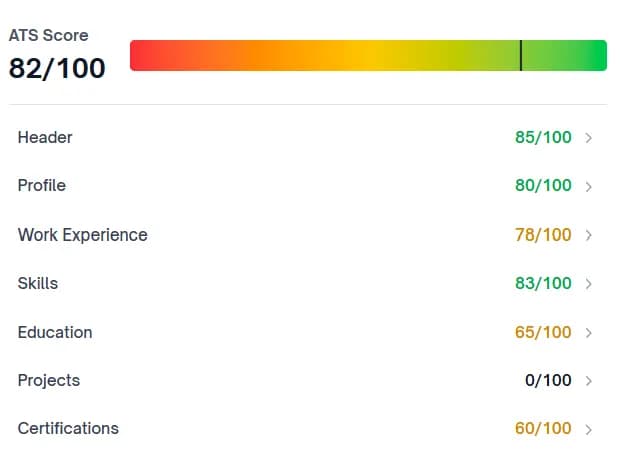
ATS-Optimized resumes That Meet Employer Standards
Our AI-powered scoring system helps organizations assess and standardize resume quality at scale. ATS-compliant templates support consistent formatting, keyword alignment, and interview readiness across cohorts.
Special Considerations for International Applicants
If you're applying for U.S. jobs from outside the country, the resume formatting rules above still apply — but there are a few additional considerations:
- Credential equivalency. If your qualifications were earned in another country, provide enough context for a U.S. hiring manager to understand them. Listing a degree without institution name, country, or year is insufficient. Some professional fields require formal credential evaluation.
- Work authorization. You are not required to include your immigration or visa status on a resume. Some candidates choose to note "Authorized to work in the U.S." if they anticipate questions — this is a judgment call depending on the role and industry.
- Address conventions. If you're applying from abroad, it's acceptable to list a U.S. city you're relocating to if that's your intention. Applying with a foreign address for roles that require in-person presence can reduce response rates.
The job search strategy 2026 article covers additional considerations for applicants navigating competitive markets.
About the Author

Maria Santos
Career Researcher
Maria Santos
Career Researcher
Maria is a Career Researcher at Yotru, studying hiring trends, resumes, and job pathways to strengthen the platform’s career guidance and insights.
Frequently Asked Questions
The best resume builder for USA job applications follows U.S. standards like one-page format, no photos, and ATS-friendly structure. Tools like Yotru help ensure resumes meet these expectations while aligning with job descriptions.
Audience Context
This guide is for job seekers applying to roles in the United States, including international candidates. It explains U.S. resume standards, ATS requirements, and how to structure a resume that aligns with employer expectations.
Disclaimer
This content is for general guidance only. Hiring practices vary by employer, industry, and role. Using tools like Yotru can improve formatting and alignment with U.S. standards, but does not guarantee interviews or job offers.
Further Insights
- Hiring Trends in the United States — U.S. job growth and employer priorities
- ATS-Friendly Resume Builders — ATS guide for U.S. applicants
- Job Search Strategies Now — Tactics beyond the resume
- AI vs. Traditional Resume Tools — Which tool type fits your needs
- Ultimate Guide to Resume Builders — Full landscape overview for 2026
- Best Resume Builder Apps — Builder options by career stage
- Resume Tips for Gen Z — Formatting for younger applicants
- Canadian Resume for Int'l Students — Applying in a new country
- ATS-Friendly Resume Builders — ATS compliance for entry-level
- Top 10 Free Resume Builders — No-cost builder options reviewed
Teal vs ChatGPT for Job Seekers — Tracker tool vs general AI - Kickresume vs ChatGPT for Resumes — Design-first vs text generation
- Rezi vs ChatGPT for Resume Building — ATS builder vs open AI
- Enhancv vs ChatGPT for Resumes — Visual builder vs raw AI
- Is Jobscan Better Than ChatGPT? — Keyword tool vs AI writing
- AI Resume Builder vs ChatGPT — Structured AI vs open AI
- How to Use ChatGPT for Resumes — Prompts, limits, and better tools
- Can ChatGPT Resumes Get You Rejected? — AI risk in real hiring
References
- U.S. Bureau of Labor Statistics. (2025). Current employment statistics. https://www.bls.gov/ces/
- Equal Employment Opportunity Commission. (2024). Pre-employment inquiries and equal employment opportunity. https://www.eeoc.gov
- U.S. Department of Labor. (2025). Occupational outlook handbook. https://www.bls.gov/ooh/
- Society for Human Resource Management. (2025). Talent acquisition benchmarking report. https://www.shrm.org
- LinkedIn Talent Solutions. (2025). Future of recruiting. https://business.linkedin.com/talent-solutions
- Greenhouse Software. (2025). State of hiring report. https://www.greenhouse.com
- iCIMS. (2025). Workforce report. https://www.icims.com/resources
- Pew Research Center. (2024). Work and workers in the United States. https://www.pewresearch.org
- Harvard Business Review. (2025). How hiring has changed in the post-pandemic U.S. labor market. https://hbr.org
- National Bureau of Economic Research. (2024). Resume screening and labor market outcomes. https://www.nber.org
Maintained by: Employability & Skills Group at Yotru
Review cycle: Updated regularly
Last updated: April 4, 2026
Questions or Need Support?
If you are working on employability programs, hiring strategy, career education, or workforce outcomes and want practical guidance, you are in the right place.
Yotru supports individuals and organizations navigating real hiring systems. That includes resumes and ATS screening, career readiness, program design, evidence collection, and alignment with employer expectations. We work across education, training, public sector, and industry to turn guidance into outcomes that actually hold up in practice.