Employability
4 min read
Job Search Strategy 2026: How to Stop Wasting Effort and Start Getting Interviews
Synopsis
Discover how to optimize your job search in 2026 by balancing targeted networking with precise applications to land more interviews efficiently.
Introduction
Most people heading into 2026 have been told two pieces of advice so often they sound like laws: “Just network” and “Just apply to everything.” In a market where some postings receive more than 200 applications and many roles fill through referrals, both of those ideas contain truth but fail badly on their own. A sustainable job search strategy in 2026 has to treat your effort like a finite resource and allocate it between volume and precision instead of swinging wildly between extremes.
Key Insight
Most job seekers in 2026 do not fail because they are “lazy” or “unqualified”. They fail because they rely on one job search channel in a system that now rewards hybrid, multi‑channel strategies.
Why “Just Network” Quietly Burns You Out
In 2026, networking that works looks more like targeted business development than casual socializing. Instead of coffee chats with anyone who will say yes, the goal is to repeatedly show up around a defined list of companies, teams, and decision‑makers where you could realistically solve problems.
The problem is that “just network” is vague. In practice, it often pushes job seekers into unfocused activity that feels busy but produces little return. Over time, this leads to three predictable failure patterns.
Pro Tip
If you cannot name 15–30 target companies and at least 1–2 real people at each that you are trying to get closer to, you are not “networking strategically” yet — you are exploring, which is fine, but should not be your only job search channel.
Why “Apply to Everything” No Longer Works
At the same time, job boards and “easy apply” tools have made it possible to send dozens of applications in a single sitting, which feels productive in the moment. However, as more candidates behave this way, each posting attracts hundreds of resumes, and many organizations lean heavily on ATS filters and AI‑assisted screening to cope with the volume.
That creates two problems for a high‑volume, low‑precision strategy. First, generic resumes often fail the ATS screening step because they do not match the posting’s language closely enough, even when the candidate is actually qualified. Second, even when those resumes reach a human, they tend to blur together because they do not clearly speak to the specific team’s problems, metrics, or tools.
- Same resume for every posting
- Ignoring required skills or tools
- Relying on auto‑apply extensions
- Applying to roles you would not accept
- No tracking of response or conversion rates
A modern job search approach does not reject online applications entirely. Instead, it treats each application as a small experiment where you test a clearly defined fit hypothesis (for example, “My past CRM work maps to this lifecycle marketing role”) and adjust quickly based on response data.
The Hybrid Job Search Strategy: Volume + Precision
The most resilient job seekers in 2026 tend to run a hybrid job search strategy that combines targeted networking with calibrated application volume. Rather than choosing “networking vs online applications,” they assign different roles to each: networking generates warm leads and information, while applications convert those leads and targeted postings into actual interviews.
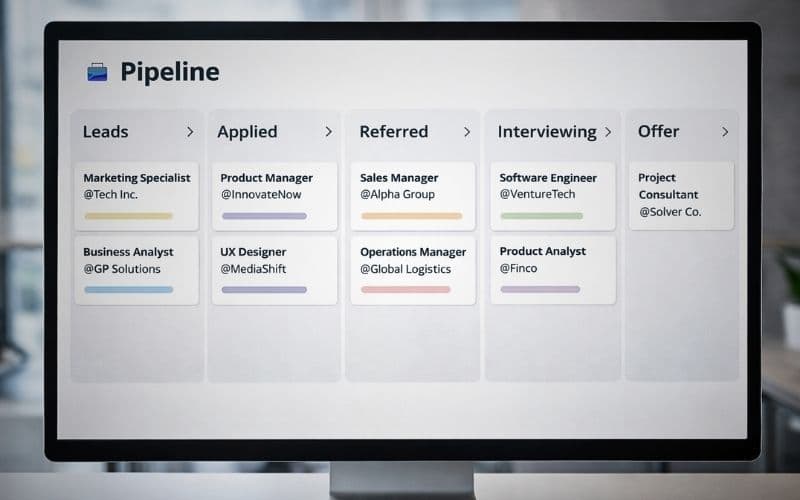
One useful way to think about this is as a pipeline rather than a to‑do list. Every week, your system should generate a certain number of new leads, move a portion of them into tailored applications or referrals, and then funnel a smaller subset into interviews and offers.
What Interviews Look Like in 2026
Hiring teams increasingly rely on structured interviews, work samples, and scenario-based questions. Your resume and networking efforts are now judged by how well they predict on-the-job performance, not personality fit alone.
Weekly Activity Ranges That Actually Make Sense
For most full‑time seekers, the right range is neither “5 perfect applications” nor “100 low‑effort ones.” A practical sweet spot many coaches and career services recommend is roughly:
- 115–30 new leads added to your pipeline
- 28–15 targeted applications submitted
- 33–5 warm conversations (networking)
- 41–3 direct hiring‑manager outreaches
- 51 structured block for skill/portfolio work
These are ranges, not rules. The right numbers depend on your seniority, industry, and bandwidth, but setting explicit floors and ceilings prevents both under‑activity and self‑defeating over‑activity.
How to Split Your Time Across Channels
Online applications
- Use job boards and company career pages to identify opportunities where you meet most core requirements.
- Prioritize roles where your existing achievements map directly to the posted responsibilities and metrics.
- Limit total applications so you can customize resumes and short answers meaningfully.
Networking & referrals
- Build “digital proximity” with people at 15–30 target companies through comments, DMs, and events.
- Turn generic chats into specific opportunities by asking about upcoming needs and team priorities.
- When appropriate, ask directly if they would be comfortable referring you for a particular role.
Whether you use a spreadsheet, a checklist, or software, the underlying principles are the same.
Making ATS Work for You Instead of Against You
In the 2026 job market, it is reasonable to assume that most mid-sized and large employers rely on applicant tracking systems to manage and filter applications. These systems are not robots making final hiring decisions, but they do function as strict gatekeepers. They reward resumes that align closely with the language, structure, and priorities of the job description.
A practical ATS job search strategy has three parts.
- Mirror key language from the posting
- Use clean, simple formatting
- Align each resume version to one role type
- Answer any screening questions carefully
- Keep a master skills and keywords bank
The objective is not to cram in keywords, but to translate your real experience into the terms hiring teams and ATS systems are designed to recognize. For example, if a posting emphasizes “stakeholder management” and your resume only says “client communication,” you may be doing the same work but failing the initial text match.
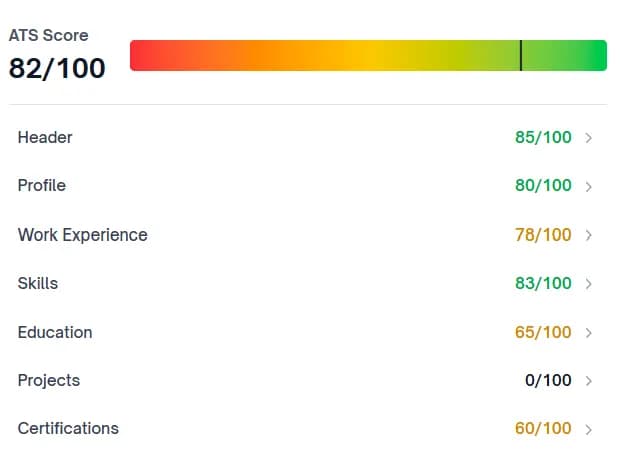
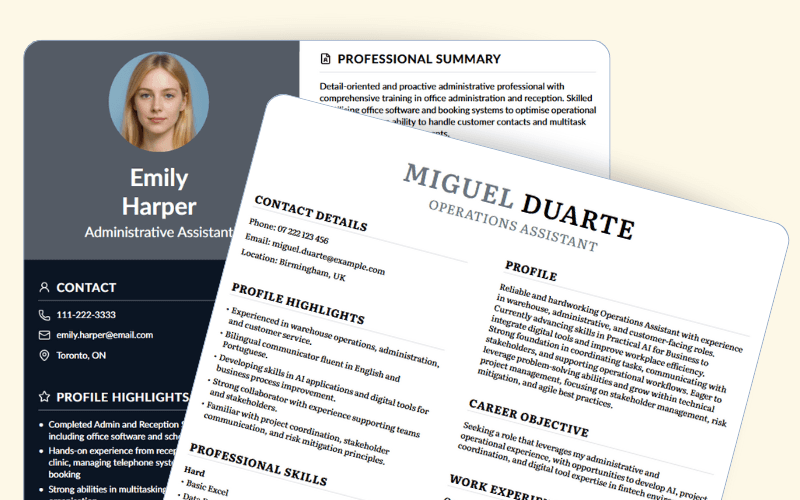
ATS-Optimized resumes That Meet Employer Standards
Our AI-powered scoring system helps organizations assess and standardize resume quality at scale. ATS-compliant templates support consistent formatting, keyword alignment, and interview readiness across cohorts.
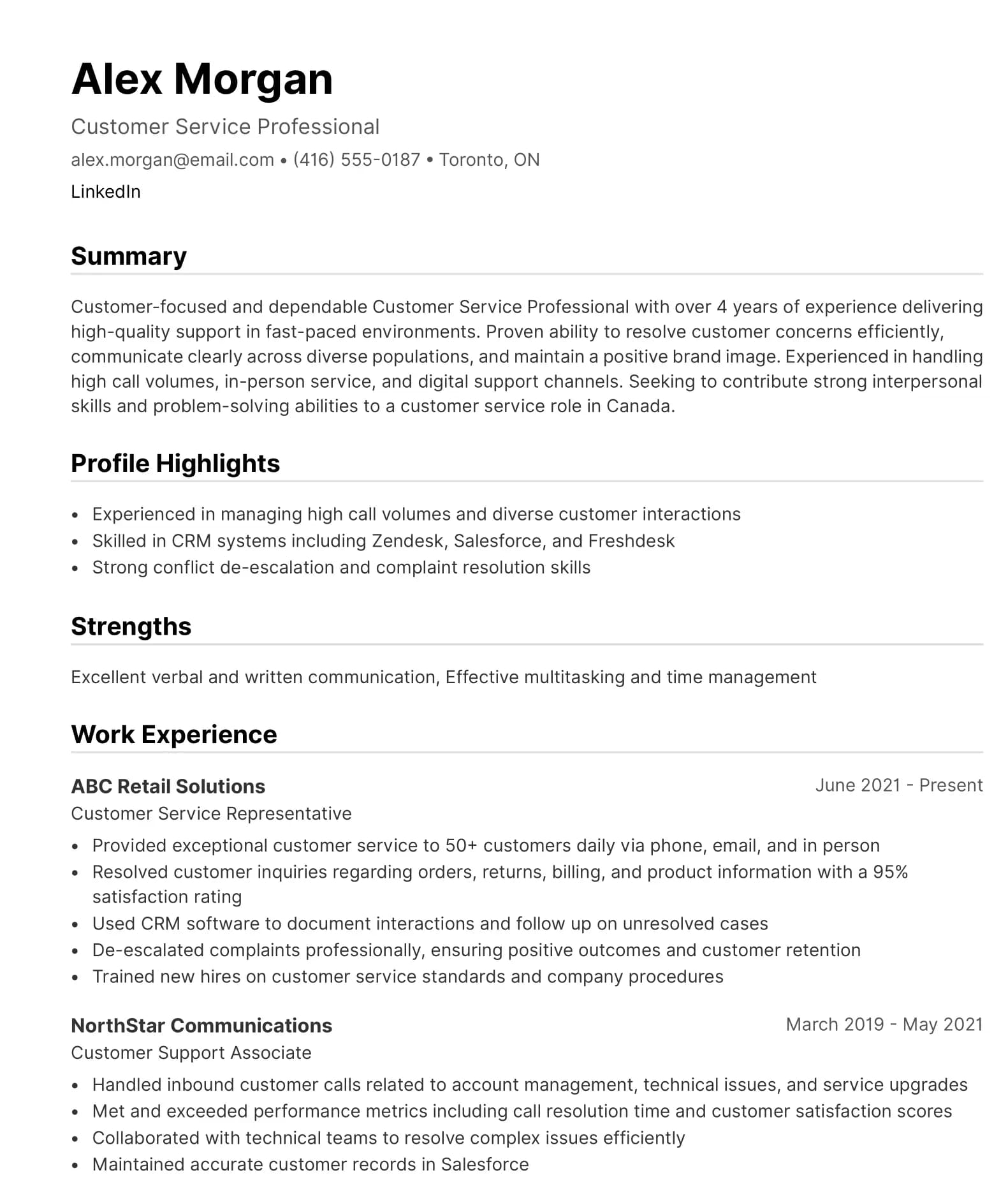
Tools, including AI, can help speed up customization, but human judgment still matters. Auto-apply systems that submit dozens of unreviewed applications on your behalf can harm your credibility. They often push candidates into poorly matched roles or misrepresent experience, creating friction with recruiters instead of momentum.
Turning Vague Networking Into a Repeatable System
To make networking feel less like random socializing and more like a professional system, anchor it to clear inputs and outputs. Inputs are activities you control, such as thoughtful comments, messages, or informational calls; outputs are referrals, interview invitations, or concrete leads that show whether your approach is working.
A simple, modern structure looks like this.
- 1Build a target list of 30–50 companies.
- 2Identify 3–5 relevant people at each.
- 3Engage publicly with their content weekly.
- 4Send 5–10 tailored messages per week.
- 5Convert a subset into short calls.
- 6Follow up when roles appear.
Over time, this “digital proximity” strategy keeps you in the awareness of people who can either hire you or recommend you, which many studies associate with higher interview and offer rates. The point is not to become an influencer; it is to become visible and credible within the specific circles that control the roles you care about.
Pro Tip
If you feel awkward “asking for favors,” reframe networking as research and collaboration: your goal is to understand how a team creates value and then offer targeted help, not to beg for a job.
Putting It All Together Without Burning Out
A sustainable hybrid job search strategy in 2026 respects both the realities of the market and your energy. Instead of chasing every piece of advice, you commit to a small number of weekly behaviors that compound over 4–8 weeks: calibrated application volume, focused networking, and continuous optimization of your materials.
Here is a concrete weekly operating model many job seekers adapt successfully.
| Weekly Job Search Activity Model | |
|---|---|
| Element | Goal in 2026 |
| Applications | 8–15 targeted, ATS‑aligned resumes per week. |
| Networking touches | 15–25 total comments, DMs, or follow‑ups. |
| New conversations | 3–5 short calls with relevant professionals. |
| Learning & projects | 3–6 hours on skills, portfolio, or certifications. |
| Review & adjustment | 1 session to analyze response data and refine. |
You can then tune these numbers up or down depending on whether you are getting more interviews via networking, online applications, or a specific combination of both. Over a long enough time horizon, it is this kind of deliberate, data‑aware system that tends to separate people who “feel busy” from those who actually move into better roles.
About the Author

Team Yotru
Employability Systems
Team Yotru
Employability Systems
We build practical career tools for training providers and workforce programs, combining labor market insights with real employment outcomes. Follow us on LinkedIn.
Frequently Asked Questions
Common questions about job search strategies in 2026
Networking alone often leads to burnout and missed opportunities because it lacks strategic targeting. Effective networking requires focusing on a specific list of companies and decision-makers to build meaningful connections that lead to referrals.
Related Resources
Additional resources to explore
Job Search Strategies
- Job Search Strategies That Are Working Now— Learn how to create and manage a job search funnel that maximizes your interview chances.
- Build professional networks that last— Effective networking strategies tailored for determined job seekers.
Resume Optimization
- How to handle an uneven career path in your resume— Step-by-step guide to tailoring your resume when you don't have a linear career.
- Hiring Trends in Canada in 2026— Learn which industries are hiring and for what in Canada
Audience Context
This article is tailored for job seekers at various career stages who want to optimize their job search in a complex, high-volume market. It addresses the challenges of modern hiring systems, including ATS filtering and networking dynamics, providing practical insights for making strategic decisions about where to invest effort.
Editorial Standards
The content is developed with a commitment to neutrality, evidence-based guidance, and practical applicability. It avoids exaggerated claims and focuses on real-world hiring practices, drawing from recruiter insights, labor market data, and proven career coaching methodologies.
Methodology
Insights in this article are based on analysis of current hiring workflows, ATS system behaviors, networking effectiveness studies, and the evolving landscape of online job applications. The approach emphasizes repeatability and adaptability to diverse industries and seniority levels rather than anecdotal tips.
Disclaimer
This article is informational and does not guarantee job search success. Outcomes may vary due to factors like location, industry, role specificity, and individual circumstances. Job seekers should adapt the strategies presented here to their unique context.
References
- Robert Half Canada. (2025, December 10). 2026 job search plans: One-third of Canadian professionals plan to search for a new job. https://press.roberthalf.ca/2025-12-10-Survey-One-third-of-Canadian-professionals-plan-to-search-for-a-new-job-in-2026
- Robert Half Canada, & Benefits Canada. (2025). Benefits and pay as key drivers of 2026 job search plans. https://www.benefitscanada.com/news/bencan/benefits-pay-driving-job-search-plans-in-2026-survey/
- PR Newswire. (2025). Global 2026 job search intentions: Nearly 4 in 10 professionals plan to look for a new job. https://www.prnewswire.com/news-releases/survey-nearly-4-in-10-professionals-plan-to-search-for-a-new-job-in-2026-302638545.html
- Final Round AI. (2025). 10-step job search strategy to get hired in 2026. https://www.finalroundai.com/blog/job-search-strategy
- JobSearch.Guide. (2025). How job search works in 2026 and why old advice fails. https://newsletter.jobsearch.guide/p/how-job-search-works-in-2026-and?action=share
- SelectSoftware Reviews. (2025). Applicant tracking system statistics: ATS adoption and hiring impact (2025 update). https://www.selectsoftwarereviews.com/blog/applicant-tracking-system-statistics
- HiringThing. (2025). 2025 job application statistics: Updated data you need to know. https://blog.hiringthing.com/2025-job-application-statistics-updated-data-you-need-to-know
- OpenArc. (2025). Hidden job market: Why 85% of jobs are never posted online (2025 data). https://www.openarc.net/the-power-of-networking-why-85-of-jobs-are-never-posted-online-2025-data/
- Adler, L. (2016). New survey reveals 85% of all jobs are filled via networking. LinkedIn. https://www.linkedin.com/pulse/new-survey-reveals-85-all-jobs-filled-via-networking-lou-adler
Maintained by: Yotru Career Research and Development Team
Review cycle: Reviewed regularly to reflect market changes
Last updated: January 13, 2026
Questions or Need Support?
If you are working on employability programs, hiring strategy, career education, or workforce outcomes and want practical guidance, you are in the right place.
Yotru supports individuals and organizations navigating real hiring systems. That includes resumes and ATS screening, career readiness, program design, evidence collection, and alignment with employer expectations. We work across education, training, public sector, and industry to turn guidance into outcomes that actually hold up in practice.