
Employability
7 min read
Best Resume Builder for Career Changers in 2026
Synopsis
A practical comparison of the best free resume builders in 2026. Find out which tools are genuinely free, which limit downloads, and which give you the best shot at landing an interview.
Most resume builders are designed for people who are doing the same job they've always done, just at a new company. The prompts ask for job titles, dates, and bullet points that match the role. That structure works when your experience maps cleanly to your target.
Career changers have a different problem. Your most relevant experience might not carry the right title. Your transferable skills span multiple roles and industries. A tool that just asks you to list past jobs in order will produce a resume that looks like a step backward, not a strategic move forward.
The best resume builder for a career change helps you identify and articulate transferable value, not just reformat your work history. It prompts you to think about what you've done, not just what you were called.
This guide compares the tools that handle career transitions most effectively in 2026, based on how well each one supports non-linear backgrounds, transferable skills presentation, and the functional or hybrid formats that career changers often need.
Key Insight
For a career change, how you frame your experience matters more than where you worked. A resume builder that helps you articulate impact and transferable skills will outperform one that just organizes your job history chronologically.
What Makes a Resume Builder Good for Career Changers
Not all tools are equally useful for career transitions. Here's what to look for:
- Flexible section structure. A career changer often needs to lead with a skills or summary section rather than work history. Tools that lock you into a chronological format are limiting.
- Transferable skills support. The best tools prompt you to think about what you've achieved and how it applies to your target role, not just what your job title was.
- Achievement-focused content prompts. Generic bullet point suggestions won't help you reframe a background from one field to another. You need prompts that push you toward specific, impact-oriented language.
- ATS compatibility with flexible formatting. Career change resumes sometimes use functional or hybrid formats that can cause ATS parsing issues. A good tool lets you adjust structure without sacrificing ATS performance.
- Target role alignment. Tools that let you input a target job description and score your resume against it help career changers identify the gaps between their current framing and what employers are actually looking for.
Top Resume Builders for Career Changers Reviewed
1. Yotru
Why it works for career changers: Guided prompts focus on what you've achieved, not just what you were hired to do. ATS scoring shows whether your reframed experience is landing the right keywords for your target role.
Yotru's content guidance is built around the idea that your resume should translate your experience, not just list it. For career changers, this distinction matters. The prompts push you toward achievement-focused language that transfers across industries -- results, impact, and skills rather than job-specific responsibilities.
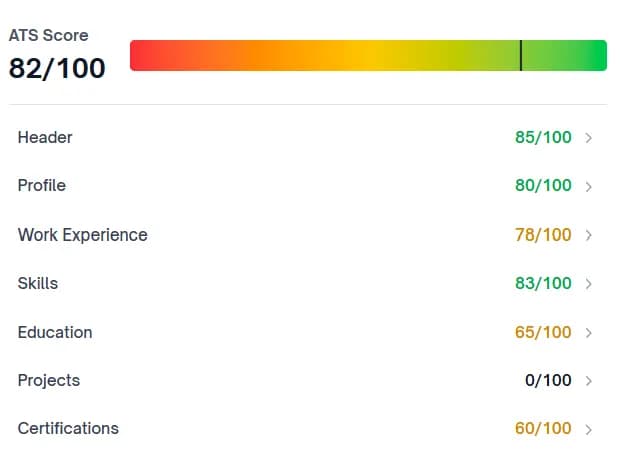
The ATS scoring feature is particularly useful for transitions. It shows you whether your resume is registering the keywords your target role requires, so you can adjust your framing before applying rather than after getting filtered out.
The flexible section structure lets you lead with a strong professional summary and a transferable skills block before your work history, which is the most effective format for most career changes.
Best for: Career changers who want both content guidance and ATS feedback in one tool, particularly those moving into roles where keyword alignment matters.
2. Enhancv
Why it works for career changers: Custom section types let you highlight projects, achievements, and skills outside the standard work history format.
Enhancv is one of the few resume builders that actively encourages non-chronological structure. You can add sections for key projects, courses, personal achievements, and strengths that sit alongside or above your work history. For career changers with relevant experience that doesn't fit neatly into a job title, this flexibility is genuinely useful.
The templates are visually distinct from most tools, which works well for creative and communications roles where presentation is part of the evaluation. For corporate or technical roles with heavy ATS screening, the design-forward layouts may need extra ATS testing.
Best for: Career changers in creative, communications, or portfolio-based fields who need to present non-traditional experience.
3. Rezi
Why it works for career changers: Job description matching shows exactly which keywords your career change framing is missing.
Rezi's core feature is scoring your resume against a specific job description. For career changers, this is valuable because it removes the guesswork about whether your reframing is landing correctly. You can see which keywords from the target role are present in your resume and which ones need to be incorporated.
The limitation is structural flexibility. Rezi is optimized for chronological formats and doesn't offer the skills-first or hybrid layouts that career change resumes often benefit from. It's most useful as an optimization step after you've structured your resume in a more flexible tool.
Best for: Career changers who want to verify their keyword alignment against specific job descriptions before applying.
4. Kickresume
Why it works for career changers: AI content suggestions pull from real job posting language, which helps you reframe experience in industry-appropriate terms.
Kickresume's AI writing assistance is more context-aware than most tools. It generates bullet point suggestions based on the job title and industry you're targeting, which helps career changers find the right language for their new field. This is particularly useful if you're unsure how your previous experience translates into the vocabulary of your target industry.
The structural flexibility is decent, though not as strong as Enhancv or Yotru for non-linear formats. The free tier is limited, but the paid plan is reasonably priced.
Best for: Career changers who need help translating their experience into the vocabulary and framing of their target industry.
Hint
When using any AI writing tool for a career change, review all suggestions critically. AI-generated bullet points reflect common patterns in job postings, not your specific achievements. Use them as a starting point, then rewrite with your actual results and numbers.
5. Novoresume
Why it works for career changers: Clean section customization and a strong summary area help you lead with your transferable narrative.
Novoresume lets you customize the order and emphasis of sections more than most tools, which matters for career changers who need to lead with skills or a summary rather than job titles. The free tier restricts you to one page, which can actually be a useful constraint during a career change -- it forces you to be selective about what to include.
Best for: Professionals making a lateral or adjacent career move who want a polished, well-structured output.
6. Canva
Why it works for some career changers: Full layout control lets you design a resume that centers your skills and projects visually.
For career changes into design, marketing, communications, or other visual fields, Canva's flexibility lets you create a resume that reflects the industry you're moving into. You can prioritize whatever sections matter most.
The significant limitation is ATS compatibility. Canva resumes frequently fail automated screening. If your target roles use ATS (most corporate, tech, and large-organization roles do), Canva is a risky choice regardless of how good the design looks.
Best for: Career changers moving into creative or design-forward roles where resumes are reviewed by humans rather than screened by ATS.
Important
Career change resumes built in Canva often fail ATS screening because of multi-column layouts and embedded graphics. If you're applying to roles that use automated screening, use an ATS-compatible tool or verify Canva output with an ATS checker before submitting.
How to Structure a Career Change Resume
The tool you use matters less than how you structure the content. Here's what works for most career transitions:
- Lead with a targeted professional summary. Two to four sentences that position you for the role you want, not the role you've had. Name the target field, your most transferable strengths, and one or two concrete outcomes from your background.
- Add a transferable skills section. List six to ten skills that are directly relevant to your target role. Include both hard skills you've developed and soft skills that transfer across industries. Keep it specific -- "project management" is too broad, "managing cross-functional product launches with budgets over $500K" is not.
- Reframe your work history around transferable achievements. Don't just list what you did in your previous roles. Identify the results and skills from each role that apply to your target field. A marketing background entering operations can lead with stakeholder communication, data analysis, and campaign budget management -- all of which transfer.
- Include relevant education, courses, or certifications. If you've completed any training related to your target field, include it. Even a short course demonstrates intentional preparation for the change.
- Keep the format ATS-compatible. Use a single or hybrid column layout. Avoid graphics, text boxes, and unusual fonts. A career change resume is more likely to face skeptical human review -- it doesn't also need to fail automated screening.
See how Yotru helps career changers build targeted resumes
Common Career Change Resume Mistakes to Avoid
- Keeping a job-title-first structure. If your most recent title doesn't reflect your target field, leading with it frames you in the wrong direction immediately.
- Using jargon from your old industry. Terms that signal expertise in your previous field may not translate to your new one. Use language from job postings in your target field to describe your transferable skills.
- Leaving out quantified results. Numbers make transferable claims concrete. "Managed a team" tells a hiring manager little. "Managed a team of eight across three time zones, delivering a platform migration six weeks ahead of schedule" tells them a lot.
- Writing a generic objective statement. An objective that says "seeking a role where I can apply my skills" signals uncertainty. A strong professional summary that names the target role and articulates specific value signals intentionality.
- Applying before verifying keyword alignment. Career change resumes often miss the keywords of the target field because they're written from the perspective of the previous one. Run your resume through an ATS checker or keyword analysis tool before submitting.
ATS-Optimized resumes That Meet Employer Standards
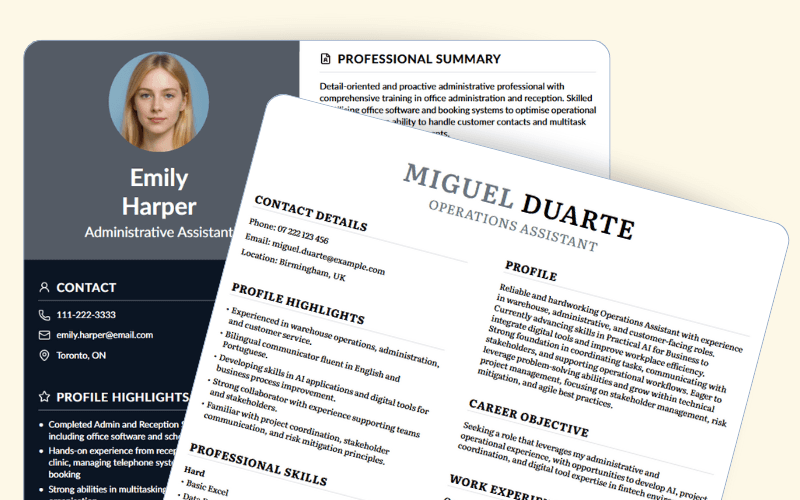
Our AI-powered scoring system helps organizations assess and standardize resume quality at scale. ATS-compliant templates support consistent formatting, keyword alignment, and interview readiness across cohorts.
About the Author

Lakshmi Reddy
Career Specialist
Lakshmi Reddy
Career Specialist
Lakshmi is a seasoned Career Specialist, contributing research and insights on hiring trends, resumes, and career pathways.
Frequently Asked Questions
For career changers, the best resume builders are ones that support flexible section structure, skills-first layouts, and ATS scoring against target roles. Yotru and Enhancv are the strongest options for non-linear career paths. Yotru adds ATS scoring and keyword alignment that Enhancv doesn't include. Rezi is useful specifically for verifying keyword alignment once you have a draft.
Audience Context
For job seekers evaluating resume builders, including those exploring career changes. Focuses on how different tools handle structure, content guidance, and ATS performance when repositioning experience for new roles.
Disclaimer
This article is published by Yotru and includes comparisons of third-party tools. Yotru is not affiliated with, endorsed by, or partnered with the brands mentioned. All trademarks belong to their respective owners.
Further Insights
- Hiring Trends in the United States — U.S. job growth and employer priorities
- ATS-Friendly Resume Builders — ATS guide for U.S. applicants
- Job Search Strategies Now — Tactics beyond the resume
- AI vs. Traditional Resume Tools — Which tool type fits your needs
- Ultimate Guide to Resume Builders — Full landscape overview for 2026
- Best Resume Builder Apps — Builder options by career stage
- Resume Tips for Gen Z — Formatting for younger applicants
- Canadian Resume for Int'l Students — Applying in a new country
- ATS-Friendly Resume Builders — ATS compliance for entry-level
- Top 10 Free Resume Builders — No-cost builder options reviewed
Teal vs ChatGPT for Job Seekers — Tracker tool vs general AI - Kickresume vs ChatGPT for Resumes — Design-first vs text generation
- Rezi vs ChatGPT for Resume Building — ATS builder vs open AI
- Enhancv vs ChatGPT for Resumes — Visual builder vs raw AI
- Is Jobscan Better Than ChatGPT? — Keyword tool vs AI writing
- AI Resume Builder vs ChatGPT — Structured AI vs open AI
- How to Use ChatGPT for Resumes — Prompts, limits, and better tools
- Can ChatGPT Resumes Get You Rejected? — AI risk in real hiring
References
- U.S. Bureau of Labor Statistics. (2025). Current employment statistics. https://www.bls.gov/ces/
- Equal Employment Opportunity Commission. (2024). Pre-employment inquiries and equal employment opportunity. https://www.eeoc.gov
- U.S. Department of Labor. (2025). Occupational outlook handbook. https://www.bls.gov/ooh/
- Society for Human Resource Management. (2025). Talent acquisition benchmarking report. https://www.shrm.org
- LinkedIn Talent Solutions. (2025). Future of recruiting. https://business.linkedin.com/talent-solutions
- Greenhouse Software. (2025). State of hiring report. https://www.greenhouse.com
- iCIMS. (2025). Workforce report. https://www.icims.com/resources
- Pew Research Center. (2024). Work and workers in the United States. https://www.pewresearch.org
- Harvard Business Review. (2025). How hiring has changed in the post-pandemic U.S. labor market. https://hbr.org
- National Bureau of Economic Research. (2024). Resume screening and labor market outcomes. https://www.nber.org
Maintained by: Employability & Skills Group at Yotru
Review cycle: Updated regularly
Last updated: April 14, 2026
Questions or Need Support?
If you are working on employability programs, hiring strategy, career education, or workforce outcomes and want practical guidance, you are in the right place.
Yotru supports individuals and organizations navigating real hiring systems. That includes resumes and ATS screening, career readiness, program design, evidence collection, and alignment with employer expectations. We work across education, training, public sector, and industry to turn guidance into outcomes that actually hold up in practice.