
Market
9 min read
Jobs in Australia 2026: Hiring Trends + Salaries
Synopsis
Australia enters 2026 with 4.2% unemployment and strong demand in healthcare, trades, and tech. Learn where hiring is strongest and what you'll earn.
Australia enters 2026 with unemployment at 4.2%, well above the near 50-year low of 3.5% reached in September 2022, but according to Jobs and Skills Australia, approximately 29% of assessed occupations still face national shortages, with critical demand persisting in health, education, construction, and regional trades. This guide explains where hiring is strongest in Australia, which skills matter most, and how to tailor your resume with Yotru's resume builder to stand out in a more selective market.
Key Insight
Australian employers like clear, simple resumes that show what you’ve actually done. Focus on real results, relevant experience, and easy-to-read formatting. Keep it practical, honest, and tailored to the job.
Whether you're an Australian seeking better opportunities, a recent graduate entering the workforce, or an international worker considering migration, understanding the current labor market is essential for making informed career decisions.
| Australia 2026: labor market at a glance | ||
|---|---|---|
| Indicator | 2026 estimate | Job Outlook |
| Unemployment rate | 4.2% (stable from mid-2025) | Medium |
| Job vacancy level | Declining from peak; more selective hiring | Medium |
| Top shortage sectors | Healthcare, skilled trades, technology, education | High |
| Real wage trend | 3.4% nominal growth; 1.3% real growth after inflation | Medium |
| Strongest profiles | Health professionals, qualified tradies, and software engineers | High |
Sources: Australian Bureau of Statistics, Jobs and Skills Australia, Reserve Bank of Australia
Hint
In Australia, having the right industry license often matters more than your job title. Employers hire faster when you’re already certified and ready to work.
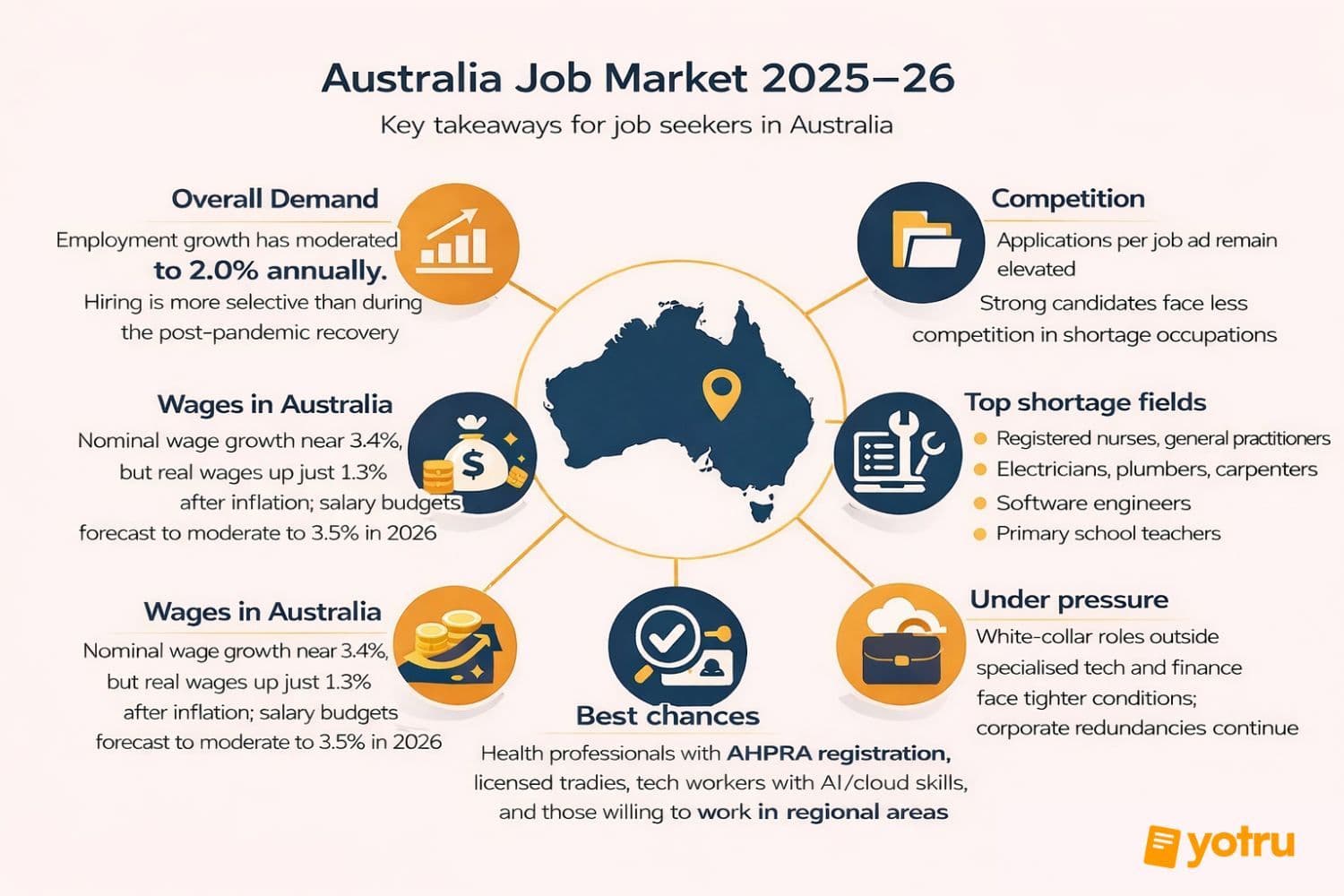
Key takeaways for job seekers in Australia
- Overall demand: Employment growth has moderated to 2.0% annually, with more selective hiring compared to the pandemic recovery period
- Competition: Applications per job ad remain elevated; strong candidates face less competition in shortage occupations
- Top shortage fields: Registered nurses, general practitioners, electricians, plumbers, carpenters, software engineers, and primary teachers
- Under pressure: White-collar roles outside specialized tech and finance face tighter conditions; corporate redundancies continue
- Wages in Australia: Nominal growth of 3.4%, but real wages (after inflation) up just 1.3%; salary budgets forecast to moderate to 3.5% in 2026
- Best chances: Health professionals with AHPRA registration, qualified tradies with licenses, tech workers with AI/cloud skills, and those willing to work in regional areas
Jobs in Australia by sector
Healthcare jobs in Australia
Healthcare and social assistance leads all industries, accounting for 14.6% of total payroll and contributing 21.6% of total employment growth. With Australia's aging population and expanding health services, healthcare professionals remain among the nation's most in-demand workers.
Salary in Australia:
- Registered nurses: $75,000–$100,000 (entry to experienced)
- General practitioners: $100,000–$300,000+
- Medical specialists: $150,000–$500,000+
- Allied health professionals: $70,000–$95,000
- Strongest demand: Regional areas, aged care facilities, mental health services
Who's hiring:
- Registered nurses — All health professional occupations show persistent shortages, with 48% of professional group occupations in shortage in 2023
- General practitioners and resident medical officers — Critical shortages in regional and rural areas
- Aged care workers — Expanding sector driven by demographic trends
- Mental health professionals — Growing recognition of mental health needs across all age groups
What you need:
- Registration: AHPRA registration required for most clinical roles; credential assessment timeline varies by profession
- English proficiency: OET or IELTS required for international applicants; clinical communication standards are high
- Clinical experience: Australian employers prefer local experience or supervised practice periods
- Specializations: Mental health, aged care, critical care, and rural health command premiums
Job posting signals: "AHPRA registration essential," "experience in aged care preferred," "rural/regional incentives available"
Hint
Queensland's 2025–2026 public agreement starts graduate nurses at $85,236, one of the highest in the country. Consider states with competitive public sector rates if you're early in your career.
If you're applying from abroad:
- AHPRA registration can take 6–12 months; begin the process before arrival if possible
- Some states offer supervised practice pathways while registration is finalized
- Target regional areas for faster placement and often higher total compensation packages
- Tailor your resume to emphasize patient ratios, technology systems, and regulatory frameworks
- Be prepared for practical assessments and competency verification
How Yotru helps: Yotru's resume builder helps healthcare professionals translate international experience into Australian-format resumes that highlight AHPRA requirements and clinical competencies employers actually search for.

Skilled trades and technical jobs in Australia
Technicians and trades workers face the highest shortage rates, with 50% of occupations in the category assessed as being in national shortage, and all occupations in construction trades and food trades found to be in shortage nationally.
Salary in Australia:
- Electricians: $70,000–$120,000 (residential to industrial; solar specialists earn premium)
- Plumbers: $75,000–$110,000 (experienced tradies can exceed $90,000)
- Carpenters: $60,000–$90,000 (leading hands and builders earn significantly more)
- Fitters and turners: $75,000–$105,000 (precision work commands higher rates)
- Strongest demand: Western Australia (mining), Queensland (construction), regional areas across all states
Who's hiring:
- Electricians (all specializations) — Residential, commercial, industrial, and renewable energy sectors
- Plumbers and gasfitters — New construction, maintenance, and regulatory compliance work
- Carpenters and joiners — Housing construction, renovations, and commercial fit-outs
- Metal fabricators and welders — Manufacturing, mining, and infrastructure projects
What you need:
- Licensing: State-specific trade licenses required; transferability varies between states
- Qualifications: Certificate III (minimum) in relevant trade; additional certifications increase earning potential
- Experience: Australian employers value local building codes, standards, and work health safety knowledge
- Tools and transport: Many positions require your own tools and reliable transport
Job posting signals: "Licensed electrician required," "all tickets and tools," "immediate start," "FIFO opportunities available"
Pro Tip
Western Australia's mining sector often pays 60–80% above national median wages for qualified electricians and fitters. If you're willing to work fly-in, fly-out (FIFO), research opportunities in Perth and regional mining towns.
If you're applying from abroad:
- Skills assessment through TRA (Trades Recognition Australia) typically takes 3–6 months
- Some trades require Australian work experience or supervised practice before full licensing
- Regional Sponsored Migration Scheme (subclass 494) offers pathways for trades in regional areas
- Emphasize your certifications, safety training, and any experience with Australian standards
- Consider starting with labor-hire firms to build local experience and references
How Yotru helps: Yotru's resume builder helps tradies present their certifications, licenses, and project experience in formats that pass ATS systems and highlight compliance with Australian standards.

IT and engineering jobs in Australia
Most jobs will change in some way due to AI augmentation, and SEEK job ads referencing AI skills have climbed sharply, with more roles now designed with AI-enabled tools and productivity in mind.
Salary in Australia:
- Software engineers: $105,000–$150,000 (mid-level to senior)
- AI/machine learning specialists: $150,000–$280,000
- Cloud architects: $140,000–$200,000 (20–30% premium over general software roles)
- DevOps engineers: $120,000–$170,000
- Front-end developers: $90,000–$150,000
- Strongest demand: Sydney, Melbourne, Brisbane; remote roles increasingly common
Who's hiring:
- Software engineers and developers — Full-stack, front-end, back-end across industries
- Cloud and infrastructure specialists — Migration to cloud platforms continues across sectors
- AI and machine learning engineers — Emerging demand; specialized skills command significant premiums
- Cybersecurity professionals — Persistent shortages as organizations prioritize security
What you need:
- Skills alignment: Employers prioritize practical experience over credentials; portfolio and GitHub contributions matter
- Technology stacks: Python, JavaScript, React, AWS/Azure, Kubernetes, and machine learning frameworks in high demand
- AI literacy: Familiarity with AI tools and ability to integrate them into workflows increasingly expected
- Communication: Ability to work with non-technical stakeholders; remote work requires strong async communication
Job posting signals: "experience with AWS/Azure," "Python and machine learning," "remote-first team," "AI integration experience"
If you're applying from abroad:
- Skills assessment through ACS (Australian Computer Society) typically straightforward for software roles
- Many tech employers sponsor visas; demonstrate specialized skills or niche expertise
- Remote work arrangements sometimes available before relocation
- Emphasize contributions to open-source projects, certifications (AWS, Azure, Kubernetes), and measurable impact
- Research salary benchmarks by city; Melbourne and Sydney rates are highest but cost of living is also elevated
How Yotru helps: Yotru helps tech professionals build resumes that highlight technical skills, project outcomes, and technology stacks in formats optimized for both ATS and technical hiring managers.
Office, admin, and customer service jobs in Australia
White-collar employment outside specialized fields faces more challenging conditions in 2026. White-collar employment is expected to grow by just 1.5% in 2025–26, supported by a rebound in finance and ongoing gains in public administration roles.
Salary in Australia:
- Administrative officers: $55,000–$75,000
- Executive assistants: $70,000–$95,000
- Customer service managers: $65,000–$90,000
- Office managers: $70,000–$85,000
Market reality: Corporate redundancies continue in 2026, and applications per job ad remain elevated. Competition is strongest in general administrative roles, while specialized positions (legal secretaries, medical receptionists, finance administrators) face less pressure.
What you need:
- Digital tools: Proficiency in Microsoft 365, CRM systems, and collaboration platforms
- Specialization: Industry-specific knowledge (legal, medical, finance) significantly improves prospects
- Customer focus: Demonstrated ability to manage relationships and resolve issues
- Adaptability: Employers value workers who can handle multiple systems and changing priorities
How Yotru helps: Office workers can use Yotru's resume builder to emphasize transferable skills, software proficiency, and quantifiable achievements that differentiate them in competitive application pools.
Education and manufacturing snapshot
Education jobs in Australia:
- Persistent shortages for primary school teachers, early childhood educators, and special education teachers
- Entry salaries: $70,000–$80,000; experienced teachers: $90,000–$110,000+
- Bachelor's degree or graduate certificate in education required
- Strong demand in regional areas; metro positions more competitive
- Full registration with state teaching authority essential
Manufacturing jobs in Australia:
- Blue-collar workforce expected to face modest contraction in 2026 due to weakness in industrial, retail, and wholesale sectors
- Specialized roles (CNC machinists, quality control, technical roles) remain stable
- Entry salaries: $55,000–$70,000; skilled technical roles: $75,000–$95,000
- Certifications and technical training improve prospects significantly

What's changing in the Australia job market
Skills matter more than credentials
Jobs and Skills Australia forecasts that over half of new jobs by 2028 will require vocational qualifications, yet apprenticeship commencements remain below pre-pandemic levels. Employers increasingly prioritize demonstrated competence over formal degrees.
What this means:
- Portfolios and certifications: Tech workers benefit from GitHub contributions, cloud certifications, and practical projects
- Micro-credentials: Short courses and industry-recognized certifications help workers pivot or upskill
- Apprenticeships valued: Completing a trade apprenticeship provides clearer pathways than many bachelor's degrees
- Skills-first hiring: More employers use skills-based assessments rather than credential screening alone
Digital baseline with uneven AI adoption
SEEK job ads referencing AI skills have climbed sharply, with more roles designed with AI-enabled tools and productivity in mind. However, adoption remains uneven across industries and company sizes.
What this means:
- AI familiarity expected: Entry-level workers should understand AI tools relevant to their field
- Productivity focus: Employers value workers who can leverage technology to work more efficiently
- Not universal: Many traditional sectors still prioritize core trade or professional skills over tech fluency
- Learning mindset: Willingness to adopt new tools matters as much as current expertise
Wages and benefits in Australia
Wage growth in Australia reached 3.4% in the September 2025 quarter, but real wage growth was just 1.3% after accounting for inflation. Salary budgets are forecast to moderate further in 2026.
What this means:
- Selective increases: Highest wage growth in shortage occupations (health, trades, specialized tech)
- Public sector gains: Public sector wages grew 3.8%, slightly above private sector at 3.2%
- Cost-of-living pressure: Real purchasing power growing slowly; workers prioritize total compensation
- Negotiation leverage: Shortage occupation workers have stronger bargaining position; others face modest raises
Getting started: what you need to know
Reality check for working in Australia
Credential recognition takes time
- Skills assessment timelines: 3–12 months depending on profession and assessing authority
- Health professions through AHPRA can take 6–12 months for full registration
- Trades through TRA typically 3–6 months; may require Australian work experience
- Some professions offer provisional registration or supervised practice pathways
Language matters more than you think
- IELTS or OET required for most skilled migration pathways; minimum scores vary by occupation
- Clinical and customer-facing roles require high proficiency; communication failures have serious consequences
- Workplace English includes idioms, humor, and cultural references that formal tests don't capture
Hiring timelines in Australia
- Typical process: 4–8 weeks from application to offer for most roles
- Public sector: Often 8–12 weeks due to additional approval processes
- Shortage roles: Can move quickly (2–4 weeks) if you meet all requirements
Contract types vary
- Permanent full-time preferred by most workers; includes leave entitlements and job security
- Casual employment common in retail, hospitality, education; 25% pay loading but no leave
- Fixed-term contracts (6–12 months) used for projects or maternity cover
Important
Many international workers accept casual contracts thinking they're temporary pathways to permanent roles. In Australia, casual employment can continue indefinitely without conversion to permanency unless specific conditions are met under Fair Work regulations. Understand your contract type and conversion rights before accepting offers.
Cost of living varies dramatically
- Sydney and Melbourne: Significantly higher housing, transport, and general living costs
- Brisbane, Adelaide, Perth: Moderate costs with growing employment opportunities
- Regional areas: Often 30–50% lower living costs; healthcare and trades roles offer regional incentives
Full visa and recognition details: Department of Home Affairs and Skills Assessment Bodies

Your job search game plan for Australia
If you're outside Australia:
- Start credential assessment early — Skills assessment takes months; begin before other preparations
- Research visa pathways — Skilled Independent (subclass 189), Skilled Nominated (190), or Regional (491) depending on your occupation
- Build Australian-format resume — Use Yotru's resume builder to create resumes that match Australian employer expectations and ATS requirements
- Target regional shortage areas — Regional sponsored visas offer additional points and often faster pathways
- Engage recruiters early — Labor-hire firms and recruitment agencies can provide market intelligence and job leads
If you're already in Australia:
- Verify your qualifications — Ensure credentials are recognized; upgrade if necessary
- Optimize your resume format — Australian resumes emphasize achievements and results; use Yotru to highlight measurable impact
- Network strategically — Industry associations, LinkedIn, and local networking events connect you with hiring managers
Pro Tip
Applications submitted early in the week (Monday–Tuesday) receive more attention than Friday applications. Hiring managers often review applications in batches early in the week and are more likely to respond quickly to strong candidates.
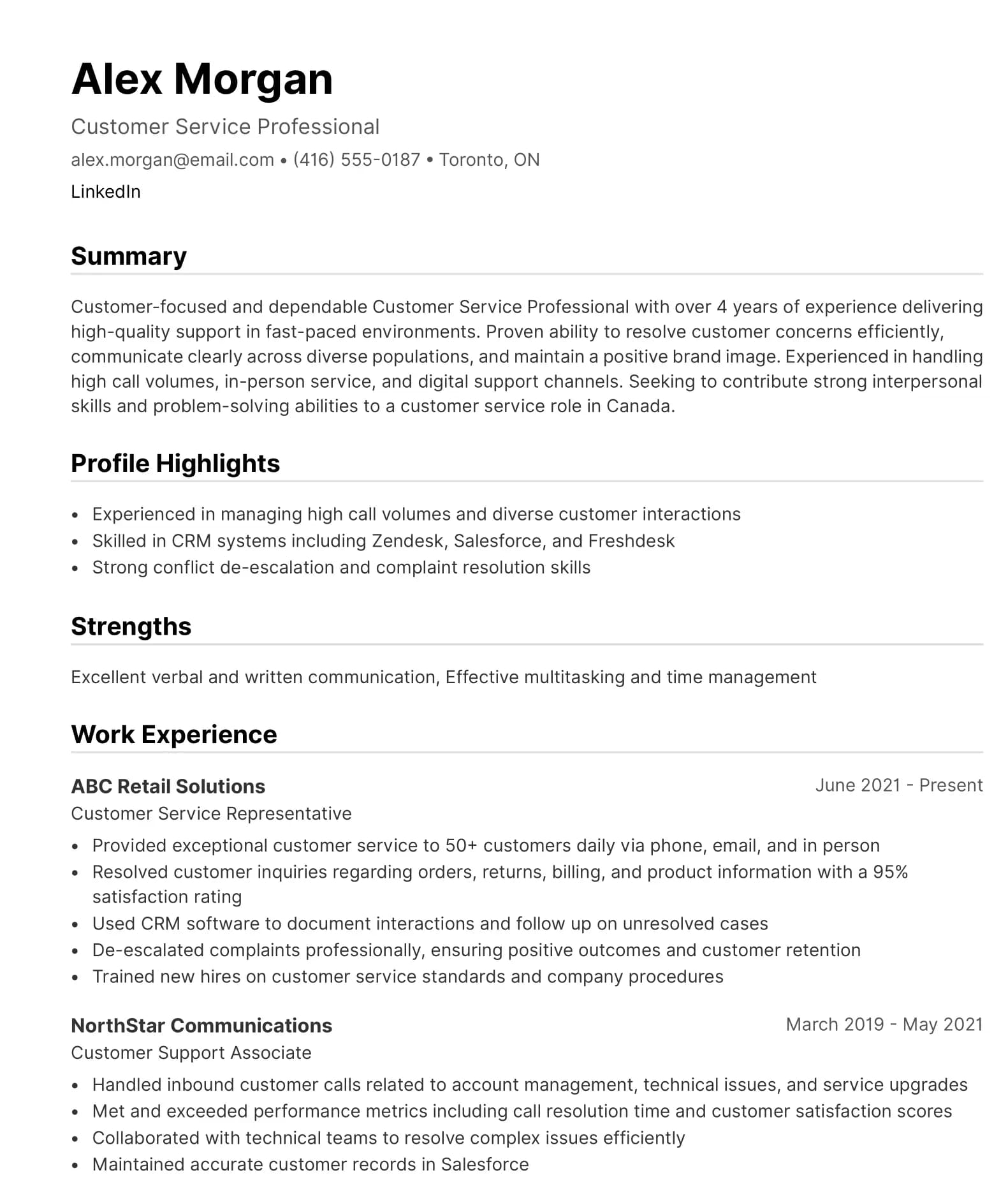
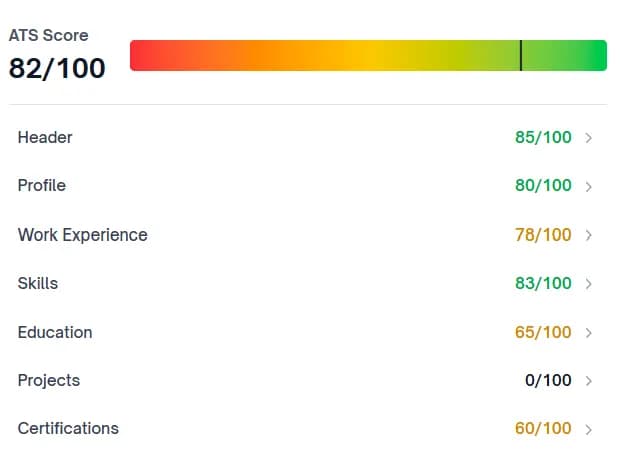
ATS-Optimized resumes That Meet Employer Standards
Our AI-powered scoring system helps organizations assess and standardize resume quality at scale. ATS-compliant templates support consistent formatting, keyword alignment, and interview readiness across cohorts.
Frequently asked questions
It depends on your occupation and qualifications. If you work in a shortage occupation—like registered nursing, electrical trades, or software engineering—and have completed skills assessment through the relevant authority (AHPRA, TRA, or ACS), employers actively recruit international workers. The challenge isn't finding opportunities; it's navigating the 3–12 month credential recognition process and meeting English proficiency requirements. Non-shortage occupations face much tighter conditions, with elevated competition and fewer visa sponsorship options.
About the Author

Team Yotru
Employability Systems
Team Yotru
Employability Systems
We build practical career tools for training providers and workforce programs, combining labor market insights with real employment outcomes. Follow us on LinkedIn.
Related Resources
Continue exploring related perspectives on career development, hiring trends, and workforce change.
Market and Research
- Hiring Trends in UK— UK job market outlook examining sectors hiring international workers, language requirements, and skilled migration pathways.
- Hiring Trends in Ireland— Ireland job market guide for international professionals, including tech sector demand and English-language opportunities.
- Hiring Trends in the United States— U.S. labor market conditions showing easing demand and persistent sectoral shortages.
- Hiring Trends in Canada — Canadian labor market outlook examining regional variations and skill requirements.
- Professional Networking Strategies— How to Build Connections That Lead to Career Opportunities
Resume Building and Optimization
- Make Your Resume ATS-Friendly in 5 Minutes— Simple, fast changes that help your resume pass applicant tracking systems without keyword stuffing.
- Single vs Double Column Resumes— ATS parsing works with both; keyword matching matters more than layout
- How to Target Job Keywords in Your Resume— A practical guide to matching your resume to job postings using the right keywords, naturally.
- AI Resume Builders vs Traditional— AI tools act as coaches and optimizers; traditional stops at formatting
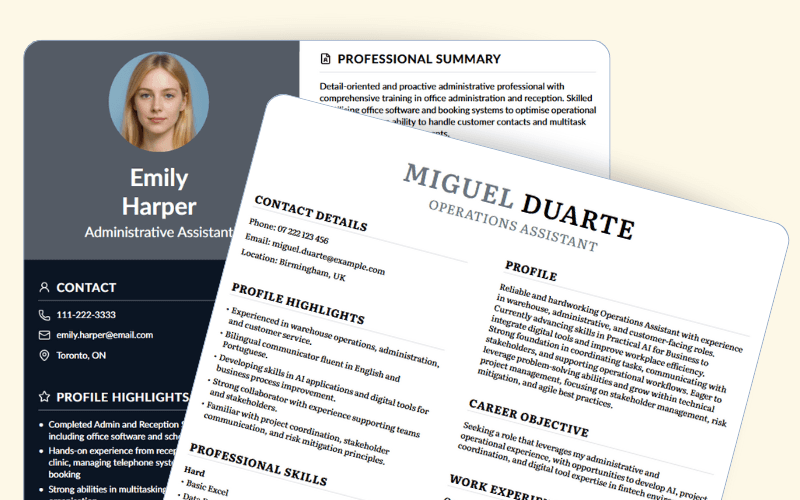
Example Resume Profiles
- Accounting Assistant (Melbourne)— Australian-based candidate; accountants in demand at all levels
- Emergency & ICU Physician (Critical)— Healthcare professionals: 48% of occupations in national shortage
- Senior Executive Assistant— Strategic Partner to C-Suite
- IT Infrastructure Technician— IT support roles stable; cloud/infrastructure skills in demand
Audience Context
This content is designed for job seekers, career changers, and workforce professionals navigating the Australian labor market. It explains where demand exists, how hiring decisions are made, and how individuals can align their skills, experience, and credentials with employer expectations in Australia.
References
- Australian Bureau of Statistics (ABS) — Unemployment 4.3%, employment 14.7M, participation 66.8%.
- Jobs and Skills Australia — 29% occupations in shortage, health/trades demand.
- Reserve Bank of Australia (RBA) — Wage growth easing, inflation 3.7% by mid-2026.
- Australian Bureau of Statistics (ABS) — Wage Price Index +0.8% q/q, 3.4% annual.
- Department of Home Affairs — Skilled Occupation Lists, subclass 189/190 visas.
- Australian Health Practitioner Regulation Agency (AHPRA) — IQRN registration 1-6 months streamlined.
- Trades Recognition Australia (TRA) — Trade skills assessment provisional 90 days.
- Fair Work Ombudsman/Fair Work Commission — Minimum wage +3.5% to $24.95/hour July.
- Deloitte Access Economics — Employment forecasts, construction/health growth.
- Mercer Australia — Salary budgets +3.5%, remuneration with 3.4% wages.
- Australian Bureau of Statistics (ABS) — Labour Force: hours 1,994M, underemployment 5.9%.
- Jobs and Skills Australia — Construction acute shortage, productivity insights.
Research Methodology
This analysis draws on publicly available data from Australian government agencies, labor market institutions, and international economic sources. It integrates employment statistics, sector-level demand indicators, and workforce projections to reflect current and emerging trends in Australia.
Salary Data Normalization
Salary figures reflect estimated annual gross earnings in Australian dollars (AUD) before taxes. Data is normalized using aggregated job postings, government labor statistics, and employer-reported ranges to account for regional variation, role seniority, and market conditions. Actual compensation may vary based on experience, employer, location, and negotiated terms.
Editorial Standards
All content is developed using verified public data and reviewed for clarity, accuracy, and neutrality. Insights are grounded in observable labor market trends rather than promotional claims. Information is updated periodically to reflect changes in economic conditions, policy, and hiring demand.
Disclaimer
This content is provided for informational purposes only and does not constitute legal, immigration, or career advice. Readers should consult official government sources or qualified professionals before making employment or relocation decisions.
Maintained by: Labor Intelligence Group at Yotru
Review cycle: Monitored as market conditions evolve
Last updated: December 31, 2025
Questions or Need Support?
If you are working on employability programs, hiring strategy, career education, or workforce outcomes and want practical guidance, you are in the right place.
Yotru supports individuals and organizations navigating real hiring systems. That includes resumes and ATS screening, career readiness, program design, evidence collection, and alignment with employer expectations. We work across education, training, public sector, and industry to turn guidance into outcomes that actually hold up in practice.