
Employability
4 min read
Resume Builder That Passes ATS Scans
Synopsis
Applicant tracking systems reject a large portion of resumes before a recruiter sees them. This guide explains what a resume builder needs to do to help your resume pass ATS scans.
Most job applications don't fail at the interview stage. They fail much earlier — when an applicant tracking system (ATS) parses your resume and can't read it correctly.
ATS software is used by the majority of mid-size and large employers to filter incoming applications before a recruiter reviews them. If your resume doesn't meet the structural and formatting requirements these systems expect, it may be scored poorly or excluded from the shortlist entirely — regardless of how qualified you are.
This article explains what ATS systems actually look for, what a resume builder needs to do to help you pass those scans, and what to check before you submit any application.
How ATS Systems Work
ATS platforms don't read your resume the way a person does. They parse your document into structured data — extracting job titles, dates, skills, education credentials, and contact information — and then score that data against the requirements set by the hiring team.
If your resume uses design elements that disrupt parsing — multi-column layouts, text boxes, graphics, tables, or unusual fonts — the ATS may misread or skip sections entirely. A resume that looks polished in a PDF viewer can appear incomplete or unstructured to an ATS.
The score your resume receives depends on how well it matches the job description. This is typically assessed through keyword matching: the ATS checks whether the terms in your resume correspond to the skills, qualifications, and role terminology in the posting.
Understanding this helps clarify what "ATS-friendly" actually means. It's not just about clean design. It's about using the right words in the right places, in a format the system can read accurately.
The ATS-friendly resume guide explains the full process and common mistakes that cause rejection.
Key Insight
ATS systems don't penalize you for simplicity. A plain, well-structured resume almost always outperforms a designed one when it comes to machine parsing.
What Makes a Resume Builder ATS-Compliant
Not every resume builder is built with ATS compatibility in mind. Many prioritize visual design, offering templates with graphic headers, skill bars, columns, and icons — all of which can create parsing problems.
When evaluating a resume builder for ATS compliance, look for these features:
- Single-column output. Multi-column layouts confuse most ATS parsers, which read left to right and top to bottom. A single-column resume reduces parsing errors significantly. The resume column debate is worth understanding before you choose a template.
- Standard section headers. ATS systems recognize conventional labels: Work Experience, Education, Skills, Certifications. Custom headers like "My Journey" or "Where I've Been" may not be recognized and can cause that content to be missed.
- Clean font choices. Decorative or display fonts are often not parsed correctly. Standard fonts like Arial, Calibri, or Georgia are consistently readable by both humans and machines. The resume font guide covers safe choices in detail.
- No text boxes or graphics. Content placed inside text boxes, tables, or graphical elements is often skipped entirely by ATS parsers. All meaningful content should be in the main document body.
- Keyword alignment tools. A good ATS-focused builder will help you compare your resume against a job description and flag missing or underrepresented terms. This is the most direct way to improve your ATS score for a specific role.
- PDF export with proper encoding. Not all PDF files are equally readable. The export format matters — a PDF generated from a web-based builder using clean HTML renders differently than one created from a design tool. Look for a builder that confirms its exports are ATS-readable.
Keywords: The Most Important ATS Variable
Keyword matching is the primary mechanism most ATS platforms use to score resumes. The closer your resume language mirrors the job description, the higher your match score is likely to be.
This doesn't mean keyword stuffing. It means using the same terminology the employer uses, particularly for:
- Job title variants (e.g., "Customer Success Manager" vs. "Account Manager")
- Core technical skills and tools
- Certifications and credentials listed as requirements
- Industry-specific terminology
The resume keyword targeting guide walks through a practical process for extracting keywords from a job posting and integrating them naturally.
One thing to watch: some resume tactics that appear to improve ATS scores actually create problems. Hidden text — adding white-on-white keywords or invisible content — is flagged as manipulation by many modern ATS platforms. The hidden text risk article explains why this approach backfires.
Pro Tip
Copy the job description into a text editor and highlight every skill or requirement term. Then check your resume line by line against that list. This manual pass catches gaps faster than any automated tool.
Common ATS Failures and How to Avoid Them
These are the most frequent reasons a resume fails ATS screening:
- Headers and footers. Contact information placed in a document header or footer is routinely missed by ATS parsers. Put your name, phone number, email, and LinkedIn in the main body of the document.
- Unusual date formats. ATS systems are designed to extract employment dates. Formats like "Jan '22 – Mar '24" or "2022–present" may parse differently across platforms. Consistent use of "Month Year – Month Year" is the safest approach.
- Abbreviations without context. If your industry uses acronyms, spell them out at first mention. An ATS looking for "Search Engine Optimization" won't always match "SEO."
- Images of text. Some applicants submit a resume as a scanned image or photo rather than a text-based document. This is completely unreadable by ATS software.
- File type issues. Most ATS platforms accept PDF and .docx. Some older systems still handle Word documents better. Unless the job posting specifies, a well-formatted PDF from a trusted builder is generally safest.
You can run a quick check on your current resume using Yotru's ATS resume check, which identifies the most common structural issues.
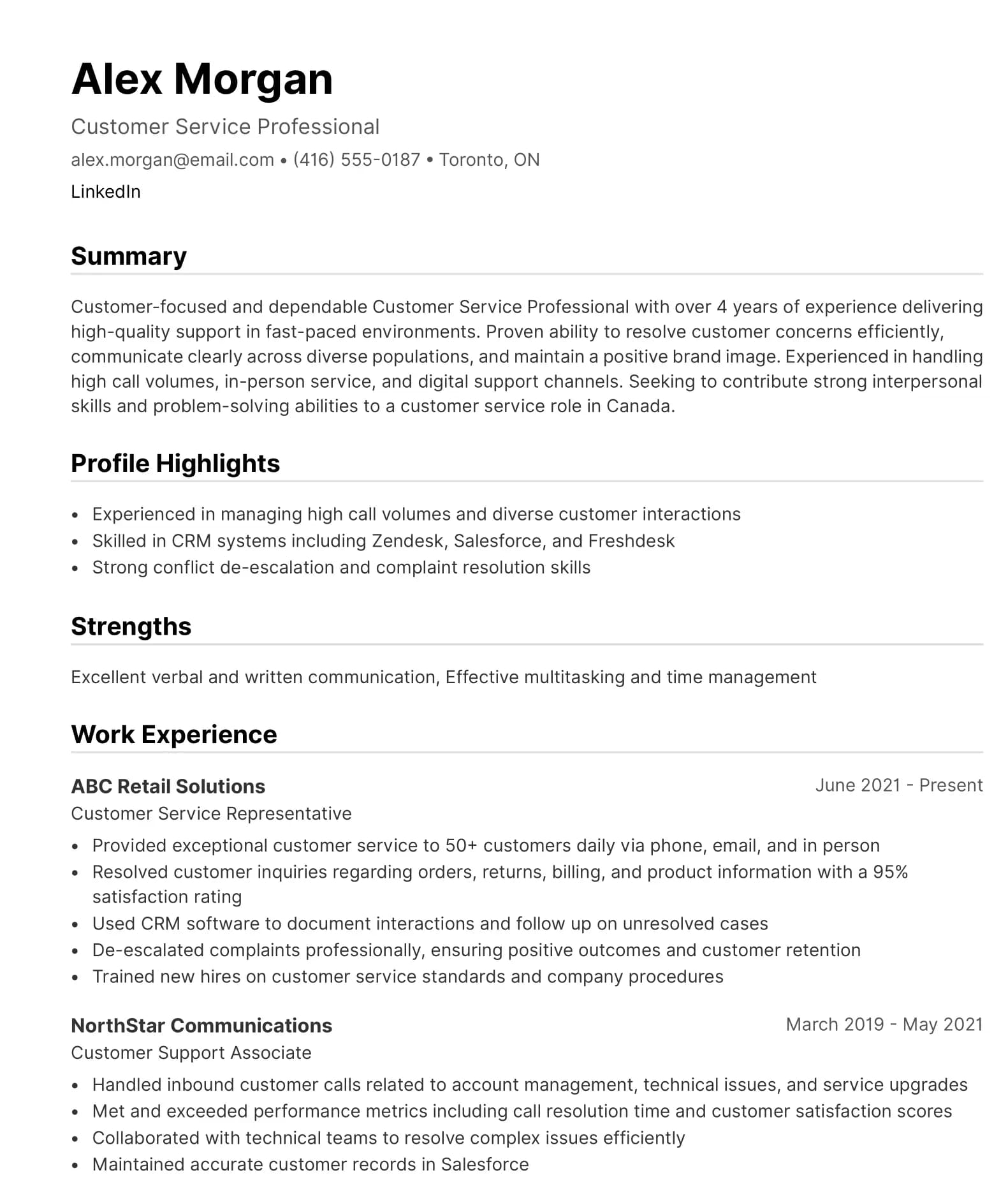
ATS-Optimized resumes That Meet Employer Standards
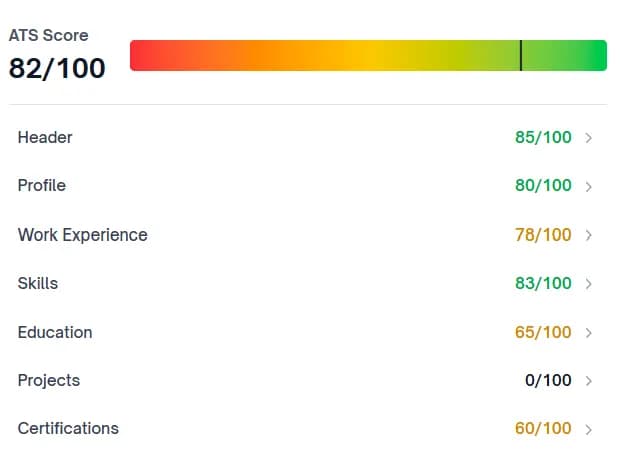
Our AI-powered scoring system helps organizations assess and standardize resume quality at scale. ATS-compliant templates support consistent formatting, keyword alignment, and interview readiness across cohorts.
Using a Resume Builder to Improve ATS Performance
A resume builder that's optimized for ATS doesn't just produce a clean template. It actively helps you improve keyword coverage, structure, and formatting before you submit.
Yotru's AI resume builder was developed with ATS compliance as a core feature. The platform analyzes your draft against job postings, flags missing keywords, and produces exports formatted for accurate machine parsing. It also avoids the design-heavy templates that look impressive in screenshots but underperform in real application pipelines.
If you're ready to build or update your resume with ATS in mind, you can get started here.
About the Author

Jeffrey Huis in't Veld
Co-Founder of Yotru
Jeffrey Huis in't Veld
Co-Founder of Yotru
Jeffrey is co-founder of Yotru, leading platform engineering and building scalable systems that support practical career and resume tools for institutions.
Frequently Asked Questions
An ATS-friendly resume builder creates resumes that can be correctly read by applicant tracking systems. It uses simple layouts, standard headings, and keyword alignment. Tools like Yotru are designed to help structure resumes so they pass ATS scans.
Audience Context
This guide is for job seekers who want to ensure their resume passes applicant tracking systems. It focuses on how ATS works, common failure points, and how resume builders can improve structure, keyword alignment, and readability.
Disclaimer
This content is for general guidance only. ATS behavior varies by employer and system. Using tools like Yotru can improve formatting and keyword alignment, but does not guarantee passing ATS scans, interviews, or hiring outcomes.
Further Insights
- ATS-Friendly Resume Builders — ATS compliance features to look for
- Make Your Resume ATS-Friendly — Fast audit checklist for ATS issues
- Resume Columns: Single vs. Double — How ATS handles column layouts
- How to Target Job Keywords — Extract and integrate keywords
- Hidden Text and Prompt Injection — Why hidden text tactics backfire
- Resume Builder for Laid-Off — Reframe displaced experience
- What to Do After a Layoff — Steps after large-scale job loss
- ATS-Friendly Resume Builders — Pass ATS when re-entering work
- Handle a Job Gap on Your Resume — Wording for employment gaps
- Top 10 Free Resume Builders — No-cost builder options reviewed
Teal vs ChatGPT for Job Seekers — Tracker tool vs general AI - Kickresume vs ChatGPT for Resumes — Design-first vs text generation
- Rezi vs ChatGPT for Resume Building — ATS builder vs open AI
- Enhancv vs ChatGPT for Resumes — Visual builder vs raw AI
- Is Jobscan Better Than ChatGPT? — Keyword tool vs AI writing
- AI Resume Builder vs ChatGPT — Structured AI vs open AI
- How to Use ChatGPT for Resumes — Prompts, limits, and better tools
- Can ChatGPT Resumes Get You Rejected? — AI risk in real hiring
- ChatGPT as a Resume Builder — What it does and doesn't do
References
- Society for Human Resource Management. (2025). Talent acquisition and applicant tracking systems. https://www.shrm.org
- LinkedIn Talent Solutions. (2025). Global talent trends report. https://business.linkedin.com/talent-solutions
- U.S. Bureau of Labor Statistics. (2025). Occupational outlook handbook. https://www.bls.gov/ooh/
- Greenhouse Software. (2024). How applicant tracking systems score resumes. https://www.greenhouse.com
- iCIMS. (2025). Workforce report: Hiring technology trends. https://www.icims.com/resources
- Oracle. (2024). HCM cloud: ATS functionality overview. https://www.oracle.com/human-capital-management/
- SAP SuccessFactors. (2024). ATS and candidate experience benchmarks. https://www.sap.com/products/hcm/recruiting.html
- Pew Research Center. (2024). AI and hiring: Worker perspectives. https://www.pewresearch.org
- Harvard Business Review. (2024). Hiring algorithms and their limitations. https://hbr.org
- National Bureau of Economic Research. (2024). Automation in hiring and selection. https://www.nber.org
Maintained by: Employability & Skills Group at Yotru
Review cycle: Updated regularly
Last updated: April 4, 2026
Questions or Need Support?
If you are working on employability programs, hiring strategy, career education, or workforce outcomes and want practical guidance, you are in the right place.
Yotru supports individuals and organizations navigating real hiring systems. That includes resumes and ATS screening, career readiness, program design, evidence collection, and alignment with employer expectations. We work across education, training, public sector, and industry to turn guidance into outcomes that actually hold up in practice.