
Employability
4 min read
Can ATS Read Two‑Column Resumes? (2026 Guide)
Synopsis
Yes, two‑column resumes can work in modern ATS when they’re built correctly, but single‑column layouts are still the safest option in 2026.
Modern ATS can read two‑column resumes if formatted right. Get the 6 critical 2026 best practices, avoid parsing errors, and choose the safest format
Key Insight
✓ Yes, Two-column resumes can work in modern ATS
⚠️ Single-column is still the safest option
Resume Columns ATS Compatibility Best Practices (2026)
Quick Answer (2025–2026 ATS Compatibility)
- Safest: Single-column, text-only resume with standard section headings.
- Two-column: Acceptable in modern ATS if built with native columns and no tables, text boxes, or images.
- Avoid: Tables used for layout, merged cells, icons or graphics, and headers or footers containing key information.
Important
Resume columns ATS compatibility best practices 2026 did not fundamentally change from 2025; confidence increased as modern ATS improved text normalization, while poor structure (tables, text boxes) remains the primary risk.
Can ATS read Two‑column resumes?
Yes, modern applicant tracking systems can read two‑column resumes when they are built correctly. The long‑standing belief that all resumes must be single column is outdated. Testing and official documentation from major ATS providers including Greenhouse, Workday, iCIMS, and SAP SuccessFactors show that column layout alone does not break parsing; problems occur only when formatting relies on elements that disrupt text extraction.
Hint
Resume columns ATS compatibility best practices prioritize clean structure and readable text. Single-column layouts are safest, but well-built two-column resumes also work when formatting is clear and validated.
What Is a Single Column Resume?
A single column resume presents all content in one continuous vertical flow. Sections appear in a clear top-to-bottom order, usually including:
- Contact information
- Professional summary
- Work experience
- Education
- Skills
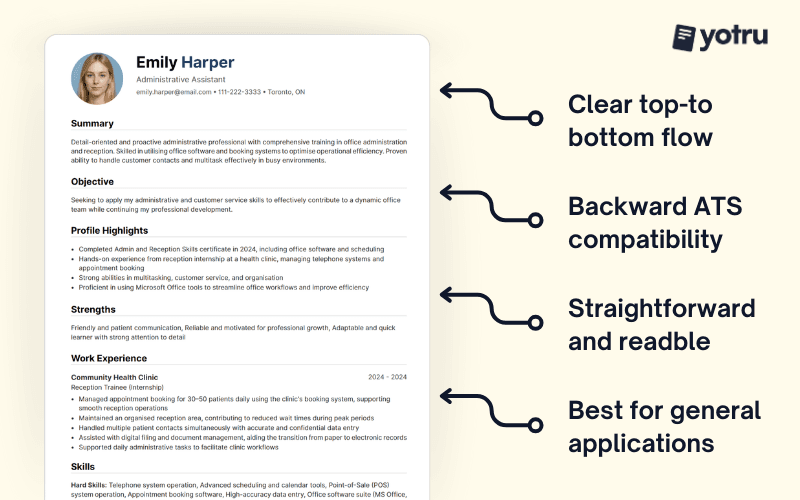
Simple, structured layout designed for maximum ATS compatibility and easy scanning
This layout is universally compatible with applicant tracking systems and remains the safest option when applying across many companies or older systems. It works especially well for early-career professionals or roles that do not require dense technical detail.
Pro Tip
Single column resumes eliminate ambiguity in reading order and reduce the chance of parsing errors.
What Is a Two Column Resume?
A two column resume divides content vertically, typically placing skills, tools, or certifications in a narrower column while reserving the main column for experience and education.
When structured correctly, two column layouts can:
- Improve visual hierarchy
- Reduce page length
- Make technical or skill-heavy profiles easier to scan
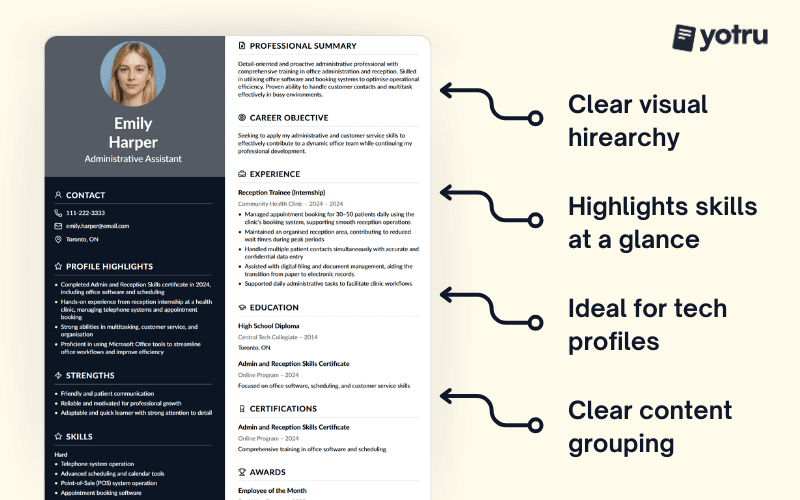
Structured two-column layout that balances visual clarity with ATS-friendly formatting.
The risk is not the layout itself, but how it is built.
How to make two‑column resumes ATS‑friendly
Yes. Modern ATS platforms can read two column resumes when they are created using native document formatting.
Platforms like Greenhouse, Workday, Lever, and iCIMS successfully parse documents that use proper column formatting in Word or Google Docs. Problems occur when layouts rely on:
- Text boxes
- Tables used for layout
- Embedded images
- Floating or layered elements
These objects disrupt the document’s logical reading order, causing parsing errors.
Important
Columns are safe. Text boxes are not.
What Actually Breaks ATS Parsing
Across all major systems, the same issues appear consistently:
- Text embedded inside images
- Scanned PDFs instead of text-based files
- Headers and footers containing key information
- Tables with merged cells
- Decorative icons or graphics used as text
- Nonstandard section titles
None of these issues are caused by using columns. They stem from how the content is embedded.
ATS Platform-Specific Resume Column Compatibility (iCIMS, Jobscan, Greenhouse, Workday)
- iCIMS: Reads single and native two-column resumes. Avoid tables, merged cells, and text boxes. Use standard headings and text-based files.
- Jobscan: Recommends single-column for lowest risk. Two-column resumes can work but are more likely to misparse if formatting is complex.
- Greenhouse: Parses clean two-column layouts when built with native columns. Text boxes, icons, and graphics cause most issues.
- Workday: Supports columns in text-based documents. Best results come from simple structure, left-aligned headings, and no layout tables.
These bullets give immediate, platform-specific guidance without overloading detail and can be expanded later into dedicated H3 sections if needed.
Why the “Two Column Resume Is Bad” Myth Exists
Early ATS platforms from the 2000s struggled with anything beyond plain text. At that time, recommending single-column resumes made sense.
Modern systems now use natural language processing. Greenhouse, for example, understands semantic relationships between phrases such as “led a team of five” and “managed five direct reports.”
Despite this progress, outdated advice continues circulating online, leading many job seekers to avoid visually effective layouts unnecessarily.
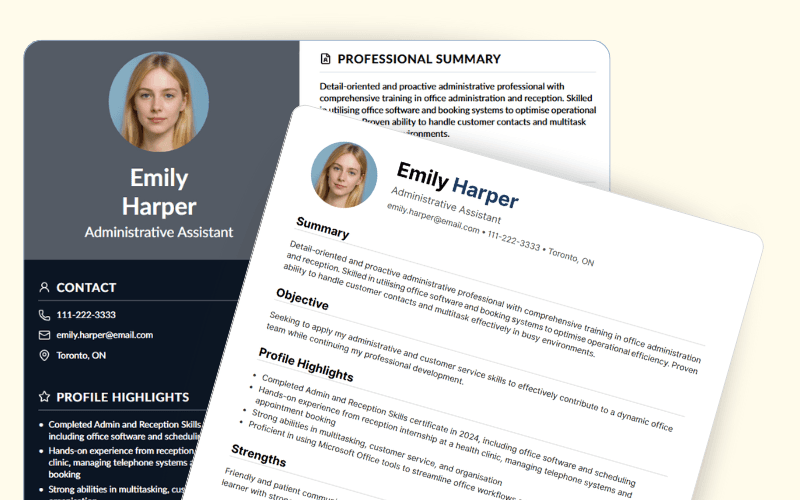
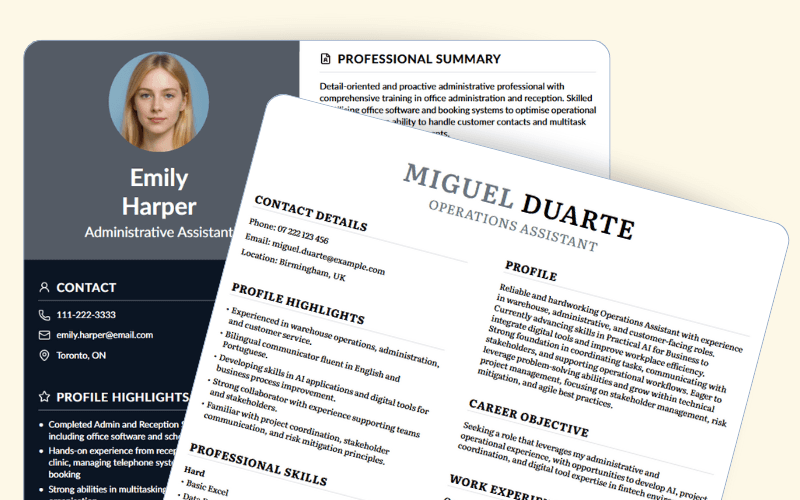
Side-by-side comparison showing single and double column resume layouts, highlighting structure, readability, and ATS compatibility.
Single Column vs Two Column: Which Should You Use?
Use a single column resume if:
- You are applying through older or unknown ATS platforms
- You want maximum compatibility with zero risk
- You have a short or straightforward career history
- You are applying broadly across many employers
Use a two column resume if:
- You have extensive experience, certifications, or skills to organize
- You are applying to modern companies using up-to-date ATS systems
- You want stronger visual hierarchy and scannability
- You can test formatting before submitting
The decision is not about ATS limitations. It is about risk tolerance and presentation goals.
Best Practices for ATS-Friendly Formatting
- Use native Word or Google Docs column tools
- Keep all critical content in the main text flow
- Avoid text boxes, icons, and images
- Use standard section headings (Work Experience, Education, Skills)
- Save files as .docx or text-based PDF
- Copy and paste into plain text to verify reading order
Important
If your resume reads cleanly in plain text, it will parse correctly.
How Modern ATS Actually Work
ATS platforms do not automatically reject candidates based on formatting.
They store resumes, extract searchable text, and help recruiters filter candidates using keywords and experience fields. Recruiters still see the original resume exactly as submitted.
If parsing fails, your resume is not rejected. It simply becomes harder to find during keyword searches. That is why clear structure matters more than visual complexity.
Final Verdict
Single column resumes are the safest option.
Two column resumes are perfectly acceptable when built correctly.
The real risk is not layout. It is poor structure, hidden text, and formatting shortcuts.
- If you want maximum compatibility, use a clean single column layout.
- If you want better visual organization and can validate formatting, a two column resume is equally viable.
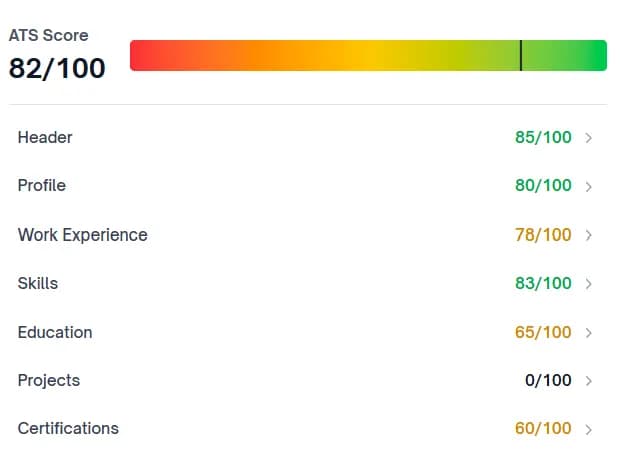
The key is not choosing one format over the other, but understanding how ATS systems actually read your content. Put your resume to the test using our ATS grader below.
ATS-Optimized resumes That Meet Employer Standards
Our AI-powered scoring system helps organizations assess and standardize resume quality at scale. ATS-compliant templates support consistent formatting, keyword alignment, and interview readiness across cohorts.
About the Author

Adewale Okafor
Quality Assurance
Adewale Okafor
Quality Assurance
Adewale is a Quality Assurance specialist at Yotru, reviewing outputs and testing features to ensure accuracy, reliability, and a consistent user experience.
Frequently Asked Questions
In 2026, the safest ATS-compatible resume format is a single-column, text-only layout using standard section headings such as Work Experience, Education, and Skills. Modern ATS can read two-column resumes, but only when native document columns are used and no tables, text boxes, or images interfere with text extraction.
Audience Context
This article is written for job seekers researching ATS-friendly resume formatting, particularly those comparing single-column and two-column resume layouts for applications in 2025 and 2026. It targets candidates applying through modern applicant tracking systems who want clear, evidence-based guidance on how resume structure affects parsing, keyword extraction, and recruiter visibility, regardless of employer or industry.
Methodological Approach
This analysis is based on publicly available technical documentation and formatting guidance from major applicant tracking systems, including Greenhouse, Workday, iCIMS, and SAP SuccessFactors. Findings are supported by independent resume parsing tests, resume-to-text validation, recruiter feedback, and observed behavior from real hiring workflows discussed in professional and HR-focused communities.
Editorial Policy
This content is grounded in documented ATS behavior, official platform guidance, and repeatable formatting tests. We avoid assumptions, myths, and legacy advice that no longer reflect how modern ATS systems operate. Our goal is to provide practical, up-to-date recommendations that help job seekers make informed resume layout decisions based on structure, risk tolerance, and application context.
Disclaimer
This information is provided for general guidance only. ATS parsing behavior, scoring logic, and employer preferences vary by platform, configuration, and role. Job seekers should always review application instructions and validate their resume formatting before submission, especially when applying through unfamiliar or legacy systems.
Further Insights
ATS, resume quality, and structure
- ATS-Friendly Resume Builders — Tools that actually pass bots.
- Make Your Resume ATS-Friendly in 5 Minutes — Fast ATS tune-up steps.
- The Myth of Single vs Double Column Resumes — Format myths debunked.
- Resume Length: One Page or Two? — Length decisions explained.
- Resume Colors: What to Use, What to Avoid — Visual design that still works.
Resume fundamentals and job seeker tips
- 7 Traits All Great Resumes Possess — Core traits of strong resumes.
- Tips for Writing a Summary in Your Resume — Strong summary examples.
- How to Build a Resume With No Work Experience — First-resume guidance.
- Traits All Great Resumes Possess — Reinforces must-have elements.
- What Not to Do on Your Resume — Mistakes free tools can amplify.
AI, tools, and job search strategy
- How to Use ChatGPT for Resume Writing — When generic AI helps or hurts.
- Job Seekers Are Hiding AI Prompts in Their Resumes — Risks of misusing AI tools.
- Is Jobscan Better Than ChatGPT? — Tool comparison logic.
- Teal vs ChatGPT — Tracker vs general AI roles.
- Job Search Strategies That Are Working Now — Positioning tools in your search.
Resume Building & Optimization
- ATS Resume Optimization Guide — How applicant tracking systems scan resumes and what formatting choices help you pass screening.
- Retail Resume Examples — Additional examples for grocery, customer service, and warehouse positions.
Yotru Resume
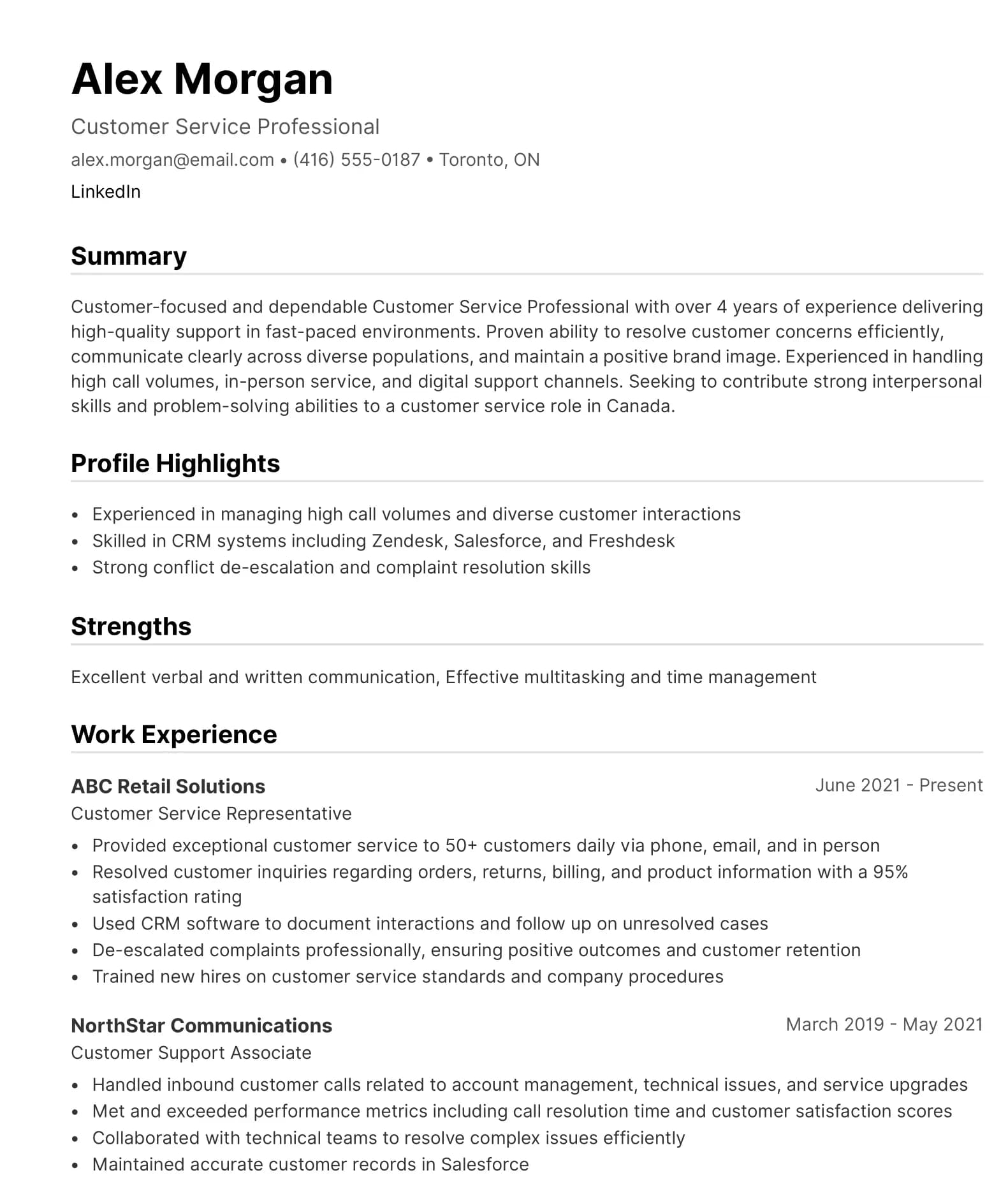
- Customer Support & Front-End Service Specialist – Single Column resume. [IMAGE]
- Front-End Membership & Customer Service Associate – Double Column resume. [IMAGE]
- Butcher & Meat Preparation Specialist – Double Column resume [IMAGE]
- Food Service & Kitchen Operations Specialist – Double Column resume example.
- Warehouse Associate & Inventory Specialist – Single Column resume example.
- Front-End Cashier & Member Services Associate – Double Column resume example.
References
- SHRM: What Is an Applicant Tracking System (ATS)? – Overview of ATS technology, core features, and implications for resume formatting.
- NACE: The Role of Technology in Recruiting and Hiring – Research on how employers use ATS and recruiting technology in modern hiring.
- Levy, F., & Murnane, R. J. (2004). The New Division of Labor – Explains how computerization changes which resume content employers value most.
- Autor, D. H. (2015). Why Are There Still So Many Jobs? – Discusses automation, screening, and why human judgment still matters in hiring.
- Cappelli, P. (2019). Your Approach to Hiring Is All Wrong (Harvard Business Review) – Critiques common hiring practices and overreliance on screening tools.
- Society for Human Resource Management. (2023, December 20). Is your applicant tracking system hurting your recruiting efforts? SHRM. https://www.shrm.org/topics-tools/news/hr-magazine/applicant-tracking-system-hurting-recruiting-efforts
- Smart Applicant Tracking System (ATS) – IJIRSET, 2024 – Academic look at ATS modules, resume parsing, and analytics in modern systems.
Maintained by: Employability & Skills Group at Yotru
Review cycle: Reviewed periodically to reflect evolving hiring trends
Last updated: March 12, 2026
Questions or Need Support?
If you are working on employability programs, hiring strategy, career education, or workforce outcomes and want practical guidance, you are in the right place.
Yotru supports individuals and organizations navigating real hiring systems. That includes resumes and ATS screening, career readiness, program design, evidence collection, and alignment with employer expectations. We work across education, training, public sector, and industry to turn guidance into outcomes that actually hold up in practice.