
Voices of Work
3 min read
Voices of Work: Why Qualified Candidates Fail Early Resume Screenings
Synopsis
A People Operations leader explains how capable candidates are filtered out before interviews even begin, revealing how resume structure, alignment, credibility, timing, and formatting influence early screening decisions in high-volume hiring environments.
Key Insight
Qualified candidates fail resume screening when resumes lack alignment, clarity, and structure; tailoring to role-defining skills, context-rich achievements, and recruiter mindset significantly improves early screening success.
Early resume screening is one of the most misunderstood stages of hiring. Many candidates assume that failing to move forward means they were not qualified enough. In reality, early screening decisions are often driven less by capability and more by how clearly that capability is presented.
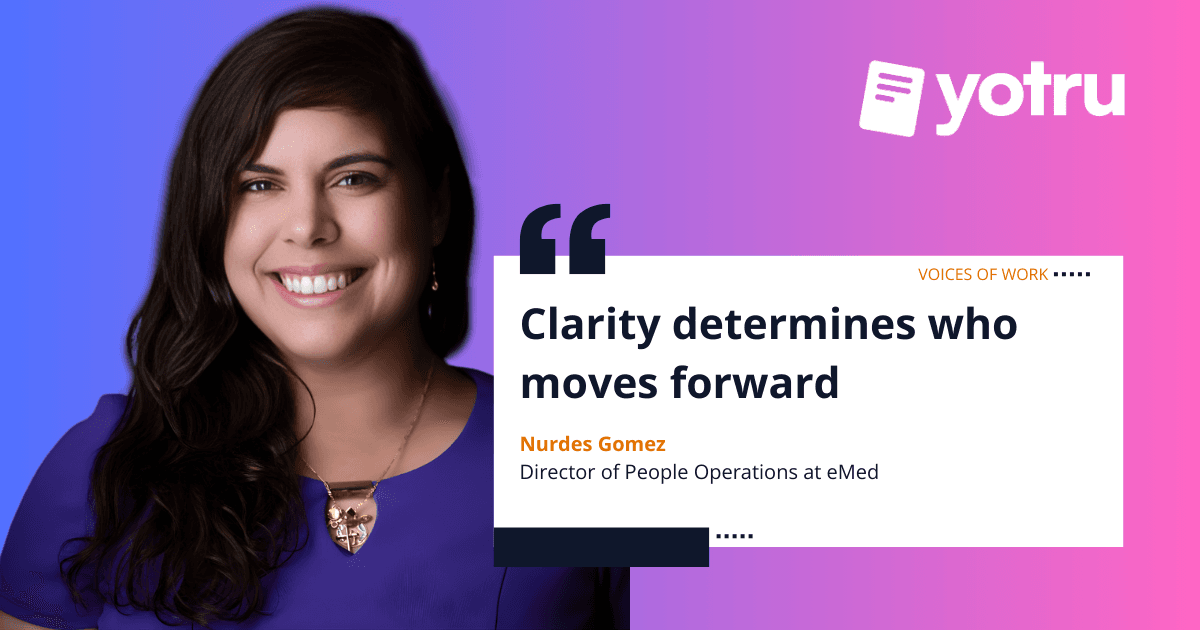
For this Voices of Work feature, we spoke with Nurdes Gomez, Director of People Operations at eMed. Through her work reviewing high volumes of applications across healthcare and technology roles, she has seen firsthand how strong candidates are frequently filtered out due to communication gaps rather than skill gaps.
She emphasized that what stands out most is not a lack of talent, but a recurring breakdown in how experience is communicated and interpreted during the first review. From her perspective, early resume screening is fundamentally about whether a candidate’s background can be quickly understood, trusted, and evaluated within structured hiring workflows.
Resume screening is a compression exercise
Early screening is not the stage for interpretation. It is a compression exercise.
Recruiters and hiring teams often review dozens or hundreds of resumes under time pressure, making rapid decisions based on structure, relevance, and alignment with the role. When a resume slows this process down, even unintentionally, it introduces friction.
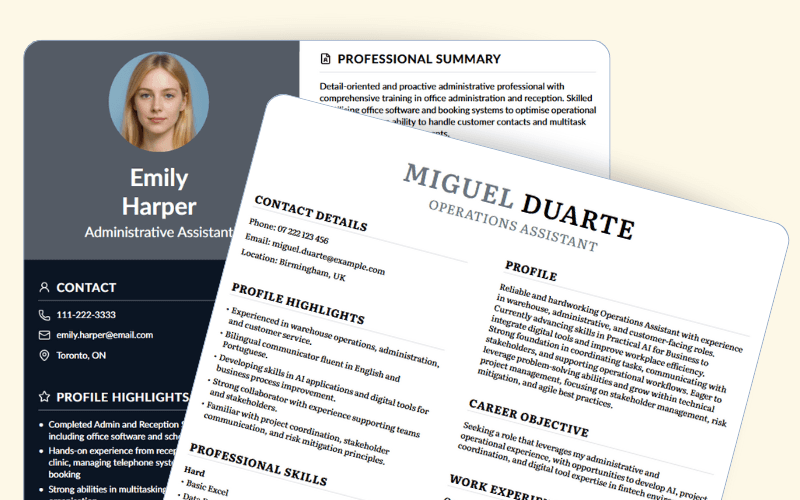
One of the most common sources of friction is length and organization. Overly long or poorly structured resumes make it harder to assess fit quickly. For most non-senior roles, exceeding one page does not add credibility; it adds noise.
“Resumes that are too long, poorly organized, or exceed one page for non-senior roles make it difficult to quickly assess fit.”
Two-page resumes are typically appropriate only for senior leaders with complex scopes, long tenures, or enterprise-level responsibility. Outside of those contexts, length often works against the candidate rather than in their favor.
Alignment matters more than effort
Another frequent reason for early rejection is content misalignment.
Nurdes often encounters resumes that mirror job descriptions almost verbatim, sometimes AI-generated, without clearly demonstrating how skills were applied in practice. She also sees resumes that omit role-defining skills altogether.
If a candidate applies for a Webflow developer role but does not explicitly list Webflow experience, reviewers cannot infer that knowledge during screening.
“Resumes that mirror the job description or omit critical skills required for the role signal misalignment with role requirements.”
Early screening rewards specificity. Clearly naming tools, responsibilities, and outcomes reduces uncertainty. Ambiguity increases the likelihood of elimination, even when the candidate may be capable of performing the work.
Credibility is evaluated early
Accuracy and completeness play a central role in early screening decisions.
Inconsistent timelines, vague role descriptions, or inflated claims reduce confidence during initial review. In high-volume environments, reviewers often make binary decisions with limited context. When information is unclear or incomplete, the safer operational choice is usually to move on.
This does not imply bad intent. The resume simply fails to provide enough reliable information to justify advancement.
Early screening is less about giving candidates the benefit of the doubt and more about managing risk within constrained systems.
Not all rejections are about the resume
Some screening outcomes are driven by factors candidates never see.
Internal applicants may already be prioritized, or interviews may be underway by the time a new application is submitted. In those cases, even well-qualified candidates may be passed over regardless of resume quality.
These decisions are operational, not personal. However, they still determine who advances.
Understanding this context matters, particularly for candidates who interpret silence as failure. Timing and internal dynamics often override individual merit during early hiring stages.
Formatting is a signal, not a detail
Formatting choices influence how resumes move through structured hiring processes. Small signal gaps add friction, and friction increases the likelihood of early elimination.
“Structural issues, unclear role history, or inconsistent responsibilities make it harder for recruiters to evaluate capabilities during structured screening and handoffs.”
In environments where multiple stakeholders review resumes, clarity supports continuity. When structure breaks down, momentum is lost.
At Yotru, we observe similar patterns among institutions managing resumes at scale. Early screening consistently favors consistency, alignment, and decision-ready information.
About Nurdes Gomez
Nurdes Gomez is Director of People Operations at eMed, where she develops and implements people strategies within a rapidly growing digital healthcare organization. With over 17 years of experience across healthcare systems, startups, and enterprise HR, she specializes in structured hiring, employee development, and operational clarity.
Pro Tip
This article is part of Yotru’s Voices of Work series, highlighting leaders who are redefining how people learn, lead, and get hired. To be featured, please contact Yotru.
About the Author

Hannah Verkler
Media Relations Lead
Hannah Verkler
Media Relations Lead
Hannah leads media relations and external communications at Yotru, helping share the company’s work with journalists, partners, and the workforce community.
Frequently Asked Questions
Qualified candidates often fail early resume screening due to unclear structure, missing critical skills, misalignment with role requirements, or formatting issues that complicate evaluation. Early screening prioritizes clarity and decision-ready information over potential.
About This Article
This article is written for employers, workforce leaders, educators, and advanced job seekers seeking to understand how early resume screening decisions are made in high-volume hiring environments.
Research Methodology
Insights in this article are drawn from direct source material provided by an experienced People Operations leader, synthesized through editorial analysis without added data or external inference.
Editorial Standards
This Voices of Work piece follows Yotru’s source-driven editorial standards. All insights are grounded in verified professional experience and presented without promotional intent.
Disclaimer
This article reflects professional observations shared by the featured expert. Hiring practices vary by organization, role, and industry, and outcomes may differ based on context.
Related Readings
Voices of Work: Leadership and Hiring Perspectives
- What Employers Really Mean by Job‑Ready — Employer ROI, hidden skills, and motivational fit in job readiness
Fallon Chase on Fractional HR and the Future of People Operations — Fractional leadership and scaling people ops - Nicole Fougere on Trust, Tools, and the Future of Hiring — Building trust into hiring systems
- Robert Hourie on AI, Instinct, and the Future of Recruitment — Balancing AI with recruiter judgment
- Gloria Espina on Suitability, Systems, and Human-First Hiring — Suitability over credentials
Platform and Solutions
- Yotru for Workforce Development — Tools for workforce organizations
- Yotru for Employers — Hiring and talent solutions
- Yotru for Outplacement — Supporting workforce transitions
- Yotru for Educators — Career services for education providers
People Strategy and Hiring
- Why Yotru Is Built for Real Hiring, Not Just Resume Writing — Systems built for real hiring outcomes
- Why HR Departments Are Using Yotru to Support Laid-Off Workers — Humane layoff support tools
- How Yotru Helps Regions Identify Upskilling and Retraining Opportunities — Regional workforce strategy
- What Is a Risk-Free Hiring Pilot Program — Testing hiring systems safely
Job Market and Interview Insights
- Why It Feels So Hard to Get a Job Right Now — Market pressures and constraints
- Why Interviews Feel Harder Than the Actual Job — Where process and work diverge
- Green Flags in Interviews — Signs of healthy hiring cultures
- What Hiring Managers Really Notice in the First 5 Minutes — Signals that matter early
References
- Society for Human Resource Management. (2025, March 6). What’s wrong with my resume? SHRM. https://www.shrm.org/topics-tools/news/career-advice-qa/whats-wrong-resume
- Castrillon, C. (2025, April 27). 7 resume red flags hiring managers spot instantly. Forbes. https://www.forbes.com/sites/carolinecastrillon/2025/04/27/7-resume-red-flags-hiring-managers-spot-instantly/
- University of Southern California. (2024, August 14). 5 resume mistakes to avoid in 2024 (and what to do instead). USC Online. https://www.online.usc.edu/news/common-resume-mistakes-to-avoid/
- University of North Texas Career Center. (2022, May 5). Common resume mistakes. UNT Career Center. https://careercenter.unt.edu/resources/common-resume-mistakes/
- University of Queensland. (2023, August 9). The 10 most common resume mistakes (and how to avoid them). UQ Employability. https://employability.uq.edu.au/article/2023/08/10-most-common-resume-mistakes-and-how-avoid-them
Maintained by: Workforce Practice Group at Yotru
Review cycle: Reviewed periodically to reflect evolving hiring trends
Last updated: February 10, 2026
Questions or Need Support?
If you are working on employability programs, hiring strategy, career education, or workforce outcomes and want practical guidance, you are in the right place.
Yotru supports individuals and organizations navigating real hiring systems. That includes resumes and ATS screening, career readiness, program design, evidence collection, and alignment with employer expectations. We work across education, training, public sector, and industry to turn guidance into outcomes that actually hold up in practice.