
Employability
11 min read
How to Upskill After a Layoff: A Practical Guide for Workers in Transition
Synopsis
Lost your job and wondering what's next? Here's how to build on what you already know, find affordable training, and position yourself for better opportunities.
Losing your job is tough. For many frontline workers, a layoff is more than just lost wages. It can shake your sense of stability and pride. The routines you built over years disappear overnight. The coworkers who became friends scatter. The identity you built around your work suddenly feels uncertain.
Key Insight
Layoffs disrupt income, identity, and stability, but they do not erase your skills. By building on existing experience through upskilling, workers can take practical steps toward new opportunities.
But there is a way forward. Upskilling, or learning new abilities that connect with your experience, can open doors to better opportunities. The process does not need to be overwhelming. It is about small steps, one at a time.
This is true whether you worked in a meatpacking plant in Nebraska, an auto assembly line in Ontario, a federal office in Ottawa, or any other workplace where layoffs have disrupted lives.
In January 2026, Tyson Foods closed its Lexington, Nebraska beef processing plant, displacing 3,200 workers in a town of just 11,000 people. Combined with shift reductions at Tyson's Amarillo, Texas facility, nearly 5,000 meatpacking workers face the same question: what comes next? For workers affected by these closures, we have published a dedicated guide: Tyson Plant Layoffs 2026: What Lexington and Amarillo Workers Can Do Next.
In Ontario, workers at the CAMI assembly plant in Ingersoll have faced repeated uncertainty as the auto industry restructures around electric vehicles. For those in southwestern Ontario navigating these changes, see our Ingersoll jobs guide and CAMI resources.
In Ottawa, federal government restructuring has displaced thousands of public servants, many of whom built entire careers in government and now face a private-sector job market for the first time. See Ottawa federal job cuts: resume examples and our broader guide on what to do after a massive layoff.
Whatever brought you here, the path forward starts with recognizing what you already bring to the table.
Start with What You Already Know
Every job teaches skills. If you worked in a factory, on a construction site, in transport, in healthcare support, or in an office, you already have strengths that employers value. These might include:
- Following safety rules and compliance procedures
- Working with your hands and tools
- Solving problems under pressure
- Teamwork and reliability
- Meeting deadlines and production targets
- Communicating with supervisors and coworkers
- Adapting to changing conditions
These skills matter in every industry. They transfer across roles and sectors, even when the specific job titles change.
Document your experience
Write down what you did in your last job, day by day. Think about:
- Daily tasks: What did you do every shift? What equipment did you operate? What processes did you follow?
- Special responsibilities: Did you train new workers? Handle quality checks? Coordinate with other teams?
- Problems you solved: What went wrong, and how did you fix it? What did you do when equipment broke, schedules changed, or coworkers needed help?
- Results you achieved: Did you meet production targets? Maintain safety records? Reduce errors or waste?
That list is the starting point for your next move. It reminds you that you are not starting from zero.
For workers who have spent years or decades in a single role, this exercise can be revealing. A production worker who "just worked the line" may discover they operated complex machinery, maintained equipment, trained dozens of coworkers, and consistently met quality standards under pressure. Those are real, valuable skills.
For help translating hands-on experience into resume language, see What Goes in a Trades Resume: A Simple Guide for Skilled Workers and the Plant Worker Layoff Resume Guide.
Identify your transferable skills
Identifying your transferable skills is an important step when planning what comes next after a layoff. Transferable skills are abilities that apply across many jobs and industries, and they often matter more to employers than a specific job title. They show how you work day to day and help explain your value when moving into a new role or field. Recognizing these skills also makes it easier to choose training or job paths that build on your existing experience rather than starting over.
Common transferable skills for frontline and plant workers include:
- Technical skills: equipment operation, routine maintenance, quality inspections, inventory or materials handling
- Safety skills: OSHA compliance, hazard awareness, PPE use, incident and safety reporting
- Physical skills: stamina, manual dexterity, lifting, precision and repetitive work
- Organizational skills: time management, following procedures, prioritizing tasks, meeting deadlines
- Interpersonal skills: teamwork, clear communication, training coworkers, working with supervisors
- Problem-solving skills: troubleshooting issues, adapting to changes, handling unexpected situations or emergencies
Understanding these skills helps you present your experience more clearly to employers and identify next steps that align with your strengths.
Key Insight
Upskilling is not about becoming someone different. It is about adding to what you already bring. The best training programs build on your existing experience rather than ignoring it.
Find Training That Connects to Your Experience
Upskilling does not mean going back to school for years. Many training options are short, affordable, and designed for working adults. Some are even free.
The key is finding training that builds on what you already know. By connecting new learning with past experience, you make the transition smoother and more valuable to employers.
Short-term certification programs
Many high-demand careers require only weeks or months of training, not years. Here are common pathways for workers transitioning from production, manufacturing, and frontline roles:
Commercial Driver's License (CDL)
- Timeline: 3-8 weeks
- Builds on: Physical stamina, safety awareness, reliability, following procedures
- Demand: Strong and consistent across North America
- Considerations: Long hours, time away from home, physical demands
For workers in Alberta's energy sector, CDL credentials open doors to oilfield services, heavy haul, and equipment transport. See hiring trends in Alberta for current market conditions.
Forklift and Warehouse Certifications
- Timeline: 1-5 days for forklift; additional training for warehouse management
- Builds on: Equipment operation, safety compliance, physical work
- Demand: Strong in logistics, distribution, and manufacturing
- Considerations: Often available through employers or workforce programs
Healthcare Support Certifications
- Timeline: 4-12 weeks for CNA, phlebotomy, or medical assistant programs
- Builds on: Attention to detail, following procedures, physical stamina, working with people
- Demand: Strong and growing across North America
- Considerations: Requires comfort with patient interaction and healthcare environments
The healthcare sector continues to grow even during economic uncertainty. For workers open to this transition, see hiring trends in Ontario, British Columbia, and the United States for current demand patterns.
Welding and Manufacturing Technology
- Timeline: Basic certifications in 2-6 months; advanced credentials take longer
- Builds on: Working with hands and tools, precision work, safety awareness
- Demand: Strong in construction, manufacturing, energy, and infrastructure
- Considerations: Physical work, potential for high wages with advanced certifications
For workers in welding and pipefitting, we have specific resume guides for Alberta pipe welders, Texas pipe welders, and welders generally.
HVAC Technician Training
- Timeline: 6-12 months for entry-level certification; apprenticeship for full credentials
- Builds on: Mechanical aptitude, troubleshooting, working with equipment
- Demand: Strong and stable, driven by building maintenance and climate control needs
- Considerations: Combines technical skills with customer interaction
See How to Write a Resume for an HVAC Technician for guidance on presenting these credentials.
IT and Technical Support
- Timeline: 3-6 months for entry-level certifications like CompTIA A+ or Google IT Support
- Builds on: Problem-solving, following procedures, attention to detail
- Demand: Varies by location; often strong in urban areas
- Considerations: May require comfort with computers and customer service
Questions to ask before enrolling
Before committing to any training program, research carefully:
- What is the job placement rate for graduates? Ask for specific numbers, not vague assurances.
- What is the average starting salary for graduates in this area? National averages may not reflect your local market.
- Does the program have partnerships with local employers? Direct hiring relationships are valuable.
- Is the credential recognized by employers in your target field? Some certifications carry more weight than others.
- What is the total cost, including materials, exams, and fees? Hidden costs can add up.
- Is financial aid available for displaced workers? Many programs have special provisions for laid-off workers.
Hint
Before enrolling in any program, search job postings in your area for roles that require that credential. If you don't see many openings, the training may not lead to local employment.
Use Available Support Programs
Many regions offer government or union programs specifically for laid-off workers. These can cover tuition, provide career counseling, and sometimes offer financial support during training. Do not hesitate to ask. These programs exist for situations exactly like this.
Government workforce programs
In Canada:
- Employment Insurance (EI) training benefits: You may be able to attend approved training programs while receiving EI benefits.
- Provincial training grants: Many provinces offer funding for workers affected by mass layoffs. Ontario, Alberta, and British Columbia all have workforce development programs.
- Second Career (Ontario): Provides financial support for laid-off workers to retrain for in-demand occupations.
- Canada-Ontario Job Grant: Provides funding for employer-sponsored training.
For detailed information on navigating the Canadian system after a layoff, see Resume Builder for Canada: How to Create a Job Bank Approved Resume.
In the United States:
- Workforce Innovation and Opportunity Act (WIOA): Provides funding for training through local Workforce Development Boards.
- Trade Adjustment Assistance (TAA): For workers displaced due to foreign trade, including extended unemployment benefits and training support.
- State-specific programs: Many states have additional programs for displaced workers. Nebraska and Texas both offered support services for Tyson workers affected by recent closures.
Contact your local workforce development center or state/provincial labor department to learn what's available in your area. The Tyson Plant Layoffs guide includes specific links for Nebraska and Texas resources.
Union training funds
If you were a union member, your union may have training funds available. Many unions maintain programs specifically for members facing layoffs or industry transitions.
- Apprenticeship programs: Union apprenticeships often provide paid training with strong job placement.
- Retraining funds: Some unions set aside money for members who need to develop new skills.
- Job referral networks: Union halls often have connections to employers who are hiring.
For more on how unions support members through layoffs, see Union Layoff Support Program: How Yotru's Pilot Helps Unions Lead in Times of Change and Outplacement Services for Unions: Navigating Layoffs Together.
Community resources
Beyond government and union programs, community resources can support your transition:
- Community colleges: Often offer short-term programs at lower cost than private training schools, with financial aid options.
- Libraries: Many libraries provide free access to online learning platforms, job search resources, and career counseling. See Why Libraries Are Key to Career Building.
- Nonprofit organizations: Many nonprofits provide free career services, especially for workers facing economic hardship.
- Faith-based organizations: Churches and community groups often provide practical support during job transitions.
Explore Online Learning
Online learning has become more practical and accessible than ever. Community colleges, trade schools, and platforms like Coursera, LinkedIn Learning, and Google Career Certificates offer programs that fit around job searching and family responsibilities.
Advantages of online learning
- Flexibility: Learn in the evenings, on weekends, or during downtime while job searching.
- Self-paced options: Many programs let you move faster or slower based on your needs.
- Lower cost: Online programs are often less expensive than in-person alternatives.
- Access from anywhere: No commute required, and you can continue learning if you relocate.
Choosing quality programs
Not all online learning is equally valuable. Prioritize programs that result in recognized credentials employers actually look for.
Stronger credentials:
- Google Career Certificates (IT Support, Data Analytics, Project Management, UX Design)
- CompTIA certifications (A+, Network+, Security+)
- AWS, Microsoft, or Salesforce certifications
- Accredited community college certificates
- Industry-recognized safety certifications (OSHA 10/30, food safety)
Weaker credentials:
- Completion certificates from unknown platforms
- "Courses" that are really just video playlists
- Programs with no industry recognition or employer partnerships
For a thoughtful analysis of whether LinkedIn Learning certificates are worth pursuing, see Are LinkedIn Learning Certificates Worth It?.
Start small
If you're not sure where to begin, start with something manageable. A single course in basic computer skills, spreadsheet fundamentals, or workplace communication can boost your confidence and make you ready for a wider range of jobs.
Small wins build momentum. Finishing a short course proves to yourself that you can learn new things, which makes bigger training goals feel more achievable.
Pro Tip
Many online platforms offer free trials or audit options. Try a course before committing money. If the teaching style doesn't work for you, move on and try something else.

Build Your Resume and Tell Your Story
Learning new skills is only half the battle. The other half is communicating those skills to employers in a way that gets you interviews.
This can feel difficult if you're used to hands-on work where results spoke for themselves. But a resume is your first impression with most employers, and it needs to tell a clear story.
Combine experience and training
Your resume should show both your work history and your new training. Employers want to see that you bring real-world experience AND that you're actively developing new capabilities.
For example, a production worker who completed forklift certification and basic logistics training might present themselves as:
"Production worker with 12 years of experience in food processing, including equipment operation, quality inspection, and team coordination. Recently completed forklift certification and warehouse management training. Ready to apply both hands-on experience and new skills in a logistics or distribution environment."
This positions you as someone who brings proven reliability plus fresh credentials.
Use tools that translate experience into resume language
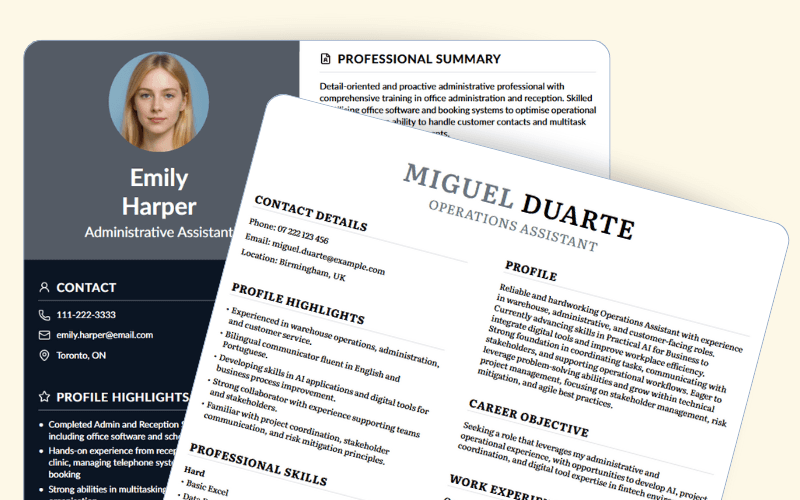
If writing a resume feels overwhelming, tools can help. Yotru's resume builder is designed to help workers translate real-world experience into clear language employers understand. It asks you questions about your work history and helps you identify and describe transferable skills.
For a comparison of available tools, see The Ultimate Guide to Resume Builders in 2026 and Resume Builder for Laid-Off Workers: Turning Job Loss into a Fresh Start.
Practice your story out loud
Practice explaining your background and transition verbally. Clear, simple statements give employers confidence.
Examples:
"I worked 15 years in manufacturing. After the plant closed, I completed a logistics certificate. I can bring both hands-on experience and fresh training to your team."
"I spent eight years in food processing, with strong experience in quality control and safety compliance. I'm now certified in HACCP and looking to apply those skills in a food safety role."
"I worked in federal government for 12 years, managing complex projects and coordinating across departments. I'm now focusing on project management opportunities in the private sector, where I can apply my organizational skills in a faster-paced environment."
These statements are direct, confident, and forward-looking. They acknowledge the transition without dwelling on the difficulty.
For detailed guidance on interview preparation after a layoff, see Interview Preparation Tips: How to Prepare and Impress Employers and How to Explain a Mass Layoff to Employers.
Stay Connected and Keep Moving Forward
Upskilling works better when you're not alone. Support from others makes the process less stressful and often leads to opportunities you wouldn't find on your own.
Connect with others in transition
Join a training group, talk with former coworkers, or connect with others online who are navigating similar transitions. Many people discover new jobs through word of mouth. A former colleague may hear about an opportunity that's a better fit for you than for them.
In communities experiencing mass layoffs, like Lexington, Nebraska or Ingersoll, Ontario, these informal networks can be particularly valuable. Pooling information and encouragement benefits everyone.
For guidance on building professional relationships that lead to opportunities, see Networking Strategies: How to Build Professional Connections That Last.
Be open to new paths
Some workers return to the same industry after a layoff. Others move into new fields. Both are valid paths.
Think about what you enjoyed most in your last job. Was it fixing machines? Working outdoors? Organizing tasks? Helping customers or coworkers? Let that guide you. Upskilling doesn't always mean moving far away from what you know. Sometimes it's a shift into a related area with more stability or better prospects.
The question Is AI Pushing Workers Toward Blue-Collar Careers? explores how some workers are finding that hands-on trades offer more stability than white-collar roles affected by automation.
For workers over 50 navigating career transitions, see How to Build Your Next Career Chapter After 50.
Keep the future in mind
The job market is changing. Technology, automation, and new industries are reshaping work in ways that affect every sector. Upskilling is not only about today. It's also about staying ready for tomorrow.
Even small steps, like learning digital basics, earning safety certifications, or understanding new tools in your field, keep you competitive as the economy evolves.
Take care of yourself
Finally, remember that upskilling is part of a larger journey. Rest, family support, and self-care matter too. A layoff is stressful. Don't push yourself to learn everything at once. Progress is steady, not instant.
If you're struggling with the emotional weight of job loss, you're not alone. Many workers experience anxiety, frustration, or even grief after losing a job, especially one they held for years. Seek support from family, friends, community organizations, or mental health professionals if needed.
About the Author

Team Yotru
Employability Systems
Team Yotru
Employability Systems
We build practical career tools for training providers and workforce programs, combining labor market insights with real employment outcomes. Follow us on LinkedIn.
Frequently Asked Questions
It depends on the credential. Some certifications (forklift, food safety) take days. Others (CDL, CNA, basic welding) take weeks to months. Community college certificates typically take 6-12 months. Choose a timeline that fits your financial situation and job market needs.
Audience Context
This guide is written for workers who have been laid off and are considering upskilling to improve their employment prospects. It addresses workers across industries, with specific attention to frontline and production workers navigating career transitions.
Research Methodology
Content is based on workforce development research, government training program documentation, and practical guidance from career transition frameworks.
Editorial Standards
This article is maintained for accuracy and designed to be shared by workforce agencies, libraries, unions, and community organizations supporting displaced workers.
Disclaimer
This article is not affiliated with any employer, union, or government organization. It provides general information and is not professional advice. Training program availability, costs, and outcomes vary by location and individual circumstances. Research programs carefully before enrolling.
Related Resources
Layoff-Specific Guidance
- What to Do After a Massive Layoff: A Guide for Moving Forward — Comprehensive guide for displaced workers
- Tyson Plant Layoffs 2026: What Lexington and Amarillo Workers Can Do Next — Hub for Tyson workers
- Ottawa Federal Job Cuts: Resume Examples — Guidance for displaced federal employees
- Jobs in Ingersoll, Ontario — Resources for southwestern Ontario workers
- Resume Builder for Laid-Off Workers — Turning job loss into a fresh start
Resume Building for Specific Roles
- What Goes in a Trades Resume — Guide for skilled workers
- Plant Worker Layoff Resume Guide — Translating production experience
- Alberta Pipe Welder Resume — Energy sector resume guide
- HVAC Technician Resume Guide — Presenting technical credentials
- Welder Resume Examples — Templates and skills guidance
Career Development and Job Search
- Interview Preparation Tips — How to prepare and impress employers
- How to Explain a Mass Layoff to Employers — Interview scripts and talking points
- Networking Strategies — Building professional connections
- How to Handle a Job Gap on Your Resume — Addressing employment gaps
- How to Build Your Next Career Chapter After 50 — Guidance for experienced workers
Market Insights
- Hiring Trends in Canada — Canadian labor market outlook
- Hiring Trends in Ontario — Provincial job market analysis
- Hiring Trends in Alberta — Energy and trades sector outlook
- Hiring Trends in the United States — U.S. labor market forecasts
- Why It Feels So Hard to Get a Job Right Now — Understanding the current market
References
U.S. Department of Labor. (2026). Workforce Innovation and Opportunity Act (WIOA). https://www.dol.gov/agencies/eta/wioa
U.S. Department of Labor. (2026). Trade Adjustment Assistance Program. https://www.dol.gov/agencies/eta/tradeact
Government of Canada. (2026). Employment Insurance training benefits. https://www.canada.ca/en/services/benefits/ei.html
Ontario Ministry of Labour, Immigration, Training and Skills Development. (2026). Second Career. https://www.ontario.ca/page/second-career
Nebraska Department of Labor. (2026). Workforce Services. https://dol.nebraska.gov/
Texas Workforce Commission. (2026). Training Programs. https://www.twc.texas.gov/
Maintained by: Labor Intelligence Group at Yotru
Review cycle: Reviewed periodically to reflect evolving hiring trends
Last updated: March 23, 2026
Questions or Need Support?
If you are working on employability programs, hiring strategy, career education, or workforce outcomes and want practical guidance, you are in the right place.
Yotru supports individuals and organizations navigating real hiring systems. That includes resumes and ATS screening, career readiness, program design, evidence collection, and alignment with employer expectations. We work across education, training, public sector, and industry to turn guidance into outcomes that actually hold up in practice.