Market
7 min read
Germany Shortage Occupation List 2026: In-Demand Jobs
Synopsis
Germany's Federal Employment Agency officially lists 163 shortage occupations in 2026 — roles where demand significantly exceeds local supply and where international professionals qualify for faster visa processing and a reduced EU Blue Card salary threshold.
Germany enters 2026 with a structural labor gap that is not closing. According to the Federal Employment Agency (Bundesagentur für Arbeit), shortages currently exist across 163 occupations — known officially as Engpassberufe or bottleneck professions. The Institute for Employment Research (IAB) and the German Economic Institute (IW) estimate over 260,000 unfilled positions in the top shortage sectors alone, with around 600,000 blue-collar vacancies nationally.
For foreigners looking for jobs in Germany, this list is the most practical starting point. If your occupation appears on it, you qualify for a reduced EU Blue Card salary threshold of €45,934 gross per year (versus the standard €50,700), faster Germany work visa processing, and in some cases a waiver of the priority check that normally requires employers to prove no local candidate was available. Understanding the list helps you decide whether Germany is a realistic target, which roles to prioritize, and how to present your credentials effectively.
Key Insight
Germany needs roughly 300,000 skilled foreign workers annually to offset retirements and fill structural gaps. Professionals in shortage occupations get meaningful advantages: a lower EU Blue Card salary threshold, faster visa processing, and potential waiver of the priority check. The list is updated regularly — always verify your occupation against the current Federal Employment Agency data before applying.
What the Shortage Occupation List Means for Your Germany Work Visa
Germany's shortage occupation list is not simply a catalog of in-demand jobs. It has direct immigration consequences.
The EU Blue Card is Germany's primary route for highly qualified international professionals. Normally, applicants must meet a gross annual salary threshold of approximately €50,700. For roles classified as bottleneck occupations, that threshold drops to €45,934 in 2026 — a meaningful difference for mid-career professionals, particularly those in healthcare, education, and trades.
Beyond salary, the priority check (Vorrangprüfung) is often waived entirely for shortage occupations. This check normally requires an employer to demonstrate they advertised the role and could not find a suitable candidate within Germany or the EU before hiring from outside. Waiving it can shorten the hiring timeline from several months to a few weeks.
If you are applying via the Opportunity Card (Chancenkarte), being in a bottleneck profession earns additional points under the points-based system and may grant access to part-time work rights during your initial job search period.
For most regulated professions — including healthcare, teaching, and engineering — qualification recognition (Anerkennung) is still required before visa approval. The official recognition portal is Anerkennung in Deutschland. Starting this process early is strongly recommended, as recognition assessments can take three to six months depending on the profession and country of origin.
Pro Tip
Start the Anerkennung (qualification recognition) process before you apply for jobs. For regulated professions like nursing, medicine, and engineering, recognition must be completed before a visa will be issued. Processing times range from a few weeks for some trades to six months or more for healthcare roles. Apply through the Recognition in Germany portal and contact the relevant competent authority for your specific profession early.
Germany Shortage Occupation List 2026: By Sector
The following categories reflect Germany's current bottleneck professions as tracked by the Federal Employment Agency. Occupations are classified as shortage roles when demand indicators score 2.0 or higher on the agency's statistical benchmarks, assessed annually.
Healthcare and eldercare
Healthcare leads all shortage categories with an estimated 46,000 vacancies. Germany's rapidly aging population has created sustained pressure on hospitals, nursing homes, and outpatient care services that the domestic workforce cannot meet.
In-demand roles in this sector include:
- Registered nurses (Gesundheits- und Krankenpfleger/in) across acute care, rehabilitation, and outpatient settings
- Elderly care specialists (Altenpfleger/in) for residential and community-based care
- Physicians and specialist doctors, particularly in rural regions and underserved specialties
- Physiotherapists, occupational therapists, and speech therapists
- Medical technologists, audiologists, and optometrists
- Midwives and pediatric care nurses
Language requirements are typically B2 German for direct patient contact roles, though some research and clinical specialist positions accept English. Qualification recognition is mandatory for all regulated healthcare roles and should be initiated through the relevant state health authority (Landesgesundheitsamt).
Engineering and STEM
Germany's manufacturing base, energy transition, and infrastructure modernization have created sustained demand for engineers and technical specialists across multiple disciplines.
In-demand roles in this sector include:
- Mechanical and industrial engineers, particularly in automotive, automation, and production systems
- Electrical engineers and electrotechnicians
- Civil engineers, structural engineers, and surveying professionals
- Environmental and chemical engineers supporting Germany's green transition
- Architects, urban planners, and construction project managers
- Mining and geoscience professionals
Many engineering roles are in Bavaria, Baden-Württemberg, and North Rhine-Westphalia, where Germany's largest manufacturing clusters are concentrated. English is often sufficient in international firms, but German at B1 to B2 level significantly expands the range of employers accessible to you.
Hint
Engineering roles in Germany often require that your degree is recognized as equivalent to a German Fachhochschule or university degree. If your engineering qualification is from outside the EU, check equivalency early via the ANABIN database (anabin.kmk.org) before applying. Many employers will ask for this confirmation before extending an offer.
Information technology
Germany's digital transformation is generating consistent demand for IT professionals at all experience levels. Unlike some shortage categories, many IT roles do not require German language proficiency, particularly in international firms and Berlin-based startups.
In-demand roles in this sector include:
- Software developers and software engineers across all major languages and frameworks
- Systems analysts and IT architects
- Network administrators and infrastructure specialists
- Database developers and administrators
- IT security and cybersecurity analysts
- Data scientists and machine learning engineers
- ICT project managers
The Berlin, Munich, and Hamburg tech ecosystems are particularly active. Many employers in these markets operate primarily in English. However, IT roles in traditional German industrial firms (Mittelstand) typically require German at B1 level or above.
Construction and skilled trades
Germany's housing shortage and ongoing infrastructure investment have created strong and persistent demand for trade professionals. The Federal Employment Agency reports over 600,000 blue-collar vacancies nationally, with construction and trades accounting for a significant share.
In-demand roles in this sector include:
- Electricians and electrical installers
- Plumbers, pipefitters, and heating/cooling technicians (HVAC)
- Bricklayers, tilers, and plasterers
- Welders and metalworkers
- Carpenters and joiners
- Construction site supervisors and forepersons
These roles typically require vocational qualifications (Berufsausbildung) rather than university degrees. Recognition of foreign vocational credentials follows a separate process from academic degrees and is often handled through the relevant trade chamber (Handwerkskammer). German language skills of A2 to B1 are commonly required for trades roles.
Pro Tip
For skilled trades roles, qualification recognition often goes through the relevant Handwerkskammer (Chamber of Crafts) rather than a central authority. The process varies by trade and federal state. Some trades allow a partial recognition that permits supervised work while full recognition is being assessed — ask specifically about this option when contacting the chamber, as it can allow you to begin working sooner.
Education and early childhood
Teacher shortages affect most German federal states (Bundesländer), with particularly acute gaps in mathematics, science, technology, vocational training, and special education. Early childhood educators (Erzieher/in) are also persistently in demand.
In-demand roles in this sector include:
- Primary and secondary school teachers, especially STEM subjects
- Vocational and technical training instructors
- Special needs educators and integration specialists
- Early childhood educators and nursery workers
- German language instructors for integration and adult education programs
Teaching positions in Germany's public school system typically require a recognized teaching qualification and strong German language skills (C1 level). Vocational training instructor roles may have more flexible language requirements. The shortage of integration course teachers creates specific opportunities for German-language-qualified instructors working with migrants.
Transport and logistics
Germany's position as Europe's primary logistics hub generates consistent demand for transport and supply chain professionals, particularly as e-commerce continues to expand.
In-demand roles in this sector include:
- Truck drivers and heavy vehicle operators
- Warehouse supervisors and logistics coordinators
- Supply chain analysts and operations managers
- Rail transport workers and conductors
Basic German is typically required for operational roles involving public interaction. Logistics coordinator and management roles in multinational companies may accept English.
Germany Jobs for Foreigners: Applying from Abroad
Qualifying for the shortage occupation list is one part of the equation. Getting hired still requires a competitive resume and a clear presentation of your credentials.
German employers assess candidates differently from North American or UK hiring norms. Resumes are typically concise, qualification-focused, and structured in reverse chronological order. Applications are expected to include a cover letter (Anschreiben) that directly addresses the role. Generic applications are rarely successful in Germany's mid-sized employer market.
A few practical points for international applicants:
Credential recognition is non-negotiable for regulated roles. Healthcare, teaching, law, and engineering are regulated professions in Germany. You cannot legally practice in these fields without formal recognition. Start the Anerkennung process early and include your recognition status (or pending application reference) in job applications.
Language requirements vary more than many guides suggest. IT roles and research positions in multinational firms are often accessible with English alone. Healthcare and education roles almost always require B2 German or higher. Trades roles typically require A2 to B1. Assessing language requirements for your specific target role before investing in relocation is worth doing carefully.
The Make it in Germany portal is the most reliable official resource. The German government's Make it in Germany portal provides current shortage occupation lists, visa pathway information, and employer-facing guidance updated regularly by the Federal Employment Agency.
Target your resume to the specific role and employer type. Applications to German Mittelstand firms (mid-sized family-owned businesses) require a different approach than applications to DAX-listed multinationals or Berlin startups. Research the employer context before adapting your resume.
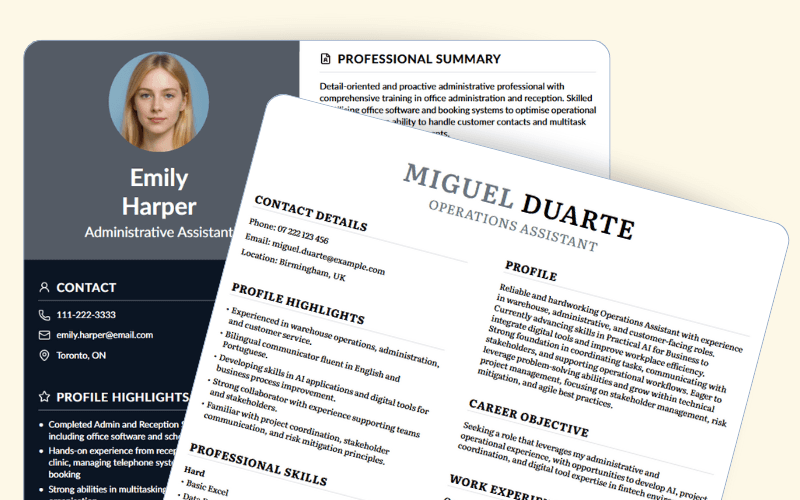
If you need to build or adapt a resume specifically for the German market, Yotru's resume builder helps you structure your experience in a clean, ATS-compatible format that works across European hiring systems.
How the Shortage List Is Maintained
The Federal Employment Agency updates its bottleneck occupation analysis annually based on statistical indicators drawn from the national job vacancy database. An occupation is classified as a shortage role when the ratio of vacancies to unemployed qualified workers exceeds a defined threshold — currently scored at 2.0 or higher on the agency's composite indicator.
The list fluctuates with economic conditions. In 2025, the total number of shortage occupations declined slightly from prior years due to weaker economic growth and modest increases in unemployment. However, the Federal Employment Agency's Chair, Andrea Nahles, confirmed that shortages remain severe in core sectors: "The shortage of skilled workers remains a major challenge for Germany as a business location. To take action against this, we need to pull out all the stops — from targeted further education and training, to ensuring a better work/life balance, through to managed migration."
The 2026 list reflects the structural nature of Germany's talent gap rather than a cyclical response to economic conditions. Demographics, not demand cycles, are the primary driver. Germany needs approximately 300,000 skilled foreign workers annually simply to maintain current staffing levels, a figure that is expected to grow as the baby boomer generation retires through the end of the decade.
For the most current version of the full shortage occupation list, refer directly to the Federal Employment Agency's statistics portal at statistik.arbeitsagentur.de or the official Make it in Germany shortage occupation PDF maintained at make-it-in-germany.com.
About the Author

Jenna Gallo
Business Development
Jenna Gallo
Business Development
Jenna leads business outreach at Yotru, connecting with partners and organizations to introduce the platform and build new opportunities.
Frequently Asked Questions
It is an official list of professions — known as Engpassberufe or bottleneck occupations — where demand for qualified workers significantly exceeds the available local supply. The list is maintained and updated annually by Germany's Federal Employment Agency. Professionals in these roles qualify for preferential visa conditions, including a reduced EU Blue Card salary threshold and faster processing.
Audience Context
This guide is for job seekers considering working in Germany who want to understand which occupations are in demand and how to align their skills with shortage roles.
Research Methodology
This analysis draws on publicly available German labor market data, government workforce reports, and economic research. It integrates employment statistics, sector demand forecasts, and regional labor indicators to reflect current and emerging trends across Germany’s economy.
Salary Data Normalization
Salary figures represent estimated annual gross earnings in euros (EUR) before taxes. Data is normalized using aggregated job postings, official wage statistics, and employer-reported compensation ranges. Actual earnings may vary by region, industry, experience level, and collective bargaining agreements.
Editorial Standards
All content is developed using verified public data and reviewed for clarity, accuracy, and neutrality. Insights are based on observable labor market conditions rather than promotional claims. Information is updated regularly to reflect policy changes, economic shifts, and hiring trends.
Disclaimer
This content is provided for informational purposes only and does not constitute legal, immigration, or employment advice. Readers should consult official German authorities or qualified professionals before making career or relocation decisions.
Further Insights
Germany and European job markets
- Hiring trends in Germany — A broader look at Germany's 2026 labor market, salary ranges by sector, and what job seekers need to know before applying.
- Hiring trends in the Netherlands — How the Dutch labor market compares to Germany, with sector-by-sector breakdown for international professionals.
- Hiring trends in Switzerland — Salary benchmarks, in-demand sectors, and what distinguishes the Swiss job market for skilled workers.
- Hiring trends in Ireland — Tech, pharma, and financial services hiring in Ireland for 2026, including pathways for non-EU professionals.
- Hiring trends in France — Sector demand, language requirements, and how France's labor market compares for international candidates.
Resume guides for shortage occupations
- How to create a nurse resume in Canada for Canadian and internationally educated nurses — Resume structure and keyword strategy for internationally educated nurses entering a new market — principles that apply across borders.
- Software developer resume guide — How to build a resume that presents technical skills clearly for developer roles in competitive international markets.
- Welder resume examples and templates — Resume guidance for skilled trades workers, including how to document certifications and trade qualifications.
- How to write a resume for an HVAC technician — Practical resume guidance for heating, ventilation, and cooling technicians targeting trade shortage roles.
References
- Bundesagentur für Arbeit. (2025, May 28). Qualified skilled workers urgently required: Shortages in 163 occupations [Press release]. Federal Employment Agency of Germany. https://www.arbeitsagentur.de/en/press/2025-25-qualified-skilled-workers-urgently-required-shortages-in-163-occupations
- Bundesagentur für Arbeit. (2024). List of shortage occupations according to Section 18g (1) of the Residence Act. Federal Employment Agency of Germany / Make it in Germany. https://www.make-it-in-germany.com/fileadmin/1_Rebrush_2022/a_Fachkraefte/PDF-Dateien/3_Visum_u_Aufenthalt/2024_Mangelberufe_EN.pdf
- Make it in Germany. (2026). Shortage occupations and the EU Blue Card. Federal Ministry of the Interior and Community / Federal Employment Agency. https://www.make-it-in-germany.com
- The Local Germany. (2026, February 6). The in-demand jobs that make it easier to move to Germany. The Local. https://www.thelocal.de/20260206/the-jobs-that-make-it-easier-to-move-to-germany
- VisasUpdate. (2026). Germany faces massive skilled worker shortage in 2026: Needs hundreds of thousands of foreign professionals to keep economy running. https://www.visasupdate.com/post/germany-skilled-worker-shortage-2026
- World Economic Forum. (2025, January 8). The future of jobs report 2025. World Economic Forum. https://www.weforum.org/publications/the-future-of-jobs-report-2025/
- Anerkennung in Deutschland. (2026). Recognition of foreign professional qualifications in Germany. Federal Institute for Vocational Education and Training (BIBB). https://www.anerkennung-in-deutschland.de
- Jobbatical. (2025). Germany shortage occupations 2026: Key professions guide. https://www.jobbatical.com/blog/germany-shortage-occupations-bottleneck-professions-eu-blue-card
Maintained by: Labor Intelligence Group at Yotru
Review cycle: Monitored as market conditions evolve
Last updated: March 24, 2026
Questions or Need Support?
If you are working on employability programs, hiring strategy, career education, or workforce outcomes and want practical guidance, you are in the right place.
Yotru supports individuals and organizations navigating real hiring systems. That includes resumes and ATS screening, career readiness, program design, evidence collection, and alignment with employer expectations. We work across education, training, public sector, and industry to turn guidance into outcomes that actually hold up in practice.