
Employability
5 min read
How to Write a Nursing Resume for Canada in 2026
Synopsis
For nurses applying in Canada, a strong resume is critical. This guide explains licensing requirements, ATS-friendly formatting, and how to present nursing experience clearly in 2026.
Key Insight
In 2026, nursing jobs in Canada remain highly competitive despite ongoing shortages. A strong Canadian nursing resume must clearly show licensure status, clinical skills, and patient care experience in an ATS-friendly format employers recognize.
Ideal Canadian Nursing Resume Format (2026)
This is one of the most searched nursing resume questions in Canada and deserves a direct answer.
Best resume format for nurses in Canada (2026):
- Length: 1 page for new graduates or nurses with under 5 years of experience; up to 2 pages for experienced nurses
- Format: Reverse-chronological is strongly preferred by Canadian hospitals
- File type: PDF unless the employer specifically requests Word (.docx)
- Font: Simple, professional fonts (Calibri, Arial, Times New Roman) in 10–12 pt
- Layout: No tables, graphics, columns, or icons (ATS systems cannot read them reliably)
Canadian employers prioritize clarity, licensure visibility, and recent clinical experience over visual design.
Medical-Surgical RN Resume Example (Relocating to Ontario)
Anna Kowalczyk, RN
Toronto, ON (Relocating from Dubai, UAE)
📞 416-555-2874
✉️ nurse@yotrumail.com
Professional Summary
Registered Nurse with 5+ years of acute care experience in hospital and clinical settings, specializing in medical-surgical nursing, patient assessment, medication administration, and interdisciplinary care coordination. Internationally educated nurse with NCLEX-RN completed and Ontario licensure in progress. Experienced in high-acuity environments, evidence-based practice, and patient safety standards aligned with Canadian healthcare systems.
Licensure & Registration
- NCLEX-RN – Passed (2025)
- College of Nurses of Ontario (CNO) – Registration in progress
- Registered Nurse (Poland) – Active, in good standing
- Basic Life Support (BLS) – Heart & Stroke Foundation, Current
- Advanced Cardiovascular Life Support (ACLS) – Current
Clinical Skills & Keywords (ATS Optimized)
Medical-Surgical Nursing, Acute Care Nursing, Patient Assessment, Care Planning, Medication Administration (IV, IM, Oral), Wound Care Management, Infection Prevention and Control, Patient Safety, Discharge Planning, Patient Education, IV Therapy, Vital Signs Monitoring, Pain Management, Fall Prevention, Electronic Medical Records (EMR), Interdisciplinary Collaboration, Cultural Competence, Evidence-Based Practice
Clinical Systems & Tools:
Epic EMR, Cerner, Meditech, IV Pumps, Cardiac Monitors, Oxygen Therapy, Glucometers
Professional Experience
Registered Nurse – Medical-Surgical Unit
Al Noor General Hospital · Dubai, UAE
June 2021 – Present
- Provided direct nursing care for up to 6–8 acute care patients per shift in a high-volume medical-surgical unit
- Conducted comprehensive patient assessments, developed individualized care plans, and evaluated patient outcomes
- Administered medications safely via IV, IM, and oral routes with zero documented medication errors
- Collaborated with physicians, pharmacists, physiotherapists, and social workers to support coordinated patient care
- Maintained accurate clinical documentation using electronic medical record systems
- Supported infection control protocols, contributing to reduced hospital-acquired infection rates
Staff Nurse – Inpatient Medical Unit
CityCare Medical Centre · Dubai, UAE
July 2018 – May 2021
- Delivered patient-centered care to adult medical patients with chronic and acute conditions
- Performed wound care, IV insertions, catheterization, and monitoring of vital signs
- Educated patients and families on medications, treatment plans, and discharge instructions
- Assisted in emergency response situations and rapid clinical assessments
- Demonstrated adaptability while working rotating shifts in a fast-paced hospital environment
Education
Bachelor of Science in Nursing (BSN)
Medical University of Warsaw · Warsaw, Poland
Graduated: 2018
- Credential evaluated by World Education Services (WES) as equivalent to a Canadian Bachelor of Science in Nursing
Professional Development
- Canadian Healthcare System Orientation (Online, 2025)
- Infection Prevention & Control in Acute Care Settings
- Cultural Safety and Inclusive Patient Care
Languages
English (Fluent)
Polish (Native)
Additional Information
- Eligible to work in Canada upon licensure completion
- Open to hospital RN roles in Ontario including Toronto, Mississauga, and Hamilton
- Experienced working in multicultural healthcare teams
ATS-optimized Canadian nursing resume for an internationally educated registered nurse relocating to Ontario, highlighting NCLEX-RN status, acute care experience, CNO licensure progress, and hospital-ready clinical skills.
New Graduate Nurse Resume (Canada)
This is a high-intent search term and should stand on its own.
How a New Grad Nurse Resume Differs in Canada
If you are a new graduate nurse, your resume structure should change slightly:
- Education first, followed by clinical placements
- Clinical rotations and capstone projects count as experience
- Emphasize competencies, patient exposure, and systems used
- Keep the resume to one page
New Graduate Registered Nurse Resume (Canada-Ready)
Ananya Patel, BScN
Registered Nurse (New Graduate)
Toronto, ON | Email: ap@yotruemail.com | Phone: 416-555-0198
Professional Profile
New graduate Registered Nurse educated in Ireland with clinical training across acute care settings. Strong foundation in patient assessment, medication safety, and evidence-based nursing practice. Preparing for RN registration in Ontario.
Education
Bachelor of Science in Nursing (BScN)
University College Dublin | Dublin, Ireland
Graduated: 2025
Clinical Experience
Medical–Surgical Clinical Placement
St. Vincent’s University Hospital | Dublin, Ireland
- Provided direct patient care for up to 6 adult patients per shift under RN supervision
- Conducted head-to-toe assessments and monitored vital signs and clinical changes
- Administered oral and subcutaneous medications following safety protocols
- Assisted with wound care, catheter care, and mobility support
- Documented patient care accurately using electronic health records
- Collaborated with nurses, physicians, and allied health professionals
Acute Care Clinical Placement
Mater Misericordiae University Hospital | Dublin, Ireland
- Supported care delivery for patients with complex medical conditions
- Practiced infection prevention and isolation protocols consistently
- Participated in bedside handovers and interdisciplinary care planning
- Escalated patient concerns appropriately using SBAR communication
Skills
- Patient assessment and monitoring
- Medication administration
- Infection prevention and control
- Electronic documentation (EHR/EMR)
- Team-based clinical care
- Patient communication and education
Certifications
- Basic Life Support (BLS)
- Infection Prevention and Control Training
Example resume for an Ireland-educated new graduate registered nurse applying in Canada, showing clinical placements, patient care experience, documentation skills, and Ontario hospital-ready resume structure.

Understanding Canada’s Nursing Shortage in 2026
Canada’s nursing shortage has intensified since the pandemic and continues to place strain on the healthcare system.
Statistics Canada reported more than 28,000 vacant registered nurse positions nationwide in early 2023, the highest of any occupation. Pre-pandemic forecasts projected shortages exceeding 100,000 nurses by 2030, and current trends suggest those estimates were conservative.
Ontario remains the most affected province. For the ninth consecutive year, it has the lowest RN-to-population ratio in Canada. Approximately 2.5 million Ontarians currently lack access to a primary care provider, a number expected to rise to 4.4 million by the end of 2026. Nurse practitioners are essential to closing this gap, but recruitment and retention challenges remain.
For qualified nurses, this shortage creates real opportunity. At the same time, employers rely heavily on automated screening and fast resume reviews. Your resume must perform well in both systems.
Pro Tip
Canada’s nursing shortage is severe. Over 28,000 RN vacancies were reported nationwide, with long-term projections exceeding 100,000 nurses short by 2030. Ontario is hardest hit, with 2.5 million people lacking primary care, rising to 4.4 million by 2026. This creates opportunity, but only for resumes that pass ATS and rapid employer screening.
Provincial Nursing Licensing Requirements in 2026
Before applying for nursing roles, you must be licensed or actively pursuing licensure with the appropriate provincial or territorial regulator. Requirements vary by province but follow similar frameworks.
Ontario
Regulated by the College of Nurses of Ontario (CNO). Requirements include passing the NCLEX-RN or REx-PN, completing the Jurisprudence Exam, meeting English language proficiency standards (CELBAN or IELTS), and demonstrating recent nursing practice or education.
British Columbia
Regulated by the British Columbia College of Nurses and Midwives (BCCNM). Requires NCLEX-RN or CPNRE, English language proficiency, a criminal record check, and minimum practice hours.
Alberta
Regulated by the College of Registered Nurses of Alberta (CRNA). Requires NCLEX-RN, English proficiency, a criminal record check, and completion of jurisprudence education modules.
Quebec
Regulated by the Ordre des infirmières et infirmiers du Québec (OIIQ). Requires passing the OIIQ licensing exam, French language proficiency, and completion of a professional integration period.
Other Provinces and Territories
Each province has its own regulator, including NSCN, NANB, CRNM, CRNS, CRNNL, and CRNMPEI. The territories typically require provincial registration first, followed by territory-specific licensing.
Important
Always state your license status clearly, including timelines if your registration is in progress.
ATS systems scan for:
- Exact keyword matches from the job posting
- Standard section headings (Experience, Education, Skills, Licenses)
- Simple formatting and consistent dates
- Recognized licenses and certifications
Avoid: tables, graphics, columns, headers/footers, and icons.
ATS-Optimized resumes That Meet Employer Standards
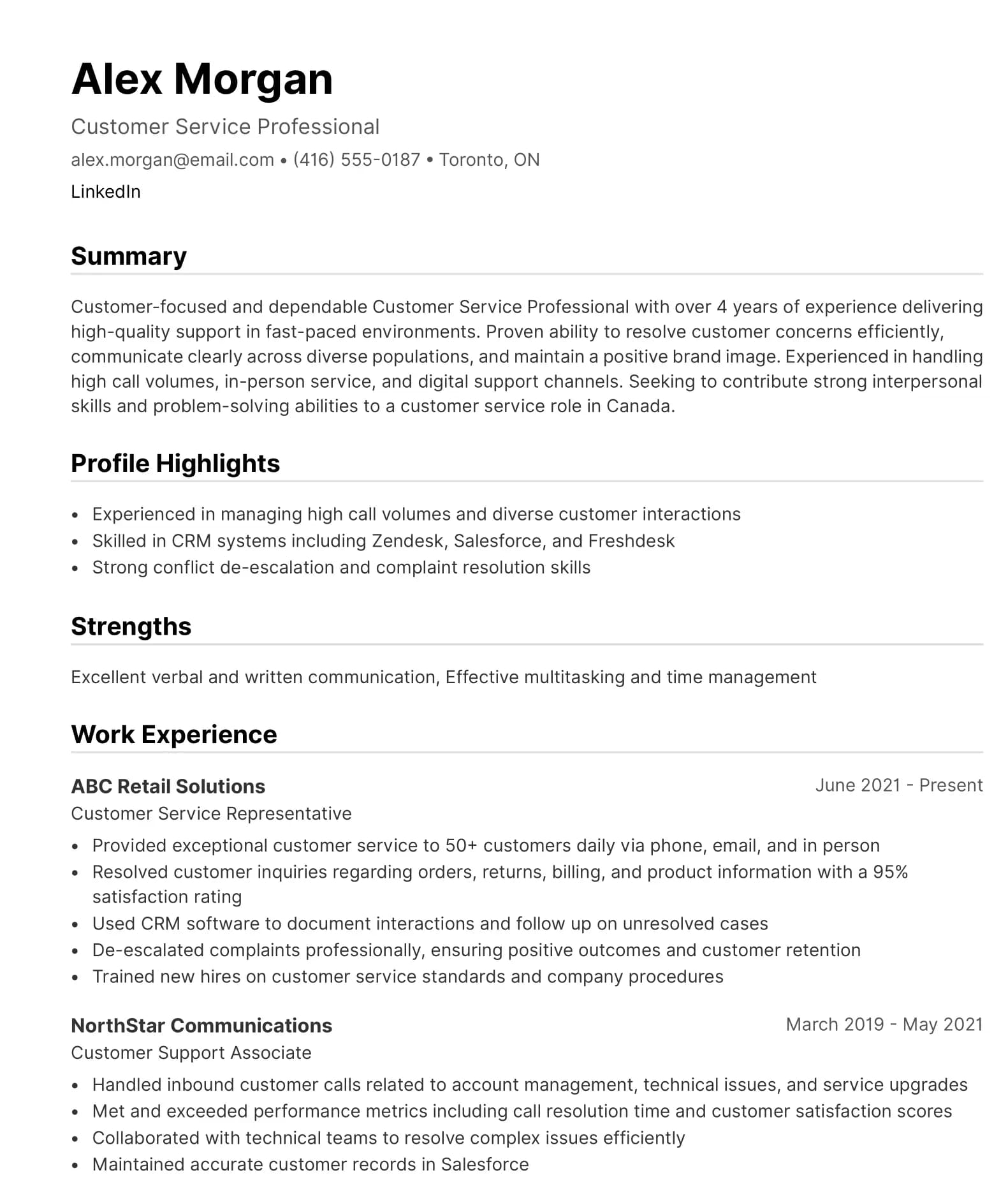
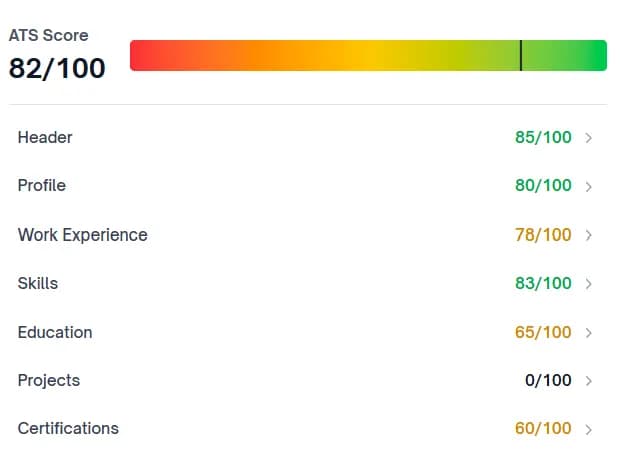
Our AI-powered scoring system helps organizations assess and standardize resume quality at scale. ATS-compliant templates support consistent formatting, keyword alignment, and interview readiness across cohorts.
Nursing Resume Expectations by Healthcare Setting
Hospitals
Hospitals prioritize clinical depth, adaptability, and specialization. Employers expect experience with high-acuity patients, electronic medical records, interdisciplinary collaboration, and evidence-based protocols.
Ontario RN wages (2026):
$46.91–$67.24 per hour under the ONA agreement, with experienced nurses earning over $100,000 annually including differentials and benefits.
Private Clinics and Medical Practices
Clinics value patient communication, continuity of care, and efficiency. Schedules are typically predictable, but compensation is lower than in hospitals.
Typical range: $28–$42 per hour.
Community Health Centers and Long-Term Care
These roles emphasize long-term patient relationships, chronic disease management, and care planning. Autonomy is often higher, but resources may be limited.
Typical range: $38–$48 per hour.
Hint
Nursing resumes should reflect the care setting: hospitals expect high-acuity skills and EMR experience, clinics value communication and efficiency, while community and long-term care emphasize continuity, autonomy, and chronic disease management with realistic wage expectations.
Common Nursing Resume Mistakes to Avoid
- Listing duties instead of outcomes
- Using vague or generic language
- Omitting measurable results (patient load, unit size, outcomes)
- Including unrelated work history
- Failing to proofread
- Burying licenses and certifications
These mistakes account for most early rejections.
Internationally Educated Nurses Resume Focus
Nurses with Experience in the Gulf Region (UAE, Qatar, Saudi Arabia)
Many nurses applying to Canada currently work in internationally accredited hospitals in the Gulf.
Resume focus:
- Translate hospital systems into Canadian terms (acute care, tertiary hospital)
- Clarify patient ratios and unit acuity
- Emphasize evidence-based practice and safety protocols
- Clearly state credential evaluation and licensure status
Nurses Educated in India
India remains one of the largest sources of internationally educated nurses applying to Canada.
Resume focus:
- Translate role titles into Canadian equivalents
- Clarify scope of responsibility (medications, care planning, documentation)
- Emphasize hands-on patient care over supervisory titles unless applicable
- Include WES or NNAS equivalency clearly
- Show continuing education and Canadian healthcare familiarity
Important
Nursing roles vary widely by institution. Your resume should remove ambiguity by explaining unit size, patient load, and responsibilities.
Nurses from the United Kingdom and Ireland
UK- and Ireland-trained nurses often align well with Canadian practice but still need resume adaptation.
Resume focus:
- Convert NHS titles to Canadian equivalents
- Highlight autonomous clinical decision-making
- Translate documentation systems and protocols into Canadian terminology
- Clearly state NCLEX-RN completion (still required)
Nurses from Australia and New Zealand
Nurses from Australia and New Zealand transition smoothly but still face ATS screening barriers.
Resume focus:
- Align terminology with Canadian job descriptions
- Highlight triage, patient advocacy, and evidence-based practice
- Include provincial licensure progress
- Avoid assuming employers understand foreign role scopes
Nurses Trained in African Countries
Canada has seen growing applications from nurses trained across multiple African healthcare systems.
Resume focus:
- Provide credential evaluation results clearly
- Explain clinical settings and resource environments
- Emphasize adaptability, clinical judgment, and patient safety
- Highlight English proficiency and continuing education
Pro Tip
Context matters more than geography. Canadian employers value clarity and standards alignment.
Build an ATS-Ready Canadian Nursing Resume with Yotru
Before a recruiter reviews your resume, it must pass ATS screening. Many qualified nurses are filtered out due to missing keywords, unclear licensure details, or formatting issues.
Yotru helps you fix that by:
- Checking your resume against real nursing job postings for ATS keyword gaps
- Translating international nursing experience into Canadian-recognized language
- Formatting resumes to meet ATS and healthcare hiring standards
- Turning duties into measurable, achievement-focused bullet points
- Letting you create multiple targeted versions for different nursing roles
Whether you are a new graduate, an experienced RN, or an internationally educated nurse preparing to work in Canada, Yotru helps ensure your resume is seen, understood, and evaluated the way Canadian employers hire in 2026.
Run your resume through the ATS checker below to see where you stand before you apply.
ATS-Optimized resumes That Meet Employer Standards
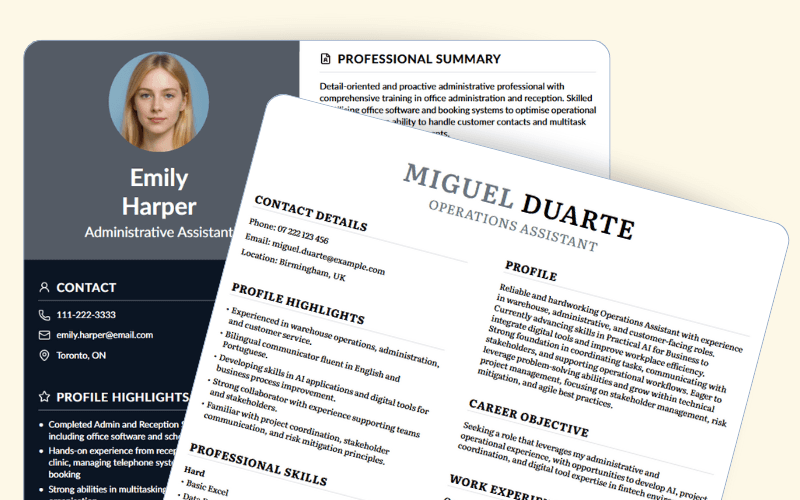
Our AI-powered scoring system helps organizations assess and standardize resume quality at scale. ATS-compliant templates support consistent formatting, keyword alignment, and interview readiness across cohorts.
About the Author

Team Yotru
Employability Systems
Team Yotru
Employability Systems
We build practical career tools for training providers and workforce programs, combining labor market insights with real employment outcomes. Follow us on LinkedIn.
Frequently Asked Questions
For most nurses, a one-page resume is ideal if you have under five years of experience. Nurses with extensive clinical backgrounds, multiple specialties, or leadership roles may use two pages, but clarity and relevance matter more than length.
Audience Context
This guide was created to help nurses understand how to present their experience, credentials, and clinical skills effectively for the Canadian job market in 2026. It is designed for Canadian-trained nurses and internationally educated nurses applying across provinces and healthcare settings.
Editorial Standards
This article follows an evidence-based editorial approach focused on accuracy, neutrality, and practical relevance. Content reflects current Canadian nursing regulations, hiring practices, and resume screening methods. Claims are written to mirror how healthcare employers and applicant tracking systems operate in real hiring environments, not idealized scenarios.
Research Methodology
Guidance in this article is informed by publicly available data from Canadian nursing regulators, labor market reports, employer job postings, and observed resume screening practices in healthcare recruitment. Licensing requirements and resume recommendations reflect standards in place as of 2026.
Disclaimer
This article is provided for informational and educational purposes only. It does not guarantee employment, licensure, or hiring outcomes. Nursing requirements, employer expectations, and hiring processes vary by province, employer, role, and individual circumstances. Readers should verify requirements with relevant regulatory bodies and employers.
Yotru Insights
Resume Building for Healthcare Professionals
- How to Write a Phlebotomist Resume That Gets You Hired – Step-by-step guidance for medical laboratory professionals creating resumes
- How to Write a Dental Hygienist Resume – Resume strategies for allied health professionals with licensure requirements
- How to Write a Social Worker Resume – Building effective resumes for regulated healthcare and social service roles
Canadian Job Market and Immigration Resources
- How to Write a Canadian Resume as an International Student – Essential resume formatting and content guidance for newcomers to Canada
- Resume Builder for Canada: How to Create a Job Bank-Approved Resume – Optimizing resumes for Canadian government job portals and ATS systems
- How to Get an Entry-Level Job in Today's Competitive Canadian Job Market – Strategies for new graduates and career changers entering Canadian employment
Resume Optimization and Job Search Strategies
- Make Your Resume ATS-Friendly in 5 Minutes: 2025 Guide – Quick techniques to ensure your resume passes applicant tracking systems
- How to Effectively Target a Job by Updating Your Resume – Tailoring your resume for specific nursing positions and specialties
- Job Search Strategy 2026: How to Stop Wasting Effort and Start Getting Interviews – Strategic approaches to maximize interview opportunities in competitive markets
References
- Canadian Institute for Health Information. (2025). Registered nurses. https://www.cihi.ca/en/registered-nurses
- Canadian Nurses Association. (2025). Code of ethics 2025. https://www.cna-aiic.ca/en/nursing/regulated-nursing-in-canada/nursing-ethics/2025-coe
- Canadian Nurses Association. (2025). Nursing statistics. https://www.cna-aiic.ca/en/nursing/regulated-nursing-in-canada/nursing-statistics
- Canadian Nurses Association. (2025). Regulatory bodies. https://www.cna-aiic.ca/en/nursing/regulated-nursing-in-canada/regulatory-bodies
- College of Nurses of Ontario. (2025). About the College of Nurses of Ontario. https://www.cno.org/what-is-cno/about-cno
- College of Nurses of Ontario. (2025). About NCLEX-RN. https://cno.org/become-a-nurse/examinations/registered-nurse-examinations/about-nclex-rn
- College of Nurses of Ontario. (2025). Nursing statistics report 2025. https://www.cno.org/Assets/CNO/Documents/Statistics/latest-reports/nursing-statistics-report-2025.pdf
- Government of Canada. (2024). Improving the working lives of nurses across Canada. https://www.canada.ca/en/health-canada/news/2024/03/improving-the-working-lives-of-nurses-across-canada.html
- Government of Canada. (2025). Health workforce. https://www.canada.ca/en/health-canada/services/health-care-system/health-human-resources.html
- Government of Canada. (2025). Immigration, Refugees and Citizenship Canada. https://www.canada.ca/en/immigration-refugees-citizenship.html
- Government of Canada. (2025). Nursing retention toolkit: Improving the working lives of nurses in Canada. https://www.canada.ca/en/health-canada/services/health-care-system/health-human-resources/nursing-retention-toolkit-improving-working-lives-nurses.html
- National Nursing Assessment Service. (2025). Eligibility. https://www.nnas.ca/eligibility/
- National Nursing Assessment Service. (2025). Expedited service. https://www.nnas.ca/expedited-service/
- National Nursing Assessment Service. (2025). Frequently asked questions. https://www.nnas.ca/faqs/
- National Nursing Assessment Service. (2025). Start your nursing journey in Canada. https://www.nnas.ca/
Maintained by: Employability & Skills Group at Yotru
Review cycle: Regularly reviewed to reflect real-world practice
Last updated: January 11, 2026
Questions or Need Support?
If you are working on employability programs, hiring strategy, career education, or workforce outcomes and want practical guidance, you are in the right place.
Yotru supports individuals and organizations navigating real hiring systems. That includes resumes and ATS screening, career readiness, program design, evidence collection, and alignment with employer expectations. We work across education, training, public sector, and industry to turn guidance into outcomes that actually hold up in practice.