Voices of Work
3 min read
Emily Demirdonder on Why Character Matters
Synopsis
A business director shares why technical skills get you noticed, but character, clear communication, and trustworthiness decide who actually gets hired in 2026 and beyond.
At Yotru, we share stories from people who sit close to real hiring decisions. The kind of people who see what actually works long before it shows up in job advice blogs. Each Voices of Work feature highlights leaders shaping how people get hired, evaluated, and trusted.
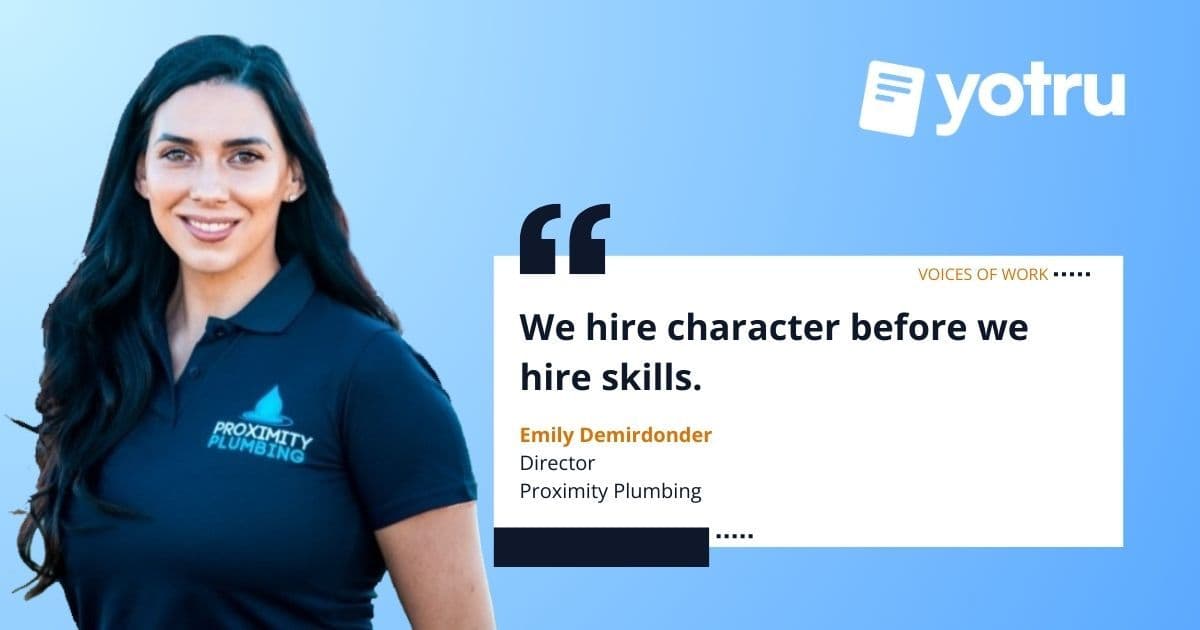
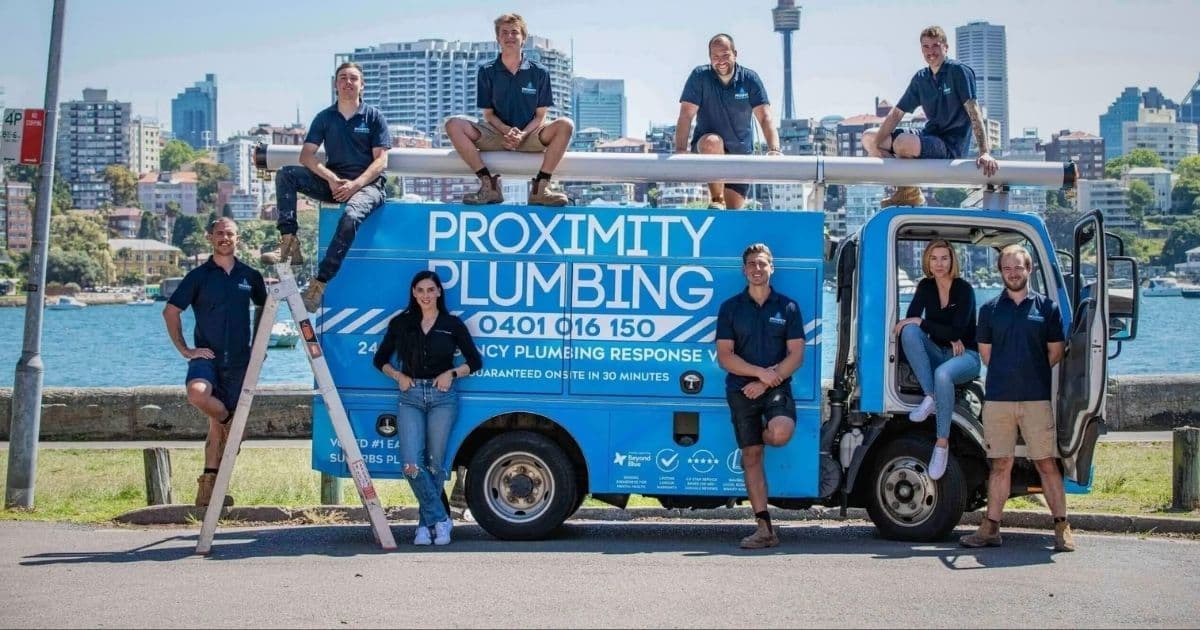
This time, we spoke with Emily Demirdonder, Director at Proximity Plumbing in Sydney, Australia. Emily runs day-to-day operations for a fast-growing service business with more than 1,900 Google reviews and a strong local reputation.
With over a decade of hiring and managing teams in the trades, she has a clear view of what employers are really looking for as the workforce moves toward 2026.
Her message is direct: Skills matter. Character matters more.
Hiring for Trust, Not Just Skill
In service-based industries like plumbing, technical certifications are important. But Emily says they are only the starting point.
“Certifications don’t tell me how someone will treat a customer’s home,” she said. “They don’t tell me how clearly they communicate, or whether they’ll be honest about pricing.”
For Emily, hiring decisions are closely tied to trust. Customers invite tradespeople into their homes, often during stressful situations. That makes interpersonal skills just as critical as technical ability.
“We’re looking for people who understand that trust is part of the job,” she explained.
Why Communication Decides Who Moves Forward
Emily recently interviewed candidates for an administrative role. Out of ten applicants, only two progressed.
The difference was not software knowledge.
“The candidates we didn’t move forward with focused almost entirely on tools,” she said. “They didn’t show how they communicate, how they support customers, or how they work with others.”
The two candidates who stood out were able to explain how they interact with people, resolve issues, and represent the business professionally. For Emily, that distinction was decisive.
Values and Brand Alignment
Emily believes the biggest shift job seekers will face going into 2026 is the need to align with a company’s values, not just its job description.
Businesses want employees who care about the reputation of the company as much as the owner does. Especially in local service businesses, every interaction shapes the brand.
“Generic competence isn’t enough anymore,” Emily said. “We’re looking for people who support the vision of the business and understand the role they play in building trust with customers.”
That mindset, she says, is what separates short-term hires from long-term team members.
Skills Can Be Taught. Character Is Harder
One reason Emily prioritizes character is simple. Technical skills can often be taught through onboarding and training.
Attitude cannot.
“We can train people on systems and processes,” she said. “But respect, honesty, and communication come from who someone is.”
As a result, hiring decisions at Proximity Plumbing increasingly focus on how candidates think, speak, and relate to others, not just what they know on paper.
What Job Seekers Should Understand
Looking ahead, Emily believes job seekers who succeed will be those who understand the full role they play within a business.
That means:
- Showing care for customer experience
- Communicating clearly and calmly
- Taking pride in representing the company
- Understanding that reputation is built one interaction at a time
“People want to work with professionals they trust,” she said. “That applies to customers and employers.”
About Emily Demirdonder
Emily Demirdonder is Director at Proximity Plumbing, a Sydney-based commercial, residential, and strata maintenance company serving the Eastern Suburbs. She began her career as a flight attendant with Virgin Australia before moving into marketing, operations, and leadership within the plumbing industry. Emily now leads Proximity Plumbing’s operations and growth, with a focus on transparency, customer trust, and building a strong, values-driven team.
Pro Tip
This article is part of Yotru's Voices of Work series, highlighting leaders who are redefining how people learn, lead, and get hired. To get featured, please contact us.
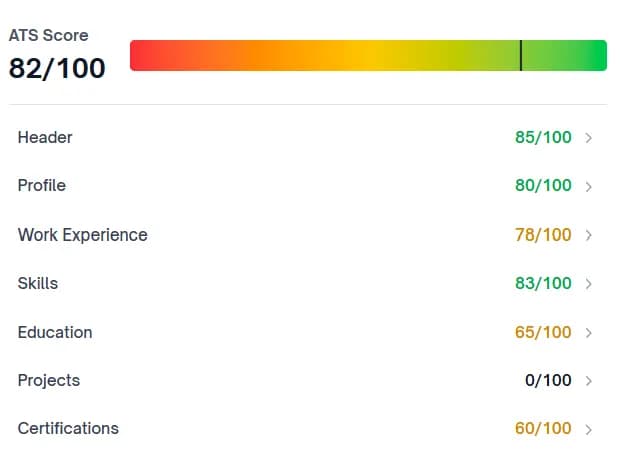
ATS-Optimized resumes That Meet Employer Standards
Our AI-powered scoring system helps organizations assess and standardize resume quality at scale. ATS-compliant templates support consistent formatting, keyword alignment, and interview readiness across cohorts.
About the Author

Team Yotru
Employability Systems
Team Yotru
Employability Systems
We build practical career tools for training providers and workforce programs, combining labor market insights with real employment outcomes. Follow us on LinkedIn.
Audience Context
For job seekers, employers, and trades professionals. Learn why character, communication, and values alignment matter more than credentials alone in 2026 hiring decisions from a director who manages high-trust service teams.
Disclaimer
Views shared reflect personal experience only. Not official advice. Hiring practices vary by company and region. Use for general guidance, not as professional or legal advice.
Recommended Reading
Character, values, and hiring
- Nicole Fougere on Trust — Trust, tools, and proof in hiring
- Gloria Espina on Suitability — Suitability over credentials
- Robert Hourie on AI & Instinct — AI plus human judgment
- Traits All Great Resumes Possess — Traits that signal character and care
- Green Flags in Interviews — Behaviours that show true character
Skills-first signals and proof
- What Methods Show Impact — Ways to evidence real results
- What Hiring Managers Notice First — Signals that stand out fast
- What Hundreds of Resumes Taught — Patterns from real reviews
- Job Search Strategies That Work — Tactics aligned with modern hiring
- Skills in Resume for Freshers — Showing skills, not just titles
Values, fit, and retention
- Why It Feels Hard to Get a Job — Market and expectations mismatch
- Why Interviews Feel Harder — Process vs real work gap
- What Really Matters in Interviews — What good interviewers focus on
- Why Libraries Are Key — Community pathways into work
- How Training Providers Improve Outcomes — Program design around proof
Voices of Work series
- Amanda Main on Gen Z Pivot — Redefining ambition and paths
- Danielle Ayodele on Safe Learning — Safe learning and outcomes
- Fallon Chase on Fractional HR — People ops and fit at scale
- Tina Robinson on Leadership — Habits that build trust
- Em Richards on Storytelling — Stories that prove impact
References
- Why Hire for Character — Why character shapes every outcome
- Why Hiring for Character Matters — Case for character-first hiring
- Values-Based Recruitment — Hiring on values, not just skills
- Skills-Based Hiring Reshaping TA — Shift to skills-first evaluation
- Skills-First Employers & Retention — Skills-first linked to retention
Maintained by: Workforce Practice Group at Yotru
Review cycle: Regularly reviewed to reflect real-world practice
Last updated: December 30, 2025
Continue Reading
More insights from our research team

AI in Career Services: Practical Use Cases That Don't Replace Advisors
AI in career services isn't about replacing advisors. It's about handling baseline tasks so career professionals can focus on coaching and relationship building.
7 min read

Resume Builder for Laid Off Workers: Turning Job Loss Into a Fresh Start
For laid-off workers, getting back to work starts with a strong resume. This guide explains how a resume builder for laid-off workers helps you handle employment gaps, highlight transferable skills, and create an ATS-ready document that gets you in front of employers.
2 min read
What “Job-Ready” Actually Means for Early-Career Candidates
Job-ready isn’t about grades anymore. What actually gets early-career candidates hired is real-world experience, initiative, and proof you can deliver from day one.
4 min read

Applying Gatsby Benchmark 3 in Adult and Vocational Education: Personal Guidance at Scale
For careers teams in adult and vocational education. A practical look at applying Gatsby Benchmark 3, delivering personalised guidance at scale without overwhelming staff.
3 min read