
Employability
5 min read
Best Resume Builder for Students
Synopsis
Building a resume with limited experience is a real challenge. This guide explains what the best resume builder for students should offer, and how to turn coursework, internships, and extracurriculars into a competitive application.
Writing your first serious resume is harder than it sounds. You're expected to compete for internships and entry-level jobs against applicants with polished documents, but you've had limited time to accumulate the kind of experience that fills one.
The good news is that students don't need a long work history to build an effective resume. They need a resume builder that helps them present what they have in a format that works for entry-level hiring — and they need to understand how the selection process actually works.
This guide explains what to look for in a resume builder as a student, what content matters most at this stage, and how to build something that holds up in real hiring situations.
What Students Actually Need from a Resume Builder
A student resume builder needs to solve a different problem than a professional resume builder. The challenge isn't organizing decades of experience — it's making limited experience look purposeful and relevant.
The key features for students are:
Guided input for non-traditional experience. Coursework, group projects, volunteer work, campus organizations, and part-time jobs all count — but only if they're written up in a way that connects them to the role you're applying for. A builder that helps you phrase these sections is far more useful than one that just gives you a blank template.
Entry-level friendly templates. Some resume templates look great for a senior professional with three pages of content. For a student, those same templates will look sparse and unbalanced. Look for templates designed for one-page documents with smart use of whitespace.
ATS compatibility. Even entry-level roles at medium and large employers use ATS screening. Your student resume still needs to be machine-readable. The same structural rules apply: single-column layout, standard headers, clean fonts, no graphics.
Free or low-cost access. Students are cost-sensitive. A builder that requires a paid subscription to download your completed resume creates an unnecessary barrier. Look for tools that offer free exports, not just free editing.
Speed and ease of use. If it takes more than 30 minutes to produce a working draft, the tool is working against you.
What to Include in a Student Resume
The content challenge for students is knowing what counts. Here's a practical framework:
Education section — lead with it. For students and recent graduates, education should appear at the top of the resume, not at the bottom. Include your degree, institution, expected or actual graduation date, and GPA if it's 3.5 or above.
Relevant coursework. If you're applying for a role related to your field of study, listing four to six relevant courses adds content without fabricating experience. It also signals to ATS systems that you have domain knowledge.
Projects and assignments. A capstone project, research paper, or significant group assignment can be written up as a work experience item. Include what you did, what method or skill you applied, and what the outcome was.
Internships and co-ops. These are the closest thing to work experience and should be formatted like a standard job entry with a company name, title, dates, and bullet points describing your contributions.
Part-time and seasonal work. Even jobs that aren't directly related to your target field demonstrate reliability, communication, and time management. Include them with concise, achievement-oriented bullets rather than task lists.
Extracurriculars and leadership. Student government, clubs, athletics, and community organizations are legitimate resume content, particularly if you held a leadership role or organized events.
The student resume guide covers common errors hiring managers observe in student applications and how to avoid them.
Hint
If you're applying for your first internship, a one-page resume is the standard. If you're a recent graduate with substantial project or co-op experience, one to one-and-a-half pages is appropriate. Never pad to fill space.
Resume Format Choices for Students
Reverse-chronological works for most students, particularly those with internship or work experience to list. It's the most familiar format for recruiters and the most reliably parsed by ATS systems.
Hybrid format works well for students making a lateral move into a different field, or for those whose skills are more impressive than their job titles suggest. Leading with a skills summary before the work history lets you front-load your most relevant qualifications.
Functional format is generally not recommended. It hides the lack of experience rather than addressing it, and most experienced recruiters recognize this. It also tends to perform poorly in ATS parsing.
For most students, a clean reverse-chronological or hybrid format on a simple single-column template is the right call. The AI resume builders vs. traditional tools comparison explains where AI-assisted builders add the most value at this stage.
Pro Tip
Tailor your resume to each job. This doesn't mean rewriting everything — it means adjusting two or three bullet points and your skills section to reflect the language of the specific job description you're targeting.
Common Mistakes in Student Resumes
These are the issues that repeatedly appear in student resumes reviewed by hiring teams:
- Objective statements that describe you, not the role. Outdated objective sections ("Seeking a challenging position where I can grow") add no value. Replace with a two-line professional summary if the space is needed, or remove it entirely.
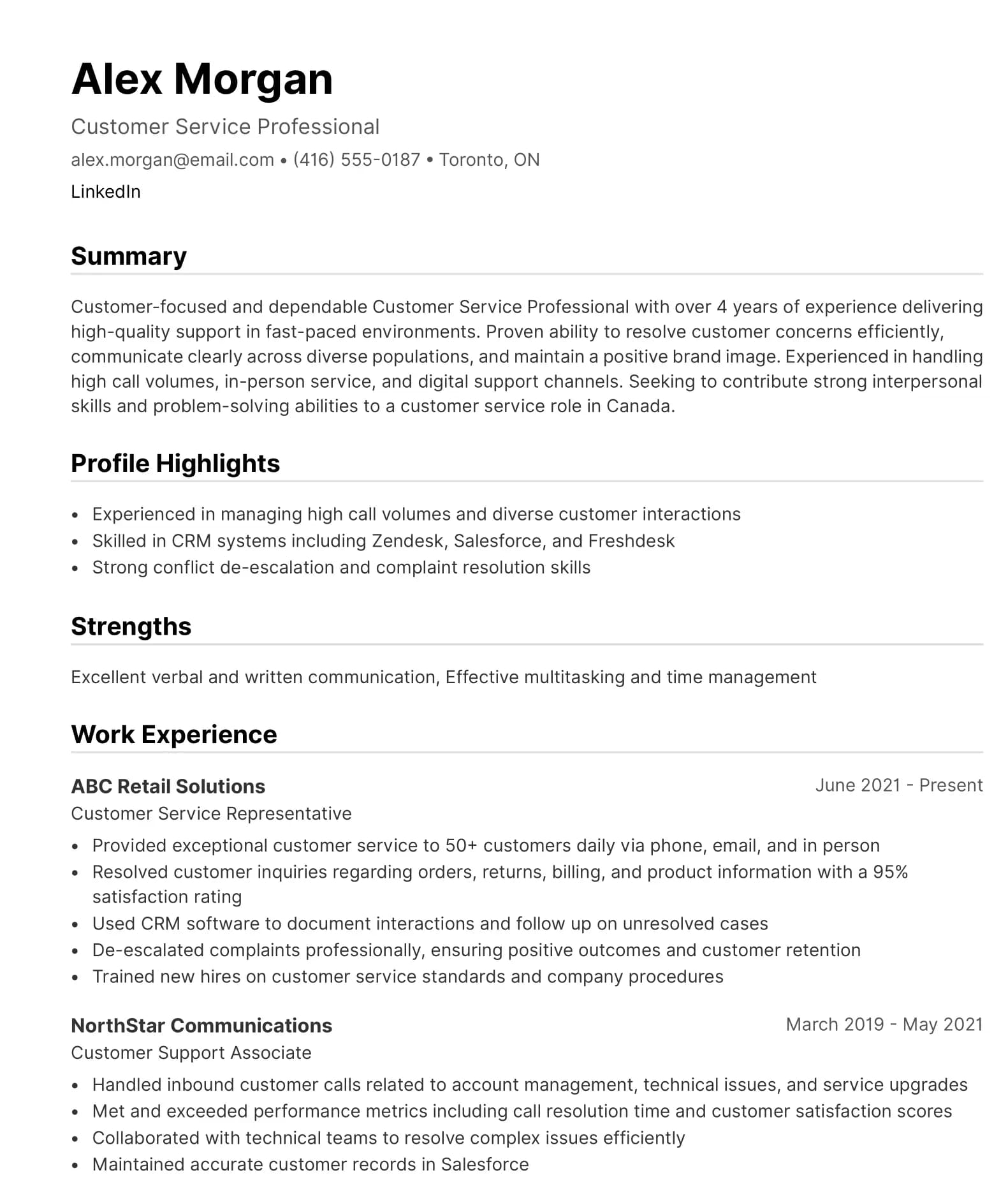
- Task-based bullets instead of accomplishment-based ones. "Responsible for social media" tells a recruiter nothing. "Managed Instagram and LinkedIn accounts, growing combined following by 340 in six months" is specific and demonstrable.
- Missing contact information or outdated links. Make sure your phone number, email, and LinkedIn URL (if applicable) are current and visible at the top of the resume.
- GPA omission when it's strong. Students often leave off a strong GPA assuming it doesn't matter. For recent graduates and students, a GPA above 3.5 is a credibility signal worth including.
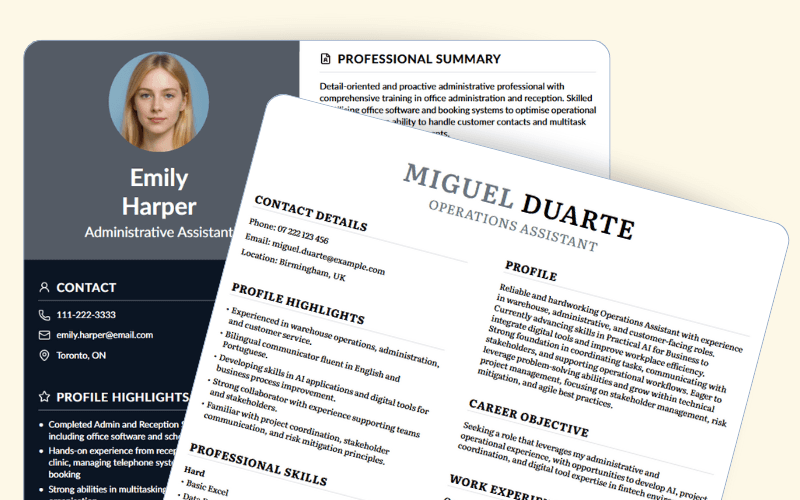
- Design-heavy formatting. Icons, colored skill bars, and multi-column designs look modern but often fail ATS parsing and can appear unprofessional in conservative industries.
The resume tips for Gen Z article addresses several of these patterns directly, particularly around design trends common in student resumes.
ATS-Optimized resumes That Meet Employer Standards
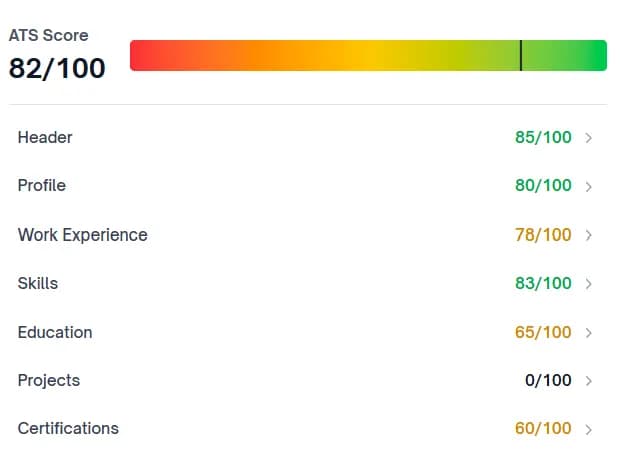
Our AI-powered scoring system helps organizations assess and standardize resume quality at scale. ATS-compliant templates support consistent formatting, keyword alignment, and interview readiness across cohorts.
Getting Your Student Resume Job-Ready with Yotru
Yotru's resume builder is built for job seekers who need practical guidance, not just templates. For students, this means AI-assisted content suggestions that help you phrase your experience accurately, ATS-compatible templates that work in real hiring systems, and a clean export you can submit immediately.
The platform is available to students and has been used by university career services programs and training providers to support learners at the start of their career.
If you're ready to build your student resume, you can get started here.
About the Author

Lakshmi Reddy
Career Specialist
Lakshmi Reddy
Career Specialist
Lakshmi is a seasoned Career Specialist, contributing research and insights on hiring trends, resumes, and career pathways.
Frequently Asked Questions
The best resume builder for students helps turn limited experience into structured, job-ready content. It should guide coursework, projects, and internships into relevant sections. Tools like Yotru are designed to help students build resumes quickly without starting from scratch.
Audience Context
This guide is for students and recent graduates building their first resume with limited experience. It focuses on how to present coursework, projects, and early work experience in a format that works for internships and entry-level roles.
Disclaimer
This content is for general guidance only. Resume quality and outcomes depend on experience, role requirements, and job market conditions. Tools like Yotru can help structure and improve resumes, but do not guarantee interviews or job offers.
Further Insights
- What Student Resumes Teach Us — Hiring manager observations on students
- Best Resume Builder Apps — Builder options by career stage
- Resume Tips for Gen Z — Formatting for younger applicants
- Canadian Resume for Int'l Students — Applying in a new country
- ATS-Friendly Resume Builders — ATS compliance for entry-level
- Top 10 Free Resume Builders — No-cost builder options reviewed
Teal vs ChatGPT for Job Seekers — Tracker tool vs general AI - Kickresume vs ChatGPT for Resumes — Design-first vs text generation
- Rezi vs ChatGPT for Resume Building — ATS builder vs open AI
- Enhancv vs ChatGPT for Resumes — Visual builder vs raw AI
- Is Jobscan Better Than ChatGPT? — Keyword tool vs AI writing
- AI Resume Builder vs ChatGPT — Structured AI vs open AI
- How to Use ChatGPT for Resumes — Prompts, limits, and better tools
- Can ChatGPT Resumes Get You Rejected? — AI risk in real hiring
- ChatGPT as a Resume Builder — What it does and doesn't do
References
- National Association of Colleges and Employers. (2025). Job outlook survey. https://www.naceweb.org
- U.S. Bureau of Labor Statistics. (2025). College enrollment and work activity of recent high school graduates. https://www.bls.gov
- Statistics Canada. (2025). Labour force characteristics of recent graduates. https://www150.statcan.gc.ca
- LinkedIn Economic Graph. (2025). Entry-level hiring trends. https://economicgraph.linkedin.com
- Pew Research Center. (2024). Young workers in today's economy. https://www.pewresearch.org
- National Center for Education Statistics. (2024). Digest of education statistics. https://nces.ed.gov
- Harvard Business Review. (2024). The hiring problem for new graduates. https://hbr.org
- Society for Human Resource Management. (2025). Entry-level talent acquisition benchmarks. https://www.shrm.org
- Indeed Hiring Lab. (2025). Entry-level job postings and candidate activity. https://www.hiringlab.org
- Association of American Colleges and Universities. (2024). Employer views on college learning and career preparation. https://www.aacu.org
Maintained by: Employability & Skills Group at Yotru
Review cycle: Updated regularly
Last updated: April 4, 2026
Questions or Need Support?
If you are working on employability programs, hiring strategy, career education, or workforce outcomes and want practical guidance, you are in the right place.
Yotru supports individuals and organizations navigating real hiring systems. That includes resumes and ATS screening, career readiness, program design, evidence collection, and alignment with employer expectations. We work across education, training, public sector, and industry to turn guidance into outcomes that actually hold up in practice.