Toronto Salary Guide · 2026

HVAC Technician Salary in Toronto, ON (2026)

Last updated:

This page covers base salary ranges for HVAC Technicians working in Toronto and the Greater Toronto Area, across residential, commercial, and industrial settings. It is designed for apprentices entering the trade, journeypersons benchmarking their current rate, and out-of-province or internationally trained applicants navigating Ontario licensing. Ranges vary by sector, certification tier (G1/G2/G3, 313A, Red Seal), union status, and employer type.

Apprentice / Entry Level
$45,000 - $58,000 CAD
0-2 yrs, registered apprentice or first certificate level
Journeyperson
$58,000 - $78,000 CAD
3-5 yrs, 313A or G2 ticket, residential and light commercial
Senior Technician
$78,000 - $95,000 CAD
6-10 yrs, dual-certified, commercial or industrial focus
Lead / Master / Specialist
$95,000 - $107,000 CAD
10+ yrs, Red Seal, G1, chiller/BAS/refrigeration specialist or foreman

HVAC TECHNICIAN SALARY RANGES IN TORONTO, ON - 2026

Apprentice / Entry Level
$45K - $58K CAD
Journeyperson
$58K - $78K CAD
Senior Technician
$78K - $95K CAD
Lead / Master / Specialist
$95K - $107K CAD
Sources: Government of Canada Job Bank NOC 72402 Ontario (Nov 2025), ERI SalaryExpert Toronto (2026), Glassdoor Toronto (Mar 2026), PayScale Toronto (Dec 2025), Red Seal Recruiting (Feb 2026). Base salary only; excludes overtime, bonuses, and equity.

What does an HVAC Technician earn at each level in Toronto?

Certification tier, sector, and union membership are the three levers that move pay most decisively across every experience band.

Apprentice / Entry Level

$45,000 - $58,000 CAD

Apprentices working toward their 313A or G3 certificate in residential installation or service typically land in this band while accumulating hours toward journeyperson status.

Move up faster

  • Complete your G2 gas-fitting ticket before your apprenticeship term ends.
  • Target commercial service shops - they pay above residential for apprentice hours.
  • Log refrigeration hours to qualify for dual-stream certification sooner.

Rewrite your resume around production impact →

Journeyperson

$58,000 - $78,000 CAD

Licensed 313A holders with a G2 ticket covering residential and light-commercial service form the core of this band, with commercial accounts and troubleshooting complexity pushing toward the upper end.

Move up faster

  • Add your G1 licence - it unlocks higher-pressure gas systems and commercial contracts.
  • Pursue Red Seal endorsement to signal portability and command a premium.
  • Shift to a commercial or property-management employer for structured pay grids.
Rewrite your resume around production impact →

Senior Technician

$78,000 - $95,000 CAD

Dual-certified technicians with six-plus years in commercial or light-industrial environments, including chiller, BAS, or refrigeration exposure, consistently clear $78K and approach $95K with strong troubleshooting records.

Move up faster

  • Earn a refrigeration licence (class B or higher) for industrial and cold-chain work.
  • Build BAS/DDC controls familiarity - building automation skills are increasingly required.
  • Pursue union membership or a large-facility employer for grid-based top-of-band pay.
Rewrite your resume around production impact →

Lead / Master / Specialist

$95,000 - $107,000 CAD

Red Seal-endorsed G1 holders specializing in chillers, building automation, or large commercial refrigeration, or those in lead and foreman roles at institutional or industrial sites, occupy the top of this band.

Move up faster

  • Target institutional clients - hospitals, universities, and transit authorities pay top-band rates.
  • Leverage Red Seal portability to negotiate with out-of-province or multi-site employers.
  • Develop project-management or estimating skills to transition into supervisory compensation tiers.
Rewrite your resume around production impact →

Stuck below market rate as an HVAC Technician in Toronto?

Many licensed technicians plateau because their resume does not reflect the full scope of their certifications, sector experience, and building types served. Employers and ATS filters shortlist on keywords like specific licence codes, building types, and refrigerant handling.

  • List every ticket by exact code - G1, G2, G3, 313A, Red Seal, Class B Refrigeration - on your resume header.
  • Use employer-specific language from job postings: 'chiller commissioning', 'BAS/DDC', 'rooftop unit service', 'preventive maintenance programs'.
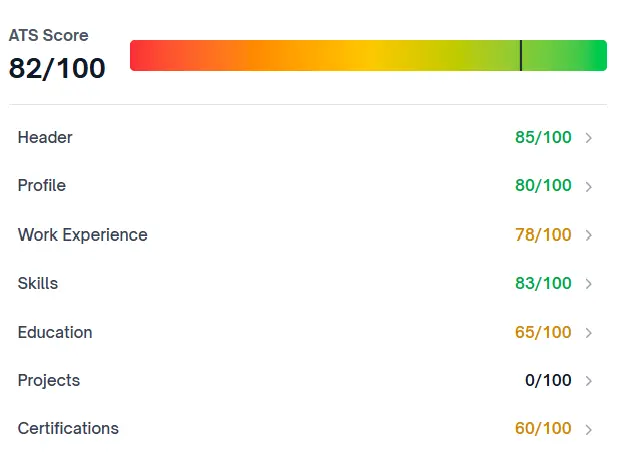
  • Get your resume scored against ATS filters before your next application.
  • Document the building types and square footage you have serviced - commercial, institutional, high-rise - to justify senior-level positioning.
  • If you hold a Red Seal, note inter-provincial mobility explicitly; Toronto employers value it for multi-site contracts.
  • Track and cite measurable outcomes - response times, first-call resolution rates, contract retention - to support a counter-offer conversation.

Turn your certifications into top-of-band resume language

Toronto HVAC employers shortlist on specific ticket codes and building-type keywords. Optimizing your resume to reflect your full certification stack can move you from the journeyperson band to senior-level conversations.

What drives HVAC Technician salaries higher in Toronto

Higher-paying candidates typically show:

  • Gas-fitting licence tier - G1 holders qualify for high-pressure and large commercial systems, commanding a premium over G2 and G3 holders in the same market.
  • Red Seal endorsement - signals cross-provincial portability and proficiency, often used by large commercial contractors and institutions as a shortlist filter.
  • Sector shift - moving from residential service to commercial property management, industrial facilities, or institutional buildings (hospitals, transit) consistently adds $8K-$20K CAD to base.
  • Refrigeration and HVAC/R dual certification - cold-chain, food-service, and industrial refrigeration work pays above standard HVAC rates across all experience levels.
  • Union membership - UA Local 787 (Toronto) and similar building-trades agreements set structured wage grids and benefit packages that frequently exceed non-union equivalents at equivalent experience levels.
  • Building automation and controls (BAS/DDC) skills - technicians who can program and commission building controls are increasingly scarce and attract above-band offers from facility operators and large mechanical contractors.
  • Employer type and size - large property managers, utilities, institutional clients, and government-facilities operators typically offer higher base rates and structured progression than small residential shops.

HVAC Technician salaries by Canadian city

Toronto, ON

$45,000 - $107,000 CAD

The GTA's dense commercial and high-rise stock, major institutions, and large transit infrastructure create strong demand across all tiers; Ontario's G1/G2/313A licensing framework and UA Local 787 presence support structured pay grids.

Ottawa, ON

$44,000 - $95,000 CAD

Federal government buildings, hospitals, and university campuses generate steady commercial demand; wages are broadly competitive with Toronto but the cost of living is lower, improving effective purchasing power.

Vancouver, BC

$48,000 - $105,000 CAD

High-density residential towers and a large commercial sector push wages above the national average; BC requires provincial registration and the Red Seal is widely respected, while high cost of living partially offsets the gross pay advantage.

Calgary, AB

$46,000 - $105,000 CAD

Oil-and-gas facility work and large commercial development historically push industrial HVAC wages high; Alberta has no provincial sales tax and a lower cost of living than Toronto or Vancouver, making net pay competitive.

Montreal, QC

$42,000 - $85,000 CAD

Quebec requires French-language proficiency for most employer and licensing interactions, and provincial certification through the CCQ (Construction Commission) is mandatory; wages are generally lower than Toronto but cost of living is also significantly lower.

Halifax, NS

$40,000 - $75,000 CAD

Atlantic Canada's smaller commercial market yields more moderate pay, but steady residential and institutional demand, lower cost of living, and less competition for licensed technicians can be attractive for career starters or those relocating.

For Toronto-based technicians weighing relocation or remote work, Calgary and Vancouver offer the strongest gross-pay upside, though both carry credential and registration steps. Ottawa matches Toronto on pay while costing less to live in - a strong net-compensation play. Montreal is viable only for French-speaking technicians or those willing to invest in language training, and Quebec's CCQ registration process adds timeline. Halifax and the Atlantic provinces offer stable work and a lower cost of living but the smaller commercial base limits ceiling pay. Internationally trained applicants targeting Toronto should prioritize Ontario credential recognition through TSSA (Technical Standards and Safety Authority) and contact the Ontario College of Trades (now Skilled Trades Ontario) for 313A equivalency assessment before accepting any offer, as unrecognized credentials typically place workers at the apprentice pay band regardless of home-country experience.

Overtime, on-call, and premium pay

Many Toronto HVAC employers offer on-call allowances, emergency-call premiums, and seasonal overtime that can add $5,000 to $15,000 CAD annually to base pay. Union agreements often set minimum on-call rates separately from the hourly grid. These amounts are not included in the base ranges on this page.

CAD vs. USD offers and remote work

Some large US-headquartered facilities-management and mechanical-contracting firms post Canadian roles with CAD-denominated pay that may be below equivalent USD roles. Confirm currency and whether benefits are extended before comparing. Remote HVAC work is rare by nature, but some diagnostic, BAS/DDC programming, and project-management roles can be partially remote.

Newcomers and credential recognition

Internationally trained HVAC technicians must have their credentials assessed by Skilled Trades Ontario (formerly OCOT) for 313A equivalency and by TSSA for gas-fitting licences before working independently in Ontario. Safety tickets such as WHMIS, Working at Heights, and First Aid are required by most Toronto employers and must be completed in Canada regardless of prior training; these are typically obtained within weeks of arrival and cost under $500 CAD combined.

HVAC Technician salary negotiation checklist - Toronto

Complete these steps before your next offer or review conversation to maximize your position within the range.

  • List all certifications by exact Ontario code: 313A, G1, G2, G3, Red Seal, Class A/B Refrigeration, and any BAS/DDC vendor credentials.
  • Pull the current Ontario Job Bank wage band for NOC 72402 and use it as your floor reference in the conversation.
  • Identify whether the role is union or non-union and, if non-union, research comparable UA Local 787 grid rates as a benchmark.
  • Document the building types and system sizes you have serviced - square footage, chiller tonnage, rooftop unit count - to justify senior-level positioning.
  • Quantify service metrics where possible: average first-call resolution rate, PM compliance percentage, or emergency-response time.
  • Confirm all components of the offer: base wage, on-call structure, overtime policy, tool allowance, vehicle or mileage, and benefits before accepting or counter-offering.
  • If relocating from another province, note Red Seal portability explicitly and request that your out-of-province experience be mapped to the Toronto-market equivalent tier.
  • Ask for a 6-month or 12-month wage review clause in writing if the starting offer is below your target band.

How Yotru helps you reach top-of-band offers

  • Rewrites your experience around deployment, systems, and measurable outcomes — the signals hiring managers actually pay for.
  • Formats your resume to pass ATS filters at top-paying companies in Toronto, Vancouver, and remote-first teams.
  • Turns "trained a model" into "reduced inference latency 40%" — the language that puts you in the upper band, not the lower one.
  • Takes 5 minutes. No blank-page anxiety, no guessing what to cut.

Turn Your resume Into Top-of-Band Evidence

Get ATS-optimized feedback and role-specific language upgrades that map your experience to salary-driving outcomes: ownership, impact, and delivery at scale.

resume templateATS score overlay

Common Questions

Answers to the most common questions about HVAC Technician compensation in Toronto, ON.

What is the average HVAC Technician salary in Toronto in 2026?

Based on multiple sources compiled in early 2026, the typical base salary range for an HVAC Technician in Toronto is approximately $45,000 to $107,000 CAD depending on experience, certification, and sector. The Ontario Job Bank (NOC 72402, updated November 2025) reports an hourly range of $21 to $58 for the province. Mid-career journeypersons with a 313A and G2 ticket generally earn between $58,000 and $78,000 CAD.

Do I need a Red Seal to work as an HVAC Technician in Toronto?

A Red Seal is not legally required to work in Toronto, but it is widely valued by commercial and institutional employers as a benchmark of competency and grants inter-provincial mobility. Ontario's mandatory credential for refrigeration and air conditioning work is the 313A Certificate of Qualification issued by Skilled Trades Ontario. Gas-fitting work additionally requires a TSSA Gas Technician licence (G1, G2, or G3) depending on system pressure and type.

How much more does a unionized HVAC Technician earn than a non-union one in Toronto?

Union HVAC technicians in Toronto, primarily under UA Local 787, typically receive structured wage grids plus defined benefit packages, on-call rates, and overtime schedules that are negotiated collectively. Gross hourly rates under union agreements can be at or above the senior-technician band on this page, but direct comparison is difficult because non-union employers may offer vehicle allowances or flexible scheduling not reflected in base pay. Candidates should compare total compensation, not just the hourly rate.

What certifications increase HVAC pay the most in Ontario?

The G1 gas-fitting licence, Red Seal endorsement, Class B Refrigeration licence, and BAS/DDC building controls proficiency are consistently cited by employers and salary data sources as the highest-impact credentials. The G1 expands the scope of permissible gas work and is required for most large commercial contracts. Refrigeration and HVAC/R dual certification also unlocks industrial and food-service roles that pay above standard HVAC rates.

Can internationally trained HVAC Technicians work in Toronto right away?

Not independently. Internationally trained technicians must complete a credential recognition process through Skilled Trades Ontario (313A equivalency assessment) and, if working with gas-fired equipment, apply to TSSA for a Gas Technician licence based on their demonstrated competency. Canadian safety training - WHMIS, Working at Heights, and First Aid - is also required by most Toronto employers and must be completed domestically. These processes can take weeks to several months depending on documentation completeness.

How does HVAC Technician pay in Toronto compare to Vancouver and Calgary?

All three cities have similar ceiling ranges (roughly $95,000 to $107,000 CAD for top-of-band specialists), but the cost-of-living context differs significantly. Vancouver's high housing costs partially offset a gross-pay advantage, while Calgary combines competitive industrial wages with lower provincial taxes and living costs. Toronto's dense commercial and institutional market provides volume and stability of work that can be harder to find in smaller markets.

What is the HVAC Technician salary range in Montreal for a French-speaking applicant?

Average HVAC Technician salaries in Montreal are generally lower than Toronto, with estimates around $42,000 to $85,000 CAD. Quebec's construction industry requires registration with the Commission de la construction du Quebec (CCQ), which regulates wages and working conditions on construction sites. French-language proficiency is effectively required for employer interactions, licensing processes, and most on-site communication in Quebec.

Does working in residential vs. commercial HVAC affect pay in Toronto?

Yes, materially. Commercial and industrial HVAC work consistently pays more than residential in Toronto due to system complexity, the requirement for higher-tier certifications (G1, Class B Refrigeration), and larger employer budgets. Senior technicians in commercial property management or institutional facilities can earn $15,000 to $25,000 CAD more than peers doing residential service at the same experience level.

Compare HVAC technician compensation with other licensed trades and construction roles in the Toronto area.

Job titleApprentice (Levels 1-4)Journeyman (303A Licensed)Senior Journeyman / SpecialistMaster Electrician / Foreman
Electrician$42K - $68K CAD$68K - $90K CAD$85K - $105K CAD$95K - $110K+ CAD
Plumber$36K - $52K CAD$60K - $80K CAD$78K - $95K CAD$88K - $105K CAD
Welder$42K - $55K CAD$55K - $72K CAD$72K - $83K CAD$83K - $90K+ CAD
Construction Labourer$36K - $46K CAD$46K - $62K CAD$62K - $74K CAD$74K - $85K CAD
Truck Driver$44K - $57K CAD$57K - $78K CAD$78K - $95K CAD$95K - $115K+ CAD

Sources and methodology

Salary ranges on this page were compiled by cross-referencing five publicly available data sources covering 2025-2026 Ontario and Toronto-specific HVAC Technician wage data, with the Government of Canada Job Bank (NOC 72402) used as the primary official floor-and-ceiling reference. Where sources diverged, ranges were set conservatively using the intersection of the middle 50th-to-90th percentile bands across sources.

What HVAC Technicians in Toronto are actually saying

The following cards reflect themes from publicly posted comments and salary submissions on trades forums and review platforms from late 2024 through early 2026. No individual is identified.

Reddit · r/hvacadvice - Toronto-area thread
Getting my G1 was the single best thing I did for my pay - jumped almost $8 an hour overnight.

Reflects a widely reported pattern: the G1 gas-fitting licence unlocks higher-pressure commercial work and is frequently cited as the most direct certification-to-pay lever in Ontario.

Reddit · r/PersonalFinanceCanada - trades pay discussion
Non-union residential shops in Toronto are still offering the same rates as three years ago. Commercial union is where the money moved.

Suggests a bifurcation in the Toronto market where residential non-union pay has stagnated while commercial union grids have tracked higher - consistent with the spread between lower and upper salary bands on this page.

Glassdoor · Toronto HVAC Technician reviews, 2025-2026
The on-call pay adds up to more than my base raise did last year - don't overlook it in negotiations.

On-call and emergency-call premiums are a significant but often overlooked component of total HVAC compensation in Toronto; multiple Glassdoor submissions note it as a key differentiator between offers.

Indeed · Toronto HVAC job reviews, 2025
They wanted Red Seal even for a journeyperson role - it seems like the baseline is shifting.

Indicates that some larger commercial and institutional Toronto employers are moving Red Seal from a preferred to a de-facto required credential, which may raise the effective entry point to senior-band pay ranges over time.

Reddit · r/canadianimmigration - trades newcomer thread
My home-country HVAC licence meant nothing until I got the Skilled Trades Ontario assessment done - start that before you even land if you can.

Highlights the importance of beginning the credential-recognition process early; internationally trained applicants who delay assessment typically start at apprentice-band wages regardless of actual experience level.

Companies actively hiring HVAC Technicians in Toronto

Enercare · Johnson Controls · Ainsworth · Comfort Systems Canada · Mechanical Contractors (GTA) - various · City of Toronto Facilities Management · Honeywell Building Technologies · Trane Technologies · Greater Toronto Airports Authority · Brookfield Global Integrated Solutions · Aramark Facilities · Black and McDonald

Glassdoor - HVAC Technician salaries, Toronto, ON, based on 151 anonymously submitted salaries as of March 2026 Glassdoor Toronto HVAC 2026

PayScale - HVAC Technician hourly pay, Toronto, Ontario, based on 27 salary profiles updated December 2025 PayScale Toronto HVAC 2026

Skilled Trades Ontario (formerly Ontario College of Trades) - credential recognition and 313A certification information Skilled Trades Ontario

Data note: All salary figures on this page are approximate base salary estimates in Canadian dollars (CAD) compiled from publicly available aggregate sources including the Government of Canada Job Bank (NOC 72402, updated November 2025), ERI SalaryExpert (2026), Glassdoor (March 2026), PayScale (December 2025), and Red Seal Recruiting (February 2026). Figures exclude overtime, on-call premiums, bonuses, tool allowances, vehicle benefits, pension contributions, and any equity or profit-sharing. Individual outcomes depend on certification tier, sector, employer size, union status, geographic submarket within the GTA, and personal negotiation. This page does not guarantee any specific wage outcome and should not be relied upon as legal, licensing, or immigration advice. Credential recognition requirements, licensing processes, and labour-market conditions may change; consult Skilled Trades Ontario, TSSA, and the Government of Canada Job Bank for current official guidance.