Toronto Salary Guide - 2026

Construction Labourer Salary in Toronto, ON (2026)

Last updated:

This page covers base pay ranges for Construction Labourers working in Toronto, ON across non-union and union (LiUNA) roles, from entry-level site work to experienced ICI labourers. It is designed for workers benchmarking a job offer, newcomers entering the Ontario trades, and out-of-province applicants evaluating a move to the GTA. Ranges vary by union status, sector (residential, ICI, civil/infrastructure), employer size, and whether the worker holds required safety tickets.

Entry Level
$36K - $46K CAD
0-2 yrs, no union card, residential or general site work
Mid-Career
$46K - $62K CAD
2-6 yrs, safety tickets, some union or ICI exposure
Experienced
$62K - $74K CAD
6-12 yrs, union member or ICI journeyperson
Senior / Specialized
$74K - $85K CAD
12+ yrs, foreperson potential, full union package or specialty sector

CONSTRUCTION LABOURER SALARY RANGES IN TORONTO, ON - 2026

Entry Level
$36K - $46K CAD
Mid-Career
$46K - $62K CAD
Experienced
$62K - $74K CAD
Senior / Specialized
$74K - $85K CAD
Source: Government of Canada Job Bank (Nov 2025), PayScale Toronto (Jul 2025), Indeed Toronto (Feb 2026), SalaryExpert (2025-2026). Base salary only; excludes vacation pay, pension, benefits fund contributions, and overtime.

What does a Construction Labourer earn at each level in Toronto?

Pay climbs steeply once a worker obtains union membership or moves into the ICI sector, where collective agreement rates apply.

Entry Level

$36K - $46K CAD

Mostly residential or small-contractor work paying near Ontario minimum wage, with take-home shaped by hours available and seasonal slowdowns.

How to move up

  • Complete WHMIS, Working at Heights, and First Aid certifications before applying to union halls
  • Approach LiUNA Local 183 (Toronto) about dispatch availability or apprenticeship entry
  • Ask employers for exposure to ICI sites - even one documented ICI project strengthens your dispatch application

Rewrite your resume around production impact →

Mid-Career

$46K - $62K CAD

Workers with a growing ticket portfolio and 2-6 years of documented site experience start accessing union dispatch or negotiating above-average non-union rates.

How to move up

  • Obtain a Confined Space Entry or Trenching and Excavation ticket to access higher-risk, higher-pay assignments
  • Apply for LiUNA Local 183 membership to access ICI collective agreement wage floors
  • Document all project types and tonnage handled - this record supports foreperson or lead hand conversations
Rewrite your resume around production impact →

Experienced

$62K - $74K CAD

Union ICI journeypersons in this band receive collective agreement base rates plus pension and benefit fund contributions that significantly raise total compensation.

How to move up

  • Pursue a Traffic Control Person (TCP) or Hoisting Engineer ticket to qualify for premium assignments
  • Express interest in lead hand or small-crew supervisory roles to build a foreperson track record
  • Explore civil / infrastructure contractors (transit, utilities) where per-hour rates often exceed ICI building rates
Rewrite your resume around production impact →

Senior / Specialized

$74K - $85K CAD

Forepersons, long-tenure union members, and workers in transit or infrastructure projects reach this band, especially when overtime and shift premiums are included.

How to move up

  • Obtain a Foreperson or General Foreperson designation through LiUNA training programs
  • Target major transit or utility infrastructure contractors where federal prevailing-wage rules often apply
  • Leverage tenure and safety record when negotiating lead-hand premium over base rate in collective agreement
Rewrite your resume around production impact →

Stuck below market rate as a Construction Labourer in Toronto?

Many labourers plateau in the $40K-$48K range because they stay with the same non-union residential employer and never pursue union dispatch or ICI sector access. Moving to union work or a larger civil contractor is typically the single biggest wage lever available.

  • Get your existing safety tickets (WHMIS, Working at Heights, First Aid) compiled into one document and verify none have lapsed
  • Contact LiUNA Local 183 directly to ask about dispatch list requirements and current wait times
  • Compare your current hourly rate against the Ontario Job Bank median of $18.25-$40.00/hr (NOC 75110, Nov 2025) to see exactly where you stand
  • Target ICI-sector general contractors rather than residential homebuilders - collective agreement floors are higher
  • Ask your current employer whether the project qualifies as City of Toronto-procured ICI work, which triggers LiUNA recognition under the Nov 2023 voluntary agreement

Turn your experience into top-of-band language

A resume that clearly documents project types, ticket portfolio, and sector experience is the difference between a dispatcher or contractor calling you back and not. Optimize your resume to reflect union-ready and ICI-ready language before your next application.

What drives Construction Labourer salaries higher in Toronto

Higher-paying candidates typically show:

  • Union membership (LiUNA Local 183) - ICI collective agreement rates are substantially above typical non-union residential rates and include pension and benefits fund contributions on top of base
  • Sector: ICI (Institutional, Commercial, Industrial) and civil/infrastructure projects pay more than residential; transit and utility work often carries the highest per-hour rates in the GTA
  • Safety ticket portfolio - Working at Heights, Confined Space Entry, Trenching and Excavation, TCP, and Hoisting certifications each open access to higher-hazard, higher-pay assignments
  • Employer size and project scale - large general contractors on public infrastructure projects must meet Fair Wage Schedule requirements set by the City of Toronto
  • Shift and overtime premiums - many ICI and infrastructure sites run double shifts; even modest overtime significantly raises effective annual income
  • Foreperson or lead hand designation - supervising a crew on a union job adds a negotiated premium over base journeyperson rate under most collective agreements

Construction Labourer salaries by Canadian city (2025-2026)

Toronto, ON

$36K - $85K CAD

The largest construction market in Canada with major transit, condo, and infrastructure activity; LiUNA Local 183 is one of the largest labour locals in North America and sets a strong wage floor for ICI work.

Vancouver, BC

$42K - $88K CAD

Comparable union density to Toronto with BC Building Trades setting competitive rates; cost of living is the highest in Canada, so nominal wages must be weighed carefully against housing costs.

Calgary, AB

$40K - $82K CAD

Alberta has no mandatory union dispatch in the ICI sector but strong non-union wages, especially on oil-and-gas-adjacent industrial projects; demand fluctuates with energy sector activity.

Ottawa, ON

$38K - $78K CAD

Federal government construction and LRT expansion projects sustain steady demand; LiUNA Local 527 covers the National Capital Region and sets rates effective May 2025 across road, sewer, and ICI sectors.

Montreal, QC

$38K - $80K CAD

Quebec requires workers on most commercial and public construction sites to hold a CCQ (Commission de la construction du Quebec) competency card; newcomers and out-of-province applicants must apply through CCQ before accessing the formal market.

Halifax, NS

$34K - $65K CAD

A smaller and less unionized market than Toronto; demand has grown due to federal housing investment and major infrastructure projects, but top-of-band rates are lower than central-Canadian cities.

Toronto offers the largest volume of ICI and transit work in Canada, which means more dispatch opportunities for union labourers and a higher wage floor on public projects. Workers considering Vancouver face similar union structures but significantly higher housing costs, which can erode the wage advantage. Calgary is attractive for workers comfortable in non-union environments and those with industrial construction experience, but income is more cyclical. Ottawa is worth considering for workers already holding LiUNA Ontario membership, as inter-local transfers are possible. Montreal requires a CCQ card before accessing regulated site work - out-of-province applicants should budget 2-4 weeks for the CCQ application process and note that French-language proficiency is a practical advantage on most sites. Halifax offers lower competition for experienced workers but capped earning potential. Workers without Canadian experience should prioritize Toronto or Ottawa for the highest volume of entry-level dispatch opportunities through LiUNA, while noting that documented foreign construction experience may count toward dispatch classification with union approval.

Vacation pay, pension, and benefits are not included in base figures

Union collective agreements (LiUNA ICI Ontario) add vacation pay, pension fund contributions, and health and welfare fund contributions on top of the hourly base rate. For experienced union members, these can add $6-$10 or more per hour in total compensation value. Non-union employers may offer none of these. Always ask for the total compensation package, not just the hourly base.

Newcomers and workers without Canadian experience

Ontario does not require a provincial licence or Red Seal for a General Construction Labourer (NOC 75110), which makes it one of the more accessible trades for newcomers. However, WHMIS 2015, Working at Heights (approved by Ontario's Chief Prevention Officer), and valid First Aid are effectively required by most employers and must be obtained in Canada. Foreign safety certifications are generally not accepted. Language barriers may affect safety comprehension on site - WSIB and Ontario's Occupational Health and Safety Act place full duty-of-care obligations on employers to communicate hazards in a language workers understand.

Out-of-province applicants and Red Seal note

Construction Labourer (NOC 75110) is not a Red Seal designated trade in Canada, so there is no interprovincial certification process to navigate. Workers moving from Quebec must obtain Ontario-equivalent safety tickets; CCQ cards are not recognized in Ontario. Alberta workers do not need to re-certify labourers, but WHMIS 2015 and Working at Heights Ontario must be completed before starting on most Toronto sites.

Before you negotiate your next Construction Labourer role in Toronto

Use this checklist to prepare before you walk into a job interview or respond to a contractor offer.

  • Confirm your Working at Heights certificate was issued by an Ontario Chief Prevention Officer-approved provider - photocopies are not accepted on most ICI sites
  • Compile all safety tickets with expiry dates into a single PDF you can send to dispatchers and HR contacts on short notice
  • Look up the current Ontario Job Bank wage range for NOC 75110 in Toronto before any salary discussion
  • Ask explicitly whether the role is union (LiUNA) or non-union, and whether the project falls under the City of Toronto Fair Wage Schedule
  • Calculate your effective hourly rate including travel time and transit cost - many GTA sites are not on a subway line and commute time adds unpaid hours
  • Ask about overtime structure - ICI collective agreements specify overtime thresholds and premiums; non-union offers may not mention them
  • If you are a newcomer, contact the LiUNA Local 183 Newcomers desk or a settlement organization (e.g. ACCES Employment) for guidance on fast-tracking your ticket portfolio
  • Do not accept a verbal wage offer without written confirmation of the hourly rate, shift schedule, and whether vacation pay is included or paid out separately

How Yotru helps you reach top-of-band offers

  • Rewrites your experience around deployment, systems, and measurable outcomes — the signals hiring managers actually pay for.
  • Formats your resume to pass ATS filters at top-paying companies in Toronto, Vancouver, and remote-first teams.
  • Turns "trained a model" into "reduced inference latency 40%" — the language that puts you in the upper band, not the lower one.
  • Takes 5 minutes. No blank-page anxiety, no guessing what to cut.

Turn Your resume Into Top-of-Band Evidence

Get ATS-optimized feedback and role-specific language upgrades that map your experience to salary-driving outcomes: ownership, impact, and delivery at scale.

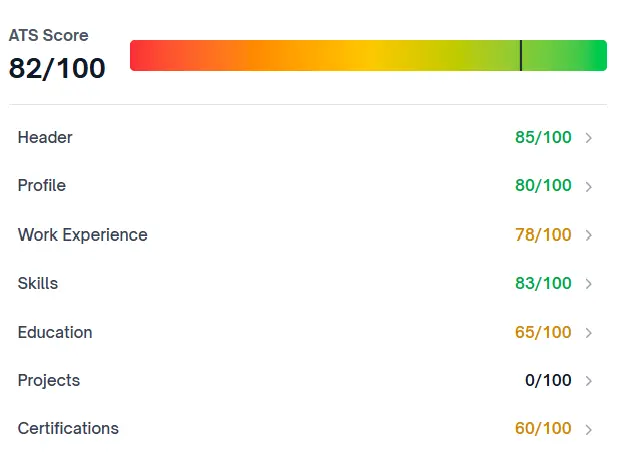
resume templateATS score overlay

Common Questions

Answers to the most common questions about Construction Labourer compensation in Toronto, ON.

How much does a Construction Labourer make in Toronto in 2026?

Based on data from the Government of Canada Job Bank (updated November 2025), Indeed Toronto (updated February 2026), and PayScale Toronto (updated July 2025), base pay ranges from approximately $36,000 to $85,000 CAD annually. The lower end reflects entry-level non-union residential work; the upper end reflects experienced union ICI or infrastructure labourers. Figures are base salary only and exclude vacation pay, pension contributions, and overtime.

What is the hourly rate for a Construction Labourer in Toronto?

The Government of Canada Job Bank reports a national hourly range of approximately $18.25 to $40.00 for NOC 75110 Construction Workers (updated November 2025). PayScale cites a Toronto median of roughly $22/hr for non-union roles. Union (LiUNA) ICI rates in Ontario are governed by collective agreements and are generally above these medians, especially for experienced journeypersons.

Do Construction Labourers in Toronto need to join a union?

Union membership is not legally required to work as a construction labourer in Toronto. However, the City of Toronto recognized LiUNA as the bargaining agent for ICI-sector labourers on City-procured projects effective November 2023, which means many large public contracts require LiUNA members. Non-union roles are common in residential construction and with smaller general contractors.

What safety tickets do Construction Labourers need in Ontario?

Most Toronto employers and all ICI-sector contractors require at minimum WHMIS 2015, Working at Heights (Ontario Chief Prevention Officer approved provider), and Standard First Aid and CPR. Additional tickets such as Confined Space Entry, Trenching and Excavation, Traffic Control Person (TCP), and Hoisting or Rigging certification expand the assignments available to you and typically increase your hourly rate.

Can newcomers or workers without Canadian experience get construction labourer jobs in Toronto?

Construction Labourer (NOC 75110) does not require a Red Seal or provincial licence, which makes it accessible to newcomers. However, foreign safety certifications are generally not accepted in Ontario - WHMIS 2015 and Working at Heights must be obtained through Canadian-approved providers. Employers have a legal duty under the Occupational Health and Safety Act to communicate site hazards in a language workers understand, but practical English or French communication ability is expected on most sites.

How much more do union Construction Labourers earn than non-union in Toronto?

A meaningful pay gap exists between union and non-union labourers in Toronto, driven by LiUNA ICI collective agreement rates that are set above typical non-union residential rates. Union packages also include pension fund contributions, health and welfare benefits, and vacation pay on top of the hourly base, which significantly raises total compensation. The exact gap varies by classification and project type.

Is Construction Labourer a Red Seal trade in Canada?

No. Construction Labourer (NOC 75110) is not a Red Seal designated trade under the Interprovincial Standards Program. This means there is no interprovincial certification exam to write and no formal credential-recognition process required when moving between provinces, though provincial safety ticket requirements (e.g. Ontario Working at Heights) must still be met locally.

How do Construction Labourer wages in Toronto compare to Vancouver and Calgary?

Vancouver's union labourer rates are broadly comparable to Toronto and in some classifications slightly higher, but the cost of living - particularly housing - is the highest in Canada, which compresses real purchasing power. Calgary non-union rates are competitive, particularly on industrial projects, but income is more cyclical and tied to energy sector conditions. Toronto generally offers the highest volume of stable ICI and transit work in Canada.

Compare Construction Labourer pay with other skilled trades and transportation roles in Toronto.

Job titleEntry LevelMid-CareerSeniorOwner-Operator / Specialist
Truck Driver$44K - $57K CAD$57K - $78K CAD$78K - $95K CAD$95K - $115K+ CAD

Sources and methodology

Salary ranges on this page were compiled from multiple public and third-party aggregated sources covering the period November 2024 to February 2026. Where sources conflicted, the Government of Canada Job Bank (an official federal source) was treated as the primary reference for the national wage floor, and PayScale and Indeed Toronto data were used for market positioning of experience tiers.

What Construction Labourers in Toronto are actually saying

The following represents the tone and themes found in public online discussions on forums and job review sites for construction labourers in Ontario and the GTA, collected from posts active in 2024-2025. Quotes are representative paraphrases of community sentiment, not verbatim reproductions.

Reddit · r/ConstructionCanada
Joined Local 183 last year - the hourly jump from my old non-union residential gig was significant, not counting the pension on top

Reflects a widely reported experience among Toronto labourers who transition from residential non-union work to LiUNA ICI dispatch - the wage step-up plus benefits is frequently cited as a major life improvement.

Reddit · r/PersonalFinanceCanada
Got my Working at Heights done, applied to a couple of big GTA contractors, had an offer within two weeks - the tickets really do matter

Safety certifications are consistently identified by GTA labourers as the fastest way to move from unemployed to employed or from lower to higher pay bands, particularly for newcomers.

Indeed · Toronto employer reviews
Pay is decent once you get union dispatch but the waiting list to get on the board can be frustrating if you're new to the city

Dispatch list wait times for LiUNA Local 183 are a recurring theme in reviews; experienced out-of-province or newcomer workers note the queue as the main entry barrier rather than skill gaps.

Reddit · r/ImmigrationCanada
They told me my safety tickets from back home are not valid here - had to redo WHMIS and Working at Heights before I could start

Newcomers frequently discover that Ontario requires Canadian-issued safety certifications regardless of prior international experience; this adds cost and time before first paycheck.

Glassdoor · Toronto construction reviews
Non-union residential pays just above minimum some weeks, especially when weather causes shutdowns - the seasonal gap really hurts the annual total

Seasonal income variability is a key financial risk for non-union labourers in Toronto; wet or cold weather stoppages reduce effective annual income below the nominal hourly rate suggests.

Construction employers actively hiring labourers in the GTA

EllisDon · PCL Constructors · Aecon Group · Graham Construction · Bird Construction · Maple Reinders · Buttcon Limited · North American Construction Group · Con-Drain Company · AECOM · Anchor Shoring · Kenaidan Contracting

Government of Canada Job Bank - Construction Worker (NOC 75110) wage data for Ontario, updated November 2025 Job Bank NOC 75110 wages

Data note: All salary figures on this page are approximate estimates in Canadian dollars (CAD) based on publicly available aggregated data from the Government of Canada Job Bank (November 2025), PayScale (July 2025), Indeed (February 2026), and SalaryExpert (2025-2026). Figures represent base salary or base hourly rate only and exclude vacation pay, pension fund contributions, benefits fund contributions, overtime premiums, profit sharing, and other forms of compensation. Data reflects reported ranges as of the dates noted; actual wages on any specific project or with any specific employer may differ. Union collective agreement rates are subject to change upon negotiation and renewal; consult the relevant LiUNA local or the Ontario Labour Relations Board for current agreed rates. Individual results vary based on union status, sector, ticket portfolio, employer, project type, shift schedule, and local market conditions. This page does not constitute legal, financial, or career advice.