Canada Salary Guide - 2026

Electrician Salary in Toronto, ON (2026)

Last updated:

This page covers what electricians earn across all experience levels in Toronto and the Greater Toronto Area, from apprentice through master electrician. It is designed to help job seekers, out-of-province applicants, and newcomers to Canada benchmark compensation and understand what drives pay differences. Ranges vary because of unionization status, trade sector (residential, commercial, industrial), years of licensed experience, Red Seal certification, and employer size.

Apprentice (Levels 1-4)
$42K - $68K CAD
Registered apprentice progressing through OCOT-approved program, 0-4 yrs
Journeyman (303A Licensed)
$68K - $90K CAD
Fully licensed, 3-8 yrs post-certification, residential or commercial focus
Senior Journeyman / Specialist
$85K - $105K CAD
8-15 yrs, industrial, high-voltage, automation, or large commercial projects
Master Electrician / Foreman
$95K - $110K+ CAD
15+ yrs, supervisory or master license, runs crew or owns shop

ELECTRICIAN SALARY RANGES IN TORONTO, ON - 2026

Apprentice (Levels 1-4)
$42K - $68K CAD
Journeyman (303A Licensed)
$68K - $90K CAD
Senior Journeyman / Specialist
$85K - $105K CAD
Master Electrician / Foreman
$95K - $110K+ CAD
Sources: Government of Canada Job Bank (Nov 2025), Glassdoor (Feb 2026), ERI SalaryExpert (2026), PayScale (May 2025), WorkZen (Feb 2026). Base salary only; excludes overtime, benefits, and equity.

What does an Electrician earn at each level in Toronto?

Pay is tightly linked to licensing stage, sector, and whether you work under a union collective agreement.

Apprentice (Levels 1-4)

$42K - $68K CAD

Apprentice wages in Ontario are set as a percentage of the journeyman rate and increase with each level completed under an OCOT-registered employer.

Move up faster

  • Complete in-class hours ahead of schedule to reach each level sooner.
  • Ask your employer for exposure to commercial or industrial sites, not just residential.
  • Sit the Certificate of Qualification exam as soon as you are eligible.

Rewrite your resume around production impact →

Journeyman (303A Licensed)

$68K - $90K CAD

Newly licensed journeymen in Toronto typically earn $68K-$80K; moving to a unionized commercial or transit contractor pushes toward the $85K-$90K band.

Move up faster

  • Pursue Red Seal endorsement to unlock national mobility and industrial-rate employers.
  • Target large ICI (industrial, commercial, institutional) contractors over small residential shops.
  • Build PLC or building-automation skills to qualify for specialist rate premiums.
Rewrite your resume around production impact →

Senior Journeyman / Specialist

$85K - $105K CAD

Electricians at this tier command premium rates by specializing in industrial maintenance, high-voltage systems, or automation, often combining base pay with overtime on large project sites.

Move up faster

  • Obtain high-voltage or power-systems endorsements recognized by Ontario utilities.
  • Seek shift-differential roles on transit or infrastructure projects (Metrolinx, utilities).
  • Mentor apprentices formally - crew-lead experience strengthens the case for foreman pay.
Rewrite your resume around production impact →

Master Electrician / Foreman

$95K - $110K+ CAD

Master electricians with 15-20 years of experience may move into foreman, estimator, or owner-operator roles where total compensation - including vehicle allowance and profit share - can exceed the base range.

Move up faster

  • Obtain the Electrical Contractor license (ESA/Ontario) to operate your own business.
  • Expand into electrical project management or estimating for larger general contractors.
  • Leverage union seniority or negotiate a lead-hand premium on large ICI projects.
Rewrite your resume around production impact →

Stuck below mid-market rate?

Many Toronto electricians plateau because they stay in one employer or sector too long without adding credentials or shifting to higher-demand work types. Moving from residential to commercial or industrial work is typically the fastest single wage lever available.

  • Get your resume reviewed against the specific job postings at ICI contractors and transit-project subcontractors before applying.
  • Check whether your current employer is registered for IBEW or an alternative union agreement - if not, compare total-compensation packages on union sites.
  • Pursue Red Seal endorsement if you hold a 303A Certificate of Qualification but have not yet written the Red Seal exam.
  • Add one in-demand specialty - EV charger installation, solar PV, or building automation - through a recognized provider such as IBEW Local 353 training or George Brown College.
  • Use Government of Canada Job Bank wage data as a factual anchor in any salary conversation with your employer.

Turn your trade credentials into top-of-band language

Your 303A ticket, Red Seal endorsement, and project experience need to appear in clear, ATS-readable terms on your resume before a recruiter will route you to the higher-paying roles. Optimizing those details is the first step toward the $90K-$110K range.

What drives Electrician salaries higher in Toronto

Higher-paying candidates typically show:

  • Unionization: IBEW and other union agreements add 15-25% to total compensation through pension contributions, benefits, and collectively bargained wage scales - a gap that widens over a career.
  • Sector: Industrial and ICI (institutional, commercial) electricians consistently earn more than residential counterparts; specialization in automation or high-voltage can add $5-$20 per hour to base rate.
  • Red Seal certification: The Interprovincial Standards endorsement signals national mobility and is often required for supervisory or high-wage industrial roles, making it one of the clearest credential-to-pay upgrades available.
  • Project scale: Large infrastructure and transit projects (Metrolinx, utility upgrades, data-centre builds) pay higher rates and often include shift differentials, remote-site premiums, or overtime at 1.5x.
  • Experience tier: Progression from apprentice to licensed journeyman to foreman carries structured pay increases; supervisory responsibilities typically add a lead-hand or foreman premium on top of journeyman scale.
  • Employer size and type: Large unionized electrical contractors and utilities offer stronger total-compensation packages than small non-union residential shops, even when base hourly rates appear similar.

Electrician salaries by Canadian city (2025-2026)

Toronto, ON

$68K - $110K CAD

Large commercial, transit infrastructure, and ICI projects drive strong demand; IBEW Local 353 sets the union scale benchmark for the GTA.

Vancouver, BC

$72K - $115K CAD

Among the highest base rates in Canada, driven by major port, industrial-maintenance, and large-commercial demand; SkilledTradesBC governs apprenticeship.

Calgary, AB

$72K - $110K CAD

Oil-and-gas and large industrial sites push rates up; Alberta's apprenticeship authority (ASTT/OA) and AIT framework apply; Red Seal is widely expected.

Ottawa, ON

$65K - $95K CAD

Steady federal-government construction and institutional projects support solid demand; wages are slightly below Toronto due to lower cost of living and fewer mega-projects.

Montreal, QC

$58K - $92K CAD

French-language requirement (Bill 96 context) is a practical barrier for anglophone or newcomer applicants; CCQ governs the construction sector with set union wage schedules.

Halifax, NS

$52K - $82K CAD

Lower cost of living partially offsets lower wages; shipyard and industrial-maintenance work offers the strongest rates; NSA apprenticeship body governs licensing.

Toronto offers one of the densest concentrations of large ICI projects and union-contractor work in Canada, which makes it a strong base for journeymen targeting the top half of the wage band. Workers considering Vancouver or Calgary may access higher hourly rates, but face higher living costs (Vancouver) or energy-sector volatility (Calgary). Ottawa is a realistic option for workers who want Ontario's 303A ticket to transfer directly without a new exam. Montreal is best approached only if you are bilingual or willing to invest in French-language upgrading, given Quebec's CCQ construction-sector rules and the practical weight of Bill 96 on workplace language. Halifax has lower absolute wages but a lower cost of living and is actively recruiting from out-of-province through the Nova Scotia Apprenticeship Agency. For out-of-province workers, Red Seal endorsement is the most efficient credential-recognition tool across all cities listed.

Union vs. non-union total compensation

Union electricians in Toronto (primarily IBEW Local 353) receive pension contributions, extended health benefits, and paid training on top of the hourly rate. Industry sources estimate the total-compensation advantage at 15-25% over non-union positions. Non-union roles can offer flexibility and faster pathways to running an independent contracting business.

Overtime, shift premiums, and side work

Ontario mandates overtime at 1.5x after 44 hours per week (Employment Standards Act minimum; union agreements often set a lower daily threshold). Large project sites and transit work routinely include shift-differential premiums. For many journeymen, overtime meaningfully increases annual take-home beyond base salary figures.

CAD figures - currency and cross-border context

All figures on this page are in Canadian dollars (CAD). Newcomers or cross-border workers comparing to US postings should note that USD-denominated offers from US-headquartered firms hiring in Canada are uncommon in the trades; most Toronto electrical employers post and pay in CAD. Currency fluctuation does not typically affect local union wage scales.

Negotiation and preparation checklist for Toronto electricians

Complete these steps before your next job application or salary conversation.

  • Confirm your Certificate of Qualification (303A) is current and your OCOT registration is active before applying to licensed-trade postings.
  • Check whether you hold or are eligible for Red Seal endorsement - it directly supports higher-band applications and out-of-province mobility.
  • Pull the current IBEW Local 353 journeyman wage scale and use it as a factual floor when negotiating with non-union employers.
  • Review Government of Canada Job Bank wage data for electricians in Ontario (NOC 72200) to anchor your ask in official published figures.
  • Document your sector experience clearly: residential, commercial, and industrial experience should each appear as distinct line items on your resume.
  • Identify any specialty certifications you hold (EV charging, solar PV, fire alarm, high-voltage, PLC programming) and quantify projects where you applied them.
  • Prepare to discuss project scale and crew size: foreman-level candidates should be ready to state dollar value of projects supervised.
  • Request the full total-compensation breakdown - pension, benefits, tool allowance, vehicle allowance, overtime structure - before comparing two offers on hourly rate alone.

How Yotru helps you reach top-of-band offers

  • Rewrites your experience around deployment, systems, and measurable outcomes — the signals hiring managers actually pay for.
  • Formats your resume to pass ATS filters at top-paying companies in Toronto, Vancouver, and remote-first teams.
  • Turns "trained a model" into "reduced inference latency 40%" — the language that puts you in the upper band, not the lower one.
  • Takes 5 minutes. No blank-page anxiety, no guessing what to cut.

Turn Your resume Into Top-of-Band Evidence

Get ATS-optimized feedback and role-specific language upgrades that map your experience to salary-driving outcomes: ownership, impact, and delivery at scale.

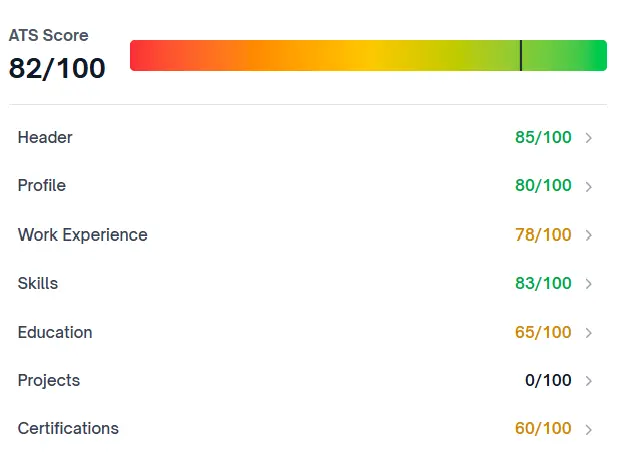
resume templateATS score overlay

Common Questions

Answers to the most common questions about Electrician compensation in Toronto, ON.

How much does an electrician make in Toronto in 2026?

Based on aggregated data from Glassdoor, ERI, and PayScale (2025-2026), Toronto electricians earn approximately $68K-$90K CAD per year at the journeyman level, with a broad full-range of roughly $56K-$110K depending on experience, licensing stage, and sector. The mid-market average across sources sits near $73K-$84K CAD. These are base-salary figures and do not include overtime, pension, or benefits.

What is the hourly rate for a licensed electrician in Toronto?

Ontario Indeed data updated March 2026 shows an average of approximately $38.48 per hour across the province. PayScale data for Toronto shows a median of about $32.50/hour with a top-decile of $45.29/hour. Union journeymen under IBEW Local 353 agreements typically earn above the median hourly figure; exact rates are set by the collective agreement and updated periodically.

Do union electricians earn more than non-union in Toronto?

Yes, in total compensation terms. Industry sources including IBEW Canada and WorkZen estimate union electricians earn 15-25% more in total compensation when pension contributions, extended benefits, and paid training are included alongside wages. Non-union positions can offer higher headline hourly rates in some cases but typically lack the pension and benefit stack of a union agreement.

Do I need a Red Seal to work as an electrician in Toronto?

The Red Seal (Interprovincial Standards) endorsement is not mandatory to work in Ontario, where the provincial Certificate of Qualification (303A) issued through OCOT is the required license. However, Red Seal certification supports national labour mobility, is often expected or required for industrial and supervisory roles, and can strengthen wage negotiations with large contractors and utilities.

Can a newcomer or internationally trained electrician work in Toronto?

Internationally trained electricians must have their credentials assessed and typically must complete Ontario's apprenticeship or challenge-exam process through OCOT before working as a licensed electrician. Credential recognition timelines and requirements vary by country of origin. Safety tickets (Working at Heights, WHMIS, First Aid) issued outside Ontario may need to be retaken. Newcomers are encouraged to contact OCOT and the Ontario College of Trades for a formal assessment.

What is the difference between an electrician salary in Toronto vs. Vancouver or Calgary?

Vancouver and Calgary tend to show slightly higher base hourly rates than Toronto, driven by industrial-maintenance, port operations, and oil-and-gas demand respectively. However, Toronto offers a high volume of large ICI and transit-infrastructure projects with strong union density. Cost of living is high in all three cities. Red Seal certification eases credential recognition when moving between provinces.

Does an out-of-province electrician need a new license to work in Toronto?

Ontario requires a valid provincial Certificate of Qualification (303A) to work as a licensed electrician. Workers holding a Red Seal endorsement from another province can apply for an Ontario Certificate of Qualification through OCOT without re-writing the full provincial exam, though there may be administrative steps involved. Workers without Red Seal should contact OCOT directly regarding the equivalency and challenge-exam process.

What specializations pay the most for Toronto electricians?

Industrial electricians, high-voltage systems specialists, automation and PLC technicians, and power-systems electricians consistently show the highest base rates. Emerging specializations with growing demand include EV charging infrastructure, solar PV systems, and building automation - areas where demand is outpacing the current licensed workforce in Ontario.

Explore compensation for other skilled trades and technical roles in the Toronto area.

Job titleEntry LevelMid-CareerExperiencedSenior / Specialized
Construction Labourer$36K - $46K CAD$46K - $62K CAD$62K - $74K CAD$74K - $85K CAD
Truck Driver$44K - $57K CAD$57K - $78K CAD$78K - $95K CAD$95K - $115K+ CAD
IT Project Manager$69K - $82K CAD$83K - $105K CAD$106K - $138K CAD$139K - $160K CAD
AI Engineer$65K - $90K CAD$90K - $130K CAD$130K - $180K CAD$180K - $210K CAD

Sources and methodology

Salary data was gathered from employer-reported and anonymous-employee submissions on Glassdoor, PayScale, and ERI SalaryExpert, supplemented by Government of Canada Job Bank wage tables for NOC 72200 (Electricians) and trade-publication salary guides published by WorkZen and Red Seal Recruiting. Where sources disagreed, the range was widened to reflect the spread rather than selecting a single figure.

What electricians in Toronto are actually saying

The following cards reflect sentiment from online trade communities and review platforms as of late 2025 to early 2026; they represent individual experiences and not guaranteed outcomes.

Reddit · r/canadianelectricians
Union scale in Toronto is hard to beat once you factor in the pension - my take-home looks lower but total comp is way up

This reflects a common theme among unionized Toronto electricians: headline hourly rates can be misleading without accounting for pension and benefit contributions that significantly boost total compensation.

Reddit · r/skilledtrades
Went from residential to ICI and my rate jumped $8 an hour almost immediately after getting my Red Seal

Consistent with published data showing that sector shift combined with Red Seal endorsement is one of the fastest wage-acceleration moves available to a licensed journeyman in Ontario.

Glassdoor · Toronto, ON - Electrician reviews
Good pay if you get into the right contractor - massive difference between a small residential shop and a big commercial outfit

Employer selection within Toronto appears to be as important as experience level in determining actual pay, reinforcing why benchmarking against large ICI contractors is important.

Electrician Talk · Ontario wages forum
Non-union shops around Toronto were paying $40-$42 an hour for a licensed journeyman on commercial work in late 2024

This aligns with PayScale and Indeed data showing journeyman hourly rates in the $38-$45 CAD range for non-union commercial work in the GTA, with union scale typically sitting above that band.

Reddit · r/ImmigrationCanada
Took me almost 18 months to get my Ontario ticket recognized after coming from overseas - the process is slow but it is doable

Newcomers with foreign electrical credentials should budget significant time for OCOT assessment and any bridging requirements, and should begin the process well before arriving in Ontario if possible.

Companies actively hiring electricians in Toronto right now

Ainsworth Inc. · Black and McDonald · Comstock Canada · Aecon Group · PCL Constructors · EllisDon · Toromont Industries · Hydro One · Toronto Transit Commission (TTC) · Dufferin Construction · Maple Reinders · Johnson Controls

Data note: The salary figures on this page are approximate estimates derived from publicly available data sources including the Government of Canada Job Bank, Glassdoor, PayScale, ERI SalaryExpert, and WorkZen, collected or published between mid-2025 and early 2026. Figures represent base salary only and exclude overtime pay, union pension contributions, extended health benefits, bonuses, tool allowances, vehicle allowances, and other non-wage compensation. Individual earnings will vary based on employer, collective agreement, licensing stage, sector, project type, and specific skills. Data reflects a specific collection period and may not capture recent collective-agreement changes or market shifts. This page is for informational purposes only and does not constitute a guarantee of earnings. Always verify current wage scales with the relevant union local, your provincial apprenticeship authority, or official government sources such as the Government of Canada Job Bank (jobbank.gc.ca).