Layoff size
At least 133 positions across two rounds (51 in March, 82 in April 2026); second-round total unconfirmed
Last updated:
George Brown Polytechnic (formerly George Brown College) has initiated at least two rounds of mass terminations in spring 2026, with a Form 1 notice filed with the Ontario Ministry of Labour on March 4 covering 51 positions, followed by a second notice in mid-April covering an additional 82 workers. This guide covers what is publicly known, what your rights may be under Ontario law, what union members should consider, and the practical steps employees typically take in the first 72 hours after receiving notice. All figures are approximate and sourced from media reports and government filings; your individual situation may differ.
Updated as new information becomes available
Layoff size
At least 133 positions across two rounds (51 in March, 82 in April 2026); second-round total unconfirmed
Announced
March - July 2026 (layoffs effective June 30 and July 15 for the second round)
Affected groups
Salaried staff, hourly staff, faculty (scope of faculty-specific cuts not fully confirmed)
Reason cited
International student enrolment decline, multi-year tuition freeze, low government grants, rising labour costs
April 14, 2026
George Brown submitted a second Form 1 Notice of Termination of Employment to the Ontario Ministry of Labour. The notice covers 76 salaried and 6 hourly staff, with effective dates of June 30 and July 15 respectively. The college described the cuts as necessary due to continued enrolment and budget pressures.
Source: TorontoToday.ca (April 14, 2026)
April 9, 2026
The faculty union representing George Brown's full-time and partial-load faculty wrote an open letter to President Gervan Fearon questioning a lack of open communication about the scale of layoffs and questioning why senior management positions were still being posted during the crisis.
Source: OPSEU Local 556 (opseu556.org, April 9, 2026)
March 31, 2026
The college published the March 4 Form 1 filing on its website on March 31, several days after the Toronto Star and other outlets reported on the mass termination notice. OPSEU Local 556 noted this as an example of what it characterised as insufficient transparency.
Source: OPSEU Local 556 open letter; CTV News
March 29, 2026
Media outlets confirmed that George Brown had filed a Form 1 mass termination notice dated March 4, 2026, covering 51 employees (22 hourly and 29 salaried). A college spokesperson described the action as a last resort taken after exploring all other cost-saving measures.
Source: Yahoo Finance / money.ca (March 2026); Toronto Star
March 4, 2026
George Brown formally triggered the Ontario ESA mass termination process by filing its Form 1. The notice covered 51 employees, satisfying the ESA threshold of 50 or more terminations in a four-week window, which entitles affected employees to enhanced group notice rights.
Source: Ontario Ministry of Labour Form 1 (as reported by money.ca and TorontoToday.ca)
February 2026
In an internal email to staff, President Gervan Fearon indicated he did not expect the Ontario government's announced investments to solve the college's broader financial challenges. Full-time enrolment had reportedly fallen approximately 29 percent compared to winter 2025.
Source: money.ca / muslimnetwork.tv (March 2026)
As of April 14, 2026, George Brown has filed two Form 1 mass termination notices in under six weeks, totalling at least 133 positions. A second wave of 82 workers is expected to leave by mid-July 2026; the college has not confirmed whether further rounds are planned.
George Brown Polytechnic has filed at least two Ontario ESA mass termination notices in spring 2026, affecting a reported minimum of 133 employees across hourly and salaried roles, with union leaders publicly questioning the transparency of the process. The layoffs appear tied to a sharp drop in international student enrolment following federal immigration policy changes in 2024, compounded by years of frozen domestic tuition and constrained provincial funding - conditions that are affecting colleges across Ontario, not only George Brown. If you have received or expect to receive a layoff notice, your rights under the Ontario Employment Standards Act and under any applicable collective agreement may be more extensive than the initial offer suggests; this guide outlines typical starting points, but your situation will likely differ and independent legal or union advice is strongly recommended before you sign anything.

Yotru AI
Layoff guidance summary
Receiving a layoff notice - especially amid sector-wide uncertainty - can be disorienting and stressful. Before beginning a job search, try to take stock of your immediate financial picture and gather key documents while you still have access to workplace systems. These steps do not need to take long, but skipping them often creates problems later.
George Brown has filed at least two distinct Form 1 notices (March 4 and mid-April 2026). If you received notice under the first wave your effective date and entitlements may differ from those notified under the second wave. Confirm which notice applies to you before calculating timelines or signing any agreement.
A clear read on the situation helps you plan next steps with less guesswork.
George Brown Polytechnic filed a Form 1 Notice of Termination of Employment with the Ontario Ministry of Labour on March 4, 2026, triggering the provincial mass termination process for 51 employees (22 hourly and 29 salaried). A college spokesperson described the layoffs as a last resort taken only after exploring other cost-saving measures, including voluntary retirement and voluntary exit programs. A second Form 1 was filed in mid-April 2026, adding 82 more positions (76 salaried and 6 hourly) with effective dates in late June and mid-July. Internal faculty meeting materials reportedly cited four drivers: a severe drop in international enrolment, a drop in domestic enrolment, a multi-year tuition freeze combined with low government grants, and rising labour costs. Full-time enrolment at George Brown was reported to have fallen approximately 29 percent compared to winter 2025 term figures.
Across both Form 1 filings, affected employees are reported to include both hourly and salaried staff. The college has not publicly itemised which departments or programs are losing staff in the second wave. Impacts have been most visible at the St. James campus, where several hospitality and culinary arts programs were suspended in fall 2025 and that campus has been reported to be operating at roughly half its prior-year capacity. OPSEU Local 556, which represents full-time and partial-load faculty, counsellors, and librarians, has raised concerns about the scope of the cuts. Whether specific contractor, sessional, or partial-load staff are included in the formal Form 1 counts is not publicly confirmed. If you are unsure whether your role is formally included, contact your union representative or HR directly.
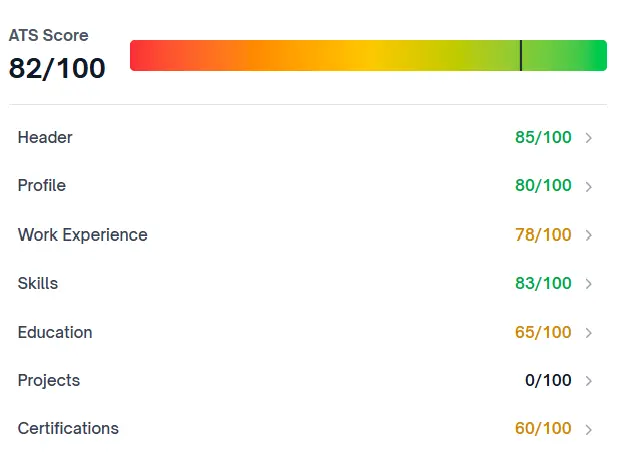
Get ATS-optimized feedback and role-specific language upgrades that map your experience to salary-driving outcomes: ownership, impact, and delivery at scale.

George Brown Polytechnic is a publicly funded college and does not issue equity compensation such as stock options or RSUs to employees. This section is not applicable to most affected staff. If you hold any participation in a deferred compensation or pension arrangement, confirm the status of those entitlements with HR and, if necessary, the CAAT Pension Plan administrator.
OFFICIAL
last resort, taken only after exploring all other cost-saving measures and conducting a comprehensive review of program delivery, workload, and operational requirements.
OFFICIAL
adapting to shifting government policies and the significant enrollment and budget pressures.
OFFICIAL
Like many post-secondary institutions, we continue to face financial pressures, largely driven by changes to international student policies introduced across Canada by IRCC beginning in 2024, which have affected enrolment across the sector.
GOVERNMENT
The province's previously announced $1.6 billion annually over four years has failed to halt ongoing restructuring, layoffs affecting staff and both full-time and contract faculty, and the pausing or closure of academic programs across colleges and universities.
EMPLOYEES / PUBLIC
What we've seen at George Brown over the past few months is a clear shift in the justification the college is providing for faculty and staff layoffs.
EMPLOYEES / PUBLIC
As George Brown navigates the current crisis in the Ontario college sector - and the issues facing our institution specifically - we continue to experience the devastating impact of mass faculty and staff layoffs.
EMPLOYEES / PUBLIC
Union leaders, some with decades of experience at these institutions, noted they have never seen 'mass termination' notices of this nature before.
The weeks immediately following a layoff notice are the best time to update your resume because your most recent accomplishments, projects, and metrics are still clear in your memory. Waiting often means losing specific numbers and context that make a resume compelling to hiring managers and ATS systems. Uploading now lets Yotru flag gaps, keyword mismatches, and formatting issues before you start applying.
General guidance only. Based on typical cases and not independently verified. Your situation may differ.
George Brown is a public institution with a payroll well above the Ontario ESA's $2.5 million threshold, which means eligible non-unionized employees with five or more years of service may be entitled to both termination pay and statutory severance pay. ESA minimums are a floor, not a ceiling; common law reasonable notice can significantly exceed them depending on your age, seniority, and the availability of comparable roles. Unionized employees should refer to their collective agreement first, as those terms govern over ESA minimums unless the ESA provides greater entitlements.
Non-unionized employees are generally not required to accept the first severance offer and typically have up to two years from termination to pursue a claim. Potential levers include years of service, age, role specialisation, and whether comparable positions exist in the Toronto market. Consider consulting an Ontario employment lawyer before signing; many offer free initial assessments.
Regional rules differ. Use these as starting points and verify against official sources for your situation.
Skills built in Ontario college environments - curriculum design, student support services, trades instruction, health sciences delivery, and academic administration - are broadly transferable to other public colleges, universities, private career colleges, school boards, and non-profit training organisations across the GTA and Ontario. The sector-wide nature of current cuts means competition for open roles may be elevated in the short term, so highlighting specific program outcomes, accreditation experience, and student success metrics will likely strengthen applications.
The George Brown layoffs are part of what OPSEU has characterised as potentially one of the largest mass layoff waves in Ontario college history, with close to 10,000 faculty and staff across 24 colleges either already let go or projected to lose jobs as of early 2026. At the sector level, 23 of 24 Ontario colleges reported a 48 percent decrease in first-semester international student enrolment from September 2023 to September 2024, and over 600 programs have been suspended or cancelled province-wide. By comparison, George Brown's confirmed 133-position loss across two waves is proportionally significant but not unusual relative to peers facing similar enrolment cliffs. The college's stated approach of attempting voluntary exits before proceeding to involuntary terminations is consistent with sector norms, though the union has disputed whether those efforts were adequate.
Compared to prior restructuring at George Brown - which included the suspension of its English for Academic Purposes program in 2025 and approximately 52 administrative voluntary buyouts in April 2025 - the 2026 Form 1 filings represent an escalation from targeted program-level cuts to institution-wide staff reductions. At nearby Humber Polytechnic, involuntary layoffs proceeded in late March 2026 after a voluntary exit program failed to close a projected 2026-27 fiscal gap, a pattern almost identical to George Brown's trajectory. Centennial College, also in the Toronto area, suspended 54 programs and is relocating its Story Arts Centre campus, generating OPSEU protests in summer 2025. Conestoga College issued nearly 400 layoff notices in late 2025, eliminating 181 full-time faculty and 197 support staff positions - a significantly larger single event than either George Brown wave individually, suggesting George Brown's cuts, while serious, are at a scale seen elsewhere in the system.
Answers to the most common questions about the George Brown Polytechnic (George Brown College) layoffs and what to do next.
Yes, George Brown Polytechnic has filed at least two Form 1 Notices of Termination of Employment with the Ontario Ministry of Labour - one dated March 4, 2026 (51 employees) and a second in mid-April 2026 (82 employees). These are government-mandated filings and are a matter of public record. However, the full scope of affected roles and any future rounds remain unconfirmed.
The amount varies considerably depending on whether you are unionized, your years of service, your role, and whether your employment contract contains enforceable termination clauses. Under the Ontario ESA, non-unionized employees in a mass termination of 50-199 employees are typically entitled to at least 8 weeks of group notice or pay in lieu, plus potentially statutory severance of 1 week per year of service (up to 26 weeks) if you have 5 or more years of service. Common law entitlements can be substantially higher. This is general information only and not legal advice - consult an employment lawyer or your union representative for guidance specific to your situation.
In many cases, yes - particularly for non-unionized employees. The college's initial offer is generally a starting point and you are typically not required to sign it by any deadline that is legally binding on you. Consulting an Ontario employment lawyer before signing is strongly recommended. Unionized employees should contact OPSEU Local 556 or Local 557 first, as collective agreement provisions likely govern the process and any negotiation should go through your union.
The Academic Collective Agreement contains layoff, seniority, and displacement provisions that may give you bumping rights. A February 2026 arbitration award (OPSEU Local 556 v George Brown College, 2026 CanLII 4591) clarified some procedural aspects of how layoff grievances under Article 27.08 are scoped. Contact OPSEU Local 556 directly at opseu556.org or 416-415-5000 ext. 2200 to understand how these provisions apply to your specific situation, as eligibility depends on factors like your classification and seniority.
As of mid-April 2026, the college has confirmed two rounds and has not publicly ruled out further cuts. President Fearon indicated in February 2026 that provincial government funding measures were not expected to resolve the underlying financial challenges. OPSEU Local 556 has raised concerns that management is now indicating a need for cuts across the board rather than cuts limited to specific closed programs. Future rounds are possible but not confirmed; monitor georgebrown.ca and opseu556.org for updates.
You can apply for Employment Insurance (EI) online at canada.ca/en/services/benefits/ei as soon as your employment ends - do not wait for your final paycheque or Record of Employment (ROE). You will need your ROE, which George Brown's payroll department is required to issue; ask HR when to expect it. Standard EI benefits typically equal approximately 55 percent of your average insurable earnings up to a weekly maximum, subject to a one-week waiting period. Eligibility depends on your insurable hours worked in the qualifying period.
Under the Ontario Employment Standards Act, when an employer terminates 50 or more employees in a four-week period, it triggers mass termination rules requiring group notice - at least 8 weeks for a group of 50-199 employees. The employer must also file a Form 1 with the Ontario Ministry of Labour and provide affected employees a copy along with an Employment Ontario Career Supports information sheet. Unionized employees may also have additional notice rights under their collective agreement. These are minimum statutory obligations; your actual entitlements may be greater.
If you believe your termination was for improper reasons or that the process was not followed correctly, you generally have two avenues: file a claim for termination and severance pay with the Ontario Ministry of Labour, or pursue a wrongful dismissal claim in court - but typically not both for the same termination. If you are unionized, your union may also file a grievance on your behalf. It is prudent to consult an employment lawyer promptly, as some deadlines are time-sensitive. This guidance is general in nature and does not constitute legal advice.
Yotru sources layoff intelligence from government filings (Ontario Ministry of Labour Form 1 notices), official institutional communications, credentialed media outlets, and verified union statements. Confirmed facts are distinguished from unconfirmed reports throughout this profile. This page is reviewed and updated as new primary sources become available; the last updated date at the top of the profile reflects the most recent editorial review.
Ontario Ministry of Labour Form 1 filings (March 4 and April 2026, as reported by TorontoToday.ca and money.ca) · CP24 / CTV News Toronto (April 14, 2026) · TorontoToday.ca (April 14, 2026) · Yahoo Finance / money.ca (March 2026) · OPSEU Local 556 open letter to President Fearon (April 9, 2026, opseu556.org) · Ontario Universities and Colleges Coalition press release (March 27, 2026) · College Employer Council February 2026 Newsletter (CanLII arbitration award reference) · Ontario ESA guidance - ontario.ca and Lexology / Achkar Law / Monkhouse Law (ESA mass termination rules)
The exact breakdown of which departments and programs are losing staff in the April 2026 second wave has not been confirmed in public reporting as of the last update date. The total number of faculty positions (as distinct from support staff) affected across both rounds is unconfirmed. Whether further rounds of layoffs are planned after mid-July 2026 is not confirmed. Quotes attributed to union officials are sourced from media reports and may not reflect the officials' complete or current statements. The status of any active grievances filed under the Academic Collective Agreement related to these specific layoffs has not been confirmed publicly.
This profile is for general informational purposes only and does not constitute legal, employment, or financial advice. All figures regarding layoff numbers, timelines, and severance entitlements are approximate and based on publicly available media reports, government filings, and union communications as of the last updated date. Individual outcomes will vary based on employment contracts, collective agreement provisions, years of service, jurisdiction, and other personal circumstances. Nothing in this guide should be relied upon as a substitute for advice from a qualified Ontario employment lawyer, your union representative, or the Ontario Ministry of Labour. Yotru makes no representations as to the accuracy or completeness of third-party sources cited herein.
March 2026 · Updated Apr 14, 2026