
Campaign Inspiration
How to Win Back Old Customers With Postcards (With Example Messages)
Past customers already know you, so a personal postcard with a relevant reason to come back can restart the relationship. Here is how to pick who to mail, what to offer, what to say and how to measure whether they return.
Jenna Gallo · Business Development Lead
· 7 min read
On this page25 sectionsClose
- Why past customers are worth a postcard
- Step 1: Decide who counts as an old customer
- Step 2: Pull and clean the list
- Step 3: Group customers by why they left
- Step 4: Choose the right offer
- Step 5: Write a message that sounds like you know them
- Lapsed service client
- Lapsed member
- Inactive B2B account
- One-time buyer
- Stalled proposal
- Step 6: Make responding easy
- Step 7: Time it and follow up
- How to measure a win-back campaign
- Mistakes to avoid
- How Yotru helps
- Frequently asked questions
- What is a customer win-back postcard?
- When should I send a win-back postcard?
- What should a win-back postcard say?
- Should a win-back postcard include a discount?
- Can I mail former customers in Canada without consent?
- How do I measure whether a win-back campaign worked?
- How many win-back postcards should I send?
- References
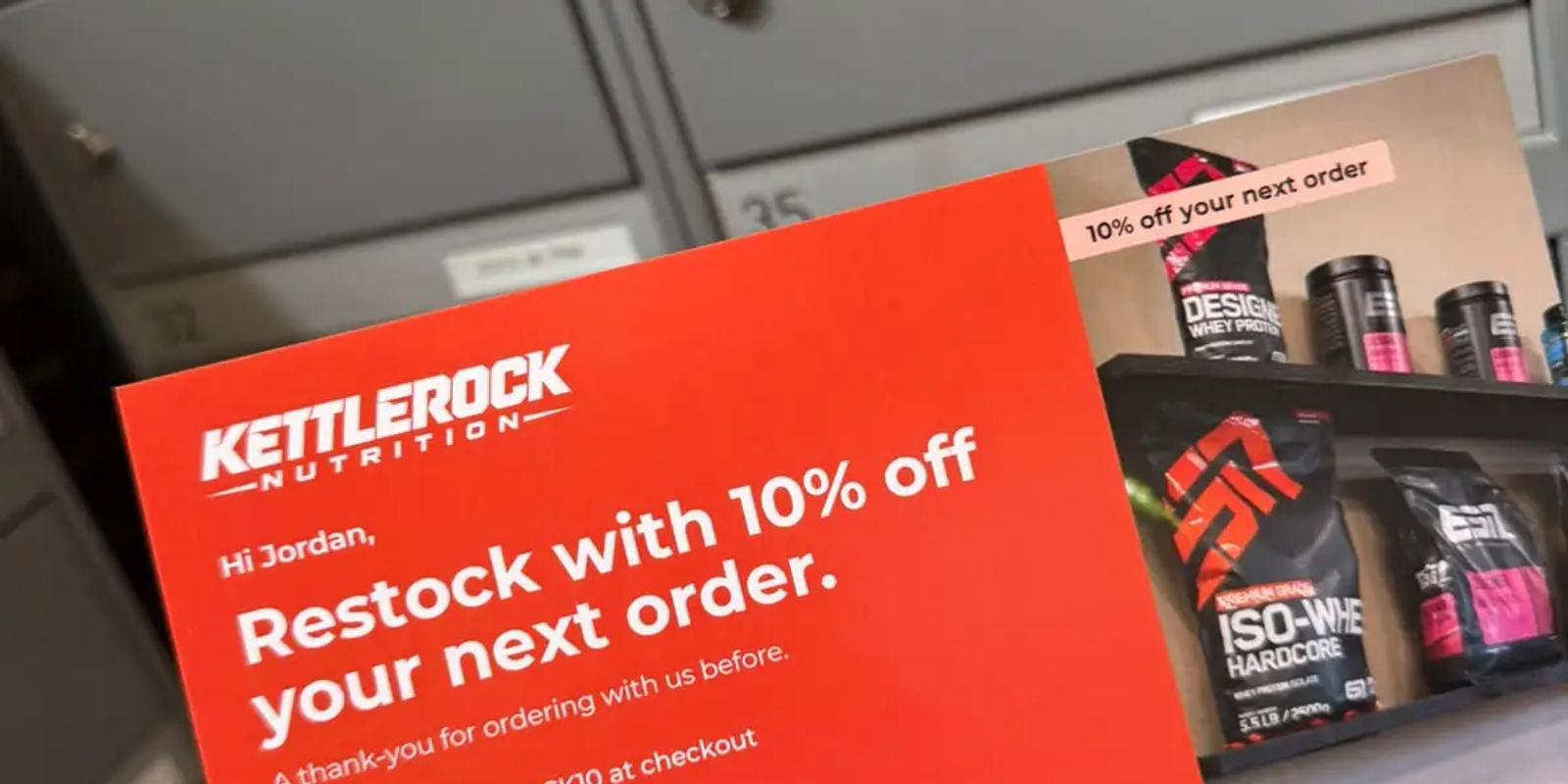
To win back old customers with postcards, pull a list of people who bought from you before but haven't returned within your normal buying cycle, group them by what they bought and why they may have left, and send each group a personal card with a relevant reason to come back. Add a unique QR code so you know who responded, and follow up with a call or email.
This guide is for service businesses, membership organizations and B2B suppliers: anyone with a list of former clients, lapsed members or inactive accounts. If you run an online store, our guide to win-back postcards for inactive ecommerce customers covers store-specific ideas. Win-back is one part of a wider approach to generating leads with postcards.
Why past customers are worth a postcard
A past customer already knows your name, your work and how to buy from you. You don't need to explain who you are, only why now is a good time to come back. That usually makes them easier to convert than a cold prospect.
A postcard also reaches people who stopped opening your emails. If someone hasn't engaged with your newsletter in a year, another email is unlikely to change that. A card with their name on it, signed by someone they dealt with, gets a fresh look.
Step 1: Decide who counts as an old customer
"Inactive" depends on how often people normally buy from you. Someone who books a service twice a year is overdue after eight or nine months. A company that renews a contract every three years isn't inactive after one. Set the cut-off at roughly one and a half to two times your usual gap between purchases, then adjust.
| Group | Example | Typical reason to mail |
|---|---|---|
| Lapsed service clients | A dental patient, salon client or HVAC customer overdue for a visit | A reminder plus an easy booking link |
| Lapsed members | Gym, club, association or subscription members who didn't renew | What's new since they left, and a simple way to rejoin |
| Inactive B2B accounts | A company that ordered regularly and stopped | A check-in from their account manager and a reason to talk |
| One-time buyers | Customers who bought once and never returned | The natural next purchase after the first one |
| Lost or stalled deals | Quotes or proposals that never closed | A new reason to reconsider, such as new pricing or capacity |
Step 2: Pull and clean the list
Export past customers from your CRM, booking system, membership database or accounting software. Include name, company if relevant, mailing address, last purchase date, what they bought and roughly how much they spent. Then clean it:
- Remove anyone who is actually still active, for example under a different account or location.
- Remove people with open complaints or disputes. Fix the problem first.
- Remove anyone who asked not to be contacted, and anyone who has died or closed their business, if you know.
- Check old addresses. People and businesses move, and a list that hasn't been used in a while will have outdated entries. In the US, postal move-update services exist for this purpose.
For a detailed checklist, see how to build and verify a targeted mailing list, and using your HubSpot or Salesforce contacts for a mailing.
Step 3: Group customers by why they left
One message for every lapsed customer is easier, but it rarely fits anyone well. Two or three groups are usually enough:
- Drifted away: no complaint, they simply stopped. A reminder and an easy next step often works.
- Left for price or a competitor: show what has changed, or what they get that the alternative doesn't include.
- Needs changed: a new service, product or package may fit them better now.
You can also split by value. Your best former customers may deserve a more personal card, a second contact or a phone call, while smaller accounts get a standard card. Sending different reactivation messages based on previous purchases shows how to set this up.
Step 4: Choose the right offer
A discount is not the only option, and it isn't always the best one. It can train customers to wait for deals. Match the offer to the reason they stopped:
| Situation | Offer that fits |
|---|---|
| Overdue for a routine service | Priority booking slots this month, or a free check with the next visit |
| Lapsed membership | A free month or week to try what's new, with no commitment |
| Inactive B2B account | A free account review, updated pricing or a sample of a new product |
| One-time buyer | A bundle or add-on that naturally follows the first purchase |
| Left over price | A clear comparison, a loyalty rate, or a smaller entry package |
| Stalled proposal | A revised quote, new start dates or a short call to update the plan |
Step 5: Write a message that sounds like you know them
The best win-back cards are short, warm and specific. Mention something real from their history, such as the service they used or how long they were a customer, and sign it from a person. Here are sample messages you can adapt:
Lapsed service client
Hi Maria, it's been about a year since your last furnace tune-up. We've held a few early slots this month for past customers. Scan to pick a time that suits you. — Dan, Northside Heating
Lapsed member
Hi James, a lot has changed since you were last here: new evening classes and a renovated weight room. Come back for a free week and see for yourself. Scan to claim it. — Priya, front desk
Inactive B2B account
Hi Sarah, we haven't seen an order from the Burlington office since spring. If your needs have changed, I'd like to hear about it. Scan to book 15 minutes with me, or call me directly. — Tom, your account manager
One-time buyer
Hi Kevin, thanks again for choosing us for your deck last summer. Before winter, a sealing treatment keeps it looking new. Past customers get priority booking. Scan for a quote. — Lisa, Oakline Decks
Stalled proposal
Hi Andrea, we talked about refreshing your office signage in the spring. We now have installation dates open in January. Scan to see an updated quote. — Mark
The names and businesses above are illustrative. Use details you actually have in your records, and never imply you know more about someone than they would expect.
Step 6: Make responding easy
Give each customer a unique QR code that opens a short landing page with their name, the offer and one action: book, reorder, request a quote or reply. Offer a phone number too, because some customers would rather call someone they already know. Postcards with individual QR codes and landing pages explains the setup.
Step 7: Time it and follow up
Send win-back cards ahead of the moments when customers naturally buy again: before a service season, before renewal dates, or before a planning cycle for business accounts. Then:
- Call or email anyone who scans, ideally the same day.
- For high-value accounts, call about a week after expected delivery even if they didn't scan.
- Send a second card four to six weeks later to people who didn't respond, with a different angle.
- If someone tells you why they left, record it. It's useful for the next campaign and for the business.
How to measure a win-back campaign
Scans show interest, but the real result is customers who come back. Track:
- Reactivation rate: customers who bought again within a set window, such as 90 days, divided by customers mailed.
- Revenue from returning customers in that window, and over the following year if they stay.
- Cost per reactivated customer: campaign cost divided by customers who came back.
If you can, hold back a small random group that doesn't get a card. Comparing the two groups shows how many customers returned because of the card rather than on their own. How to track leads and sales from postcards covers attribution in more detail, and what a postcard campaign costs helps you set a budget.
Mistakes to avoid
- Mailing customers who left unhappy without acknowledging it. Call them instead, or don't contact them until the issue is fixed.
- Using a generic "We miss you" card. Without a reason to return, it's just a reminder that they left.
- Leading with a big discount. It may bring back price-sensitive customers who leave again.
- Mailing stale addresses. Check old records before printing.
- No owner for follow-up. Decide in advance who calls the people who respond.
How Yotru helps
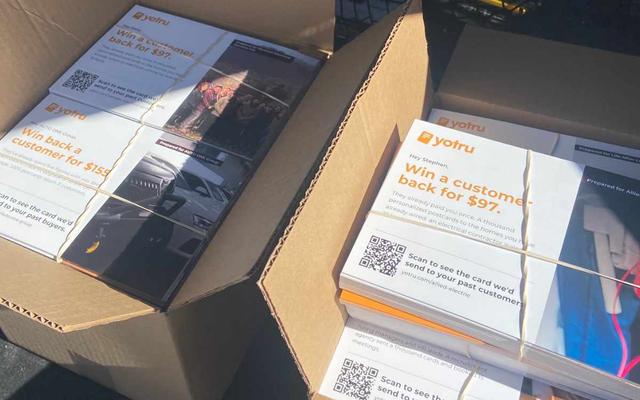
With Yotru you upload your past-customer list from a CSV or a CRM export. We personalize each card by name, company, city or segment, add a handwritten-style signature from the person who will follow up, give every recipient a unique QR code and landing page, and print and mail across Canada and the United States. You get an alert when someone scans. If you'd like a deeper look at targeting former customers, read sending postcards to former customers who haven't bought in over a year.
Frequently asked questions
What is a customer win-back postcard?
A personal card sent to someone who bought from you before but has gone quiet, with a specific reason to come back and an easy way to respond.
When should I send a win-back postcard?
When a customer is clearly past their normal buying cycle, often around one and a half to two times their usual gap between purchases, and ideally before a season or renewal date when they would buy again.
What should a win-back postcard say?
Greet them by name, mention something real from their history, give one reason to return now, include one call to action and sign it from a real person.
Should a win-back postcard include a discount?
Not always. Priority booking, a free check, a trial or a new service can work as well and protect your margins. Use discounts when price was the reason people left.
Can I mail former customers in Canada without consent?
Canada's anti-spam law applies to electronic messages, not postal mail. Privacy rules still apply to how you use customer data, and you should honour anyone who asked not to be contacted. Check with an advisor if you're unsure.
How do I measure whether a win-back campaign worked?
Count customers who bought again within a set window, the revenue they brought and the cost per reactivated customer. A small holdout group that gets no card shows how much the card itself contributed.
How many win-back postcards should I send?
Start with one card and a follow-up, then a second card four to six weeks later with a different angle. Stop once someone returns, replies or asks not to be contacted.
References
Jenna Gallo
Business Development Lead
Jenna Gallo works in business development at Yotru, covering startup growth, product strategy, and how founders use market insights and targeted outreach to attract customers and grow their businesses.
Keep reading
Campaign Inspiration
How to Generate Leads With Postcards: A Step-by-Step Guide
Postcards generate leads when a short list of the right recipients gets one clear offer, a way to respond that you can track, and a fast follow-up. Here is the full process, from choosing the audience to improving the next wave.
Chinedu Okafor
7 min read
Insights & Trends
Win-Back Postcards: A Fresh Approach to Reaching Inactive Ecommerce Customers
Win-back emails get ignored by the exact customers who already stopped opening your emails. A postcard reaches them anyway.

Zaki Usman
3 min read

Insights & Trends
How to Track Leads and Sales From Postcards: From Scan to Closed Deal
A scan is not a lead, and a lead is not a sale. Here is how to set up unique QR codes, landing pages, UTM tags and CRM stages so you can follow every postcard from scan to closed deal and credit the campaign fairly.
Erol Branovic
6 min read
Work with Yotru
Bring past customers back with a personal card
Upload your past-customer list, and Yotru personalizes each card, gives every recipient a unique QR code and tells you who scanned, so your team can call while interest is fresh.