

Insights & Trends
Win-Back Postcards: A Fresh Approach to Reaching Inactive Ecommerce Customers
Win-back emails get ignored by the exact customers who already stopped opening your emails. A postcard reaches them anyway.

Zaki Usman · Co-founder, Yotru
· 3 min read · Updated

On this page14 sectionsClose
- Why email win-back campaigns stall
- What makes a postcard different here
- What to put on a win-back card
- When to trigger it
- Measuring it against email
- Frequently asked questions
- What is a win-back postcard?
- When should you send a win-back postcard?
- Why do email win-back campaigns underperform?
- Should a win-back postcard include a discount?
- What counts as an inactive ecommerce customer?
- How many win-back postcards should one customer receive?
- How do you measure a win-back postcard campaign?
- References
Why email win-back campaigns stall
A customer who hasn't bought in 90 days usually hasn't opened an email in almost as long either. By the time you send "we miss you", you're sending it to an inbox that's already decided to ignore you. The channel that lost the customer isn't the right channel to win them back.
What makes a postcard different here
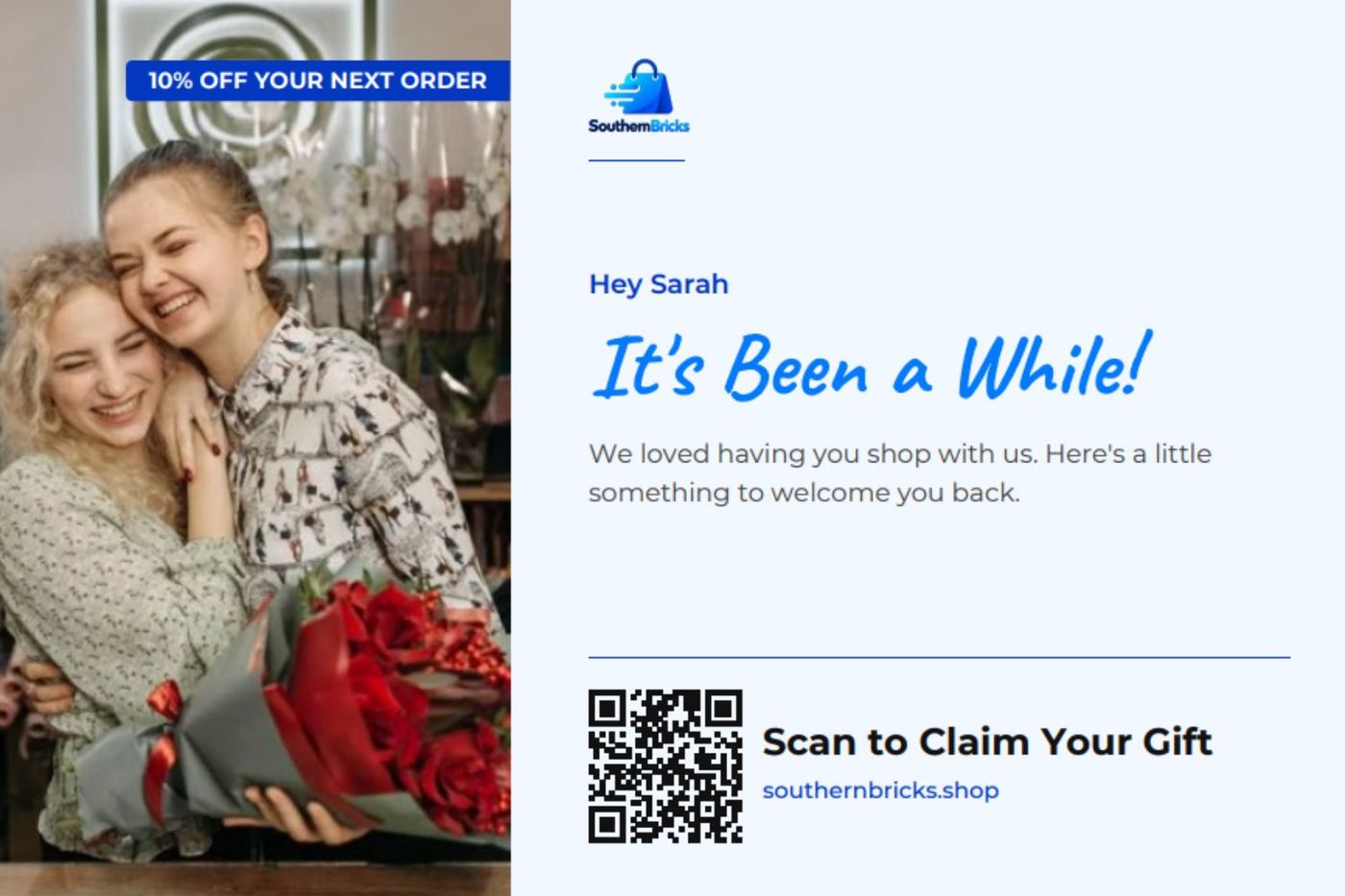
A postcard doesn't compete with a filter or an unsubscribe. It arrives in a mailbox the customer still checks, addressed to them by name, and it's the first thing from your brand they've seen in months that isn't easy to ignore. This is the same logic behind using direct mail to re-engage any list that's gone cold, not just ecommerce customers.
What to put on a win-back card
Lead with recognition, not a discount. Mention what they bought last, keep the tone like a real note rather than a promotion, and give them one clear, easy way back in: a QR code to a landing page pre-filled with a small thank-you offer works better than a generic storefront link. Once they scan it, you'll know exactly who came back and when.
When to trigger it
- 60 days since last purchase: a light, friendly check-in
- 90-120 days: a stronger nudge, often with a small incentive
- 180+ days: a last, no-pressure card before you stop mailing that customer
Measuring it against email
Track reactivation rate against the same inactive segment, not against your whole list. Even a modest reactivation rate on customers who were otherwise a lost cause usually justifies the print and postage cost. See pricing to estimate the cost of mailing your inactive segment once.
Frequently asked questions
What is a win-back postcard?
A win-back postcard is a personalized card mailed to a customer who hasn't bought in a while, triggered by days since their last purchase. It reaches people who have stopped opening your emails.
When should you send a win-back postcard?
A common sequence is a light check-in around 60 days after the last purchase, a stronger nudge at 90-120 days, and a final no-pressure card at 180+ days. Adjust the timing to how often customers normally reorder from you.
Why do email win-back campaigns underperform?
Customers who stop buying usually stopped opening your emails around the same time, so a 'we miss you' email lands in an inbox that already ignores you.
Should a win-back postcard include a discount?
Lead with recognition first, such as what they bought last. A small incentive fits best in the 90-120 day card, delivered through a QR code to a pre-filled landing page.
What counts as an inactive ecommerce customer?
It depends on your purchase cycle. A customer is inactive once they've gone noticeably longer than your typical reorder interval without buying, which might be 60 days for consumables and much longer for durable goods.
How many win-back postcards should one customer receive?
Usually no more than three. After the last card, stop mailing that customer so print and postage go to people still likely to return.
How do you measure a win-back postcard campaign?
Track reactivation rate against the same inactive segment, ideally with a holdout group that isn't mailed, rather than against your whole customer list.
References
Zaki Usman
Co-founder, Yotru
Zaki is an entrepreneur and B2B growth strategist with extensive experience across demand generation, go-to-market strategy, SaaS and account-based marketing. At Yotru, he focuses on how companies identify valuable accounts, earn attention and turn targeted outreach into measurable business opportunities.
Keep reading
Campaign Inspiration
Beyond the First Order: Postcard Marketing Ideas for WooCommerce Stores
The biggest growth lever for most WooCommerce stores is the customer who already bought once. Here's how to turn that into a second, third, and referred order.

Jeffrey Huis in 't Veld
3 min read
Insights & Trends
Which Ecommerce Customers Should Get a Postcard? Segmenting by Order History
Not every customer is worth the postage. Here's how to use recency, frequency and spend to decide who gets a postcard, a quick break-even check, and who to leave off the list.
Jenna Gallo
4 min read
Insights & Trends
Direct Mail for Ecommerce: How Online Stores Use Postcards to Bring Customers Back
Direct mail for ecommerce works best on people who have already bought from you. Here's which customers to mail, when a postcard beats another email, and how to run both together.
Jenna Gallo
5 min read
Work with Yotru
Have a list of customers who've gone quiet?
We'll help you size a win-back batch and set up the 60/90/120-day triggers.