Platform
6 min read
What Is a Career Readiness Platform for Education & Workforce Programs?
Synopsis
Designed for colleges, workforce programs, and employers, this guide explains how career readiness platforms use AI to standardize resumes, track employability outcomes, and scale career support, helping institutions deliver consistent, employer-aligned preparation and measurable workforce results.
Key Insight
A career readiness platform is a digital system that helps learners develop the skills, tools, and confidence needed to move from career exploration to successful employment.
The Problem: Career Services That Don't Scale
Most education and workforce programs face the same operational constraint: career support is labor-intensive, inconsistent, and impossible to scale.
A typical careers adviser can meaningfully review 8-12 resumes per day. A cohort of 200 learners means weeks of backlog. Quality varies by who reviews what. Feedback is subjective. Employer expectations shift faster than internal training can keep pace.
The result is predictable:
- Learners submit resumes that fail ATS screening before a human sees them
- Staff spend hours on document formatting instead of coaching and employer engagement
- Institutions can't demonstrate consistent quality to funders or regulators
- Graduates leave with materials that don't reflect the program's actual standards
This isn't a people problem. It's a systems problem. And it's why career readiness platforms exist.
What a Career Readiness Platform Actually Does
A career readiness platform is a digital system that standardizes how learners develop the skills, documents, and professional positioning required to move from education into employment.
For individuals, it provides structured access to resume development, career planning, and progress tracking. For institutions, it provides something more valuable: consistency and scale.
Instead of fragmented tools—a Google Doc template here, a workshop slide deck there, a shared drive of outdated examples—organizations can deliver standardized, employer-aligned career support across entire cohorts from a single system.
The shift is operational, not cosmetic. Staff stop doing repetitive document formatting and start doing the high-value work: coaching, employer engagement, and placement support.
Core Capabilities Institutions Need
When procurement teams evaluate career readiness platforms, they typically assess four functional areas. The question isn't whether a platform covers them—it's how well and at what scale.
1. Career Exploration
What it includes: Interest assessments, pathway mapping, labor market alignment, skills gap identification.
What matters: Does the platform connect exploration to action? A learner who discovers interest in healthcare administration should land on a structured pathway with clear next steps—not a generic job board link.
Common gap: Many platforms stop at exploration. They help learners discover interests but don't connect that discovery to resume development, skills articulation, or employer expectations.
2. Career Preparation
What it includes: Resume development, skills articulation, interview readiness, professional branding, employer research.
What matters: This is where most programs lose quality control. Manual resume review is subjective and slow. Without standardized frameworks, feedback depends entirely on which staff member reviews which document.
The scale problem: A careers team of 3 serving 500 learners cannot provide meaningful individual feedback to everyone. The math doesn't work. Platforms that automate resume review and skills alignment solve this constraint.
3. Application and Placement Support
What it includes: Job search workflows, application tracking, employer engagement tools, placement documentation.
What matters: Can the platform track where learners end up? Not just "completed program" but "employed in field at £X salary within 90 days"? Destination tracking is increasingly required for funding compliance and institutional reputation.
4. Measurement and Reporting
What it includes: Engagement analytics, readiness scoring, outcome dashboards, compliance reporting.
What matters: Funders want evidence. Regulators want compliance. Leadership wants ROI data. If a platform can't generate auditable, comparable data across cohorts, it's creating more work, not less.
Where Most Platforms Fall Short
The career readiness platform market includes tools designed for very different purposes. Understanding the gaps helps institutions make better procurement decisions.
K-12 Exploration Tools
Platforms like MaiaLearning and YouScience are designed for secondary education—helping students explore interests and plan post-secondary pathways. They're excellent for that purpose but typically lack the resume optimization, ATS alignment, and institutional reporting capabilities that post-16 providers need.
Generic Resume Builders
Consumer resume builders (Canva, Resume.io, Zety) help individuals create documents but provide no institutional oversight, no cohort management, no outcome tracking, and no standardized quality control. Staff can't see what learners produce or ensure consistency across a program.
LMS Add-ons
Some learning management systems include career modules, but they're typically bolted on rather than purpose-built. Career content sits alongside course materials without structured workflows for document development, skills articulation, or employer alignment.
The Gap Yotru Fills
Yotru operates specifically as an AI-driven employability platform for training providers, workforce agencies, colleges, and employers. Its core function is standardizing resume development and career document quality across entire programs—with institutional branding, cohort management, and outcome tracking built in.
The distinction matters: Yotru isn't a tool learners find on their own. It's infrastructure that institutions provision, configure, and manage as part of their employability delivery.
How Yotru Works
AI-Driven Resume Development
The largest operational bottleneck in career services is helping learners translate raw experience into employer-ready language. Manual feedback is slow, subjective, and difficult to scale.
Yotru's AI resume engine addresses this directly:
- Job description analysis: The system parses target role requirements and identifies skills gaps between learner profiles and employer expectations
- ATS optimization: Documents are formatted for applicant tracking system compatibility—proper headings, scannable structure, no graphics or columns that break parsing
- Keyword alignment: The AI recommends specific language based on how employers in target sectors describe required competencies
- Evidence-based bullets: Raw experience ("helped with customer service") converts to quantified achievements ("Resolved 40+ customer inquiries daily, maintaining 95% satisfaction rating")
This automation handles the repetitive work. Staff review exceptions and edge cases rather than formatting every document manually.
Institutional Configuration
Yotru operates as white-label infrastructure. Institutions configure:
- Branding: Logo, colors, domain (learners see your program's identity, not Yotru's)
- Benchmarks: Define what "resume complete" means for your context—required sections, minimum bullet counts, skills thresholds
- Access controls: Staff dashboards, learner views, admin permissions
- Reporting templates: Configure which metrics matter for your funders and regulators
Cohort Management
Staff manage learners at scale:
- Bulk provisioning: Add entire cohorts via CSV upload or LMS integration
- Progress tracking: See who's started, who's stuck, who's ready for placement
- Intervention flags: Identify learners who need additional support before they fall behind
- Completion verification: Confirm documents meet program standards before learners submit to employers
Outcome Documentation
For programs with funding or compliance requirements:
- Destination tracking: Record employment outcomes at 30/90/180 day intervals
- Quality metrics: Document average resume scores, completion rates, time-to-ready
- Export formats: Generate data in formats required by DfE, ESFA, SDS, or local workforce boards
Quantifying the Operational Impact
Career readiness platforms create value in three measurable areas.
Staff Time Recovery
Manual resume review takes 20-30 minutes per document. With Yotru, staff spend 2-3 minutes reviewing exceptions—the AI handles the rest. For a cohort of 200 learners, that's 70-100 staff hours reduced to 8-10. A three-person careers team that previously maxed out at 600 learners annually can support 3,000+.
The freed capacity goes to placement activities, employer engagement, and coaching—work that directly affects outcomes.
Quality Consistency
Without standardization:
- Resume quality varies by reviewer, workload, and learner assertiveness
- No baseline metrics for "job-ready"
- Employers receive inconsistent materials from the same program
With standardization:
- Every resume meets defined benchmarks before submission
- Comparable quality scores across cohorts and time periods
- Employer-facing materials reflect program standards, not individual variation
Outcome Evidence
Programs increasingly face questions they couldn't previously answer:
- "What percentage of your completers have job-ready resumes?"
- "How does this cohort's employment readiness compare to last year's?"
- "Can you demonstrate improvement across the learner journey?"
Yotru generates this data automatically. Staff don't compile it manually.
Implementation: What to Expect
Timeline
Most implementations follow a 4-6 week pattern:
Week 1-2: Configuration
- Branding setup
- Benchmark definition
- Staff training
- Pilot cohort selection
Week 3-4: Pilot
- Small cohort (20-50 learners) tests workflows
- Staff identify process adjustments
- Feedback incorporated
Week 5-6: Rollout
- Full cohort access
- Reporting configured
- Ongoing support established
Integration Options
Yotru connects to existing systems:
- LMS integration: Provision users from Canvas, Moodle, or other platforms
- SSO: Single sign-on via institutional identity providers
- Data export: API access for custom reporting needs
- Manual upload: CSV import for programs without LMS infrastructure
Support Model
- Implementation specialist: Dedicated contact during setup
- Documentation: Self-service guides and video walkthroughs
- Ongoing support: Email and phone access for staff questions
Who Uses Yotru
Further Education Colleges (UK)
Colleges use Yotru to:
- Standardize employability delivery across departments
- Evidence Gatsby Benchmark compliance (particularly Benchmarks 3 and 8)
- Track learner destinations for OfS and ESFA reporting
- Reduce careers team workload while expanding reach
Independent Training Providers
ITPs use Yotru to:
- Deliver consistent resume quality across dispersed learner populations
- Document employment outcomes for contract compliance
- Differentiate their offer to employers and funding bodies
- Scale employability support without proportional staffing increases
Workforce Development Agencies
Workforce boards and employment services use Yotru to:
- Standardize materials across multiple program types (reentry, upskilling, displacement)
- Generate outcome data for federal and state reporting
- Support case managers with AI-assisted document development
- Improve employer confidence in candidate materials
Employers (Outplacement and Transition)
Employers use Yotru to:
- Support workforce transitions with structured resume development
- Provide consistent offboarding experience across locations
- Document support provided for compliance and reputation purposes
About the Author

Team Yotru
Employability Systems
Team Yotru
Employability Systems
We build practical career tools for training providers and workforce programs, combining labor market insights with real employment outcomes. Follow us on LinkedIn.
Frequently Asked Questions
A career readiness platform helps education and workforce providers prepare participants for employment through resume development, skills articulation, job search readiness, and outcome tracking. It enables institutions to deliver consistent, employer-aligned support at scale.
Yotru Platform
Career Readiness & Employability Solutions Hub
- Career Development Platform— AI platform for compliant, employer-ready resumes.
- Employer Hiring Signals— Standardized resumes with clear pre-interview hiring signals
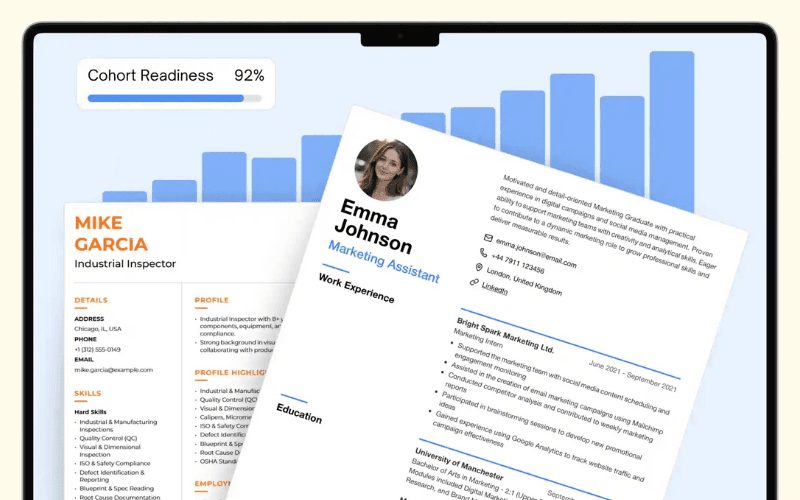
- Educator Resume Platform— Standardize learner resumes and track cohort readiness.
- Workforce Resume Builder— Employer-ready resumes for workforce clients with tracking.
- Outplacement Resume Support— Support transitions with standardized, employer-ready resumes.
- Recruitment Resume Signals— Role-aligned resumes plus readiness scores for recruiters.
Audience Context
Yotru’s content is written for career services leaders, workforce professionals, training providers, HR teams, and education administrators responsible for delivering scalable employability and transition support. Content is intended for institutional decision-making, not individual jobseeker guidance.
Research Methodology
Our content is informed by direct work with training providers, workforce programs, and employers. Analysis reflects common operational challenges, reporting requirements, and scalability needs. Descriptions of platform capabilities are based on functional design, not guaranteed program outcomes.
Editorial Standards
Yotru content is developed using public data, regulatory guidance, institutional best practices, and platform experience. Articles are reviewed for accuracy, neutrality, and professional relevance. We avoid speculative claims, unsupported performance guarantees, and misleading comparisons.
Disclaimer
Information on this website is provided for general informational purposes only and does not constitute legal, financial, regulatory, or employment advice. Yotru does not guarantee employment outcomes, funding approvals, or compliance results. Organizations should consult qualified professionals when required.
Related Resources
Yotru Platform
- Career Development Platform — AI platform for compliant, employer-ready resumes
- Yotru for Educators — Tools designed for UK schools, colleges, and training providers
- Yotru for Workforce Development — Supporting regional skills and employment programmes
Implementation Guidance
- Employability Platform for Education — Understanding platform capabilities for tracking learner destinations
- Choosing an Education Employability Platform — Practical procurement and implementation guidance
- Training Provider Employability — How ITPs deliver employability support that produces strong outcomes
UK Compliance
- Applying Gatsby Benchmark 3 in Adult and Vocational Education — Personalizing guidance in post-16 settings
- Evidencing Gatsby Benchmarks Without Overloading Careers Teams — Practical approaches to compliance
References
- National Association of Colleges and Employers. (2024). Purposeful career planning: Transactional vs. transformational career readiness. NACE. https://www.naceweb.org/career-readiness/competencies/career-readiness-defined/
- YouScience. (2026). Brightpath: College and career readiness platform. YouScience. https://www.youscience.com
- MaiaLearning. (2026). College planning & career readiness platform. MaiaLearning. https://www.maialearning.com
- University of New England. (2024). Career Ready Program. UNE Online. https://online.une.edu/online-learning/career-ready-program/
- University of St. Thomas. (2025). Career development and career readiness. University of St. Thomas. https://www.stthomas.edu/career-development/
- OECD. (n.d.). Career readiness. Organisation for Economic Co-operation and Development. https://www.oecd.org/en/about/projects/career-readiness.html
Maintained by: Workforce Practice Group at Yotru
Review cycle: Reviewed periodically to reflect evolving hiring trends
Last updated: March 5, 2026
Questions or Need Support?
If you are working on employability programs, hiring strategy, career education, or workforce outcomes and want practical guidance, you are in the right place.
Yotru supports individuals and organizations navigating real hiring systems. That includes resumes and ATS screening, career readiness, program design, evidence collection, and alignment with employer expectations. We work across education, training, public sector, and industry to turn guidance into outcomes that actually hold up in practice.