
Research
4 min read
Greater London Labour Market Data 2026: Employment, Wages + Apprenticeships
Synopsis
Greater London enters 2026 with the UK's highest unemployment rate at 7.2% but also commands the nation's highest wages, with median annual earnings of £47,455 for full-time workers.
Greater London: Labour Market at a Glance
London's labour market presents a paradox that defines the capital's economy heading into 2026. It simultaneously holds the UK's highest unemployment rate and highest wages, reflecting extreme competition alongside premium compensation for those in work.
Market Snapshot
Employment indicators (Q4 2025):
- Employment rate at 73.8% sits below UK average of 75.1%
- Unemployment rate of 7.2% is the highest of any UK region
- Economic inactivity rate of 20.1% remains below UK average of 20.8%
- Claimant count of approximately 340,000 represents largest absolute number in UK
- Workforce of 6.2 million jobs with 93.4% in service-based industries
Sources: ONS Labour Force Survey, Annual Survey of Hours and Earnings. All salary figures are gross income before tax.
Important
London's 7.2% unemployment masks significant borough-level variation. Inner East London boroughs record higher rates while Outer South West boroughs often record figures closer to national averages. This pattern is expected to continue through 2026.
Key Takeaways for Job Seekers in 2026
- Competition remains intense with approximately one in 14 working-age residents actively seeking work
- Top shortage fields for 2026 include technology, healthcare, construction trades and hospitality management
- London wage premium of 27% continues to be offset significantly by housing costs 33% above national level
- Best chances in 2026 for candidates with digital skills, professional qualifications or trades certifications
Employment and Unemployment Trends
London's unemployment rate of 7.2% as recorded in Q4 2025 represents the highest of any UK region entering 2026. This figure has risen from approximately 5.9% in Q3 2024, reflecting broader labour market cooling alongside London-specific challenges.
Youth unemployment remains a particular challenge in London heading into 2026. The capital's 16-24 unemployment rate sits above both regional and national averages, driven partly by competition from graduates and career changers.
Claimant count patterns entering 2026:
- Greater London claimant count reached approximately 340,000 in late 2025
- This represents about 5.8% of the working-age population
- Inner East London boroughs typically record higher claimant rates
- Outer London boroughs in the South West often record lower rates
Job seekers can access detailed borough-level labour market data through the Greater London labour market data for training providers guide, which covers £306M AEB funding and skills demand across all 33 boroughs for 2026.
Wage Trends and Earnings Data
London commands a substantial wage premium over all other UK regions heading into 2026, though this advantage must be considered against the capital's significantly higher living costs.
London versus UK earnings (latest data):
- Median weekly earnings of £913 in London versus £767 UK average represents 19% premium
- Median annual earnings of £47,455 versus £37,430 represents 27% premium
- Median hourly earnings of £22.84 versus £19.67 represents 16% premium
The financial and insurance sector drives much of London's wage premium. Technology and professional services also command premiums above the London average, with these patterns expected to strengthen through 2026.
While nominal wage growth in London reached approximately 5.3% in the year to April 2025, real wage growth adjusted for inflation was closer to 1.1%.
Hint
When evaluating London job offers in 2026, calculate take-home pay after housing costs.
A £45,000 role in London may provide less disposable income than £38,000 in Greater Manchester or the West Midlands.
Apprenticeship Statistics
London consistently records the lowest apprenticeship start rate per population of any English region, though recent growth is expected to continue into 2026.
Apprenticeship performance heading into 2026:
- 2024/25 academic year saw approximately 42,000 starts, up 4.8% year-on-year
- Higher-level apprenticeships (Level 4+) now account for 47% of London starts
- Digital apprenticeships grew by 17% between 2023/24 and 2024/25
- Business and Administration dominates at 28% of all starts
Training providers operating in London can find detailed information in the Greater London training providers directory, covering City and Islington College, Westminster Kingsway, General Assembly and GLA AEB funding for 2026.
Hiring Outlook by Sector for 2026
London's economy is heavily weighted toward services, with 93.4% of workforce jobs in service industries, the highest proportion of any UK region.
Leading sectors by employment:
- Professional, scientific, technical activities employ 820,000 (13.2% of total)
- Health and social work employ 680,000 (11.0% of total)
- Retail employs 520,000 (8.4% of total)
- Information and communication employs 490,000 (7.9% of total)
Technology and digital services, healthcare, professional services and green economy roles are expected to see the strongest hiring through 2026. Retail and traditional financial services administration have seen reductions and this trend is likely to continue.
The Adult Skills Fund compliance guide and devolved funding MCA compliance guide explain GLA-funded provision rules for 2026.
Important
Training providers delivering in London must comply with GLA Adult Education Budget requirements.
What This Means for Job Seekers in 2026
London's labour market rewards preparation and specificity. The capital's high competition means generic applications rarely succeed, while targeted approaches can yield results.
Practical recommendations for 2026:
- Focus on growth sectors including technology, healthcare, professional services and green economy
- Consider apprenticeship routes, particularly at higher levels and in digital sectors
- Account for true costs when evaluating offers against housing and transport
- Build demonstrable skills through portfolios, certifications and project examples
If you're preparing to apply for roles in Greater London, Yotru's resume builder helps you create targeted, ATS-optimised resumes.
Pro Tip
For regulated sector roles, demonstrate awareness of compliance requirements.
The England training provider compliance hub provides context that differentiates applications in education and workforce development.te of 20.1% remains below UK average of 20.8%.
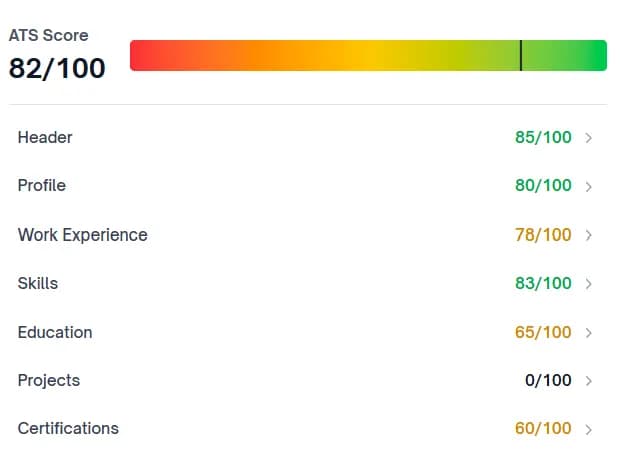
ATS-Optimized resumes That Meet Employer Standards
Our AI-powered scoring system helps organizations assess and standardize resume quality at scale. ATS-compliant templates support consistent formatting, keyword alignment, and interview readiness across cohorts.

About the Author

Team Yotru
Employability Systems
Team Yotru
Employability Systems
We build practical career tools for training providers and workforce programs, combining labor market insights with real employment outcomes. Follow us on LinkedIn.
Frequently Asked Questions
The unemployment rate in Greater London is 7.2% based on Q4 2025 data, entering 2026 as the highest unemployment rate of any UK region.

Audience Context
This data compilation serves job seekers considering work in Greater London, careers advisers supporting clients, and workforce development professionals analysing regional conditions for 2026.
Editorial Standards
Yotru content prioritizes accuracy, neutrality, and practical application. All regulatory references are verified against official sources. Articles are updated as frameworks change.
Disclaimer
This article is for informational purposes only. Labour market conditions change frequently and individual outcomes depend on skills, experience, sector and timing.
Related Resources
UK Regional Labour Market Data
- Hiring Trends in the UK – National labour market context and outlook
- Great London Market Data 2026 – UK's capital region market conditions
- Greater Manchester Labour Market Data 2026 – UK's second-largest city region
- West Midlands Labour Market Data 2026 – Manufacturing-focused regional comparison
- South Yorkshire Labour Market Data 2026 – Sheffield and surrounding areas
- North East Labour Market Data 2026 – Newcastle and Tees Valley
Training Provider Directories
- Greater London Labour Market Data for Training Providers – £306M AEB funding across 33 boroughs
- Greater London Training Providers 2026 – Colleges, apprenticeships and fintech skills
- Greater Manchester Labour Market Data for Training Providers – £92M AEB allocation
- Greater Manchester Training Providers 2026 – Manchester College and GMCA programmes
- West Midlands Labour Market Data for Training Providers – Birmingham and Black Country
- West Midlands Training Providers 2026 – WMCA AEB-funded provision
- West Yorkshire Labour Market Data for Training Providers – Leeds and Bradford
- West Yorkshire Training Providers 2026 – £63M WYCA AEB
- Liverpool City Region Labour Market Data for Training Providers – £34M AEB funding
- Liverpool City Region Training Providers 2026 – Merseyside colleges
Compliance and Funding Guidance
- England Training Provider Compliance Hub – Funding, reporting and audit readiness
- Adult Skills Fund Compliance Guide – ASF funding rules
- Devolved Adult Skills Funding: MCA Compliance – GLA and MCA requirements
- ILR Compliance and Data Quality – Individualised Learner Record guidance
- Ofsted Inspection Readiness – FE and training provider preparation
- DfE Funding Assurance Reviews – Learner file organisation
Yotru Platform Resources
- Platform for Educators and Training Providers – Institutional employability solutions
- Workforce Development Solutions – For workforce agencies
- How Training Providers Can Evidence Gatsby Benchmarks – Practical implementation
- Gatsby Benchmarks in Practice – For careers teams
- Resume Outcomes for Training Providers – Measuring learner employability
Official Reference Sources
- Office for National Statistics. (2025). Labour market in the regions of the UK: December 2025. https://www.ons.gov.uk/employmentandlabourmarket/peopleinwork/employmentandemployeetypes/bulletins/regionallabourmarket/december2025
- Office for National Statistics. (2025). Employee earnings in the UK: 2025. https://www.ons.gov.uk/employmentandlabourmarket/peopleinwork/earningsandworkinghours/bulletins/annualsurveyofhoursandearnings/2025
- Department for Education. (2025). Apprenticeships, Academic year 2024/25. https://explore-education-statistics.service.gov.uk/find-statistics/apprenticeships/2024-25
- House of Commons Library. (2026). UK labour market statistics. https://commonslibrary.parliament.uk/research-briefings/cbp-9366/
- Greater London Authority. (2025). London Labour Market Indicators. https://data.london.gov.uk/dataset/london-labour-market-indicators/
Maintained by: Workforce Practice Group at Yotru
Review cycle: Reviewed regularly to reflect market changes
Last updated: February 15, 2026
Questions or Need Support?
If you are working on employability programs, hiring strategy, career education, or workforce outcomes and want practical guidance, you are in the right place.
Yotru supports individuals and organizations navigating real hiring systems. That includes resumes and ATS screening, career readiness, program design, evidence collection, and alignment with employer expectations. We work across education, training, public sector, and industry to turn guidance into outcomes that actually hold up in practice.