Canada Salary Guide · 2026

Caregiver / Personal Support Worker (PSW) Salary in Hamilton, ON (2026)

Last updated:

$42,000 CAD is the average salary for a Caregiver or PSW in Hamilton, ON. This page covers the full base salary range from entry-level home care roles to experienced long-term care facility positions, using data from Job Bank Canada, PayScale, and Glassdoor (2025-2026). Pay varies significantly by employer type, union status, work setting, and shift schedule. Whether you are entering the field or aiming to move up the pay scale, the data and strategies here are specific to Hamilton and the broader Golden Horseshoe region.

Entry Level
$36K - $40K CAD
0-1 yr, certificate in hand, home-care agency or part-time LTC casual
Early Career
$40K - $47K CAD
1-4 yrs, full-time placement, non-union agency or small retirement home
Mid-Career
$47K - $54K CAD
4-8 yrs, unionized LTC facility or specialized home-care caseload
Senior / Specialized
$54K - $62K CAD
8+ yrs or specialization (dementia, palliative), unionized facility with night premiums

CAREGIVER / PSW SALARY RANGES IN HAMILTON, ON - 2026

Entry Level
$36K - $40K CAD
Early Career
$40K - $47K CAD
Mid-Career
$47K - $54K CAD
Senior / Specialized
$54K - $62K CAD
Source: Job Bank Canada NOC 44101 (Nov 2025), PayScale Hamilton ON (Dec 2025), Glassdoor Ontario (Mar 2026). Base salary only; excludes shift premiums, overtime, and benefits.

What does a Caregiver / PSW earn at each career level in Hamilton?

Pay in this field is shaped less by years alone and more by employer type, union coverage, and whether you hold specialty certifications or work premium shifts.

Entry Level

$36K - $40K CAD

New graduates placed through non-union home-care agencies typically start near Ontario's lower wage band at $17.60-$19.00/hr, often on part-time or casual scheduling.

How to move up

  • Complete a Dementia Care or Palliative Care certificate through a community college.
  • Apply for full-time roles at unionized retirement homes to lock in guaranteed hours.
  • Log CPR-HCP and medication-assistance credentials on your resume immediately.
Rewrite your resume around production impact →

Early Career

$40K - $47K CAD

Workers with 1-4 years of verified experience in regulated settings can access higher agency rates or entry-level facility positions closer to $20-$22/hr.

How to move up

  • Request a client specialization (ABI, palliative) to qualify for agency premium pay codes.
  • Shadow a Registered Practical Nurse to build scope and visibility for lead PSW roles.
  • Document measurable outcomes (care plans updated, incidents prevented) for performance reviews.
Rewrite your resume around production impact →

Mid-Career

$47K - $54K CAD

Unionized LTC facility workers in Hamilton at this tier benefit from collective-agreement wage grids and reliable night-shift premiums adding $1.00-$2.00/hr on top of base.

How to move up

  • Pursue the Ontario College of Trades PSW program upgrade or a bridging RPN pathway.
  • Volunteer for after-hours leads or charge-PSW shifts to build supervisory evidence.
  • Negotiate a seniority review if your years of service have not yet triggered the top grid step.
Rewrite your resume around production impact →

Senior / Specialized

$54K - $62K CAD

Experienced PSWs in unionized facilities with specialty caseloads and consistent night/weekend coverage can reach $26-$30/hr including premiums - the top of the Hamilton market.

How to move up

  • Explore RPN bridge programs at Mohawk College or Conestoga College to move to regulated status.
  • Apply for PSW team-lead or care coordinator roles that carry a non-union salaried premium.
  • Obtain Gerontological Care certification to command top-of-grid placement at new employers.
Rewrite your resume around production impact →

Stuck below the mid-market PSW rate?

Most PSWs plateau early because they stay in the same non-union agency arrangement and never document their specialization skills or shift flexibility. Moving to a unionized employer or adding one specialty certificate is usually the fastest single lever.

  • Compare your current hourly rate to the Ontario Job Bank NOC 44101 wage band and know exactly how far below median you sit.
  • Check whether your employer has a union (SEIU Healthcare, Unifor, CUPE) and, if not, research unionized facilities that are currently hiring in Hamilton.
  • Get your resume scored against ATS filters that LTC facility HR systems use before your next application.
  • Add one specialty credential (dementia care, palliative care, or wound care assistance) to unlock premium pay codes at agencies.
  • Track your night and weekend shifts and confirm your employer is applying the correct shift-premium or overtime calculations under the ESA.

Turn your PSW experience into top-of-band language

Most PSW resumes undersell specialty skills, shift flexibility, and care outcomes that LTC facility managers specifically screen for. Optimizing your resume language can be the difference between a $19/hr agency posting and a $24/hr unionized facility offer.

What drives Caregiver / PSW salaries higher in Hamilton

Higher-paying candidates typically show:

  • Union coverage - unionized LTC and hospital-adjacent roles follow collective-agreement wage grids that typically pay $2-$5/hr more than equivalent non-union positions.
  • Work setting - long-term care facilities and hospital-affiliated roles pay more than non-union home-care agencies or private household arrangements for similar tasks.
  • Specialization - caseloads in dementia, palliative, acquired brain injury (ABI), or pediatric home care often carry agency premium pay codes of $1-$3/hr above general personal care.
  • Night and weekend premiums - most Ontario facilities add $1.00-$2.25/hr for evening, overnight, and weekend shifts under collective agreements or ESA-minimum arrangements.
  • Full-time vs. casual status - guaranteed full-time hours in a facility provide predictable annual income; casual agency workers at the same hourly rate often earn 15-25% less annually due to scheduling gaps.
  • Employer type - municipally funded Community Care Access programs, hospital-affiliated home care, and large non-profits typically pay more than small private agencies.
  • Geographic flexibility - Hamilton PSWs willing to commute to Toronto or Niagara employer sites, or accept remote-manage live-in roles, can access pay at the upper end of the provincial range.

Caregiver / PSW salaries by Ontario city

Hamilton, ON

$36K - $62K CAD

Hamilton tracks near the Ontario midpoint; a mix of unionized LTC facilities (Hamilton Health Sciences-affiliated), non-union home-care agencies, and retirement homes creates a wide internal range.

Toronto, ON

$45K - $63K CAD

Toronto-region PSWs see the same provincial hourly band ($17.60-$27.00/hr per Job Bank) but higher full-time hours availability and more large unionized employers push annual figures slightly higher.

Niagara Region, ON

$35K - $56K CAD

Niagara offers slightly lower ranges than Hamilton due to fewer large facility employers, but St. Catharines and Welland have active LTC hiring with CUPE-represented roles.

Winnipeg, MB

$36K - $58K CAD

Manitoba PSWs (Home Care Aides) earn roughly $18-$27/hr; the Winnipeg Regional Health Authority is the dominant employer and provides stable unionized pay grids.

Halifax, NS

$34K - $54K CAD

Nova Scotia home-support workers have seen wage increases following provincial reviews, but Halifax still trails Ontario's top band; VON Canada and home-care agencies are major employers.

Hamilton PSWs who want to move up the pay scale without relocating should prioritize unionized facility roles within the city or commute to Hamilton Health Sciences-affiliated sites. For those open to geographic flexibility, Toronto offers marginally higher annual earnings driven by full-time availability rather than a higher hourly ceiling. Live-in caregiver arrangements in private households can appear to offer higher total compensation but often lack benefits, union protection, and ESA overtime - factor that into any comparison. Winnipeg and Halifax are viable relocation markets for PSWs seeking permanent residency pathways, but they do not consistently outpay Hamilton's unionized LTC top band.

Shift premiums and overtime

Most unionized Ontario LTC facilities add $1.00-$2.25/hr for evening, overnight, or weekend shifts under collective agreements. Ontario's Employment Standards Act also requires 1.5x pay after 44 hours per week for non-union workers - confirm your employer is applying this correctly before accepting any casual offer.

Home care vs. facility pay gap

Non-union home-care agency roles frequently start at the lower end of the provincial band ($17.60-$19.00/hr) with no guaranteed hours, while unionized LTC facility roles offer grid-based wages, benefit packages, and pension contributions that can add 15-25% to total compensation. The hourly rate alone does not tell the full story.

CAD figures and currency context

All figures on this page are in Canadian dollars (CAD). Ontario PSWs occasionally see job postings from US-based agencies offering USD rates - these are rare and typically involve cross-border live-in arrangements; confirm legal work authorization and tax obligations before accepting such offers.

PSW salary negotiation and preparation checklist

Use this list before accepting any new PSW or caregiver offer in Hamilton or surrounding Ontario markets.

  • Look up the exact NOC 44101 wage band for your region on Job Bank Canada and write down your target hourly rate before any interview.
  • Ask the recruiter directly whether the role is unionized and which collective agreement applies, then request the wage grid.
  • Calculate your true annual income at the posted hourly rate using realistic guaranteed hours - not the maximum possible hours.
  • Confirm whether the offer includes shift premiums for evenings, weekends, and overnight shifts and get the premium amounts in writing.
  • Check that your specialty credentials (dementia care, palliative, ABI) are reflected in your pay classification or agency pay code.
  • Compare the total compensation package - hourly rate plus pension contributions, benefits, and paid sick days - not just the wage line.
  • Ask about progression timelines: how many months until the next grid step or performance review?
  • Optimize your resume to use the exact terminology that LTC facility ATS systems and nurse managers scan for before submitting any application.

How Yotru helps you reach top-of-band offers

  • Rewrites your experience around deployment, systems, and measurable outcomes — the signals hiring managers actually pay for.
  • Formats your resume to pass ATS filters at top-paying companies in Toronto, Vancouver, and remote-first teams.
  • Turns "trained a model" into "reduced inference latency 40%" — the language that puts you in the upper band, not the lower one.
  • Takes 5 minutes. No blank-page anxiety, no guessing what to cut.

Turn Your resume Into Top-of-Band Evidence

Get ATS-optimized feedback and role-specific language upgrades that map your experience to salary-driving outcomes: ownership, impact, and delivery at scale.

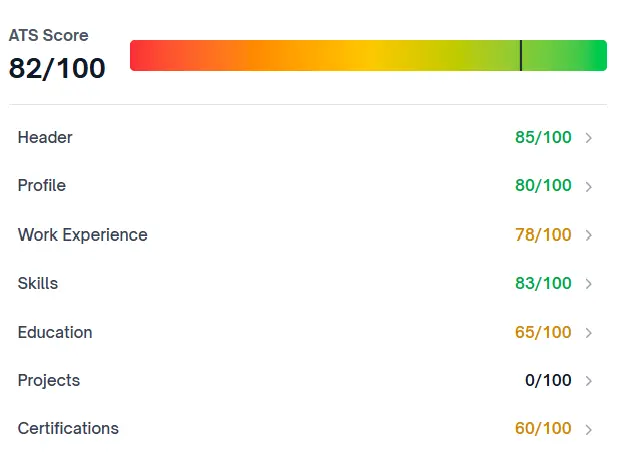
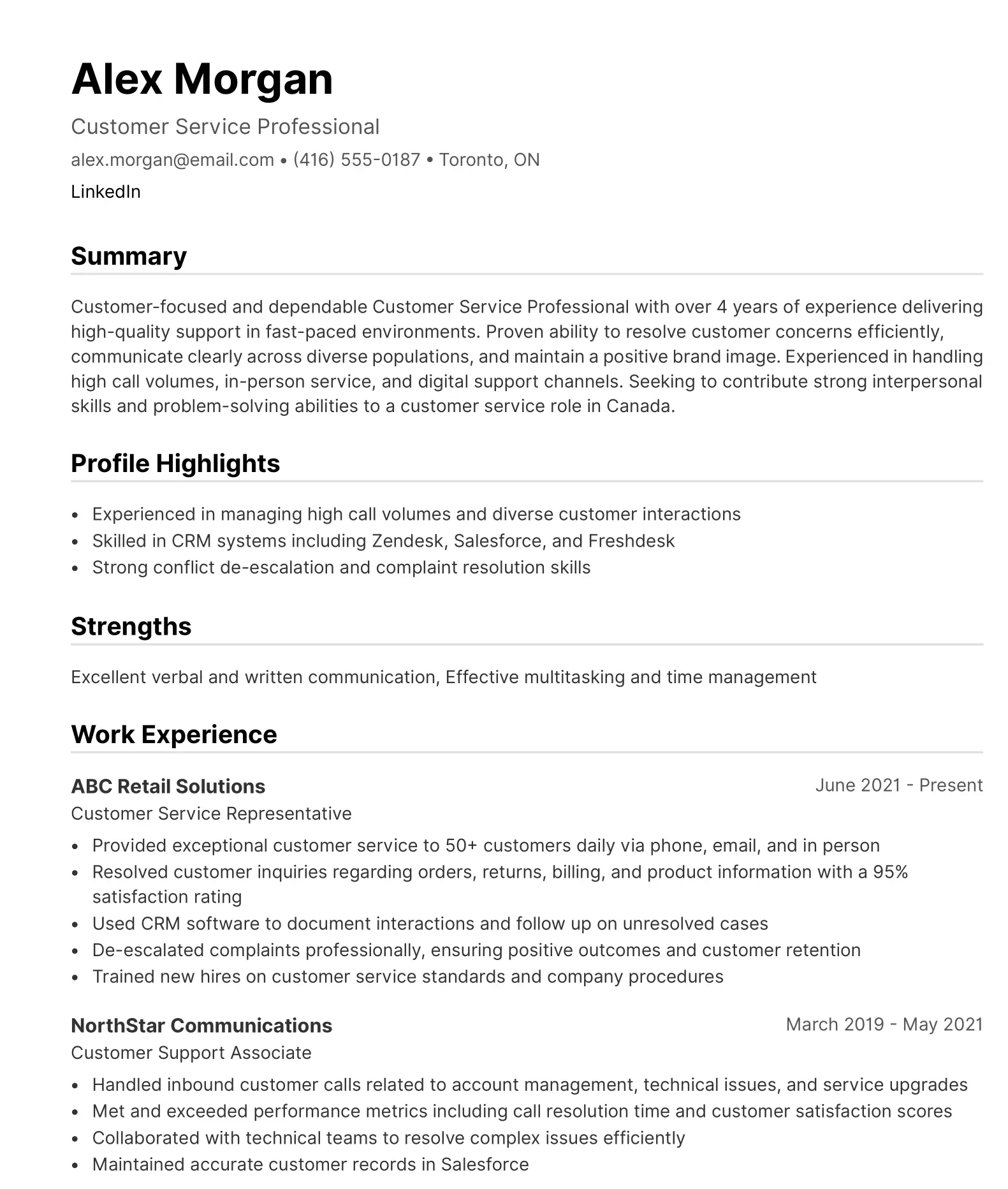
resume templateATS score overlay

Common Questions

Answers to the most common questions about Caregiver / Personal Support Worker compensation in Hamilton, ON.

How much does a PSW make in Hamilton Ontario in 2026?

A Personal Support Worker in Hamilton, ON typically earns between $36,000 and $62,000 CAD per year in base pay, equivalent to roughly $17.60 to $30.00 per hour depending on experience and employer. The provincial average hourly range per Job Bank Canada (NOC 44101, updated Nov 2025) is $17.60 to $28.00/hr in Ontario. Unionized LTC facility workers and those working specialty or overnight shifts reach the higher end of that range.

What is the difference between home care and facility PSW pay in Hamilton?

Home-care agency PSWs in Hamilton typically earn $17.60-$21.00/hr with variable hours and few benefits, while unionized long-term care facility PSWs can earn $22.00-$28.00/hr plus shift premiums, pension, and benefits under collective agreements. The gap in total annual compensation can be 15-25% in favour of facility roles even when the base hourly rates appear similar. Guaranteed full-time hours in a facility setting also make annual income significantly more predictable.

Do PSWs get a night shift premium in Ontario?

Yes. Most unionized Ontario LTC facilities pay a shift premium of $1.00-$2.25/hr for evening, overnight, and weekend shifts under collective agreements with unions such as SEIU Healthcare, CUPE, or Unifor. Non-union workers are entitled to 1.5x overtime pay after 44 hours per week under the Ontario Employment Standards Act but may not receive a separate shift-differential premium. Always confirm the specific premium amounts in any written offer.

How do I move from a home-care PSW job to a higher-paying facility role in Hamilton?

The most direct path is to apply directly to unionized LTC facilities in Hamilton such as those affiliated with Hamilton Health Sciences or regional homes operated by the City of Hamilton or non-profit operators. Highlight any specialty certifications (dementia, palliative care) on your resume, as facility HR systems and ATS filters screen for these terms. A short bridging certificate or a lead-PSW shift history can also differentiate your application in a competitive hiring pool.

What specialty skills increase PSW pay the most?

Dementia and Alzheimer's care, palliative and end-of-life support, acquired brain injury (ABI) care, and pediatric home care are the specializations most likely to trigger premium pay codes at agencies or top-of-grid placement at facilities in Ontario. Wound-care assistance and medication administration certification (where permitted by scope) are also valued. Adding one of these credentials to a PSW certificate can yield $1-$3/hr more at an agency or direct access to a higher wage grid step at a facility.

How does a Hamilton PSW salary compare to Toronto?

Toronto-region PSWs share the same provincial hourly band of roughly $17.60-$27.00/hr per Job Bank Canada, but higher availability of full-time hours at large unionized facilities can push Toronto annual earnings slightly above Hamilton. The difference is modest - typically $2,000-$5,000 CAD per year at the same experience tier - and Hamilton's lower cost of living may offset the gap for workers not requiring a major pay increase.

Is the PSW role in demand in Hamilton in 2026?

Yes. Demand for PSWs across Ontario remains strong due to the aging population and the ongoing expansion of publicly funded home-care hours. Hamilton's concentration of LTC facilities and hospital-affiliated care networks creates consistent hiring activity. CarePartners, Bayshore, and municipally funded programs actively recruit in the Hamilton and surrounding Niagara and Burlington areas year-round.

Explore salary ranges for other healthcare and support roles in Ontario, or compare compensation across skilled trades in the Toronto and Golden Horseshoe region.

Job titleEntry LevelMid-CareerSeniorLead / Red Seal
Maintenance Technician$44K - $57K CAD$57K - $72K CAD$72K - $88K CAD$88K - $95K+ CAD
HVAC Technician$45,000 - $58,000 CAD$58,000 - $78,000 CAD$78,000 - $95,000 CAD$95,000 - $107,000 CAD
Electrician$42K - $68K CAD$68K - $90K CAD$85K - $105K CAD$95K - $110K+ CAD
Plumber$36K - $52K CAD$60K - $80K CAD$78K - $95K CAD$88K - $105K CAD
Forklift Operator$36,000 - $44,000 CAD$44,000 - $55,000 CAD$55,000 - $63,000 CAD$63,000 - $68,000 CAD
Warehouse Worker$33,000 - $40,000 CAD$40,000 - $48,000 CAD$48,000 - $57,000 CAD$57,000 - $66,000 CAD
Truck Driver$44K - $57K CAD$57K - $78K CAD$78K - $95K CAD$95K - $115K+ CAD

Sources and methodology

Salary ranges on this page were compiled from Canadian government labour market data and third-party salary aggregators covering Ontario PSW roles (NOC 44101). Data points were cross-referenced across sources and weighted toward Government of Canada Job Bank figures as the most authoritative public benchmark for this occupation.

What caregivers and PSWs in Hamilton and Ontario are actually saying

The following quotes reflect themes from online PSW and caregiver communities in Ontario as of late 2025 and early 2026, drawn from Reddit, Glassdoor, and healthcare worker forums. They are representative of common salary and working-condition discussions in the field.

Reddit · r/PersonalSupportWorker
I moved from a home-care agency to a unionized LTC and my hourly went up $3 immediately plus I finally get benefits.

Reflects the recurring theme that the agency-to-unionized-facility transition is one of the most impactful single moves a PSW can make for total compensation.

Glassdoor · Ontario PSW reviews
The work is rewarding but the pay at private agencies doesn't reflect the physical and emotional demands at all.

Highlights the persistent gap between private agency wages and the workload intensity reported by PSWs - a factor pushing workers toward facility roles.

Reddit · r/ontario
Night shift premium makes a real difference - I gross about $2 more per hour on nights which adds up over a year.

Confirms that shift premiums are a meaningful income lever for PSWs in unionized facilities and are widely discussed as a strategy for increasing annual earnings.

Indeed · Hamilton PSW employer reviews
Hours are guaranteed full-time here which is rare in home care - that stability is worth a lot.

Underscores that guaranteed hours in facility roles is valued by PSWs as much as the hourly rate, and that casual home-care arrangements often reduce annual income below what the hourly rate suggests.

Companies actively hiring PSWs and caregivers in Hamilton right now

CarePartners · Bayshore Home Health · VON Canada · ParaMed Home Health Care · Hamilton Health Sciences · St. Joseph's Home Care · Revera · Extendicare · Sienna Senior Living · City of Hamilton Community Services · SE Health

PayScale - Personal Support Worker Hourly Pay in Hamilton, Ontario (updated December 2025) PayScale Hamilton PSW

Glassdoor - Personal Support Worker salaries in Ontario, based on 1,301 anonymously submitted salaries (as of March 2026) Glassdoor Ontario PSW Salaries

Data note: All salary figures on this page are approximate estimates sourced from public salary aggregators including Job Bank Canada (Government of Canada, NOC 44101), PayScale, and Glassdoor. Data was collected and published between November 2025 and April 2026. All figures represent base salary or base hourly wages only and exclude overtime pay, shift premiums, signing bonuses, agency top-ups, RSUs, pension contributions, and employer-paid benefits. Individual compensation varies based on employer type, union status, collective agreement, years of service, shift schedule, geographic location, and specialty certifications. Figures are intended as market reference ranges only - not as a guarantee of earnings. Users should independently verify current wages with prospective employers and relevant union agreements.