
Market
5 min read
Health Canada Layoffs 2026: What Workforce Adjustment Notices Mean (WFA Guide)
Synopsis
More than 1,000 Health Canada employees have received workforce adjustment notices as part of federal government plans to reduce the public service by approximately 40,000 positions by 2028-29.
Key Insight
This guide explains what a workforce adjustment notice means, the options available to you, and how to prepare for your next role inside or outside the federal government. A workforce adjustment notice at Health Canada means your position may be affected, not that you have already been laid off.
If you work at Health Canada and received a workforce adjustment letter this week, you're not alone. Over 1,000 employees across the department have been notified that their positions may be affected, according to PIPSC and CAPE union statements. These notices are part of broader federal spending reductions outlined in Budget 2025, which aim to eliminate roughly 40,000 positions across the public service over the next several years.
Important
A workforce adjustment notice does not mean you've been laid off. It means your position may be affected. You still have options, and the process unfolds over months, not days.
What Happened at Health Canada
Health Canada is the latest Ottawa-based federal department to issue workforce adjustment notices as part of Ottawa spending reductions. The Professional Institute of the Public Service of Canada (PIPSC) reports that over 700 of its members at Health Canada received WFA letters, while the Canadian Association of Professional Employees (CAPE) confirmed 331 of its members were also notified.
The roles affected span scientific, regulatory, and consumer safety positions. PIPSC has warned that these reductions could weaken oversight of food safety, medications, medical devices, and infectious disease response.
Health Canada joins a growing list of departments issuing workforce adjustment notices, including:
- Statistics Canada: Over 1,900 CAPE members notified
- Shared Services Canada: Over 1,200 employees affected
- Innovation, Science and Economic Development: 1,100 employees notified
- Natural Resources Canada: Over 400 notices issued
- Public Services and Procurement Canada: Hundreds of notices
The federal government plans to reduce overall headcount from a peak of approximately 368,000 in 2023–24. These federal public service job cuts are expected to bring staffing levels down to around 330,000 by 2028–29.
What a Workforce Adjustment Notice Actually Means
A workforce adjustment notice is not a termination letter. It signals that your position has been identified as potentially affected by organizational changes. The formal WFA process, outlined in collective agreements and the NJC Directive, provides structured options and timelines.
These workforce adjustment rules apply across the core public service, including Health Canada, Statistics Canada, and other Ottawa federal departments.
Two key status types:
- Surplus with a guarantee of a reasonable job offer: You can expect to be offered another position within the core public administration, normally at an equivalent level
- Opting status: You must choose one of several options within 120 days
If you're declared opting, your options typically include:
- A 12-month paid surplus priority entitlement to find another federal position
- A transition support measure (cash payment based on years of service)
- An education allowance for approved retraining
The process is designed to find alternative employment where possible. Some employees will be redeployed. Others may use alternation agreements to exchange positions with employees who wish to leave. Not everyone who receives a notice will ultimately lose their position.
Important
Time matters. If you're declared opting, you have 120 days to select an option. If you receive surplus priority status, you have 12 months to secure a reasonable job offer before potential layoff.
How This Affects Your Career Options
Whether you stay in the public service or explore opportunities outside government, the current environment creates both challenges and openings.
Inside government:
Competition for remaining positions is intensifying. When thousands of employees across multiple departments enter the priority system simultaneously, having a current, well-structured federal resume becomes essential. Your resume needs to clearly communicate your classification, experience, and competencies in language that matches federal job posters.
Outside government:
Your Health Canada experience translates to roles in provincial health agencies, pharmaceutical companies, biotech firms, healthcare consulting, regulatory affairs, and non-governmental organizations. Scientific, regulatory, and policy expertise developed in federal roles is valued across these sectors.
The key risk is waiting too long. Many affected employees delay updating their resumes, hoping the situation will resolve. But the WFA process has firm deadlines, and the priority system works best when you're actively applying.
How to Update Your Resume After a WFA Notice
If you received a Health Canada workforce adjustment notice, your resume likely needs attention. Federal roles use specific language, classifications, and competency frameworks that don't automatically translate to either external employers or even other federal competitions.
If you are a Health Canada employee, your resume should read like a federal competition poster, using the same language and keywords the core public administration uses.
Practical steps:
- Clarify your classification and group level. Your resume should reflect your current and previous classifications (EC-05, BI-03, etc.) for federal applications
- Translate internal titles. External employers won't recognize Health Canada acronyms or internal program names. Describe your work in plain terms
- Quantify outcomes. Instead of listing duties, highlight measurable results: regulatory files reviewed, inspections completed, risk assessments delivered, policy instruments developed
- Address the WFA neutrally. If asked, explain briefly: "Position affected by government-wide workforce adjustment in 2026." Mass layoffs are understood and carry no stigma
- Prepare two versions. One resume optimized for federal competitions (with classifications, competencies, and GC language) and one for external opportunities (focused on transferable skills and accomplishments)
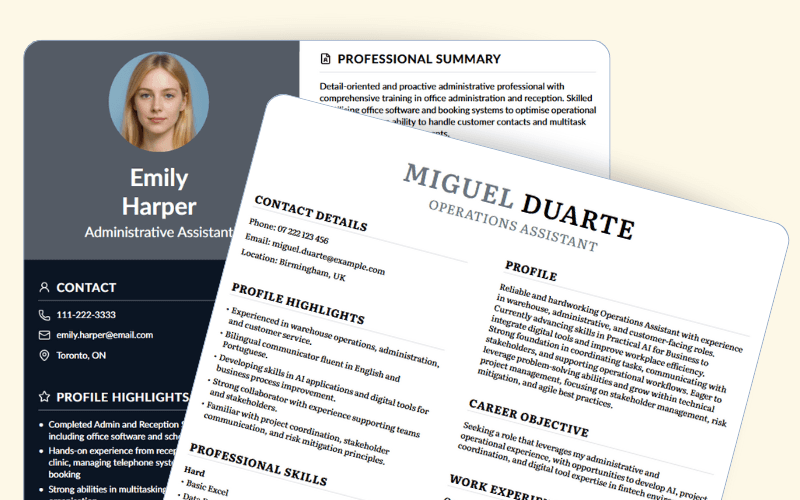
If your Health Canada resume is more than a year old, use Yotru to convert it into a WFA‑ready format with federal and private‑sector versions.
Pro Tip
If you have the capacity, starting your resume early can give you more space to think, revise, and ask for feedback. Taking it step by step can make the process feel more manageable.
What to Do This Week
If you just received a WFA notice:
- Read the letter carefully. Confirm whether you're affected, surplus with guarantee, or opting status
- Contact your union representative. PIPSC, PSAC, or CAPE can explain your specific options and timelines
- Gather your documentation. Collect performance reviews, job descriptions, project records, and any awards or recognitions
- Update your resume. Don't wait for clarity on your status. Having a current resume ready gives you more options
- Explore the priority system. If you receive surplus priority, you gain access to federal job postings before external candidates
- Consider your timeline. If retraining or education interests you, research programs now so you can make informed decisions
- Start a WFA‑ready resume draft using a federal template so you can apply quickly when priority postings appear.
If you're staying in the public service:
Your priority entitlement gives you preferential access to competitions across the core public administration. But the system works best when you're actively searching and applying. Monitor GC Jobs, set up alerts, and apply to positions that match your qualifications.
If you're exploring external opportunities:
Provincial governments, healthcare organizations, pharma, and consulting firms value regulatory and scientific expertise. Start networking now. Update your LinkedIn profile. Reach out to former colleagues who've made similar transitions.
If you’re still reviewing your notice, you may find this Ottawa workforce adjustment guide helpful.
About the Author

Team Yotru
Employability Systems
Team Yotru
Employability Systems
We build practical career tools for training providers and workforce programs, combining labor market insights with real employment outcomes. Follow us on LinkedIn.
Frequently Asked Questions
Common questions about workforce adjustment notices and job cuts in Ottawa's public service
A workforce adjustment notice means your position has been identified as potentially affected by organizational changes. It does not mean you've been laid off. The WFA process includes options like redeployment, priority placement, transition payments, or education allowances, depending on your status.
Audience Context
This article is written for Health Canada employees and other federal public servants who have received workforce adjustment notices in 2026, particularly those based in Ottawa and the National Capital Region. It is intended for scientific, regulatory, policy, and administrative professionals navigating uncertainty around surplus status, opting decisions, redeployment, or external career transitions. The guidance assumes familiarity with federal classifications, unions, and GC hiring systems, but not with private-sector recruitment norms.
Editorial Standards
Yotru publishes workforce and employability content grounded in verifiable policy, institutional processes, and practical hiring realities. This article avoids speculation, fear-based framing, or prescriptive career outcomes. It distinguishes clearly between confirmed policy, common practice, and informed guidance. References are limited to credible government, union, and established media sources. Product mentions are contextual and informational, not advisory.
Methodology
The analysis is based on a review of official Government of Canada workforce adjustment directives, collective agreement provisions, and publicly available union communications from PIPSC, CAPE, and related organizations. The career and resume guidance reflects observed federal hiring workflows, priority entitlement mechanics, and real transition patterns of public servants moving into provincial, healthcare, regulatory, and private-sector roles. No individual personnel data was used.
Disclaimer
This article is provided for general informational purposes only and does not constitute legal, union, or career advice. Workforce adjustment outcomes vary by department, classification, collective agreement, and timing. Readers should consult official Treasury Board guidance, their union representatives, and departmental HR advisors for advice specific to their situation. Use of any tools or strategies discussed does not guarantee redeployment, employment, or specific career outcomes.
Further Insights
Resume Building and Optimization
- Resume Builder for Canada: How to Create a Job Bank Approved Resume
- Ottawa Federal Job Cuts: Resume Examples
Market and Workforce Guidance
References
- Government of Canada: Workforce Adjustment - Official TBS guidance on the WFA process, timelines, and employee options
- PIPSC: Canada Is Losing the Experts Who Keep Its Health Systems Safe - Union press release on Health Canada workforce reductions
- PIPSC: Federal Job Cuts Risk Generational Rollback of Public Services - Union statement on broader federal workforce reductions
- CTV News: Health Canada the Latest Federal Department to Issue Layoff Notices - News coverage of Health Canada WFA notices
- CBC News: Federal Government Job Cuts: Here's What We Know So Far - Comprehensive overview of affected departments
- Yahoo Finance/Canadian Press: Layoff Notices Sent to Thousands of Federal Government Workers - Coverage of union responses and scale of workforce adjustment notices
Maintained by: Yotru Career Research and Development Team
Review cycle: Reviewed regularly to reflect market changes
Last updated: January 23, 2026
Questions or Need Support?
If you are working on employability programs, hiring strategy, career education, or workforce outcomes and want practical guidance, you are in the right place.
Yotru supports individuals and organizations navigating real hiring systems. That includes resumes and ATS screening, career readiness, program design, evidence collection, and alignment with employer expectations. We work across education, training, public sector, and industry to turn guidance into outcomes that actually hold up in practice.