Atlanta Salary Guide - 2026

HVAC Installer Salary in Atlanta, GA (2026)

Last updated:

$59,000 USD is the average salary for an HVAC Installer in Atlanta, GA, based on aggregated data from Indeed, ZipRecruiter, Salary.com, and Glassdoor compiled through early 2026. This page breaks down pay by experience tier, install vs. service mix, residential vs. commercial work, and licensing status so Atlanta-area installers can benchmark their current rate and identify the fastest levers to raise it. Ranges vary widely because entry-level helpers on residential crews earn as little as $37,000 while licensed lead installers on commercial projects with overtime can exceed $90,000.

Entry Level / Helper
$37,000 - $50,000 USD
0-2 yrs, assisting lead installer, no independent licensing
Mid-Level Installer
$50,000 - $68,000 USD
2-5 yrs, EPA 608 certified, residential or light commercial installs
Senior Installer
$68,000 - $82,000 USD
5-10 yrs, lead on commercial projects, state gas license held
Lead / Foreman
$82,000 - $95,000 USD
10+ yrs, crew supervision, design-assist, large commercial systems

HVAC INSTALLER SALARY RANGES IN ATLANTA, GA - 2026

Entry Level / Helper
$37K - $50K
Mid-Level Installer
$50K - $68K
Senior Installer
$68K - $82K
Lead / Foreman
$82K - $95K
Source: Indeed, ZipRecruiter, Salary.com, Glassdoor, ERI (2025-2026). Base salary only; excludes overtime, bonuses, and equity. Figures are USD.

What does an HVAC Installer earn at each level in Atlanta?

Pay steps reflect a combination of licensing milestones, job scope, and whether you are leading a crew or assisting one.

Entry Level / Helper

$37,000 - $50,000 USD

New-to-trade helpers running materials and assisting lead installers on residential replacements typically land in this band before earning EPA 608 certification.

Move up fast

  • Earn EPA 608 certification within your first year on the job
  • Complete a NATE-recognized apprenticeship or trade school program
  • Ask your foreman to shadow ductwork layout and commissioning tasks

Rewrite your resume around production impact →

Mid-Level Installer

$50,000 - $68,000 USD

Certified techs who can independently install split systems, air handlers, and basic duct runs on residential or light-commercial jobs sit squarely in this range.

Move up

  • Obtain a Georgia Conditioned Air Contractor license or work toward journeyman status
  • Cross-train on commercial rooftop units and VAV systems to expand scope
  • Document installs with manufacturer startup forms to build a portfolio for larger contractors
Rewrite your resume around production impact →

Senior Installer

$68,000 - $82,000 USD

Experienced installers leading residential replacements end-to-end or handling commercial new-construction rough-in regularly hit this band, especially with gas-piping sign-off authority.

Advance further

  • Pursue Georgia state low-pressure gas piping endorsement to command premium on commercial bids
  • Move to a commercial-specialist contractor where per-project scope and billing rates are higher
  • Negotiate for prevailing-wage or Davis-Bacon jobs through union locals (UA Local 72)
Rewrite your resume around production impact →

Lead / Foreman

$82,000 - $95,000 USD

Crew leads managing two or more installers on large commercial or multi-family projects, responsible for scheduling, material pull, and quality sign-off, reach the top of the installer band.

Top-of-band levers

  • Transition into project management or estimating for commercial HVAC contractors
  • Build service-mix skills to cross to HVAC Service Tech roles that often pay $10K-$15K more
  • Explore independent subcontracting to capture contractor margin directly
Rewrite your resume around production impact →

Stuck below mid-market rate as an Atlanta HVAC Installer?

Most installers plateau because their resume reflects time in the trade rather than scope and certifications - Atlanta employers and commercial GCs specifically screen for documented licensing and system types. Changing how you present your experience can move you one or two bands faster than waiting for a tenure raise.

  • List every EPA 608, NATE, and gas-piping credential by certification number and issue date on your resume
  • Specify system types and tonnage handled (e.g., 5-ton split, 20-ton RTU) rather than generic install duties
  • Get your resume scored against ATS filters before submitting to large commercial contractors like McKenney's or Comfort Systems
  • Target commercial new-construction crews - they pay $5,000 to $15,000 more per year than residential replacement shops
  • Join UA Local 72 or a joint apprenticeship program to access prevailing-wage commercial projects with defined pay scales

Turn your install experience into top-of-band language

Employers hiring for $70K+ HVAC roles in Atlanta want to see system scope, tonnage, and certifications - not just years on the job. Optimizing your resume for those keywords is the single fastest way to move out of the mid-range.

What drives HVAC Installer salaries higher in Atlanta

Higher-paying candidates typically show:

  • Commercial vs. residential scope: Commercial installers working on rooftop units, chillers, or new-construction projects earn $8,000 to $15,000 more per year than residential replacement techs at the same experience level
  • Licensing and certifications: Holding EPA 608 (required), a Georgia Conditioned Air Contractor license, or a low-pressure gas piping endorsement directly unlocks higher-pay job postings and contractor bids
  • Overtime and summer peak: Atlanta's hot climate drives heavy June-August demand; installers willing to work 50+ hour weeks during peak season can add $5,000 to $8,000 in annual overtime pay
  • Union affiliation (UA Local 72): Union sheet metal and pipefitter locals in the Atlanta area negotiate defined wage scales and prevailing-wage access that often exceeds non-union rates at the senior level
  • Company size and billing model: Large commercial contractors (McKenney's, Comfort Systems, Johnson Controls) pay 10-20% more than small residential shops because their billing rates support higher labor costs
  • Install vs. service split: Technicians who can both install and diagnose service calls are paid more and are harder to replace; cross-training in service work adds significant negotiating leverage

HVAC Installer salaries by Georgia city near Atlanta

Atlanta, GA (metro core)

$50,000 - $95,000 USD

The densest concentration of commercial HVAC work in the state, with major contractors, airport projects, and high-rise construction driving demand for licensed lead installers.

Marietta / Cobb County

$48,000 - $88,000 USD

Strong residential replacement market with growing light-commercial activity; slightly lower ceiling than the city core but strong volume keeps hours and overtime high.

Alpharetta / Roswell

$50,000 - $90,000 USD

Fast-growing suburban corridor with new commercial and mixed-use construction supporting above-average installer wages and consistent year-round demand.

Augusta, GA

$40,000 - $78,000 USD

Smaller market with lower ceiling rates than Atlanta metro; strong residential base but fewer large commercial contractors competing for experienced talent.

Savannah, GA

$42,000 - $80,000 USD

Port-driven industrial and commercial growth has lifted wages in recent years, but overall ceiling still trails Atlanta by roughly $10,000 at the senior level.

Macon, GA

$38,000 - $72,000 USD

Mid-size market with a primarily residential install base; lower cost of living partially offsets the lower wage ceiling compared to metro Atlanta.

Atlanta remains the highest-paying market in Georgia for HVAC Installers, primarily because the volume of commercial new-construction and retrofit projects supports large contractors with higher billing rates. If you are based in a smaller Georgia city, targeting Atlanta metro employers who allow drive-in scheduling or who run commercial projects in your region can add $8,000 to $15,000 annually without relocation. Remote HVAC work is not applicable to this trade, but installers with clean driving records and willingness to travel to job sites across the metro area are routinely offered premium rates by commercial contractors who struggle to staff outlying projects.

Overtime and seasonal premium

Atlanta's extreme summer heat means installers are in heavy demand from late May through September. Many employers pay time-and-a-half after 40 hours, and top earners report $6,000 to $9,000 in annual overtime pay. Factor this into any base-salary comparison when evaluating job offers.

Install vs. service mix and pay ceiling

Pure installers typically earn less than technicians who can also diagnose and repair. Residential replacement shops pay on the lower end of the range; commercial service-install hybrid roles at large contractors hit the top of the band. If your goal is to reach $80,000+, building service skills alongside installation is the clearest path.

Licensing and contractor classification

Georgia requires a Conditioned Air Contractor license for business owners bidding jobs, but individual installers working under a licensed contractor are not required to hold it personally. However, holding EPA 608 certification is federally required to handle refrigerants, and employers use it as a baseline screening filter. Gas piping endorsements add additional leverage in the $70K+ tier.

HVAC Installer salary negotiation checklist - Atlanta, GA

Complete these steps before you accept an offer or ask for a raise.

  • Pull current rate data from Indeed, ZipRecruiter, and Glassdoor for HVAC Installer in Atlanta to anchor your ask to a specific number, not a feeling
  • List all certifications by name and number: EPA 608, NATE specialty, gas piping endorsement, manufacturer-specific training (Carrier, Trane, Lennox)
  • Document the largest systems you have installed by type and tonnage - rooftop unit tonnage and commercial system complexity are the most valued signals
  • Calculate your total compensation including overtime, not just base - and present the base ask separately when negotiating
  • Research the contractor's project type: commercial new-construction crews pay more and are more negotiable than residential service shops
  • Ask specifically about overtime structure, prevailing-wage access, and whether the role has a defined reclassification review at 6 or 12 months
  • Get competing offers from at least one other Atlanta contractor before your negotiation conversation - written or verbal both work
  • If the base is non-negotiable, negotiate for tool allowance, vehicle, EPA recertification fees, and continuing education reimbursement instead

How Yotru helps you reach top-of-band offers

  • Rewrites your experience around deployment, systems, and measurable outcomes — the signals hiring managers actually pay for.
  • Formats your resume to pass ATS filters at top-paying companies in Toronto, Vancouver, and remote-first teams.
  • Turns "trained a model" into "reduced inference latency 40%" — the language that puts you in the upper band, not the lower one.
  • Takes 5 minutes. No blank-page anxiety, no guessing what to cut.

Turn Your resume Into Top-of-Band Evidence

Get ATS-optimized feedback and role-specific language upgrades that map your experience to salary-driving outcomes: ownership, impact, and delivery at scale.

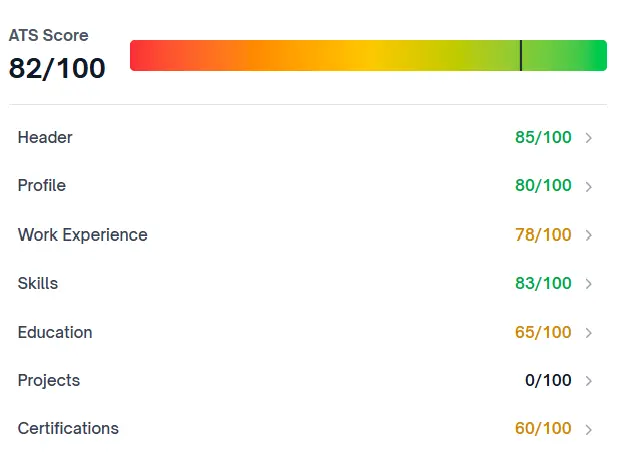
resume templateATS score overlay

Common Questions

Answers to the most common questions about HVAC Installer compensation in Atlanta, GA, US.

How much does an HVAC Installer make in Atlanta, GA?

The average HVAC Installer in Atlanta, GA earns approximately $59,000 per year based on aggregated data from Indeed, ZipRecruiter, Salary.com, and Glassdoor through early 2026. The typical range runs from about $37,000 for entry-level helpers to $95,000 for experienced lead installers on commercial crews. Overtime, licensing, and residential vs. commercial scope are the biggest factors that move pay within that range.

What is the difference in pay between residential and commercial HVAC Installers in Atlanta?

Commercial HVAC Installers in Atlanta generally earn $8,000 to $15,000 more per year than residential replacement technicians at comparable experience levels. This gap exists because commercial contractors bill at higher rates and require more complex system knowledge, including rooftop units, VAV systems, and large-tonnage equipment. Moving from a residential shop to a commercial contractor is one of the fastest pay-advancement moves available in this trade.

Do HVAC Installers in Atlanta need a license?

Individual HVAC Installers in Atlanta working under an employer are not required to hold a Georgia Conditioned Air Contractor license personally, but must hold EPA Section 608 certification to legally handle refrigerants - a federal requirement. Gas piping work requires a separate state endorsement. Holding these credentials is a practical hiring requirement at most commercial contractors and unlocks pay at the senior tier.

How much overtime do HVAC Installers earn in Atlanta?

Atlanta's hot climate drives peak demand from late May through September, and many HVAC Installers earn $5,000 to $9,000 in overtime pay annually. Indeed data reports average overtime pay for HVAC installers in Georgia of approximately $6,750 per year. Employers in the commercial sector are more likely to offer structured overtime than residential replacement shops.

What certifications increase HVAC Installer pay in Atlanta?

EPA Section 608 certification is the baseline requirement and without it most employers will not hire you to handle refrigerants. NATE certifications in specific installation categories (air distribution, air-to-air heat pump, light commercial refrigeration) add credibility and roughly $3,000 to $7,000 in annual pay at mid-level. A Georgia low-pressure gas piping endorsement and manufacturer-specific factory training (Carrier, Trane, Lennox) also increase pay ceiling significantly at the senior level.

How does HVAC Installer pay in Atlanta compare to other Georgia cities?

Atlanta metro consistently pays the highest HVAC Installer wages in Georgia, with experienced techs reaching $82,000 to $95,000 at the lead level. Comparable roles in Augusta and Savannah typically cap $10,000 to $15,000 lower, while Macon and smaller markets trail by $15,000 to $20,000 at the senior tier. The Atlanta premium reflects the higher concentration of commercial contractors, airport and stadium projects, and competing employers driving wages up.

Is it worth joining a union as an HVAC Installer in Atlanta?

UA Local 72 and Sheet Metal Workers Local 85 represent HVAC workers in the Atlanta area and negotiate defined wage scales with access to prevailing-wage commercial projects. Union pay at the journeyman level often exceeds non-union base wages, particularly on government-funded and large institutional projects. The trade-off is apprenticeship structure and dispatch rules, which some experienced installers find limiting compared to direct-hire commercial contractor roles.

What is the highest salary an HVAC Installer can earn in Atlanta?

Top-earning lead installers and foremen on large commercial projects in Atlanta can reach $90,000 to $95,000 in base pay, with total compensation exceeding $100,000 when overtime is included. Glassdoor data shows HVAC Technicians at the 90th percentile in Atlanta earning approximately $103,000 in total pay. Reaching this level typically requires 10+ years of experience, crew lead or foreman responsibility, and active licensing credentials.

Compare HVAC installer pay to other skilled trades and technical roles in similar markets.

Job titleEntry LevelMid-CareerSenior TechnicianLead / Master Tech
HVAC Technician$38K - $50K USD$50K - $68K USD$68K - $82K USD$82K - $95K USD
Electrician$38K - $50K USD$50K - $65K USD$65K - $90K USD$83K - $105K+ USD
Plumber$42,000 - $58,000 USD$58,000 - $80,000 USD$78,000 - $95,000 USD$88,000 - $115,000 USD
HVAC Technician$45,000 - $58,000 CAD$58,000 - $78,000 CAD$78,000 - $95,000 CAD$95,000 - $107,000 CAD
Maintenance Technician$38K - $48K USD$48K - $65K USD$65K - $80K USD$80K - $95K USD
HVAC Installer$48K - $58K CAD$58K - $68K CAD$68K - $82K CAD$80K - $95K CAD
Low Voltage Technician$37,000 - $48,000 USD$48,000 - $62,000 USD$62,000 - $75,000 USD$75,000 - $83,000 USD
Facilities Technician$33K - $42K USD$42K - $56K USD$56K - $68K USD$68K - $75K USD

Sources and methodology

Salary ranges on this page were compiled by cross-referencing multiple public aggregator platforms (Indeed, ZipRecruiter, Salary.com, Glassdoor, ERI Economic Research Institute) and BLS occupational data for the Atlanta, GA metro area and Georgia state, with data points drawn from reports dated mid-2024 through early 2026. Where sources diverged, mid-point averages were used and the full range was preserved to reflect market variation.

What HVAC Installers in Atlanta are actually saying

Quotes reflect themes from discussions on Reddit, Glassdoor reviews, and trade forums gathered through early 2026; individual experiences vary by employer and project type.

Reddit · r/HVAC
Commercial install is where the money is in Atlanta. Residential shops will work you to death in the summer for $20 an hour.

Reflects a common pattern where experienced Atlanta installers migrate toward commercial contractors for significantly better base pay and more structured hours outside peak season.

Glassdoor · Atlanta HVAC employer reviews
Good overtime in summer but the base could be higher. They expect you to have 608 on day one.

Highlights how Atlanta employers treat EPA 608 as a non-negotiable entry requirement rather than a bonus qualification, and how overtime substantially lifts effective annual pay during peak months.

Reddit · r/HVAC
Got my gas piping cert last year and jumped almost $4 an hour at my next job. Worth every penny of the class.

Confirms that targeted licensing additions - particularly gas piping endorsements - produce measurable and immediate pay jumps in the Atlanta market rather than just incremental tenure raises.

Indeed · Atlanta HVAC installer reviews
Install only pays less than service. Once I crossed over to service-install hybrid I never went back.

Illustrates the pay ceiling gap between pure installation roles and hybrid install-service positions, which is one of the most actionable levers for mid-career techs looking to move up.

Reddit · r/Trades
Atlanta is booming for commercial HVAC right now. I turned down two offers this month alone because I already had work.

Signals a tight labor market for skilled commercial HVAC Installers in the Atlanta metro, which gives experienced techs meaningful negotiating leverage when evaluating competing offers.

Companies actively hiring HVAC Installers in Atlanta, GA

McKenney's Inc. · Comfort Systems USA · Coolray Heating and Cooling · Empire Heating and Air Conditioning · Johnson Controls · Assured Comfort Heating and Air · TE Certified Electrical Plumbing Heating · Bartlett Heating and Cooling · Carrier Corporation (Atlanta operations) · Trane Technologies · Lennox International (Southeast region) · Georgia Air

ERI Economic Research Institute - Heating and Air Conditioning Technician Salary in Atlanta, GA (2025) ERI Atlanta HVAC Salary

Data note: Salary figures on this page are compiled from publicly available aggregated data sources including Indeed, ZipRecruiter, Salary.com, Glassdoor, ERI, and Bureau of Labor Statistics occupational surveys. All figures are approximate, reflect base salary only, and exclude overtime pay, bonuses, benefits, employer-provided vehicle or tool allowances, and any form of equity or profit sharing. Data reflects reported salary ranges gathered between mid-2024 and early 2026; labor market conditions change and individual results will vary based on employer, project type, certifications held, negotiation outcome, and local demand at time of hire. This page is intended as a research starting point, not a guarantee of compensation.