Market
4 min read
Comparing Executive Assistant Resumes in 2026: What Employers Look For
Synopsis
This analysis compares five Executive Assistant resumes across healthcare, tech, corporate, and remote environments. It shows how positioning, tools, and measurable impact influence hiring decisions in 2026.
Key Insight
Executive Assistant roles have diversified. Healthcare systems, tech startups, global firms, and remote-first companies now expect very different capabilities from senior support professionals.
The Five Executive Assistant Resumes We Evaluated
In this analysis, we reviewed five real-world Executive Assistant resumes from different industries and working environments. Each profile reflects a distinct career path and employer expectation.
Healthcare & Clinical
- Executive Assistant Resume Example – Hospital Administration
- Bilingual Executive Assistant Resume – Healthcare & Clinical Admin
Tech & Startups
Corporate & Travel
Remote & Operations
Pro Tip
Modern EAs are no longer evaluated only on scheduling and admin support. Employers increasingly assess operational impact, data handling, cross-functional coordination, and industry-specific compliance.
1. Career Positioning and Professional Narrative
Healthcare Executive Assistant (Monique)
• Positions herself as a governance and compliance-focused hospital partner.
• Signals long-term institutional trust and executive confidentiality.
• Strong fit for regulated, hierarchical environments.
Bilingual Clinical Executive Assistant
• Frames experience around patient-provider-admin coordination.
• Uses bilingual capability as a strategic differentiator.
• Appeals to community health and public-facing organisations.
Executive Assistant to CTO (Tech Startups)
• Emphasises speed, scale, and multi-time-zone coordination.
• Signals readiness for VC-backed and growth-stage companies.
• Leans on metrics and certifications for credibility.
Travel Management Executive Assistant
• Centers narrative on complex logistics and client-facing reliability.
• Positions as a high-pressure corporate support specialist.
• Appeals to global and sales-driven firms.
Remote Executive Assistant (Finance & Operations)
• Blends executive support with finance and operations management.
• Targets lean, remote-first organisations.
• Signals versatility over depth in traditional EA work.
Important
High-performing EA resumes answer one question early: “What environment am I built for?” Sector clarity reduces screening friction and improves shortlisting rates.
2. Industry Alignment and Employer Fit
Healthcare-Focused Profiles
• Prioritise confidentiality, regulatory awareness, and documentation accuracy.
• Emphasise experience with clinical leadership structures.
• Appeal to risk-averse institutions.
Technology and Startup Profile
• Highlights adaptability, digital coordination, and global scheduling.
• Appeals to scaling teams with flat hierarchies.
• Signals comfort with ambiguity.
Corporate and Travel-Oriented Profile
• Emphasises logistics, vendor management, and client experience.
• Targets organisations with heavy travel and event demands.
• Supports revenue-facing teams.
Remote and Operations Profile
• Aligns with distributed teams and financial oversight needs.
• Supports founders and small leadership teams.
• Appeals to cost-conscious employers.
3. Skills and Tools: How the Profiles Compare
Healthcare EAs
• EHR/EMR systems
• Clinical documentation
• Privacy and compliance procedures
• Standard office platforms
Tech Startup EA
• Virtual meeting platforms
• Collaboration tools
• Project tracking systems
• Conference management software
Travel Management EA
• Global booking systems
• Expense platforms
• Vendor contracts
• Event coordination tools
Finance and Operations EA
• Xero, Hubdoc, MYOB
• Payroll systems
• Audit preparation tools
• Reporting platforms
Pro Tip
ATS systems filter resumes using software keywords. Naming platforms explicitly improves ranking and recruiter confidence.
4. Evidence of Impact and Performance Metrics
Healthcare Executive Assistant
• Shows compliance and governance coordination.
• Limited explicit numerical performance data.
• Relies on institutional credibility.
Bilingual Clinical EA
• Demonstrates workflow improvements.
• Highlights qualitative service impact.
• Uses process documentation as evidence.
Tech Startup EA
• Provides strong quantitative metrics.
• Measures calendar efficiency and logistics performance.
• Benefits from ATS feedback overlay.
Travel Management EA
• Demonstrates experience volume.
• Needs stronger cost and time metrics.
• Impact remains partly implied.
Finance and Operations EA
• Shows system optimization.
• Demonstrates reporting and audit improvements.
• Strong base for measurable outcomes.
5. Transferability and Career Mobility
Healthcare Specialists
• Strong vertical mobility within healthcare systems.
• Limited crossover without reframing.
• Risk of niche perception.
Bilingual and Mixed Background EA
• High sector flexibility.
• Requires tighter narrative control.
• Benefits from focused targeting.
Tech Startup EA
• High portability across tech firms.
• Strong appeal to scale-ups.
• Supports transition to operations roles.
Travel Management EA
• Transfers well to consulting and sales environments.
• Requires metric reinforcement.
• Strong client-service positioning.
Finance and Operations EA
• Supports progression into operations management.
• Appeals to founder-led companies.
• Less suited to traditional corporate hierarchies.
Hint
Resumes that combine sector expertise with portable systems skills move more easily between employers and industries.
6. What Job Seekers Can Learn From These Profiles
For Healthcare EAs
• Balance regulatory credibility with transferable skills.
• Avoid sounding purely administrative.
• Quantify governance and coordination outcomes.
For Tech and Startup EAs
• Name collaboration tools clearly.
• Document scale and complexity.
• Connect metrics to business growth.
For Corporate and Travel-Focused EAs
• Add cost, time, and efficiency metrics.
• Show vendor negotiation impact.
• Highlight client retention support.
For Remote and Operations EAs
• Prove executive support depth.
• Separate EA and finance contributions.
• Show reliability in distributed settings.
For more ideas, visit Executive Assistant Resume Resources
- Executive Assistant Resume Guide 2025: Tips, Examples and Skills – Comprehensive guide covering what hiring managers look for, summary examples, modern tools, and ATS optimization
- Executive Assistant Resume Keywords (2025): ATS Skills List for Every Level – 150+ keywords for entry-level, senior, legal, and finance EAs with practical integration examples
- How Executive Assistants Can Write Resumes That Truly Stand Out – Expert insights from recruiters and hiring managers on turning tasks into measurable outcomes
Final Assessment: What Strong EA Resumes Have in Common
Across all five profiles, the strongest resumes share three characteristics:
• Clear sector positioning
• Explicit tool and system visibility
• Evidence of measurable organisational impact
Resumes that lack one of these elements tend to face slower hiring outcomes and heavier screening pressure.
Build a Competitive Executive Assistant Resume With Yotru
Yotru helps Executive Assistants translate coordination, systems management, and operational support into employer-ready achievements.
The platform guides you in:
• Clarifying sector positioning
• Structuring measurable impact
• Optimising for ATS systems
• Aligning skills with target roles
This ensures your resume reflects not just what you do, but the value you deliver.
ATS-Optimized resumes That Meet Employer Standards
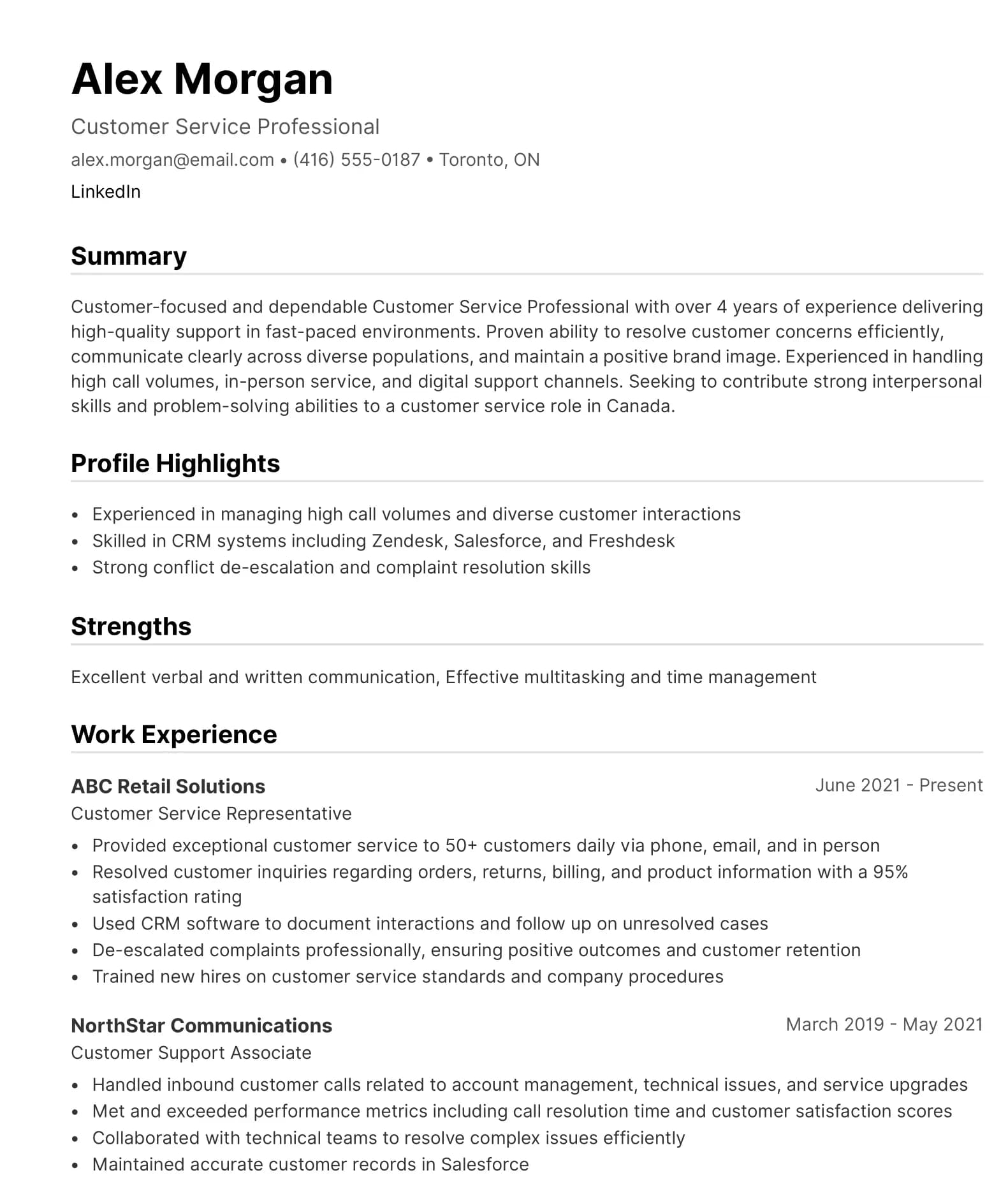
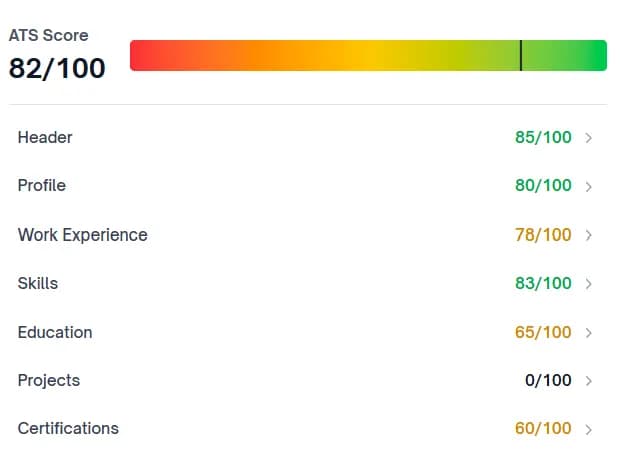
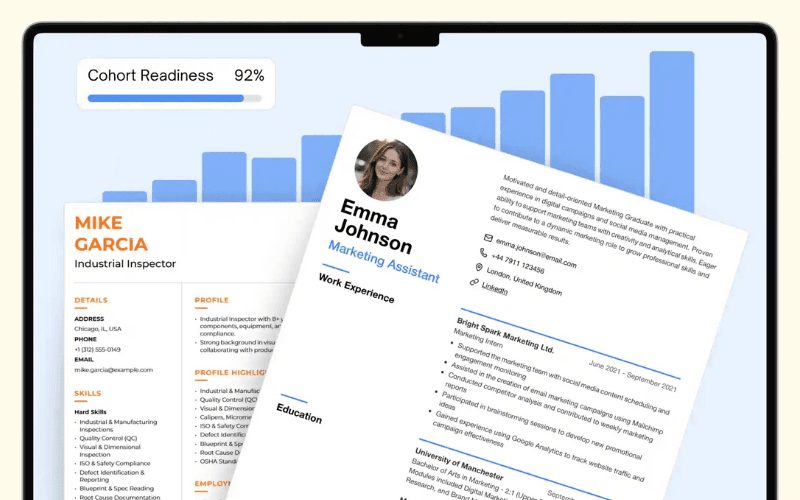
Our AI-powered scoring system helps organizations assess and standardize resume quality at scale. ATS-compliant templates support consistent formatting, keyword alignment, and interview readiness across cohorts.
About the Author

Team Yotru
Employability Systems
Team Yotru
Employability Systems
We build practical career tools for training providers and workforce programs, combining labor market insights with real employment outcomes. Follow us on LinkedIn.
Frequently Asked Questions
Strong resumes show clear sector positioning, name relevant tools, and include measurable impact such as scheduling efficiency, compliance accuracy, cost savings, or process improvements.
Audience Context
This review is written for job seekers using Yotru's public resume library to learn what works in real resumes. It's designed to help you understand what employers look for and how to apply similar techniques to your own resume.
Editorial Standards
Yotru resume reviews prioritize accuracy, clarity, and practical guidance. All observations are based on the resume content as displayed. We focus on what job seekers can realistically improve, not on theoretical ideals.
Disclaimer
This content is for informational purposes only and does not guarantee employment outcomes. Individual results depend on factors including local job markets, employer preferences, and how well your resume matches specific roles. Consider consulting a career professional for personalized advice.
Related Resources
Resume building and optimization
- Make your resume ATS-friendly in 5 minutes
- Tips for writing a summary in your resume
- What not to do on your resume and how to avoid common mistakes
Career development
- How to handle a job gap on your resume
- Interview preparation tips: how to prepare and impress employers
Market insights
Official Reference Sources
- Duncan, M. J. (2011). The case for executive assistants. Harvard Business Review, May 2011.
- Low-Kramen, B. (2022). Is "executive assistant" the right career for you?. Harvard Business Review.
- Society for Human Resource Management. (2025). Executive assistant job description. SHRM.
- U.S. Bureau of Labor Statistics. (2025). Secretaries and administrative assistants. Occupational Outlook Handbook.
- U.S. Bureau of Labor Statistics. (2024). Executive secretaries and executive administrative assistants. Occupational Employment and Wage Statistics.
Maintained by: Workforce Practice Group at Yotru
Review cycle: Reviewed regularly to reflect market changes
Last updated: February 15, 2026
Questions or Need Support?
If you are working on employability programs, hiring strategy, career education, or workforce outcomes and want practical guidance, you are in the right place.
Yotru supports individuals and organizations navigating real hiring systems. That includes resumes and ATS screening, career readiness, program design, evidence collection, and alignment with employer expectations. We work across education, training, public sector, and industry to turn guidance into outcomes that actually hold up in practice.