
Employability
12 min read
How to Get an Entry-Level Job in Today's Competitive Canadian Job Market
Synopsis
Canada’s 2026 entry-level job market is selective, not broken. Learn how to target hiring sectors, tailor an ATS-friendly resume, build experience, and network the Canadian way.
Key Insight
Canada’s 2026 entry-level job market is not broken. It is selective. Candidates who understand where demand exists, align their skills clearly, and present evidence of readiness consistently outperform those who rely on volume applications alone.
Starting your career can feel exciting and overwhelming all at once. If you're in Canada and looking for an entry-level job, you've probably noticed how competitive the market feels. The numbers confirm this reality: the share of Canadians between ages 15 and 24 who've never had a job reached 26% in 2025, up from 21% three years earlier. Entry-level opportunities globally have dropped by 29%, making competition for these positions fiercer than ever.
The good news? While the market presents real challenges, there are practical, evidence-based steps you can take to stand out and land a role that gets your career moving in the right direction. Understanding what's happening in Canada's 2026 labour market and how to position yourself strategically makes all the difference.

Understanding Canada's 2026 Labour Market Reality
The Canadian labour market has been lackluster for three straight years, but conditions have stabilized rather than worsened. While employer demand has softened, it hasn't collapsed. The job vacancy rate fell from 3.1% in Q3 2024 to 2.8% in Q3 2025, and job postings on platforms like Indeed remained stable between September and November 2025.
For entry-level job seekers, this creates a specific challenge: employers are being more selective. Only 0.4% of Canadian workers changed jobs in November 2025, down by almost half from the 0.7% rate that prevailed in 2019. This means fewer people are leaving positions, which reduces the number of openings available for new entrants to the workforce.
Long-term joblessness has also risen, with 3.4% of Canadians ages 25 to 54 out of work longer than six months (despite wanting a job), up from 2.5% in late 2022. These statistics aren't meant to discourage you—they're meant to help you understand what you're up against so you can respond strategically.
Important
Fewer job switches, slower hiring cycles, and declining entry-level postings mean competition is structural, not personal. Employers are hiring, but they are filtering more aggressively and prioritizing readiness over potential alone.
Regional Differences Matter
Labour market conditions vary significantly across Canada. Quebec currently has the country’s lowest unemployment rate at 5.4%, roughly in line with 2019 levels, while Ontario is facing one of the highest unemployment rates nationwide. Nova Scotia and New Brunswick have seen relatively little deterioration since 2022 and remain below their pre-pandemic unemployment levels.
Mid-2025 data shows Kitchener, Ontario leading major urban areas in employment rate, while western cities such as Saskatoon, Calgary, and Regina continue to post strong gains. In Atlantic Canada, cities like Moncton and St. John’s are benefiting from sustained labour demand, supported in part by the Atlantic Immigration Program and steady regional hiring.
Understanding regional labour conditions can help you narrow your job search, adjust expectations, and evaluate whether relocation could improve your chances in the near term.
Check your ATS score
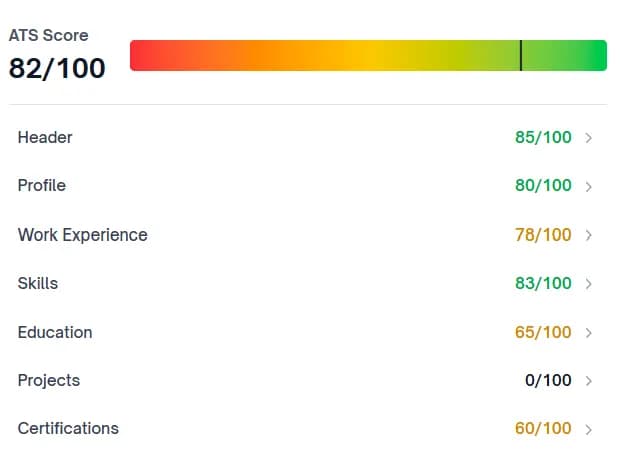
If you want a clearer picture of how your resume performs across different regions and employers, an ATS scan can highlight alignment gaps and keyword issues that may affect screening outcomes. Yotru’s ATS check is designed to provide this feedback without requiring you to apply or commit to any next step.
ATS-Optimized resumes That Meet Employer Standards
Our AI-powered scoring system helps organizations assess and standardize resume quality at scale. ATS-compliant templates support consistent formatting, keyword alignment, and interview readiness across cohorts.
Know What You Bring to the Table
Before sending out applications, take time to understand your strengths, skills, and interests. Even if you have limited work experience, you likely have valuable qualities from school projects, volunteer work, part-time jobs, or extracurricular activities.
Canadian employers in 2026 are prioritizing specific skills in new hires: strong work ethic, detail orientation, time management, problem solving, and ability to work on a team. Interestingly, these are also the skills employers find most difficult to locate among new hires, creating opportunity for candidates who can demonstrate these capabilities convincingly.
Around 60% of job openings in 2026 require a university degree or college diploma. This reflects the need for advanced knowledge in various fields such as technology, healthcare, and engineering. However, this also means 40% of opportunities don't require post-secondary credentials, particularly in skilled trades, hospitality, and certain service roles.
Write down your relevant experiences and think about how they connect to the jobs you're applying for. Can you point to specific examples where you:
- Solved a problem under pressure
- Organized an event or project successfully
- Communicated complex ideas clearly
- Worked effectively in a team setting
- Demonstrated attention to detail
This makes it easier to talk confidently about yourself in cover letters and interviews, and provides concrete examples for behavioral interview questions.
Pro Tip
In tight markets, employers optimize for low onboarding risk. That means reliability, communication, and follow-through matter as much as technical skills. Candidates who demonstrate these traits clearly advance faster.
Understand Which Sectors Are Actually Hiring in 2026
Not all industries face the same hiring conditions. Knowing where demand concentrates helps you target your efforts strategically.
- Healthcare and social services remain among the strongest hiring sectors. Canada's aging population and expanded social programs create ongoing demand for healthcare workers, personal support workers, and social service providers. These roles often offer entry-level opportunities with clear advancement pathways.
- Skilled trades including electricians, plumbers, construction workers, and HVAC technicians face persistent labour shortages. Many trade positions offer apprenticeship programs that provide paid training while you work, making them accessible entry points even without extensive experience.
- Technology roles show strong continued demand, though with important qualifications. Experienced talent in technology, data, and analytics has become indispensable, but entry-level tech opportunities are actually shrinking. If you're targeting tech, focus on demonstrating practical skills through projects, certifications, or internships rather than relying solely on educational credentials.
- Digitally-enabled business roles across customer service, office administration, sales, and logistics increasingly expect basic AI tool proficiency. Even if you're not pursuing a technical career, understanding how AI affects your target industry positions you as forward-thinking and adaptable.
- Declining sectors include auto-parts manufacturing (affected by trade dynamics) and certain traditional administrative roles being automated. Education, law enforcement, and public administration still have openings, though positions are declining.
Creative and cultural jobs like arts, design, and recreation are among the few with rising vacancies in 2025/2026, though these fields tend to be highly competitive and may require portfolio work or unpaid experience to break in.
Tailor Your Resume and Cover Letter Strategically
In a competitive market where employers receive dozens or hundreds of applications for each entry-level position, sending a generic resume rarely works. Instead, focus on tailoring your resume for each job posting.
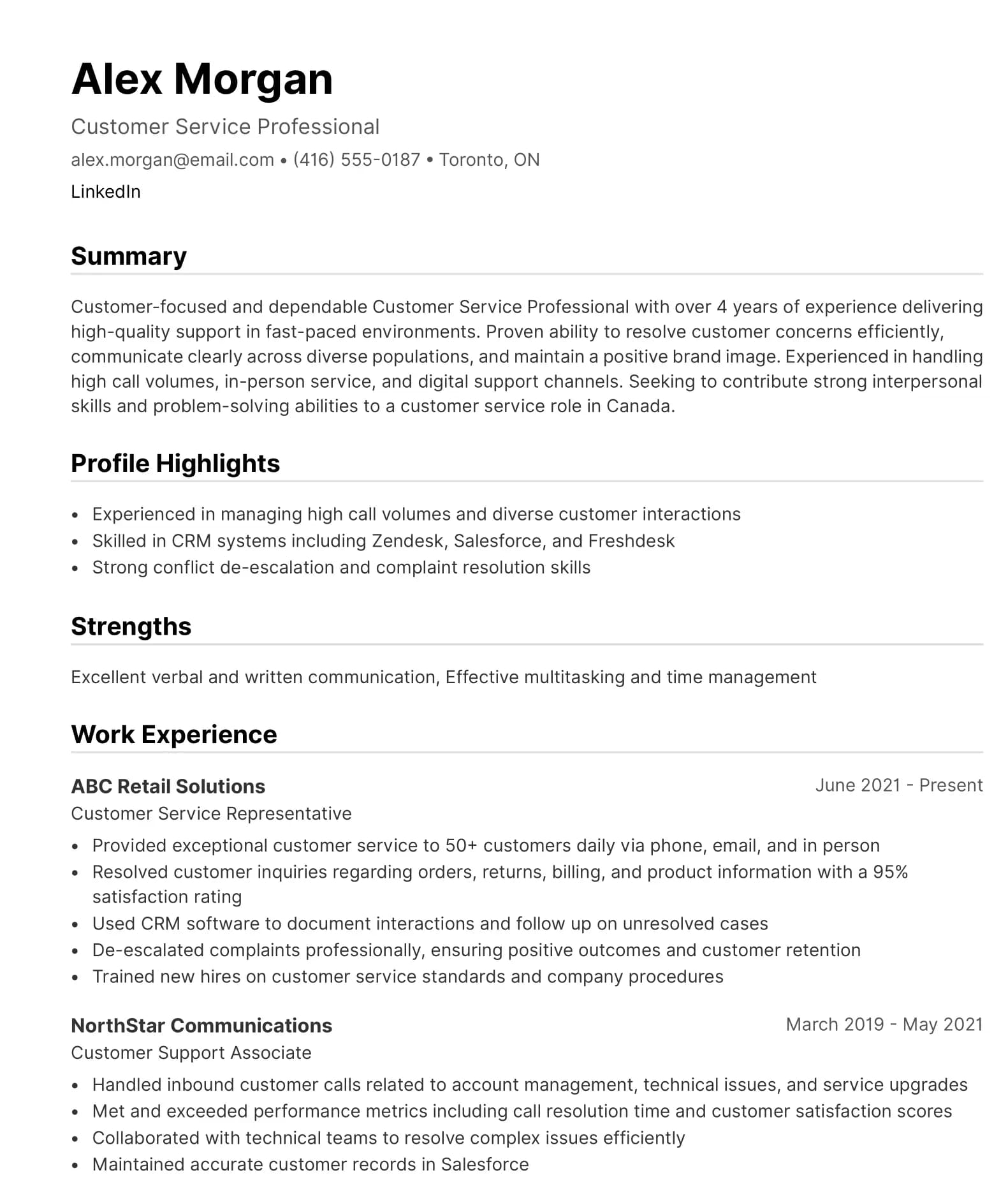
Use the language and keywords from the job description so that your application speaks directly to the role. Many Canadian employers use Applicant Tracking Systems (ATS) that scan resumes for relevant keywords before a human ever sees them. Including exact phrases from the job posting (where truthful and relevant) helps your resume pass these initial screens.
If you're applying for a customer service job in Toronto, highlight communication skills, problem-solving ability, and examples where you helped others. For a tech role in Vancouver, showcase any coding projects, certifications, or hands-on experience you have. For a skilled trade position, emphasize any relevant technical training, safety certifications, or hands-on project work.
A tailored application shows effort and genuine interest, which Canadian employers value. It also demonstrates that you understand what the role requires and can see how your background connects to those requirements.
Key Insight
Applicant Tracking Systems filter resumes before human review. Applications that do not mirror job language are often screened out automatically. Strategic keyword alignment is now a baseline requirement, not an optimization tactic.
ATS-Optimized resumes That Meet Employer Standards
Our AI-powered scoring system helps organizations assess and standardize resume quality at scale. ATS-compliant templates support consistent formatting, keyword alignment, and interview readiness across cohorts.
Address the Education-Experience Paradox
Many entry-level positions paradoxically require "2-3 years of experience," creating a frustrating catch-22 for new graduates. Address this by:
- Reframing relevant experience: Part-time jobs, volunteer work, student organization leadership, and academic projects all count as experience. Frame them professionally in your resume.
- Emphasizing transferable skills: Even if your experience isn't in the target industry, skills like customer service, project management, data analysis, or team coordination transfer across sectors.
- Pursuing micro-credentials: Short online courses or certifications in areas like project management, basic data skills, or industry-specific tools can demonstrate initiative and fill experience gaps quickly.

Network the Canadian Way
In Canada, networking is not just about asking for a job. It's about building genuine connections. Attend local events, join industry meetups, and engage with professionals on LinkedIn. If you're a recent graduate, check if your school has alumni groups in your city.
Reach out for coffee chats or virtual meetings. Ask people about their career paths, listen carefully, and share your own story. The more you connect, the more opportunities you'll hear about before they're even posted online.
Indeed's 2025 Workforce Insights Survey found that only 28% of job seekers from Quebec said they disagreed with the statement that they were confident in finding work quickly, compared to 34% Canada-wide. This regional variation partly reflects the strength of local professional networks and industry clusters.
- Leverage LinkedIn strategically: Build a complete profile that mirrors your resume, connect with professionals in your target industry, engage with their content, and share relevant articles or insights. Many hiring managers review LinkedIn profiles before scheduling interviews.
- Join professional associations: Most industries have professional associations that offer student memberships at reduced rates. These provide networking events, job boards, and mentorship programs specifically designed to help entry-level professionals break in.
- Attend virtual and in-person events: Industry conferences, career fairs, and professional development workshops provide concentrated networking opportunities. Come prepared with a brief introduction about your background and what you're looking for.
Gain Experience While You Search
If your job search is taking longer than expected, look for ways to keep building experience. Consider short-term contracts, internships, volunteer positions, or project-based freelance work.
For example, volunteering with a non-profit in Calgary could give you hands-on experience in fundraising, marketing, or community outreach. Not only does this strengthen your resume, it also keeps you engaged and motivated while you search for a long-term role.
- Post-Graduate Work Permits (PGWP) provide international students with Canadian work experience that directly supports applications for permanent residency through programs like Express Entry or Provincial Nominee Programs. This Canadian experience makes you significantly more competitive for permanent positions.
- Co-op and internship programs through educational institutions often convert to full-time offers. Even unpaid internships (where legally permissible) can provide crucial resume content and professional references.
- Freelance platforms like Upwork or Fiverr allow you to build a portfolio of completed projects in areas like writing, design, data analysis, or virtual assistance. This demonstrates both initiative and tangible skills.
Master the Behavioral Interview
Canadian employers often use behavioral interview questions that start with phrases like "Tell me about a time when..." These questions look for real examples of how you handled situations in the past, based on the premise that past behavior predicts future performance.
The STAR method (Situation, Task, Action, Result) provides a simple framework for answering. For instance, if asked about teamwork:
- Situation: "During my final semester, our capstone project team faced a tight deadline when one member had to withdraw due to a family emergency."
- Task: "As the designated project coordinator, I needed to ensure we still delivered quality work on time while redistributing responsibilities fairly."
- Action: "I met with each team member individually to understand their capacity, reorganized our timeline, took on the withdrawn member's research responsibilities myself, and scheduled daily 15-minute check-ins to maintain momentum."
- Result: "We submitted the project two days early and received an A grade. The professor specifically noted our effective collaboration despite the setback."
Practicing these stories ahead of time helps you speak with confidence and precision during interviews. Prepare 5-7 STAR stories covering different competencies: teamwork, leadership, problem-solving, conflict resolution, time management, and handling failure.
Develop AI Literacy and Digital Skills
Canada's labour market in 2026 increasingly expects basic AI literacy across virtually all roles. You don't need to be a deep technical expert, but understanding how AI tools affect your industry demonstrates adaptability.
According to Randstad Canada's 2026 outlook, 68% of workers are ready to embrace AI, yet fewer than half (44%) believe their employer will adequately prepare them for this transition. More strikingly, 37% say they would leave their job if no AI-related training is offered.
For entry-level candidates, demonstrating AI awareness creates competitive advantage:
- For administrative roles: Familiarity with AI-powered scheduling tools, email assistants, or document automation.
- For customer service: Understanding chatbot technology, AI-driven ticketing systems, or sentiment analysis tools.
- For marketing: Knowledge of AI content creation tools, analytics platforms, or personalization engines.
- For data-focused roles: Practical experience with tools like ChatGPT for code generation, data analysis assistants, or automated reporting.
Free or low-cost resources including LinkedIn Learning, Coursera, and platform-specific tutorials can build these capabilities quickly.

Address the Skills Gap Employers Report
Employers consistently report struggling to find candidates who combine technical ability with strong interpersonal and problem-solving skills. This creates opportunity for entry-level candidates who intentionally develop both dimensions.
Hard skills vary by industry but commonly include:
- Microsoft Office proficiency (Excel, PowerPoint, Word)
- Basic data literacy (reading charts, understanding metrics)
- Industry-specific software or tools
- Project management fundamentals
- Digital communication platforms (Slack, Teams, Zoom)
Soft skills that employers struggle to find:
- Strong work ethic (meeting deadlines, following through on commitments)
- Detail orientation (accuracy, thoroughness, quality control)
- Time management (prioritizing tasks, meeting deadlines without supervision)
- Problem solving (identifying issues, proposing solutions, implementing fixes)
- Ability to work in teams (collaboration, communication, conflict resolution)
Develop specific examples demonstrating these skills from any context—academic, volunteer, part-time work, or personal projects. The context matters less than your ability to articulate what you did and what resulted.
Hint
Employers routinely accept structured academic projects, volunteer roles, co-ops, internships, and part-time work as valid experience when framed professionally. What matters is evidence of responsibility, outcomes, and learning.
Stay Positive and Persistent
Rejection is a normal part of the process. Sometimes you might not hear back at all, which can be frustrating. The key is to keep going. Every application, interview, or networking conversation builds your skills and gets you closer to the right opportunity.
The data shows the challenge is real—26% of young Canadians have never held a job, and long-term unemployment has risen. But these statistics also mean thousands of people are successfully entering the workforce despite these conditions. You can be one of them.
Celebrate small wins along the way: improving your resume, getting a callback, making a new professional connection, or receiving constructive feedback after an interview. These incremental steps compound over time.
- Track your applications in a spreadsheet including company name, position, date applied, any follow-up, and outcome. This prevents duplicate applications and helps you identify patterns (which types of roles generate interviews, which don't).
- Request feedback after rejections. Many employers won't provide it, but some will, and even brief comments can help you refine your approach.
- Set weekly goals rather than focusing solely on outcomes. Commit to applying to five positions, reaching out to three professionals for informational interviews, or completing one skill-building course per week. You can't control whether you get hired, but you can control your effort and activity level.
Pro Tip
Candidates who continue building skills, certifications, or project experience during a job search are perceived as more employable. Gaps without explanation create uncertainty; active development reduces perceived risk.
Make Use of Canadian Job Resources
Canada has many free or low-cost resources for job seekers. Taking advantage of these tools shows employers that you're proactive and serious about your career.
- Job Bank (jobbank.gc.ca) is the federal government's official job board, featuring thousands of positions across Canada with detailed occupation profiles showing duties, typical wages, required skills and education, and labour market outlook.
- Provincial job boards include WorkBC, Alberta Supports, and others specific to each province, often featuring positions with public sector employers.
- Local employment centres provide resume help, job fairs, and interview coaching, often at no cost.
- Immigrant settlement agencies serve newcomers to Canada with employment preparation, credential recognition support, and connections to employers seeking diverse talent.
- Youth employment programs including programs through Service Canada support young Canadians entering the workforce with wage subsidies for employers, pre-employment training, and job placement assistance.
- Industry-specific job boards like TechTalent Canada for technology roles or Charity Village for non-profit positions often feature entry-level opportunities not posted on general job boards.
Important
These resources help you identify openings. Automated screening determines whether your application is reviewed. An ATS check provides a clear assessment of how your resume performs against the systems employers rely on to manage applicant volume.
ATS-Optimized resumes That Meet Employer Standards
Our AI-powered scoring system helps organizations assess and standardize resume quality at scale. ATS-compliant templates support consistent formatting, keyword alignment, and interview readiness across cohorts.
Consider Alternative Pathways
Traditional job applications aren't the only route into employment. Alternative pathways sometimes offer faster entry and better long-term prospects.
- Apprenticeships in skilled trades provide paid training while you work, leading to journeyperson certification and strong earning potential. Canada faces significant skilled trades shortages, making these positions accessible and stable.
- Temporary foreign worker programs and Global Talent Stream positions help employers hire when Canadian candidates aren't available, though these typically require specific skills or credentials.
- Provincial Nominee Programs help fill local job needs and can speed up permanent residency for candidates with job offers or in-demand skills, making it easier to start working locally.
- Post-secondary co-op programs integrate work terms into degree programs, providing Canadian work experience and often leading to full-time offers upon graduation.
- Graduate certificates (typically 1-year programs) can add specialized credentials to a bachelor's degree, making you more competitive for specific roles while providing co-op terms or practicums for experience building.
Prepare for Salary Discussions
Entry-level positions may not offer extensive salary negotiation opportunity, but understanding compensation norms helps you evaluate offers fairly and negotiate where possible.
Jobs requiring a Canadian university degree offer an average of $43.35 per hour, nearly double the $22.10 per hour for high school-level roles. Payment growth has slowed compared to past years but remains positive at 4-5%, a hopeful sign for educated job seekers.
Research typical entry-level salaries for your target roles using resources like:
- Job Bank occupation profiles (showing wage ranges by region)
- Robert Half Salary Guide (industry-specific data)
- Glassdoor and PayScale (self-reported salary data)
- LinkedIn Salary Insights (based on platform data)
When you receive an offer, consider the total compensation package including benefits, vacation time, professional development opportunities, and growth potential rather than focusing solely on base salary.
About the Author

Team Yotru
Employability Systems
Team Yotru
Employability Systems
We build practical career tools for training providers and workforce programs, combining labor market insights with real employment outcomes. Follow us on LinkedIn.
Frequently Asked Questions
You can get an entry-level job in Canada without formal experience by reframing academic projects, volunteer work, internships, and part-time roles as professional experience. Employers look for evidence of responsibility, problem-solving, and reliability, not just paid job history. Tailoring your resume to each role and targeting hiring sectors improves outcomes.
Audience Context
This article is intended for entry-level and early-career job seekers in Canada, including recent graduates, newcomers to the labour market, and individuals transitioning between roles or sectors. It is particularly relevant for candidates applying through employer-managed portals and government or large-organization hiring systems where automated screening plays a central role. The guidance assumes readers are actively job searching and seeking clarity on how hiring decisions are made in practice.
Methodology
Insights in this article are based on analysis of Canadian labour market data, hiring system behavior, and observed resume screening patterns across public and private sector employers. Sources include national labour force data, employer hiring reports, and documented applicant tracking system workflows. The recommendations focus on repeatable, system-level factors that influence application visibility, rather than anecdotal outcomes or individual success stories.
Editorial Standards
This content follows an evidence-based editorial approach emphasizing accuracy, neutrality, and practical relevance. Claims are supported by reputable data sources such as government labour statistics, institutional research, and established hiring platforms. Language is intentionally precise and avoids exaggeration, guarantees, or promotional framing. Content is reviewed for clarity, consistency, and alignment with current Canadian hiring practices.
Disclaimer
This article is provided for informational and educational purposes only. It does not constitute legal, employment, or career placement advice and does not guarantee interviews or job offers. Hiring practices, screening systems, and labour market conditions vary by employer, region, industry, and time. Readers should use this information as one input alongside their own judgment and, where appropriate, professional guidance.
Yotru Insights
Building Your Resume and Job Application Materials
- How to Build a Resume with No Work Experience – Step-by-step guidance for creating compelling resumes when starting your career
- How to Correctly Add Volunteer Positions to Your Resume – Leverage unpaid experience to demonstrate skills and commitment to employers
- Skills in Resume for Freshers – Essential guidance on presenting skills effectively when you're new to the workforce
- 7 Traits All Great Resumes Possess – Key characteristics that make resumes stand out to hiring managers
Navigating the Canadian Job Market
- Hiring Trends in Canada – Current employment landscape and opportunities across Canadian provinces
- How to Write a Canadian Resume as an International Student – Specific guidance for adapting your resume to Canadian employer expectations
- Hiring Trends in Ontario – Provincial employment outlook and sector-specific opportunities in Ontario
- Resume Builder for Canada: Job Bank Approved Resume – Create resumes that align with Government of Canada employment standards
Interview Preparation and Job Search Strategies
- Interview Preparation Tips: How to Prepare and Impress Employers – Comprehensive strategies for successful job interviews
- Networking Strategies: How to Build Professional Connections – Build relationships that open doors to unadvertised opportunities
- Job Search Strategy 2026: Stop Wasting Effort and Start Getting Interviews – Modern approaches to finding employment in today's competitive market
- How Fresh Graduates Can Land a Good First Job – Practical advice specifically for new graduates entering the workforce
References
- Indeed Hiring Lab Canada. (2025). Indeed's 2026 Canadian Jobs & Hiring Trends Report. Retrieved from https://www.hiringlab.org/en-ca/2025/12/18/indeed-2026-canadian-jobs-hiring-trends-report/
- Randstad Canada. (2025). Labour Market Outlook 2026: Four Major Trends Reshaping Work. Retrieved from https://www.randstad.ca/newsroom/labour-market-outlook-2026-four-major-trends-reshaping-work/
- Statistics Canada. (2025). Labour Force Survey Data.
- Robert Half Canada. (2025). Labour Market Outlook 2025 into 2026: 4 Trends You Can't Ignore. Retrieved from https://www.roberthalf.com/ca/en/insights/research/labour-market-outlook-and-emerging-trends
- ADP Canada. (2025). 2026 HR Trends Report: Canada Workplace Trends. Retrieved from https://www.talentcanada.ca/employers-report-these-top-workplace-trends-for-2026/
- Government of Canada. (2025). Job Bank Labour Market Information. Retrieved from https://www.jobbank.gc.ca/trend-analysis
- Employment and Social Development Canada. (2025). Building Canada Strong: Youth in the Labour Market. Government of Canada. https://www.canada.ca/en/employment-social-development/programs/youth-employment-strategy/labour-challenges/discussion.html
- Employment and Social Development Canada. (2025). Employment and Skills Support for Canada's Youth. Government of Canada. https://search.open.canada.ca/qpnotes/record/esdc-edsc,FCY_JUN2025_005
- Employment and Social Development Canada. (2025). Youth and Student Employment. Government of Canada. https://www.canada.ca/en/services/jobs/opportunities/student.html
- Government of Canada. (2025). Job Bank. Employment and Social Development Canada. https://www.jobbank.gc.ca/home
- Government of Canada. (2025). Network and Stay Connected to Develop Your Career. Job Bank. https://www.jobbank.gc.ca/career-planning/resources/network
- OECD. (2025). Education at a Glance 2025: Canada. OECD Publishing. https://www.oecd.org/en/publications/education-at-a-glance-2025_1a3543e2-en/canada_a2529d00-en.html
- OECD. (2025). Transition from Education to Work: Where Are Today's Youth? Education at a Glance 2025. OECD Publishing. https://www.oecd.org/en/publications/education-at-a-glance-2025_1c0d9c79-en/full-report/transition-from-education-to-work-where-are-today-s-youth_b90719d0.html
- OECD. (2025). Youth Employment and Social Policies. OECD Publishing. https://www.oecd.org/en/topics/sub-issues/youth-employment-and-social-policies.html
- OECD. (2025). Youth Unemployment Rate. OECD Data. https://www.oecd.org/en/data/indicators/youth-unemployment-rate.html
- Statistics Canada. (2025). Labour Force Survey, October 2025. The Daily. https://www150.statcan.gc.ca/n1/daily-quotidien/251107/dq251107a-eng.htm
- Statistics Canada. (2025). Labour Force Survey, September 2025. The Daily. https://www150.statcan.gc.ca/n1/daily-quotidien/251010/dq251010a-eng.htm
- Statistics Canada. (2025). Labour Force Survey, July 2025. The Daily. https://www150.statcan.gc.ca/n1/daily-quotidien/250808/dq250808a-eng.htm
- Statistics Canada. (2024). A Snapshot of Employment Among Youth in Canada. StatsCAN Plus. https://www.statcan.gc.ca/o1/en/plus/6351-snapshot-employment-among-youth-canada
Maintained by: Employability & Skills Group at Yotru
Review cycle: Reviewed periodically to reflect evolving hiring trends
Last updated: January 10, 2026
Questions or Need Support?
If you are working on employability programs, hiring strategy, career education, or workforce outcomes and want practical guidance, you are in the right place.
Yotru supports individuals and organizations navigating real hiring systems. That includes resumes and ATS screening, career readiness, program design, evidence collection, and alignment with employer expectations. We work across education, training, public sector, and industry to turn guidance into outcomes that actually hold up in practice.