Employability
14 min read
What Viral Resume Stunts Teach Job Seekers About Standing Out (Without the Gimmicks)
Synopsis
A viral half-printed resume sparked debate about attention-grabbing job applications. What job seekers actually need to know about standing out to recruiters in 2026
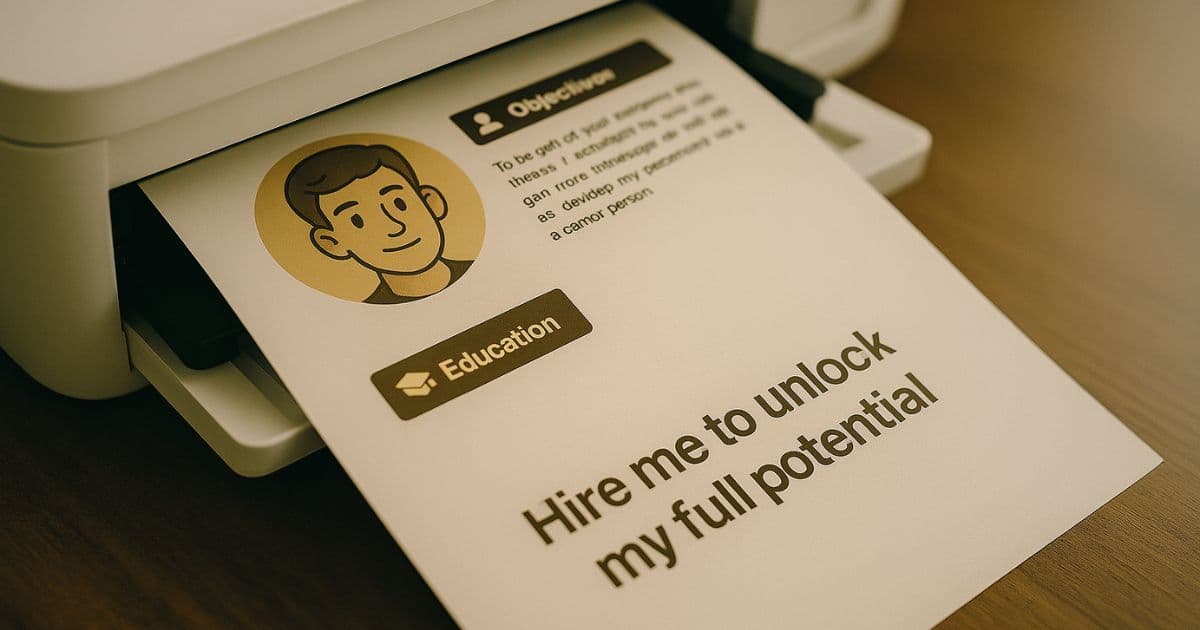
You’ve probably seen it by now. A printed resume that stops halfway down the page. Just a pair of hopeful eyes peeking over the top, and below?
A photo recently surfaced online showing a printed resume that stopped halfway down the page, with the message "Hire me to unlock my full potential" where the candidate's experience should be. The image went viral across job search communities, sparking thousands of reactions and reigniting a familiar debate: Do attention-grabbing resume stunts actually work?
The short answer is complicated. While creative applications occasionally break through, the vast majority fail to deliver interviews—and some actively damage candidacy. Understanding why requires examining what recruiters actually prioritize, how hiring systems process applications, and what separates memorable candidates from forgettable gimmicks.
This analysis draws on recruiter surveys, hiring manager interviews, and research on applicant tracking systems to explain what job seekers should know about standing out in competitive markets without resorting to tactics that undermine professional credibility.
Why Job Seekers Turn to Resume Stunts
The frustration behind attention-grabbing applications is legitimate. Job seekers face increasingly difficult market conditions characterized by high application volumes, automated screening systems, and limited human review time. Research indicates recruiters spend approximately seven seconds on initial resume scans, while applicant tracking systems (ATS) filter up to 75% of applications before human review.
This creates what hiring professionals describe as a paradox: candidates feel invisible despite submitting dozens of applications, while recruiters struggle to identify qualified candidates within overwhelming applicant pools. The resulting desperation drives experimentation with unconventional approaches.
Creative resume tactics typically emerge from three motivations. First, genuine personality expression—candidates in creative fields attempting to demonstrate design skills or brand identity through application materials. Second, desperation after extended job searches with minimal response rates. Third, misunderstanding about what differentiates successful applications from rejected ones.
⭐⭐⭐⭐⭐ "I have been out of work for several years and honestly did not know where to start. Yotru made everything simple. It guided me step by step, explained things without talking down to me, and helped me see what skills I still have. I feel much more confident and already have two interviews lined up." — Linda Tran
The challenge is distinguishing between creative differentiation that enhances candidacy and gimmicks that signal poor judgment or desperation.
What Actually Works: Recruiter Perspectives
Industry research provides clear guidance on what hiring professionals prioritize. A 2025 survey of over 700 recruiters found that 83% read cover letters even when optional, with 45% reviewing cover letters before resumes. This contradicts common advice suggesting cover letters are obsolete.
Recruiters consistently emphasize several factors that elevate applications. Quantifiable achievements demonstrating measurable impact rank highest—specific percentages, dollar amounts, time savings, or other concrete results that distinguish performance from job descriptions. Technical competency clearly demonstrated through project descriptions or specific tool applications rather than keyword lists. Evidence of career progression showing increasing responsibility or expertise development. Clean, ATS-compatible formatting that enables both automated parsing and human scanning.
What recruiters explicitly reject includes excessive design elements that interfere with ATS processing, generic statements lacking specificity or measurable outcomes, keyword stuffing without contextual application, and gimmicks that substitute creativity for substance.
The distinction is meaningful. A recruiter at a technology company explained that candidates who showcase skills through publicly accessible projects—GitHub repositories, published articles, portfolio websites—immediately stand apart from those relying solely on resume claims. This aligns with broader industry trends emphasizing demonstrated competency over stated qualifications.
When Creative Applications Succeed
Creative applications occasionally work, but success correlates strongly with specific contexts. Analysis of viral job application stories reveals consistent patterns in situations where unconventional approaches generated positive outcomes.
Industry alignment matters significantly. Marketing, design, content creation, and social media roles tolerate—sometimes reward—creative presentation that demonstrates relevant skills. A candidate who built a custom website analyzing a company's market opportunity or created a presentation proposing expansion strategies demonstrates both initiative and applicable expertise.
Company culture determines receptivity. Startups and innovative organizations with informal cultures respond more favorably to personality-driven applications than established corporations with formal hiring protocols. A candidate researching company values and leadership communication styles can calibrate approach appropriately.
Seniority level affects risk tolerance. Entry-level and early-career candidates have less to lose experimenting with differentiation strategies, while senior professionals applying for executive positions face higher standards for professional presentation.
The critical factor distinguishing successful creative applications from failed gimmicks is relevance. Applications that demonstrate job-related skills, industry knowledge, or company-specific research tend to succeed. Those that merely attract attention without showcasing applicable competency typically fail.
One example: a candidate applying for a marketing position at an energy drink company created a detailed market analysis examining the company's expansion opportunities, competitive positioning, and partnership possibilities. This approach demonstrated research skills, analytical capability, strategic thinking, and genuine interest—all relevant to the target role. The candidate received interview offers from multiple major companies despite the unconventional application format.
Contrast this with a half-printed resume offering to "unlock full potential." While attention-grabbing, the approach demonstrates nothing about professional competency, work quality, or job-related skills. It's a gimmick without substance.
The ATS Reality: Why Format Still Matters
Understanding applicant tracking systems explains why many creative resumes fail before reaching human reviewers. Research indicates 99% of Fortune 500 companies use ATS or AI-powered screening tools to filter applications. These systems parse resume content, extract key information, and rank candidates based on keyword matching and structural elements.
Creative formatting frequently breaks ATS parsing. Multiple columns, text boxes, graphics, tables, headers and footers, and non-standard fonts can prevent systems from correctly extracting information. This means a visually impressive resume might register as incomplete or unqualified within automated systems.
⭐⭐⭐⭐⭐ "Switching into tech support, Yotru helped me highlight software skills, not just troubleshooting. Adding ATS terms made the difference. I am actually getting call backs now." — A Kaczmarek
The 2025 resume trend emphasizes minimalist, single-column layouts using standard fonts and clear section headers. This reflects recognition that ATS compatibility is non-negotiable for most applications to medium and large organizations.
However, ATS optimization alone is insufficient. Resumes must also engage human reviewers who scan for evidence of impact, relevant experience, and cultural fit. This requires balancing technical compliance with compelling content that communicates value quickly.
Evidence-Based Differentiation Strategies
Rather than relying on gimmicks, job seekers can implement proven strategies that genuinely elevate applications without triggering skepticism or formatting failures.
Quantified Achievement Statements
Replace generic responsibility descriptions with specific, measurable outcomes. Compare these examples:
Generic: "Managed social media accounts for company"
Specific: "Increased social media engagement by 40% over six months by launching influencer partnership campaign, resulting in 15,000 new followers and 25% increase in website traffic from social channels"
The second example provides concrete evidence of impact, strategic thinking, and measurable results—exactly what hiring managers prioritize.
Demonstrated Expertise Over Keyword Lists
Rather than listing technical skills in isolation, demonstrate application within job contexts. A data analyst mentioning "Python" among 30 technical skills provides less signal than explaining: "Built automated data pipeline using Python and Apache Airflow, reducing manual processing time from 8 hours to 45 minutes while improving accuracy by 30%."
This approach proves competency through specific application rather than claiming familiarity.
Tailored Applications
Industry research confirms 78% of hiring professionals easily distinguish generic applications from customized ones, with 90% of cover letters rejected due to lack of customization. Tailoring requires researching specific company challenges, incorporating relevant terminology from job descriptions, and explaining how past experience addresses stated requirements.
This doesn't mean rewriting entire resumes for each application—it means adjusting emphasis, selecting relevant examples, and crafting targeted cover letters that demonstrate genuine interest and applicable experience.
Skills-Based Emphasis
As skills-based hiring expands, resumes that clearly articulate transferable competencies alongside traditional experience gain advantage. This particularly benefits career changers and professionals with non-traditional backgrounds.
A teacher transitioning to corporate training might frame experience as: "Designed and delivered engaging training programs for diverse audiences, resulting in 20% increase in knowledge retention measured through pre- and post-assessments." This highlights transferable skills—instructional design, audience analysis, measurement and evaluation—that apply directly to corporate learning and development roles.
Professional Online Presence
Recruiters increasingly check LinkedIn, GitHub, personal websites, and online portfolios before or instead of reviewing traditional resumes. A survey of tech recruiters found that candidates who showcase skills through public projects immediately stand apart from those relying solely on resume claims.
This means job seekers benefit from maintaining current LinkedIn profiles with endorsements and recommendations, publishing relevant content demonstrating expertise, contributing to professional communities or open-source projects, and curating portfolio websites showcasing work samples where applicable.
The key is consistency. Professional branding should align across all touchpoints—resume, LinkedIn, portfolio, and any other discoverable online presence.
What Recruiters Say About Resume Gimmicks
Direct feedback from hiring professionals provides clear guidance. Multiple recruiters interviewed for industry research emphasized that gimmicks typically signal poor judgment rather than creativity.
One recruiter explained encountering a candidate who included inappropriate personal content on a professional resume, noting the disconnect between claimed professionalism and actual presentation. Another described receiving applications with photos of candidates holding firearms while applying for positions working with children—instant disqualification regardless of other qualifications.
The common thread: recruiters evaluate judgment and professionalism through application materials. Tactics that prioritize attention over substance raise concerns about candidate decision-making in professional contexts.
However, recruiters distinguish between unhelpful gimmicks and genuine differentiation. Candidates who demonstrate initiative through company-specific research, provide concrete evidence of relevant skills through publicly accessible work, or craft compelling narratives explaining career progression and applicable expertise stand out positively.
The distinction is intention. Differentiation aimed at demonstrating competency and fit succeeds. Attention-seeking divorced from substance fails.
The Risk-Benefit Analysis
Job seekers considering unconventional approaches should conduct honest risk assessments. The potential benefits—standing out in crowded applicant pools, demonstrating personality and creativity, showing initiative beyond standard applications—must be weighed against significant risks.
The downside includes immediate disqualification by hiring managers valuing traditional professionalism, ATS parsing failures preventing application from reaching human reviewers, perception of desperation or poor judgment, and incompatibility with senior or corporate roles requiring conservative presentation.
For most applications to established companies, traditional organizations, senior-level positions, or roles emphasizing technical expertise over creativity, standard resume approaches optimized for both ATS and human review offer better risk-reward profiles than experimental tactics.
Creative differentiation works best in contexts where it demonstrates job-relevant skills, aligns with company culture and industry norms, and supplements rather than replaces substantive evidence of qualifications.
What Job Seekers Should Do Instead
Rather than gambling on gimmicks, job seekers benefit from systematic approaches addressing underlying challenges that drive unconventional tactics.
First, invest in resume fundamentals. This means clear, scannable formatting using standard fonts and single-column layouts, quantified achievements demonstrating measurable impact, relevant keywords naturally incorporated throughout content, and ATS-compatible structure with conventional section headers.
Second, customize strategically. Research target companies to understand culture, challenges, and priorities. Tailor cover letters addressing specific requirements and explaining relevant experience. Adjust resume emphasis highlighting most applicable qualifications.
Third, build demonstrable expertise. Create publicly accessible evidence of skills through portfolio projects, published writing, open-source contributions, professional certifications, or other tangible proof of competency beyond resume claims.
Fourth, leverage professional networks. Direct referrals and warm introductions dramatically improve callback rates compared to cold applications. Invest time developing authentic professional relationships that may lead to opportunities.
Fifth, optimize online presence. Ensure LinkedIn profiles are complete, current, and keyword-optimized. Consider personal websites showcasing work samples or professional accomplishments. Maintain consistency across all discoverable touchpoints.
These approaches address the same underlying challenge—standing out in competitive markets—without the risks associated with gimmicks that may undermine professional credibility.
The Viral Resume's Real Lesson
The half-printed resume that sparked this discussion teaches an important lesson, though perhaps not the one its creator intended. The viral spread demonstrates job seeker frustration with unresponsive hiring processes and systemic challenges making employment searches feel futile.
That frustration is valid. Application volumes have increased, response rates have decreased, and automated systems filter candidates before human review. Job seekers face legitimate difficulties navigating markets where hundreds of applications may generate few or no callbacks.
However, the solution isn't creative disruption through gimmicks. It's understanding how hiring actually works and optimizing applications accordingly. This means recognizing that recruiters prioritize quantifiable achievements over generic statements, demonstrated expertise over keyword lists, customized applications over mass submissions, and professional presentation over attention-seeking tactics.
The most effective differentiation comes not from printing half a resume or adding mustaches to profile photos, but from clearly communicating relevant experience, measurable impact, and applicable skills through content and format optimized for both automated systems and human decision-makers.
Job seekers who invest time developing substantive qualifications, crafting compelling narratives explaining how past experience addresses target role requirements, and presenting information clearly within ATS-compatible formats consistently outperform those relying on gimmicks hoping to bypass normal evaluation processes.
⭐⭐⭐⭐⭐ "I work in construction and needed something fast. I opened Yotru on my phone, answered a few questions, and it built a solid resume. The interview prep was plain English and actually useful. Just what I needed." — Marco DeLuca
Moving Forward: Practical Application
Understanding these principles is insufficient without practical implementation. Job seekers benefit from systematic approaches translating research into action.
Start by auditing current resume against evidence-based criteria. Does it include quantifiable achievements with specific metrics? Are technical skills demonstrated through application examples rather than isolated lists? Is formatting compatible with ATS systems? Does content directly address requirements listed in target job descriptions?
Next, research specific companies and roles thoroughly. What challenges do they face? What skills and experiences do they prioritize? What language do they use describing ideal candidates? This information enables targeted customization demonstrating genuine fit rather than generic interest.
Then, build evidence of expertise accessible to recruiters. This might include publishing articles on industry topics, contributing to relevant online communities, creating portfolio projects showcasing applicable skills, or pursuing certifications validating technical competencies.
Finally, develop authentic professional relationships that may lead to opportunities. Attend industry events, engage thoughtfully in professional forums, and maintain connections with former colleagues and classmates. Direct referrals dramatically outperform cold applications in callback rates.
These approaches require more effort than printing a creative resume, but they deliver better outcomes with lower risk of undermining professional credibility.
Frequently Asked Questions
Do creative resumes ever work?
Yes, but primarily in creative industries where design skills are directly relevant to the role, at companies with innovative cultures that value personality, and for early-career positions where candidates have less to lose. Most successful creative applications demonstrate job-relevant skills rather than merely attracting attention.
How long do recruiters actually spend reviewing resumes?
Research indicates recruiters spend approximately seven seconds on initial resume scans, looking for specific signals including quantifiable achievements, relevant keywords, career progression, and clean formatting. This makes clear, scannable presentation essential.
Are applicant tracking systems really screening out qualified candidates?
ATS systems filter applications based on keyword matching and structural parsing. Resumes with complex formatting, graphics, or non-standard layouts may fail parsing even if candidates are qualified. Using simple, single-column formats with standard fonts improves ATS compatibility significantly.
What's the most important element for standing out?
Quantifiable achievements demonstrating measurable impact consistently rank highest among hiring managers. Specific percentages, dollar amounts, time savings, or other concrete results differentiate strong applications from generic ones more effectively than any other single element.
Should I customize my resume for every application?
Customization significantly improves callback rates. You don't need to rewrite entire resumes, but adjusting emphasis, selecting relevant examples, and incorporating specific keywords from job descriptions demonstrates genuine interest and applicable experience that hiring managers prioritize.
Do cover letters still matter?
Yes—research shows 83% of hiring managers read cover letters even when optional, with 45% reviewing them before resumes. Well-crafted cover letters addressing specific company needs and explaining relevant experience can elevate candidacy significantly.
How can I demonstrate skills without extensive experience?
Create publicly accessible evidence through portfolio projects, published writing, open-source contributions, freelance work, volunteer positions, or relevant coursework. Demonstrated competency through tangible work often carries more weight than years of generic experience.
What should I do if I'm not getting callbacks?
Audit your resume for quantifiable achievements, ATS compatibility, and keyword optimization. Ensure LinkedIn is current and complete. Seek direct referrals through professional networks. Consider whether you're applying to appropriate roles matching your actual qualifications.
Are skills-based resumes better than chronological formats?
Hybrid formats combining chronological work history with skills-based emphasis work best for most candidates in 2025. Pure functional formats can raise concerns about employment gaps or lack of direct experience, while pure chronological formats may not adequately highlight transferable skills.
How important is LinkedIn compared to traditional resumes?
Increasingly important—many recruiters check LinkedIn before or instead of reviewing traditional resumes. Maintain consistent information across both, with LinkedIn offering opportunities for recommendations, endorsements, and published content that resumes cannot accommodate.
Standing Out Through Substance
Yotru helps job seekers build resumes that stand out to both ATS systems and hiring managers without gimmicks or risky creative tactics. The platform provides ATS compatibility scoring, keyword optimization suggestions based on target roles, formatting guidance ensuring proper parsing, and achievement-focused templates emphasizing measurable impact. Users can create professional, effective resumes that get past automated screening while engaging human reviewers—no half-printed pages or mustache photos required.
Ready to Build an ATS-Optimized Resume That Actually Gets Read?
Put this knowledge into action. Use Yotru's resume builder to get smart keyword suggestions, ATS compatibility scoring, and professionally designed templates that work with modern hiring systems. Create a resume that stands out for the right reasons.
Build Your Resume | View Resume Examples
Related Resources
Resume Building & Optimization
- Make Your Resume ATS-Friendly in 5 Minutes: 2025 Guide
- 7 Traits All Great Resumes Possess
- The Myth of Single Column vs Double Column Resumes for ATS Superiority
Skills & Career Development
- How to Build a Resume with No Work Experience: Step-by-Step Guide
- How to Handle an Uneven Career Path on Your Resume
Market & Research
- Why It Feels So Hard to Get a Job Right Now
- Demystifying Applicant Tracking Systems: What Recruiters Really Do
About This Article
This article examines what viral resume stunts reveal about job seeker frustration, recruiter priorities, and effective differentiation strategies in competitive markets. It synthesizes research on hiring manager preferences, ATS functionality, and successful application approaches to provide evidence-based guidance for standing out without undermining professional credibility.
The analysis addresses current market challenges including high application volumes, automated screening systems, and low response rates while explaining why gimmicks typically fail and what strategies actually work. This aligns with Yotru's Employability category by providing practical, research-informed guidance helping job seekers navigate real hiring systems effectively.
About the Author
The Yotru team works with educational institutions, workforce development organizations, and employers to understand real hiring systems and translate that knowledge into practical guidance for job seekers. Our research combines quantitative analysis of hiring trends, qualitative interviews with recruiters and hiring managers, and systematic testing of application strategies to identify what actually works in current markets.
We believe effective career guidance requires understanding both systemic challenges and evidence-based solutions. Our content aims to explain hiring processes clearly while providing actionable strategies job seekers can implement immediately.
Follow the Yotru team on LinkedIn to stay connected with new research, practical insights, and updates from the field.
References
- Bureau of Labor Statistics. (2025). Labor Market Trends and Employment Projections. U.S. Department of Labor. https://www.bls.gov
- Deloitte. (2025). Global Human Capital Trends: Talent Acquisition Technology. Deloitte Insights. https://www2.deloitte.com
- iCIMS. (2025). Workforce Report: Hiring Technology and Candidate Experience. iCIMS Insights. https://www.icims.com/insights
- Jobvite. (2025). Recruiter Nation Report: Hiring Trends and Recruiter Sentiment. Jobvite Research. https://www.jobvite.com/resources
- LinkedIn. (2025). Global Talent Trends Report: The Future of Recruiting. LinkedIn Talent Solutions. https://business.linkedin.com/talent-solutions
- Society for Human Resource Management. (2025). SHRM Recruiting Benchmarks. SHRM Research. https://www.shrm.org/research
- Zety. (2025). Recruiter Survey: What Hiring Managers Really Want in Applications. Zety Career Advice. https://zety.com/blog/recruiter-survey
- CareerBuilder. (2024). The Hiring Manager Survey: Application Deal-Breakers and Success Factors. CareerBuilder Resources. https://www.careerbuilder.com
- Greenhouse. (2025). Modern Recruiting Practices and Candidate Evaluation Criteria. Greenhouse Resources. https://www.greenhouse.io/resources
Article Maintenance
Maintained by: Employability Team at Yotru
Review cycle: Quarterly
First published: December 26, 2025
Last updated: December 26, 2025
Questions or Feedback?
Yotru supports job seekers navigating real hiring systems through ATS-optimized resume tools, evidence-based career guidance, and research on effective application strategies. We help individuals understand what actually works in current markets and provide practical tools for implementing proven approaches.
Contact Yotru at https://yotru.com/contact or follow us on LinkedIn.
About the Author

Team Yotru
Employability Systems
Team Yotru
Employability Systems
We build practical career tools for training providers and workforce programs, combining labor market insights with real employment outcomes. Follow us on LinkedIn.
Questions or Need Support?
Continue Reading
More insights from our research team

IT Project Manager Resume 2025: Tips, Examples, & Keyword Strategy for IT PMs
Written for IT professionals at any level, this guide covers how to structure an IT project manager resume that passes ATS, impresses recruiters, and shows the metrics-driven leadership hiring managers look for.
4 min read

How to Handle 5 of the Toughest Job Interview Questions (Without Freezing)
For job seekers who freeze under pressure. This guide breaks down five of the toughest interview questions and gives you clear frameworks to respond with confidence.
3 min read


Do You Have to Disclose Your Salary in an Interview?
Being asked about your current salary in an interview is uncomfortable for many candidates. This guide explains what you're legally required to share, why the question gets asked, and how to redirect it without hurting your chances.
4 min read