
Market
3 min read
Federal Public Servants Ordered Back to Office 4 Days a Week Starting July 2026
Synopsis
Federal public servants must return to office 4 days a week by July 2026. Executives face full 5-day mandates in May. Here's what the policy means for your career.
The Treasury Board of Canada announced on February 5, 2026 that federal public servants must increase their in-office presence to a minimum of four days per week starting July 6, 2026. Government executives face an earlier deadline, with full five-day, in-office work required by May 4, 2026.
The directive applies to core public service departments under Treasury Board. Separate agencies, including the Canada Revenue Agency and the Canadian Food Inspection Agency, are "strongly encouraged" to follow the same approach.
Important
This represents a significant shift from the three-day in-office minimum in place since September 2024. The government says it will consult bargaining agents on implementation details, including assigned seating and occupational health and safety requirements.
What Does This Really Mean?
The timing of this announcement raises questions that extend beyond workplace logistics. Coming alongside plans to cut approximately 40,000 federal positions, or roughly 10 percent from peak civil service levels, the policy has prompted some observers to ask whether it serves multiple objectives at once. Rather than being solely about collaboration or culture, the return-to-office mandate may also intersect with broader fiscal and workforce-reduction goals.
Is Quiet Attrition Part of the Strategy?
Return-to-office requirements have historically led to higher rates of voluntary departure. Employees who relocated during the pandemic, those with caregiving responsibilities, and workers who structured their lives around remote flexibility may find the new rules difficult to accommodate. In many cases, leaving may appear more practical than attempting to comply. For a government seeking to reduce headcount, this form of attrition can function as an indirect tool. Voluntary exits are less costly than severance packages and carry fewer political risks than visible, large-scale layoffs.
Does In-Office Work Improve Productivity?
The Treasury Board letter describes in-office work as “an essential foundation” for strong teams and organizational culture. However, Sean O'Reilly, president of the Professional Institute of the Public Service of Canada, has argued that the mandate is driven more by public perception than by measurable performance outcomes. Research on remote and hybrid work continues to show mixed results, and the federal government has not released evidence indicating that service quality or output declined under the existing model.
Who Benefits Most From the Policy?
Questions also arise about who stands to benefit most from the policy. Mark Sutcliffe has openly supported a stronger return to downtown offices, citing the need for a “thriving and prosperous” core. Much of the economic case for in-person work centers on supporting downtown businesses, commercial real estate values, transit usage, and municipal tax bases. These priorities reflect urban and fiscal interests more than employee wellbeing or demonstrable improvements in public service delivery.
A Policy With Multiple Strategic Effects
Taken together, the mandate appears to operate not only as a workplace policy, but also as a tool with fiscal, political, and urban-development implications. Its effects on staffing levels, productivity, and public-sector morale will likely become clearer only over time.

If You're Thinking About Your Options
Whether you're planning to comply, negotiate, or explore alternatives, now is the time to prepare rather than react.
Stay and adapt. If returning to the office is feasible, use the transition period to establish new routines, negotiate flexibility where possible, and document your contributions.
Explore internal mobility. Some roles, departments, or agencies may have more flexibility than others. Understanding the landscape within the federal system could reveal options you haven't considered.
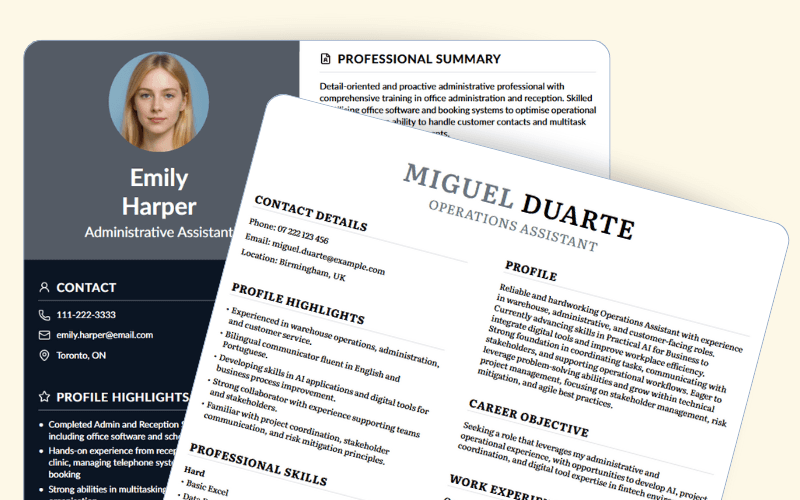
Update your resume now. Even if you're not planning to leave, having a current resume gives you options. Federal experience translates well to provincial governments, municipalities, non-profits, and private sector roles. Yotru's resume builder can help you position your public service background for external opportunities.
Consider the private sector. While some large employers have also tightened remote work policies, many organizations still offer hybrid or fully remote positions. Your skills in policy analysis, program management, procurement, or specialized technical areas have value outside government.
About the Author

Team Yotru
Employability Systems
Team Yotru
Employability Systems
We build practical career tools for training providers and workforce programs, combining labor market insights with real employment outcomes. Follow us on LinkedIn.
Frequently Asked Questions
Most federal employees must work in the office at least four days per week starting July 6, 2026. Executives are required to return full-time by May 4, 2026.
Audience Context
This article is intended for Canadian federal public servants, public-sector professionals, and workforce stakeholders affected by changes to government workplace policy.
Editorial Standards
Yotru reporting follows a neutral, evidence-based approach. Articles prioritize verified facts, institutional context, and balanced perspectives from government, labour, and policy stakeholders. Opinion and speculation are clearly distinguished from reporting.
Methodology
This analysis is based on publicly available government statements, union commentary, media reporting, and historical workforce trends. It does not rely on unpublished or confidential sources.
Disclaimer
This article is for informational purposes only and does not constitute legal or career advice. Employment terms for federal public servants are governed by collective agreements, Treasury Board policies, and individual employment circumstances. Readers should consult their union representatives or qualified professionals for guidance specific to their situation.
Further Insights
Understanding the Current Landscape
- Ottawa federal job cuts: What we know
- Ottawa federal job cuts resume examples
- Health Canada layoffs and workforce adjustment
Career Strategy and Job Search
- Job search strategy 2026: How to stop wasting effort and start getting interviews
- Why it feels so hard to get a job right now
- Are you afraid of being laid off?
Regional Context
References
- CBC News. (2026, February 5). Federal public servants called back to office 4 days a week starting this summer. CBC. https://www.cbc.ca/news/politics/federal-government-return-to-office-9.7076314
- Treasury Board of Canada Secretariat. (2026, February 5). Message to deputy heads regarding return to office. Government of Canada. https://www.canada.ca/en/public-services-procurement/news/2026/02/public-services-and-procurement-canada-statement-on-increased-office-presence.html
- The Canadian Press. (2026, February 5). Public servants ordered to work in-office 4 days a week starting in July. https://ca.finance.yahoo.com/news/public-servants-ordered-office-4-223604410.html
Maintained by: Yotru Career Research and Development Team
Review cycle: Reviewed regularly to reflect market changes
Last updated: February 6, 2026
Questions or Need Support?
If you are working on employability programs, hiring strategy, career education, or workforce outcomes and want practical guidance, you are in the right place.
Yotru supports individuals and organizations navigating real hiring systems. That includes resumes and ATS screening, career readiness, program design, evidence collection, and alignment with employer expectations. We work across education, training, public sector, and industry to turn guidance into outcomes that actually hold up in practice.