Employability
3 min read
What Is a T-Style Cover Letter (T Cover Letter) and When Should You Use One?
Key Insight
A T-style cover letter (T cover letter) highlights job requirements alongside your matching skills, making fit easy to scan. In competitive hiring, this ATS-friendly format helps recruiters assess alignment faster than traditional narratives.
What Is a T-Style Cover Letter?
A T-style cover letter is a modern format that replaces storytelling with direct comparison. Instead of explaining your background in paragraphs, it visually aligns what the employer is looking for with how your skills and experience match those needs.
You may also see this format referred to as a T-shaped cover letter. These terms all describe the same concept: a cover letter that shows alignment clearly rather than describing it indirectly.
T-Style Cover Letter (Simple Text-Based Example)
Dear Hiring Manager,
I am applying for the Customer Support Coordinator role at Acme Software. My experience aligns well with the core requirements of this position.
- Customer support experience → Provided daily email and chat support, resolving customer issues efficiently.
- CRM and ticketing systems → Used Zendesk to track, prioritize, and close support tickets.
- Clear written communication → Responded to customer inquiries with accurate, professional messaging.
- Time management and reliability → Managed multiple requests while meeting response-time targets.
Thank you for considering my application. I would welcome the opportunity to discuss this role further.
Sincerely,
Jordan Patel
This is a T-style cover letter presented in a text-only, bullet-style format. It mirrors job requirements with matching experience using plain text, rather than relying on tables or layout formatting, making it easy to scan, ATS-friendly, and suitable for email or text-based application systems.
Why It’s Called a T-Style Cover Letter
The name comes from structure, not design.
At the top of the letter is a short introductory paragraph. Below that, the content splits into two aligned sections. One reflects the employer’s requirements. The other shows how you meet each requirement. Together, the layout forms the shape of a “T”.
The goal is not visual flair. The goal is clarity and speed for the reader.
Pro Tip
Pro tip: If a job description reads like a checklist, a T-style cover letter is often the most effective option.
How a T-Style Cover Letter Is Structured
A strong T-style cover letter has three parts.
- Opening: Briefly state the role, your interest, and a one-sentence summary of your value. Two or three sentences is enough.
- Middle: Match job requirements directly to your skills or experience, showing clear evidence of fit rather than long explanations.
- Closing: Reaffirm interest and invite next steps. Keep it professional and concise without restating your resume.
| How to Respond to Different Types of Employer Requirements | ||
|---|---|---|
| If the employer asks for… | Your response should focus on… | |
| Hard technical skills (tools, software, systems) | Specific tools used, how you applied them, and measurable or practical outcomes | |
| Process or operational skills | Workflows followed, systems maintained, and improvements or efficiencies achieved | |
| Domain or industry knowledge | The environment you worked in, typical problems handled, and how knowledge was applied | |
| Problem-solving or analytical ability | The issue faced, action taken, and the result or learning | |
| Time management and reliability | Workload handled, deadlines met, and consistency over time | |
| Soft interpersonal skills (communication, teamwork) | Real interactions, how you worked with others, and the effect on outcomes | |
| Leadership or initiative | Responsibility taken, decisions made, and impact on the team or project | |
Pro Tip
Important: The comparison section should mirror the job description closely. Relevance matters more than completeness.
Why Recruiters Like T-Style Cover Letters
Recruiters like T-style cover letters because they reduce effort.
This format is easy to scan, quick to evaluate, and clearly tailored to the role. It removes guesswork and answers the core question hiring teams are asking early in the process: “Can this person do the job?”
In high-volume hiring environments, clarity often matters more than narrative style.
When a T-Style Cover Letter Works Best
T-style cover letters are especially effective for roles in technology, product, data, analytics, operations, and other skills-driven fields. They are also useful for career changers who need to show transferable skills clearly, and for international candidates applying across borders where context may be limited.
This format is widely accepted in Canada and the United States and increasingly used in the UK and remote-first companies.
Hint
If the posting lists specific tools, skills, or responsibilities, a T-style cover letter is usually a strong fit.
When You Should Avoid a T-Style Cover Letter
A T-style cover letter is not always appropriate.
If an employer explicitly asks for a traditional narrative letter, follow those instructions. The same applies to highly formal environments such as law, academia, or certain public-sector roles.
You should also be cautious if the application system struggles with formatting. Always prioritize clarity over structure.
Important
Important: If your T-style layout relies on columns, make sure the letter still makes sense when read linearly.
Is a T-Style Cover Letter ATS-Friendly?
Yes. A T-style cover letter can be an ATS-friendly cover letter when written cleanly.
Use standard fonts, avoid graphics or text boxes, and ensure the content reads logically from top to bottom. Applicant Tracking Systems evaluate text, not layout, so simplicity matters more than visual formatting.
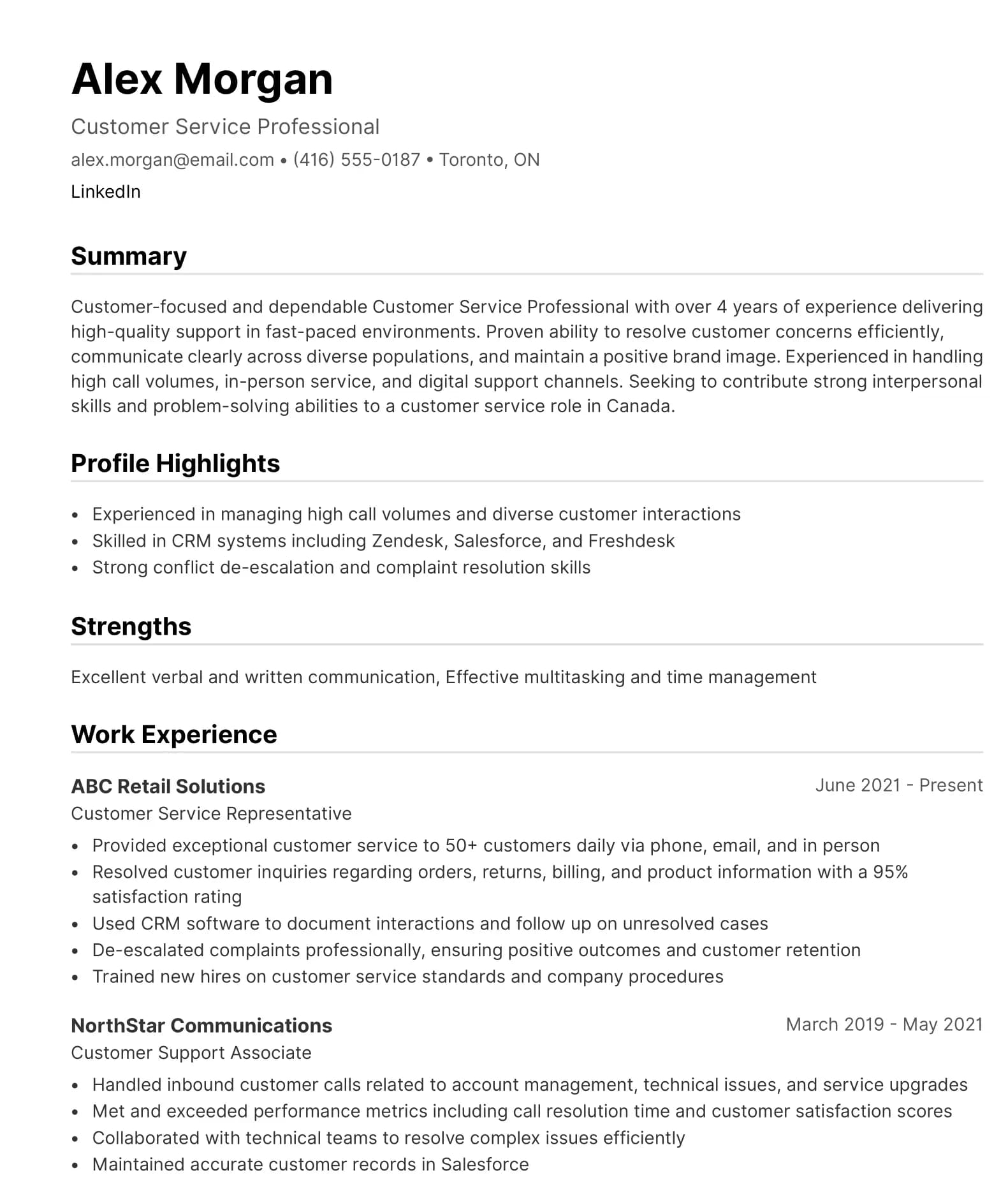
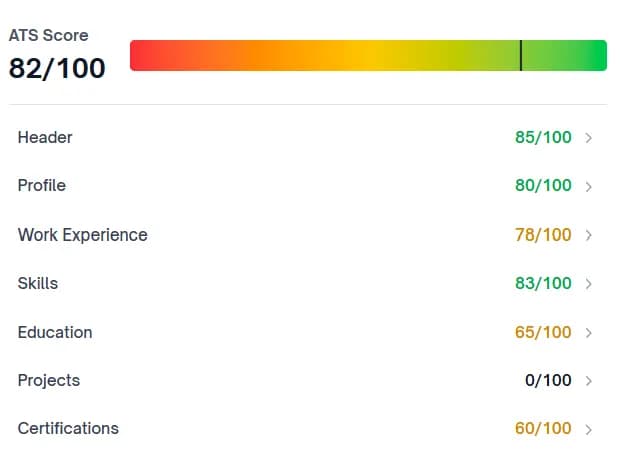
Check your resume to see how ATS-compatible it is.
Use our free ATS checker to confirm your resume can be read, parsed, and passed through common hiring filters before a recruiter reviews it.
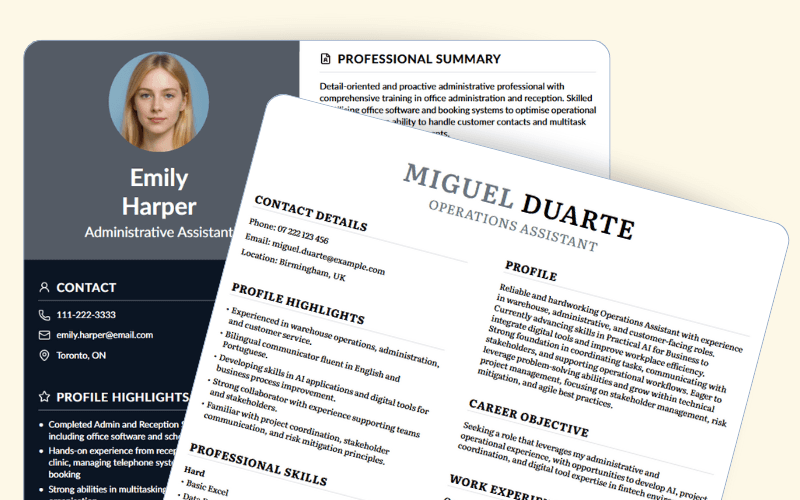
ATS-Optimized resumes That Meet Employer Standards
Our AI-powered scoring system helps organizations assess and standardize resume quality at scale. ATS-compliant templates support consistent formatting, keyword alignment, and interview readiness across cohorts.
T-Style vs Traditional Cover Letters
Traditional cover letters focus on storytelling and motivation.
T-style cover letters focus on proof of fit.
Both formats are valid. The difference is how quickly a recruiter can understand your value. In competitive hiring markets, speed and clarity often outweigh narrative detail.
How Yotru Helps with T-Style Cover Letters
Yotru helps you create and customize T-style cover letters by pulling key requirements directly from job descriptions and turning your experience into clear match points.
You can build one strong base letter, adapt it for different roles or regions, and keep everything ATS-friendly without rewriting from scratch.
The Takeaway
A T-style cover letter is not about being creative. It is about being clear.
If your goal is to show alignment quickly and make life easier for recruiters, this format is a practical and effective choice.
About the Author

Mateo Villanueva
Customer Service Manager
Mateo Villanueva
Customer Service Manager
Mateo Villanueva is the Customer Service Manager at Yotru, ensuring users receive clear support while sharing customer insights to help improve the platform.
Frequently Asked Questions
A T-style cover letter is a format that directly aligns job requirements with your matching skills or experience. Instead of long paragraphs, it shows fit side by side, making it faster for recruiters to assess alignment.
Audience Context
This article serves job applicants seeking to communicate qualifications clearly in competitive hiring environments, including career changers demonstrating transferable skills, international candidates applying across borders, professionals in tech and data roles, and candidates targeting positions with specific technical requirements where alignment must be immediately apparent.
Research Methodology
This article draws on recruiter workflow observation and time-allocation studies, applicant tracking system parsing behavior analysis, hiring manager feedback on cover letter evaluation patterns, employment application format effectiveness research, and applied experience from real screening environments where clarity and scanability directly influence candidate advancement.
Editorial Standards
Guidance reflects observed recruiter behavior and documented ATS functionality rather than theoretical best practices. Content prioritizes accuracy in representing how cover letters are evaluated in practice, neutrality in format recommendation without overstating effectiveness, and practical applicability for candidates navigating varied application systems and employer preferences.
Disclaimer
This article provides informational guidance only and does not guarantee interview requests or employment outcomes. Cover letter effectiveness varies by employer preference, recruiter evaluation methods, ATS configuration, industry norms, role seniority, and organizational culture. Some employers explicitly request traditional narrative formats or have systems that cannot process formatted documents. Hiring decisions depend on multiple factors beyond cover letter format.
Yotru Insights
Resume and Application Optimization
- How to Effectively Target a Job by Updating Your Resume – Align your application materials directly with job requirements for maximum impact
- ATS-Friendly Resume Builders: How to Pass the Bots and Get Hired – Essential strategies for creating applications that work with applicant tracking systems
- 7 Traits All Great Resumes Possess – Core characteristics that make applications stand out to hiring managers
- Demystifying Applicant Tracking Systems: What Recruiters Really Do – Understanding how ATS works in real hiring workflows
Interview and Job Search Strategy
- Interview Preparation Tips: How to Prepare and Impress Employers – Comprehensive guidance for making strong impressions throughout the hiring process
- Job Search Strategy 2026: Stop Wasting Effort and Start Getting Interviews – Modern approaches to finding employment in competitive markets
- What Hiring Managers Really Notice in the First 5 Minutes – Critical first impression factors that influence hiring decisions
Career Transitions and International Applications
- How to Write a Canadian Resume as an International Student – Adapting application materials for Canadian employer expectations
- How Fresh Graduates Can Land a Good First Job – Practical advice for entry-level candidates entering competitive job markets
- How to Build a Resume with No Work Experience – Creating compelling applications when changing careers or starting out
References
- Coursera. (2022). Cover Letter Tips: How to Stand Out. Coursera Articles. https://www.coursera.org/articles/cover-letter-tips
- Indeed Editorial Team. (n.d.). How to Write a Cover Letter (With Examples and Tips). Indeed Career Guide. https://www.indeed.com/career-advice/resumes-cover-letters/how-to-write-a-cover-letter
- Indeed Editorial Team. (n.d.). How to Write an ATS Resume (With Template and Tips). Indeed Career Guide. https://www.indeed.com/career-advice/resumes-cover-letters/ats-resume-template
- IDEO. (n.d.). An IDEO Recruiter's 5 Tips for Writing a Better Cover Letter. IDEO Journal. https://www.ideo.com/journal/an-ideo-recruiters-5-tips-for-writing-a-better-cover-letter
- Jobscan. (2025). How to Address a Cover Letter in 2024 (With Examples). Jobscan Blog. https://www.jobscan.co/blog/addressing-a-cover-letter-hiring-managers-name/
- Jobscan. (2025). Write an ATS Cover Letter Recruiters Actually Read. Jobscan Blog. https://www.jobscan.co/blog/cover-letter-robot-approved/
- Microsoft Corporation. (n.d.). ATS-Friendly Resume and Cover Letter Templates. Microsoft Word Templates. https://word.cloud.microsoft/create/en/ats-templates/
- Mtshali, M. T. (2025). How to Make Your Resume and Cover Letter ATS-Friendly. Medium. https://medium.com/@scholarlytransitions/how-to-make-your-resume-and-cover-letter-ats-friendly-722e27aebf25
- The Muse. (n.d.). How to Write a Cover Letter to a Hiring Manager (With Templates). The Muse Career Advice. https://www.themuse.com/advice/the-cover-letters-that-make-hiring-managers-smile-then-call-you
- University of Minnesota Duluth Career Center. (n.d.). Applicant Tracking System (ATS) Tips. UMD Career Resources. https://career.d.umn.edu/students/resume-cover-letter/applicant-tracking-system-ats-tips
- Women in Tech Network. (2025). What Strategies Help Optimize Cover Letters for Applicant Tracking Systems (ATS)? Women in Tech Articles. https://www.womentech.net/how-to/what-strategies-help-optimize-cover-letters-applicant-tracking-systems-ats
Maintained by: Labor Intelligence Group at Yotru
Review cycle: Reviewed regularly to reflect market changes
Last updated: March 24, 2026
Questions or Need Support?
If you are working on employability programs, hiring strategy, career education, or workforce outcomes and want practical guidance, you are in the right place.
Yotru supports individuals and organizations navigating real hiring systems. That includes resumes and ATS screening, career readiness, program design, evidence collection, and alignment with employer expectations. We work across education, training, public sector, and industry to turn guidance into outcomes that actually hold up in practice.