
Employability
4 min read
Target a Job by Updating Your Resume for a Specific Job in 2026
Synopsis
Job seekers targeting a specific role can improve results by updating their resume for relevance, clarity, and alignment with what employers actually hire for.
Sending the same resume to every role is one of the most common reasons qualified candidates get overlooked. Employers hire for specific problems, not general potential. A targeted resume shows, clearly and quickly, that you understand the role and are prepared to do it.
Key Insight
This guide explains how to tailor your resume for a specific job in 2026 so your experience matches what recruiters and ATS systems are actually screening for.
Why Tailoring Your Resume for a Specific Job Matters in 2026
Recruiters typically scan a resume for relevance in seconds. If your experience does not obviously match the role, it is unlikely to move forward.
Here's what actually happens: a recruiter opens your resume alongside 50 others. They're looking for specific signals, keywords, familiar job titles, recognizable tools. If those signals aren't immediately visible, you're out. Not because you're unqualified, but because you made them work too hard to see the fit.
Targeting your resume helps you:
- Match what the employer is actually hiring for, not what you think they want
- Pass applicant tracking systems that filter by keywords before humans see anything
- Show focus and intent rather than desperate mass-applying
- Make it easier for a recruiter to justify moving you forward to their manager
Important
A targeted resume is not about changing your background. It is about choosing what to emphasize and what to downplay.
Step 1: Start With the Job Description, Not Your Resume
Before editing anything, read the job posting carefully and extract:
- Core responsibilities (what you'll actually be doing daily)
- Required skills and tools (the non-negotiables)
- Repeated phrases or terminology (if they say it three times, it matters)
- Seniority signals such as years of experience or leadership expectations
Look for patterns. If several bullets mention stakeholder communication, reporting, or analysis, that is a priority area to reflect.
Pro Tip
Copy the job description into a document and highlight recurring themes. Those themes should appear in your resume using honest, natural language, not copy-pasted verbatim.
Step 2: Adjust Your Professional Summary
Your summary should change for each role. This is one of the highest impact sections to target, yet most candidates leave it generic.
Instead of a vague introduction, write 2 to 3 lines that:
- Name the role you are targeting (literally use their job title)
- Reflect the core skills from the posting in order of importance
- Anchor your experience level and domain (they need context fast)
Example shift
- Generic: Experienced professional with a strong background in operations and administration.
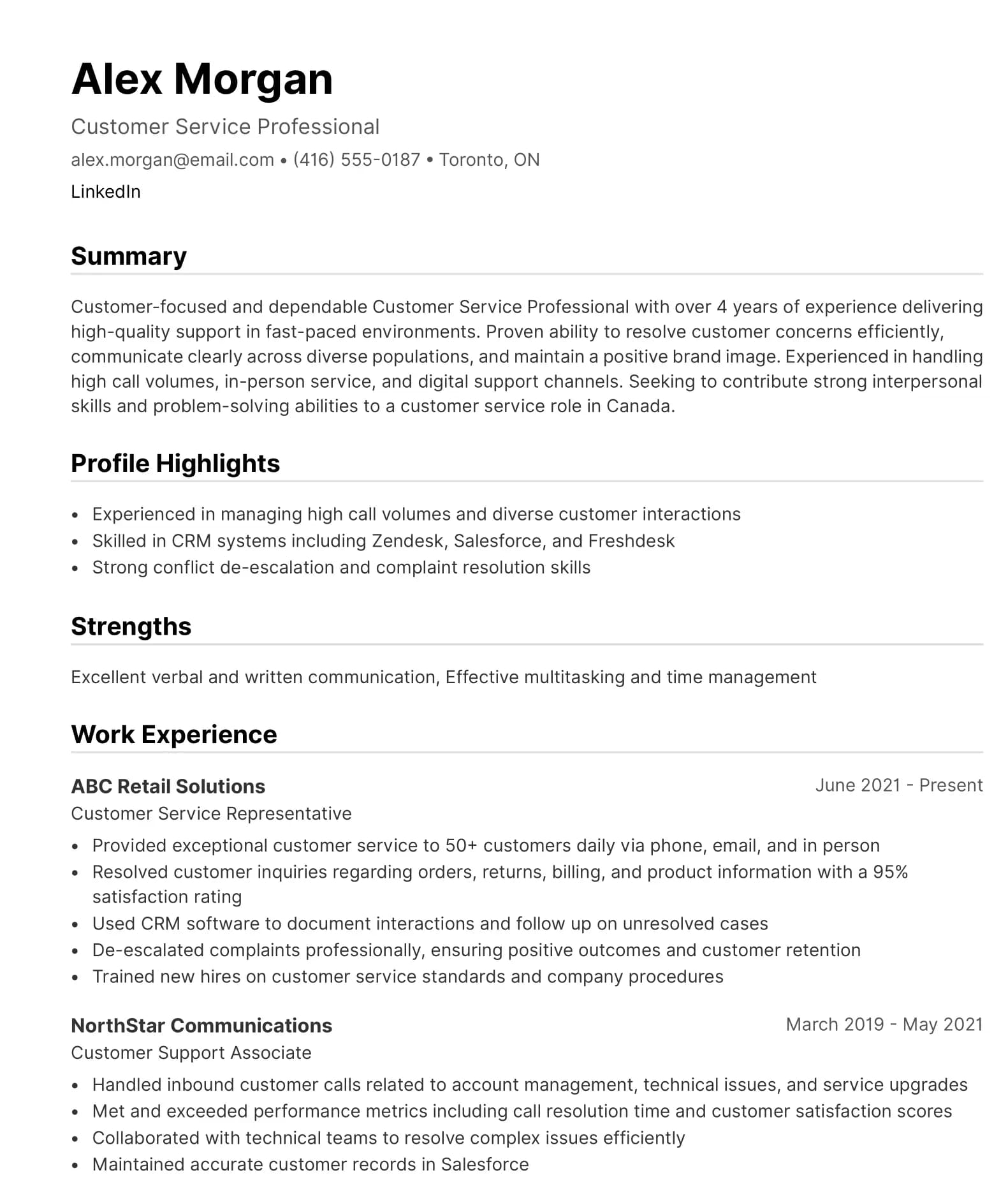
- Targeted: Operations coordinator with 4+ years supporting cross-functional teams, managing compliance reporting workflows, and implementing process improvements in healthcare settings.
This immediately signals fit. The recruiter knows you're not just qualified, you're speaking their language.
Step 3: Reorder and Refocus Your Experience
You do not need to rewrite your job history. You need to reprioritize it.
Think of your resume as a highlight reel, not a documentary. Show what matters for this job, not everything you've ever done.
For each role:
- Move the most relevant bullets to the top (recruiters read top to bottom)
- Rewrite bullets to emphasize outcomes related to the target job
- Remove or condense tasks that are unrelated (nobody cares you "answered phones" if you're applying for data analysis)
Strong bullets typically include:
- Action verb (avoid weak starters like "responsible for")
- Context or responsibility (what you managed, who you supported)
- Outcome or purpose (what changed because you did this)
Example: Analyzed weekly performance data to identify scheduling gaps, supporting workforce planning decisions for 200+ staff members.
Step 4: Align Skills and Keywords Naturally
Most employers use automated systems to filter resumes before a human sees them. This makes keyword alignment important, but it must remain natural, not robotic.
Best practices:
- Use the same terminology as the job posting where accurate (if they say "Salesforce," don't say "CRM system")
- Include tools, platforms, or certifications explicitly if required (don't assume they'll infer)
- Avoid keyword stuffing or lists without context (listing 40 skills with no proof helps nobody)
- Balance hard skills (tools, systems) with soft skills (communication, problem-solving) when both appear in the posting
Hint
If a job posting mentions a specific system or method and you have used it, say so clearly. If you have not, do not pretend you have. Instead, highlight similar or transferable experience.
Step 5: Tailor Your Resume Title and File Name
Small details matter more than you think. They signal professionalism and attention.
- Resume title: Use a clear, role-specific title at the top of your resume.
Avoid vague labels like "Professional Profile" or "Experienced Worker". - File name: Firstname_Lastname_TargetRole_Resume.pdf
This helps recruiters and hiring managers immediately understand what they are opening and makes it easier for them to find your file later.
Step 6: Check for Consistency and Clarity
Before submitting, review your resume with one question in mind: If I were hiring for this role, would this resume feel written for me?
Check:
- Consistent tense and formatting (past tense for old jobs, present for current)
- Clear alignment with the job description (do a side-by-side comparison)
- No unexplained gaps or unexplained jargon (if they won't understand it, remove it)
- Clean, readable layout (white space is your friend)
Test it: print your resume and read only the first half. Does it immediately communicate fit? If not, keep refining.
Pro Tip
Some candidates also check that their resume and LinkedIn profile match. Inconsistent titles, experience order, or messaging can hurt credibility.
Common Mistakes to Avoid
- Sending the same resume to multiple different roles (lazy and obvious)
- Overloading the skills section without evidence (claiming 30 skills proves nothing)
- Inflating titles or responsibilities (recruiters fact-check, especially during reference calls)
- Removing valuable experience just to match keywords (don't erase substance for SEO)
- Using buzzwords without specifics ("results-oriented team player" means nothing without proof)
Targeting is about clarity and relevance, not distortion or desperation.
Moving Forward
A targeted resume shows respect for the employer’s time and makes it easier for recruiters to see how you fit the role.
You do not need dozens of resumes. You need one strong version for each role type, updated with purpose.
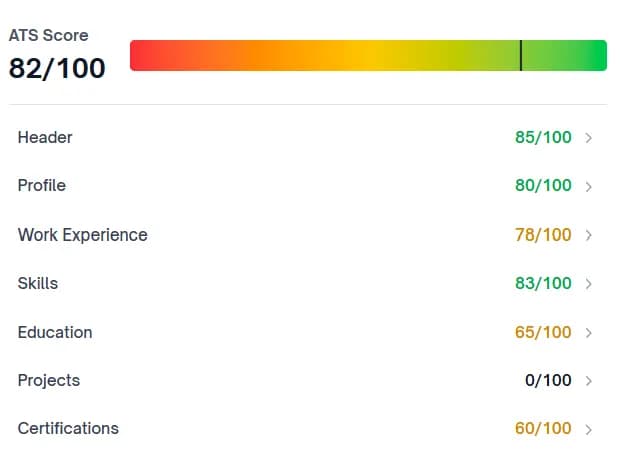
With Yotru, you can move forward confidently. Start by running your resume through our ATS checker to understand how it performs, then paste in the target job description to fine-tune your resume for that specific role. Each step helps sharpen your focus and present your experience more clearly.
ATS-Optimized resumes That Meet Employer Standards
Our AI-powered scoring system helps organizations assess and standardize resume quality at scale. ATS-compliant templates support consistent formatting, keyword alignment, and interview readiness across cohorts.
About the Author

Team Yotru
Employability Systems
Team Yotru
Employability Systems
We build practical career tools for training providers and workforce programs, combining labor market insights with real employment outcomes. Follow us on LinkedIn.
Frequently Asked Questions
It depends on how different the roles are. If you're applying to similar positions (e.g., all project coordinator roles), you might only need to adjust your summary and reorder a few bullets. If you're pivoting to a different function or industry, expect to restructure your experience section significantly and rewrite 40-60% of your bullet points to emphasize transferable skills.
Audience Context
This article is written for job seekers who want to improve how their resume aligns with a specific role. It is especially relevant for candidates applying through ATS-based hiring systems who need clear, practical guidance on targeting their resume without rewriting their entire work history.
Research Methodology
This content is informed by observed recruiter screening practices, applicant tracking system behavior, and common resume review patterns across multiple industries. Insights reflect typical hiring workflows and resume parsing logic observed during 2025–2026.
Editorial Standards
This content follows an evidence-based editorial approach focused on accuracy, neutrality, and practical relevance. Guidance is reviewed to ensure clarity, consistency, and alignment with current hiring practices. Content is written independently and updated as resume screening and ATS standards evolve.
Disclaimer
This article is for informational and educational purposes only. It does not provide employment, hiring, or outcome guarantees. Results vary by role, employer, industry, and labor market conditions. Readers should apply this guidance using their own judgment and professional context.
Further Insights
- How to Write an ATS-Optimized Resume That Gets Past Screening Systems — ATS optimization strategies for automated resume screening
- 7 Traits All Great Resumes Possess — Essential resume qualities that recruiters look for
- What Should You Name Your Resume File? Reddit Weighs In — Professional resume file naming best practices
- How to Optimize Your LinkedIn Profile Using Your Resume — Aligning LinkedIn and resume for consistent job search
- Demystifying Applicant Tracking Systems: What Recruiters Really Do — Understanding how recruiters use ATS to screen resumes
References
- Addante, R. J., Trujillo, L. T., & Dobson, J. L. (2022). Should I trust the artificial intelligence to recruit? A behavioral and ERP study of human–AI collaboration in resume screening. Frontiers in Psychology, 13, 913010. https://doi.org/10.3389/fpsyg.2022.913010
- Ghani, U., Zhai, X., Spector, P. E., Chen, S., & Jokisaari, M. (2025). How educational background influences recruitment evaluation: Behavioral and neurophysiological evidence from simulated resume screening. Frontiers in Psychology, 16, 1370219. https://doi.org/10.3389/fpsyg.2025.1370219
- Savanur, S., & Kumar, P. (2023). Making hiring process effective through application tracking systems (ATS). In Proceedings of the 12th International HR Conference (pp. 1–12). SDMIMD.sdmimd
- Yao, L., & Moya, M. (2024). Is your résumé/textbook up-to-date? An audit of AI ATS résumé recommendations in business education. Journal of Management Education, 48(3), 415–438. https://doi.org/10.1177/23294906231223101
- von Lilienfeld-Toal, A., & Thomsen, S. (2022). Do recruiters select workers with different personality traits for different tasks? Evidence from a discrete choice experiment. Labour Economics, 79, 102238. https://doi.org/10.1016/j.labeco.2022.102238
- McMaster University Student Success Centre. (2024). Applicant tracking system (ATS) and artificial intelligence (AI): What students need to know about resume screening. McMaster University. https://studentsuccess.mcmaster.ca/job-applications-applicant-tracking-systems-ats/
- University of Illinois Chicago Career Services. (n.d.). Optimizing resumes for applicant tracking systems (ATS) [PDF]. University of Illinois Chicago. https://careerservices.uic.edu/wp-content/uploads/sites/26/2017/08/Ensure-Your-Resume-Is-Read-ATS.pdf
Maintained by: Employability & Skills Group at Yotru
Review cycle: Reviewed periodically to reflect evolving hiring trends
Last updated: January 7, 2026
Questions or Need Support?
If you are working on employability programs, hiring strategy, career education, or workforce outcomes and want practical guidance, you are in the right place.
Yotru supports individuals and organizations navigating real hiring systems. That includes resumes and ATS screening, career readiness, program design, evidence collection, and alignment with employer expectations. We work across education, training, public sector, and industry to turn guidance into outcomes that actually hold up in practice.