Market
6 min read
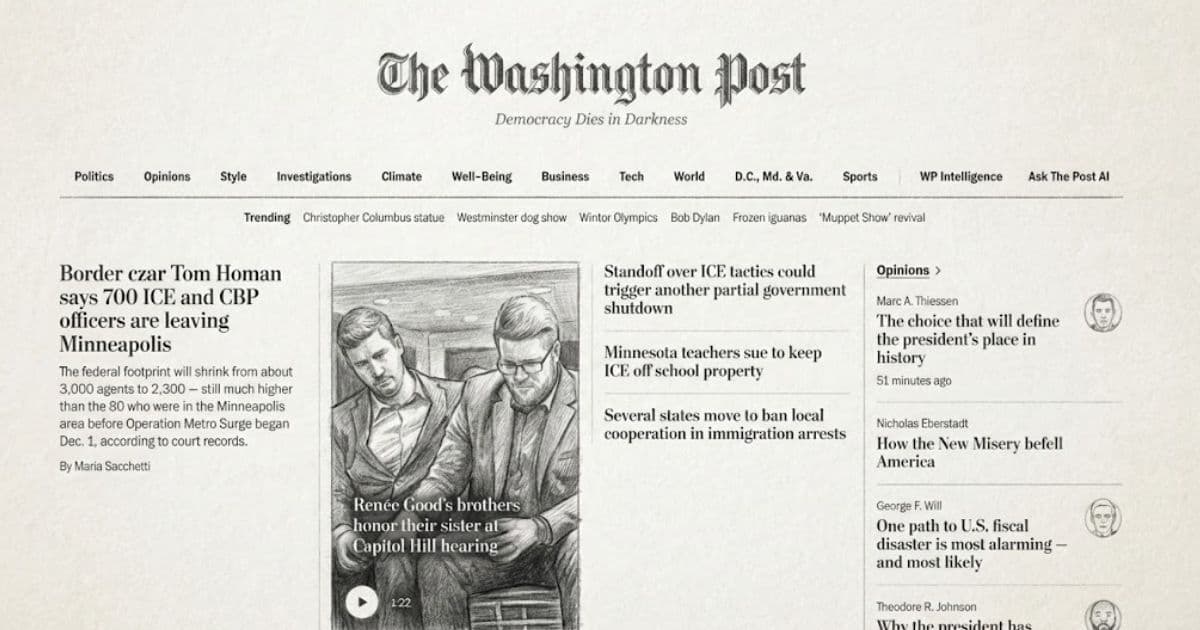
Washington Post Layoffs February 2026: What to Do If You're Affected
Synopsis
The Washington Post is cutting one-third of its staff in February 2026. This guide covers severance, benefits continuation, and practical steps for affected journalists and media professionals.
Key Insight
The Washington Post announced sweeping layoffs on February 4, 2026, cutting roughly one-third of its workforce across all departments. This guide is designed to support employees affected by these layoffs as they navigate their next steps.
According to reports from CNN and The New York Times, more than 300 newsroom employees were affected, with entire sections eliminated including sports, books, and the Post Reports podcast.
Executive editor Matt Murray announced the cuts during a morning Zoom call, describing them as a "strategic reset" in response to declining digital traffic and financial challenges. If you received a layoff notification today, this guide will help you understand your options and plan your next steps.
Important
The Washington Post layoffs 2026 affect union-represented employees covered by the Washington Post Guild contract. Contact the Guild immediately to understand your specific severance rights and negotiate terms. Guild negotiations over severance are ongoing, and your benefits may differ from initial company communications.
Understand the Washington Post February 2026 Layoffs
The February 2026 layoffs represent one of the most significant workforce reductions in The Washington Post's nearly 150-year history. The cuts come after years of financial challenges, declining digital subscriptions, and controversial editorial decisions under owner Jeff Bezos.
What happened:
- One-third of the total workforce was eliminated across all departments
- More than 300 of approximately 800 newsroom employees were laid off
- The sports department was closed in its current form
- The books section was eliminated entirely
- The Metro desk was restructured from 40+ to approximately 12 staff members
- Several foreign bureaus were shut down, including coverage in Jerusalem, Ukraine, Cairo, and Sydney
- The Post Reports daily podcast was suspended
Who was affected:
The layoffs hit nearly all corners of the newsroom. According to Poynter's reporting, those laid off include reporters covering race and ethnicity, national health, protest movements and activism, Maryland education, and Amazon. The international desk lost correspondents covering the Middle East, Russia and Ukraine, and international investigations.
Why this is happening:
Executive editor Matt Murray cited several factors in his memo to staff. The Post's organic search traffic has fallen by nearly half in the last three years as Google shifts to AI-generated results. Daily story output has declined significantly over the past five years. The company concluded that its structure was "too rooted in a different era, when we were a dominant, local print product."
Pro Tip
The Post's subscriber base dropped significantly after Bezos blocked the planned endorsement of Kamala Harris in late 2024. More than 250,000 readers canceled subscriptions following that decision. This context matters for your resume narrative: the layoffs reflect ownership decisions, not performance issues.
Industry context:
This is part of a broader contraction in traditional media. The Los Angeles Times enacted a 6% newsroom reduction in mid-2025. BuzzFeed shuttered its news division in 2023. Vice Media filed for bankruptcy the same year. Business Insider cut more than 20% of its workforce recently. NBC News Group laid off about 150 employees in late 2025.
Immediate Steps in Your First Week
The first days after a layoff notification can feel overwhelming. Focus on these concrete actions to protect yourself and set up your job search.
Today and tomorrow:
- Save your work samples, bylines, and portfolio pieces to personal storage before you lose system access
- Screenshot or export any performance reviews, awards, or recognition emails
- Download your contact list from company systems
- Note the names and titles of colleagues who can serve as references
Contact the Washington Post Guild:
The Guild represents hundreds of newsroom employees and is actively negotiating severance terms. According to the Guild's website, they can help you:
- Understand your specific severance entitlements under the union contract
- Navigate the grievance process if you believe your termination was unfair
- Connect with other affected employees organizing collective action
Important
The Washington Post Guild is planning a rally for Thursday, February 6, 2026, outside the paper's headquarters. Even if you've been laid off, participating in collective action may strengthen your negotiating position and provide emotional support during this transition.
Understand your timeline:
- Confirm when your last day of employment will be
- Ask HR about the deadline for making decisions about severance packages
- Determine when your health insurance coverage ends
- Identify any stock options, 401(k) matching, or pension considerations
Document everything:
- Keep copies of all communications about your layoff
- Note any verbal promises made during termination meetings
- Save your offer letter and any employment contracts
- Request a written explanation of your severance package
Severance, Benefits, and Union Representation
As a Washington Post employee, your severance and benefits are influenced by whether you're covered by the Guild contract and your specific role and tenure.
What we know about severance:
Negotiations between the Washington Post Guild and management are ongoing. According to NPR's coverage, at least one Metro staffer declined to share details because "negotiations over severance are ongoing."
In 2023, The Post offered voluntary separation packages to 240 employees during a previous round of cuts. The specific terms of the current layoff package have not been publicly disclosed, but Guild members should expect the union to negotiate collectively on their behalf.
Hint
Even if you're not a dues-paying Guild member, the union represents all employees in the bargaining unit. Contact wapounion@gmail.com to understand what rights you have under the expired or current contract.
Benefits to clarify with HR:
- Health insurance continuation: When does coverage end? What are your COBRA options?
- Unused PTO: Will you be paid out for accrued vacation and personal days?
- Retirement benefits: How will the layoff affect your 401(k) or pension?
- Outplacement services: Is the Post offering any job search support or career counseling?
What may be negotiable:
- Extended health insurance coverage beyond the standard severance period
- Letter of recommendation or reference commitment from management
- Extension of system access to retrieve work samples
- Timing of your official end date for resume purposes
Important
If you're a foreign correspondent or based outside the U.S., your visa status may be affected by job loss. Consult an immigration attorney immediately to understand your options and deadlines. Some visa categories have limited time to find new sponsorship.
Turning Your Washington Post Experience Into Your Next Role
Washington Post experience carries significant weight in journalism and communications. The challenge is translating your internal work into language that resonates with hiring managers across media, corporate communications, nonprofits, and tech.
Where Post journalists go:
Former Washington Post employees have successfully transitioned to:
- Other national news organizations (New York Times, Wall Street Journal, Reuters, Associated Press)
- Digital-native outlets (Axios, Politico, The Athletic, Punchbowl News)
- Corporate communications and public affairs roles
- Nonprofit and foundation communications
- University communications and academic positions
- Government public affairs (federal, state, and local)
- Tech company content and policy teams
Reframe your experience:
Move away from internal Post terminology toward universal descriptions of your skills.
- Beat reporting becomes expertise in stakeholder management, source cultivation, and deadline-driven content production
- Breaking news coverage translates to crisis communications, rapid response, and high-pressure decision-making
- Investigative work demonstrates research methodology, data analysis, and complex project management
- Metro reporting shows community engagement, local market knowledge, and public accountability expertise
- International coverage reflects cross-cultural communication, multilingual ability, and global perspective
Pro Tip
Your portfolio matters more than your resume in journalism. Before you lose access to Post systems, save PDFs of your best work, screenshot any paywalled pieces, and document reader engagement metrics or awards your stories received.
Highlight transferable skills:
- Content strategy and editorial judgment
- Audience engagement and reader analytics
- Social media platform expertise
- Video, audio, and multimedia production
- Data visualization and information design
- Project management across distributed teams
- Fact-checking and verification methodology
Support Resources and Next Steps
Job searching while processing a layoff is emotionally demanding. These resources can help you maintain momentum while taking care of yourself.
Professional networks:
- AAJA (Asian American Journalists Association): Job board and networking for Asian American media professionals
- NABJ (National Association of Black Journalists): Career resources and job listings
- NAHJ (National Association of Hispanic Journalists): Job fairs and professional development
- ONA (Online News Association): Digital journalism jobs and community
- SPJ (Society of Professional Journalists): Legal resources and job postings
Hint
Many laid-off Post journalists are sharing their availability on social media, particularly Bluesky and X. Follow the #WaPoLayoffs hashtag to connect with colleagues and spot opportunities being shared in real time.
Mental health support:
Job loss is a significant life stressor. If your health insurance is still active, consider scheduling an appointment with a mental health professional now rather than waiting until you're in crisis. Many Employee Assistance Programs (EAPs) also provide short-term counseling that remains available briefly after termination.
Financial considerations:
- File for unemployment insurance in Washington, D.C. (or your state of residence) promptly
- Review your budget and identify areas to reduce spending during your transition
- Consider whether you need to pause retirement contributions temporarily
- Investigate freelance opportunities to maintain income while job searching
Community support:
The Washington Post Guild has historically organized buyout support and maintains connections among current and former Post employees. Reach out to colleagues who have been through previous layoff rounds for advice and job leads.
Build a Resume That Reflects Your Washington Post Experience
One of the hardest parts of leaving a major news organization is translating your work into language that resonates outside journalism. Your desk title, beat, and internal achievements may not mean much to an HR system scanning for keywords or a hiring manager at a different type of organization.
This is where intentional resume positioning makes a difference. You need to strip out Post-specific jargon and replace it with industry-standard descriptions that highlight your transferable skills. The reporting you did on federal policy becomes "stakeholder communication and regulatory expertise." Your breaking news experience becomes "crisis communications and rapid content production under deadline pressure."
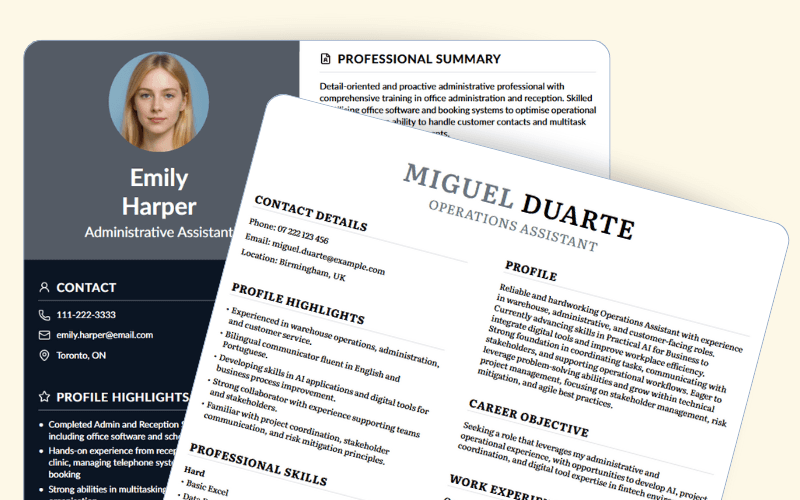
Yotru's resume builder can help you create targeted resumes that speak to different audiences, whether you're pursuing another journalism role, pivoting to corporate communications, or exploring opportunities in tech. The platform helps you:
- Generate ATS-optimized resumes that pass automated screening systems
- Create multiple resume versions tailored to journalism, PR, and corporate roles
- Focus on achievement-based statements that quantify your impact
- Translate industry jargon into universally understood competencies
- Build cover letters that complement your resume for each application
About the Author

Team Yotru
Employability Systems
Team Yotru
Employability Systems
We build practical career tools for training providers and workforce programs, combining labor market insights with real employment outcomes. Follow us on LinkedIn.
Frequently Asked Questions
The Washington Post cut roughly one-third of its total workforce in February 2026. According to reporting from CNN and The New York Times, more than 300 of approximately 800 newsroom employees were affected. The layoffs touched nearly all news departments and included significant reductions in sports, books, metro, and international coverage.
Audience Context
This article is written for Washington Post journalists, editors, and newsroom staff affected by the February 2026 layoffs. It provides practical guidance for navigating severance negotiations, union representation, and career transition during a high-stress period of industry-wide media contraction.
Editorial Standards
Yotru content prioritizes accuracy, neutrality, and evidence-based guidance. All factual claims are verified against company statements, union communications, and reputable news reporting. This article is updated as new information becomes available.
Methodology
This article draws on publicly available reporting from NBC News, CNN, NPR, Poynter, Axios, and other outlets about The Washington Post's February 2026 restructuring. Additional sources include Washington Post Guild communications, government labor resources, and Yotru's applied research on job search strategy and career transition for media professionals.
Disclaimer
This article is for informational purposes only and does not constitute legal, employment, or financial advice. Severance terms, benefits, and union contract provisions may differ from what is described here and are subject to ongoing negotiation. Individual outcomes depend on specific employment circumstances, union membership status, and regional regulations. Readers should consult the Washington Post Guild, qualified attorneys, and financial professionals for guidance specific to their situation.
Further Insights
Layoff Support and Career Transition
- What to do after a massive layoff: a guide for moving forward – Step-by-step guidance for the first weeks after job loss
- How to upskill after a layoff – Strategic approaches to building new skills during career transition
- HR and layoffs: lessons for leaders and tools for workers – Understanding the process from both sides
- Resume builder for laid-off workers – Practical tools for building a new resume after job loss
Resume and Job Search Strategy
- Build your resume with Yotru – AI-powered resume builder optimized for ATS systems
- How to handle a job gap on your resume – Strategies for addressing employment gaps
- Job search strategy 2026 – Current best practices for getting interviews
- How to optimize your LinkedIn profile using your resume – Aligning your LinkedIn presence with your job search
- Why it feels so hard to get a job right now – Understanding the current job market context
Related Media and Tech Layoffs
- Amazon Project Dawn layoffs January 2026 – Guidance for Amazon employees affected by recent cuts
- Ubisoft layoffs January 2026 – Support for entertainment industry workers navigating layoffs
- Shopify layoffs January 2026 – Resources for tech workers in career transition
References
- NBC News. (2026, February 4). Washington Post lays off one-third of its newsroom. https://www.nbcnews.com/business/media/washington-post-layoffs-sports-rcna257354
- CNN. (2026, February 4). Washington Post announces widespread layoffs, gutting numerous parts of its newsroom. https://www.cnn.com/2026/02/04/media/washington-post-layoffs
- NPR. (2026, February 4). Bezos orders layoffs at Washington Post. https://www.npr.org/2026/02/04/nx-s1-5699328/washington-post-layoffs-jobs-bezos
- Poynter. (2026, February 4). The Washington Post lays off a third of its staff. https://www.poynter.org/business-work/2026/washington-post-layoffs-sports-books-metro/
- Axios. (2026, February 4). Washington Post announces sweeping layoffs amid financial distress. https://www.axios.com/2026/02/04/washington-post-layoffs
- CNBC. (2026, February 4). Washington Post begins widespread layoffs, sharply shrinking storied newspaper's reach. https://www.cnbc.com/2026/02/04/washington-post-starts-massive-layoff-gutting-sports-and-foreign-coverage-reuters.html
- Variety. (2026, February 4). Washington Post layoffs cut more than 300 employees at Jeff Bezos paper. https://variety.com/2026/digital/news/washington-post-layoffs-jeff-bezos-amazon-beat-reporter-1236651840/
- Deadline. (2026, February 4). The Washington Post begins long-expected layoffs. https://deadline.com/2026/02/washington-post-layoffs-jeff-bezos-2-1236708618/
- The Washington Post Guild. (n.d.). Know your rights. https://postguild.org/contract/
- Washington-Baltimore News Guild. (n.d.). The Washington Post unit. https://wbng.org/unit/washington-post/
- U.S. Department of Labor. (n.d.). Unemployment insurance. https://www.dol.gov/general/topic/unemployment-insurance
Maintained by: Labor Intelligence Group at Yotru
Review cycle: Reviewed regularly to reflect market changes
Last updated: February 4, 2026
Questions or Need Support?
If you are working on employability programs, hiring strategy, career education, or workforce outcomes and want practical guidance, you are in the right place.
Yotru supports individuals and organizations navigating real hiring systems. That includes resumes and ATS screening, career readiness, program design, evidence collection, and alignment with employer expectations. We work across education, training, public sector, and industry to turn guidance into outcomes that actually hold up in practice.