3 min read
Top Resume Writing Tips for 2025 That Will Actually Get You Hired
Synopsis
Discover actionable resume writing tips for 2025 that go beyond generic advice — learn how to tailor your resume, beat ATS systems, and land more interviews.
Why Your Resume Strategy Needs a 2025 Upgrade
The job market in 2025 looks nothing like it did five years ago. Hiring managers are flooded with applications, AI-powered Applicant Tracking Systems (ATS) filter out resumes before human eyes ever see them, and recruiters spend an average of just 7 seconds scanning each resume they do review. Generic advice like "use action verbs" or "keep it to one page" simply isn't enough anymore.
Whether you're an active job seeker, a career changer, or an experienced professional refreshing your credentials, this guide gives you the real, actionable tips for a good resume in 2025 — strategies that combine smart tailoring, modern tools, and proven formatting to help you stand out in today's competitive landscape.
1. Tailor Every Resume to the Specific Job
One of the most powerful — and most ignored — resume writing tips is customization. Sending the same resume to 50 employers is the fastest route to radio silence.
Key Insight
Recruiters can instantly tell when a resume is generic. A tailored resume that mirrors the language and priorities of the job description dramatically increases your callback rate.
How to create a tailored resume:
- Copy the job description and highlight repeated keywords, required skills, and must-have qualifications
- Mirror that language in your resume's summary, skills section, and bullet points
- Reorder your bullet points so the most relevant experience appears first
- Customize your professional summary for each role — it only takes 5 minutes and makes a massive difference
Pro Tip
Use a free word cloud tool or paste the job description into an AI assistant to identify the top 5–7 keywords the employer uses most. Then make sure those exact terms appear naturally in your resume.
2. Optimize for ATS Before a Human Reads It
Most mid-to-large companies use ATS software to screen resumes automatically. If your resume isn't formatted correctly or lacks the right keywords, it gets rejected before a recruiter ever sees it.
ATS-Optimized resumes That Meet Employer Standards
Our AI-powered scoring system helps organizations assess and standardize resume quality at scale. ATS-compliant templates support consistent formatting, keyword alignment, and interview readiness across cohorts.
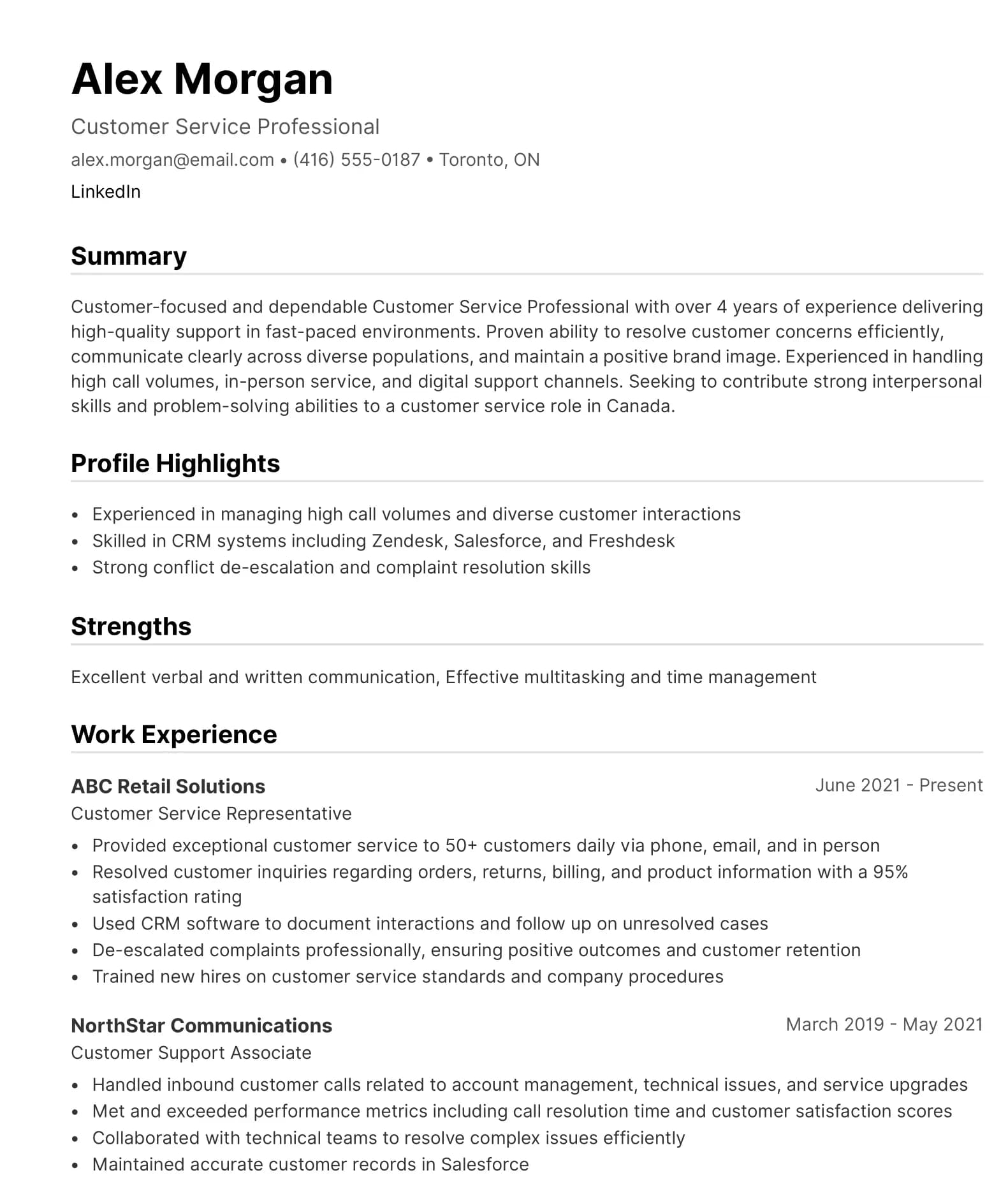
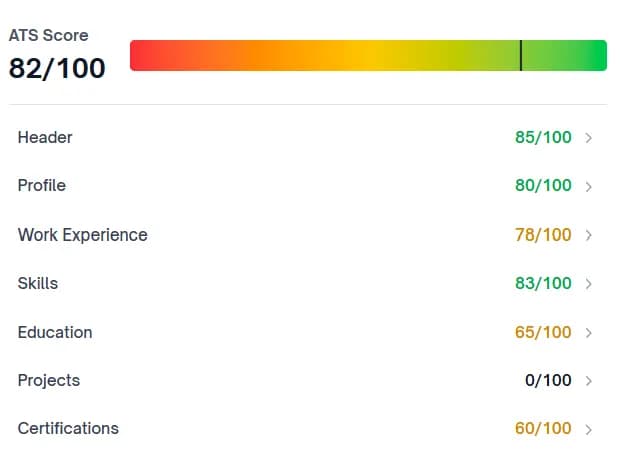
Key ATS optimization tips for 2025:
- Use a clean, single-column layout with standard fonts like Arial, Calibri, or Georgia
- Avoid tables, graphics, headers/footers, and text boxes — ATS can't read them reliably
- Include exact keywords from the job posting in context (not stuffed unnaturally)
- Use standard section headings: Work Experience, Education, Skills, Summary
- Save and submit your resume as a .docx or .pdf as specified in the job posting
Important
Fancy resume templates with columns, icons, and graphics may look great to the human eye but are often misread or rejected by ATS software. Prioritize clean formatting over visual flair when applying through online portals.
3. Write a Powerful Professional Summary
Your professional summary is prime real estate — it's the first thing recruiters read and the section most likely to make them keep reading. In 2025, a strong summary is specific, results-driven, and tailored to the role.
What your 2025 summary should include:
- 1Your professional title and years of experience
- 2Your top 2–3 relevant skills or areas of expertise
- 3A standout quantified achievement or value proposition
- 4A clear statement of what you're looking to do next
Weak summary: "Experienced marketing professional looking for a challenging role."
Strong summary: "Results-driven Digital Marketing Manager with 8+ years driving B2B demand generation. Grew organic traffic by 140% and reduced cost-per-lead by 32% at a SaaS startup. Seeking a senior marketing role where I can scale content and paid strategies for a growth-stage company."
4. Quantify Your Achievements — Always
Numbers make your experience tangible and credible. Hiring managers respond to evidence, not vague claims. This is one of the most impactful resume writing tips for experienced professionals, where real results are your biggest differentiator.
| Before vs. After: Quantifying Achievements | ||
|---|---|---|
| Without Numbers | With Quantified Results | Impact |
| Managed a sales team | Led a team of 12 sales reps to exceed quota by 23% for 3 consecutive quarters | Strong |
| Improved customer satisfaction | Boosted NPS score from 42 to 71 within 18 months | Strong |
| Reduced operational costs | Cut operational expenses by $180K annually by renegotiating vendor contracts | Strong |
| Helped grow the company's social media | Grew LinkedIn following from 2K to 28K followers in 12 months | Strong |
If you don't have exact numbers, use estimates with context: "approximately," "up to," or "contributed to a team that..."
5. Use AI Tools — But Keep the Human Voice
AI resume tools are transforming how job seekers write and optimize their resumes in 2025. From keyword matching to tone analysis, these tools can give you a real edge — if used thoughtfully.
What AI Can Help With
- Identifying missing keywords from job descriptions
- Rephrasing weak bullet points into achievement-focused statements
- Checking ATS compatibility and formatting issues
- Tailoring your summary to different industries or roles
What You Still Own
- Your authentic voice and personality
- Specific achievements and real context
- Industry nuances and insider language
- The final judgment on what to include and cut
Hint
After using an AI tool to optimize your resume, read it aloud. If it doesn't sound like you or feels robotic, revise it. Authenticity still matters — especially in interviews when you need to speak to everything on the page.
6. Resume Writing Tips for Experienced Professionals
If you have 10+ years of experience, you face a unique challenge: too much to say and not enough space to say it. Here's how experienced professionals can make their resume work harder in 2025.
- Lead with your most recent and relevant 10–15 years — older roles can be listed briefly or omitted
- Create a dedicated Core Competencies or Areas of Expertise section for quick keyword scanning
- Highlight leadership, cross-functional impact, and strategic contributions — not just task completion
- Consider a two-page resume if you have substantial relevant experience (one page isn't a hard rule)
- Remove outdated technologies, software, or certifications that are no longer industry-relevant
Key Insight
For senior professionals, the resume isn't just a history of what you've done — it's a positioning document that argues why you're the right leader for this specific role. Frame every line through that lens.
7. Modernize Your Resume's Visual Hierarchy
Even with ATS in mind, your resume still needs to be readable and visually organized for the humans who review it. Good visual hierarchy guides the eye to what matters most.
Quick formatting wins for 2025:
- Use white space generously — a cramped resume is hard to scan
- Bold company names and job titles to make career progression clear at a glance
- Keep fonts consistent — one font, two sizes maximum (11–12pt body, 14–16pt name)
- Use bullet points rather than dense paragraphs for job descriptions
- Limit color to one subtle accent (if any) — navy or dark teal works well
8. Don't Forget Your Digital Footprint
In 2025, your resume doesn't exist in isolation. Recruiters will Google you, check LinkedIn, and potentially review a portfolio. Make sure everything aligns.
- 1Add a LinkedIn URL to your resume header (make sure your LinkedIn mirrors your resume's key points)
- 2Include a portfolio link if relevant (designers, developers, writers, marketers)
- 3Audit your public social media profiles for anything that could raise red flags
- 4Make your LinkedIn headline and summary consistent with your resume's positioning
Build a Resume That Gets Results in 2025
You now have the blueprint. Tailored content, ATS optimization, quantified achievements, and a modern format — these aren't just tips for a good resume in 2025, they're the difference between getting ignored and getting interviews.
SM
★★★★★
"I followed these resume tips and rewrote my resume using Yotru. Within two weeks I had three interview requests from companies I'd been trying to get into for months. The tailoring advice alone was a game-changer."
Sarah Mitchell
Senior Product Manager
Ready to Build Your 2025 Resume?
Use Yotru to create a tailored, ATS-optimized resume in minutes — and start landing the interviews you deserve.
Used by career services teams, training providers, and job seekers worldwide.
About the Author

Zaki Usman
Co-Founder of Yotru
Zaki Usman
Co-Founder of Yotru
Zaki is co-founder of Yotru, working at the intersection of workforce development, education, and technology to build systems that deliver job-ready career support at scale.
Frequently Asked Questions
Common questions about resume writing in 2025
For most professionals with under 10 years of experience, one page is ideal. Experienced professionals with 10+ years of relevant history can use two pages. Avoid going beyond two pages unless you're in an academic or research field that requires a CV format.
Related Resources
More guides to help you land your next role
Resume Writing Guides
- How to Write a Professional Summary That Gets Noticed— Learn how to craft a compelling professional summary that grabs recruiter attention in the first 7 seconds of reading your resume.
- ATS Resume Optimization: The Complete Guide— Understand how Applicant Tracking Systems work and how to format and keyword-optimize your resume to pass ATS screening in 2025.
- How to Quantify Resume Achievements (With Examples)— Step-by-step guide to turning vague job duties into powerful, number-backed achievements that impress hiring managers.
Career Change & Job Search
- Resume Tips for Career Changers in 2025— Discover how to reframe your existing skills and experience for a new industry or role when making a career transition.
- How to Tailor Your Resume for Any Job Posting— A practical framework for customizing your resume for each application without spending hours rewriting from scratch.
About This Article
Context and editorial standards behind this resume writing guide
Audience Context
This article is written for active job seekers, career changers, and experienced professionals who want practical, up-to-date guidance on resume writing in 2025. It addresses the real challenges modern candidates face — including ATS filtering, recruiter attention spans, and the pressure to differentiate in a crowded talent market. The advice is applicable across industries and seniority levels, with specific sections dedicated to professionals with 10+ years of experience. Readers are assumed to have a basic understanding of resume structure but are looking to meaningfully improve their approach beyond generic advice.
Editorial Standards
This guide is built on evidence-based hiring practices drawn from recruiter behavior research, ATS vendor documentation, and observed patterns in successful job search outcomes. We avoid exaggerated claims and do not promise specific results, recognizing that hiring outcomes depend on many variables beyond resume quality alone. All advice is reviewed for accuracy and relevance to current hiring practices, and we update content regularly to reflect changes in recruitment technology and employer expectations. We prioritize actionable, specific guidance over broad platitudes to ensure genuine utility for readers.
Methodology
Insights in this article were developed through analysis of job posting language patterns, ATS system behavior, and documented recruiter preferences across multiple industry sectors. We examined real resume transformation examples — comparing underperforming resumes against high-callback versions — to identify the specific changes that drive measurable improvements in interview rates. Our recommendations on tailoring and keyword optimization are grounded in how modern ATS platforms parse and rank applicant profiles. The before-and-after examples used throughout the article are representative of common patterns observed in job seeker resumes across industries including technology, marketing, finance, and operations.
Disclaimer
The tips and strategies presented in this article are informational in nature and are intended to support — not guarantee — your job search outcomes. Results will vary based on factors including your specific industry, geographic market, level of experience, and the competitiveness of individual roles you apply for. Resume quality is one component of a successful job search; other factors including networking, interview performance, and market timing also play significant roles. Yotru does not guarantee employment or interview outcomes as a result of following this guidance.
Yotru Resume Examples
Yotru has helped thousands of job seekers create professional, ATS-optimized resumes across a wide range of industries and career levels. Our resume examples span roles in technology, healthcare, finance, marketing, education, and more — giving job seekers concrete models to reference when building or refreshing their own resumes. Each example is crafted to demonstrate best practices in formatting, achievement quantification, and keyword optimization as outlined in this guide. Browse our resume example library to find templates and real-world samples relevant to your specific role and industry.
References
The guidance in this article draws on publicly available recruiter behavior research, including studies on resume scanning time and ATS rejection rates published by HR technology firms and talent acquisition associations. ATS optimization recommendations are informed by documentation and behavior patterns from leading applicant tracking platforms including Workday, Greenhouse, Lever, and iCIMS. Industry-specific advice for experienced professionals references talent acquisition frameworks and career development literature widely cited in human resources practice. Labor market context reflects current hiring trends as observed across major job boards and recruitment platforms active in 2025.
Maintained by: Yotru Career Research and Development Team
Review cycle: Reviewed regularly to reflect market changes
Last updated: March 22, 2026
Questions or Need Support?
If you are working on employability programs, hiring strategy, career education, or workforce outcomes and want practical guidance, you are in the right place.
Yotru supports individuals and organizations navigating real hiring systems. That includes resumes and ATS screening, career readiness, program design, evidence collection, and alignment with employer expectations. We work across education, training, public sector, and industry to turn guidance into outcomes that actually hold up in practice.