
Employability
8 min read
How to Handle a Non-Linear Career on Your Resume (Without Underselling Yourself)
Synopsis
Frame career pivots as strategic choices, not setbacks. Learn to group roles, highlight impact over titles, and show clear logic in your professional journey.
Most career advice assumes your work history moves in one direction: up. One job leads to a better job, which leads to a promotion, which leads to a senior title. For many people, that is not how it works.
If you have made lateral moves, switched industries, taken on contract work, stepped back to reskill, or taken time away entirely, you already know that a standard resume format can make your path look more confusing than it actually is. The challenge is not that your experience is weak. It is that the default way of presenting it does not tell the right story.
This guide covers how to build a non-linear career resume that communicates intention, highlights transferable skills, and gives recruiters the context they need to say yes.
Key Insight
A non-linear career is not a liability on your resume — but a poorly explained one can look like one. Recruiters are not automatically penalizing unconventional paths. They are trying to understand the logic. Your job is to make that logic visible.
What a Non-Linear Career Actually Looks Like
"Non-linear" covers a wide range of career histories. Recognizing yours is the first step to framing it well.
Common patterns include:
- Lateral moves at the same level instead of promotions
- Industry switches (e.g., finance to education, retail to tech)
- Moving from a senior role into a more specialized or hands-on position
- Freelance, contract, or consulting work alongside or between full-time roles
- Employment gaps for caregiving, health, study, or personal reasons
- Returning to work after a significant break
- Gaining experience across unrelated fields before choosing a clear direction
None of these patterns disqualify you. What matters is whether your resume helps a recruiter understand why each move happened and what it contributes to where you are now.
Hint
Recruiters spend an average of 6 to 10 seconds on an initial resume scan. If the thread connecting your roles is not immediately visible, the default assumption is inconsistency — even when the reality is strategy.
Why Uneven Career Histories Raise Questions
When a recruiter reviews a resume with a non-linear path and no framing, a few questions tend to come up:
- Was there a performance issue at the last role?
- Is this person clear about what they actually want?
- Will they leave quickly again if something better comes along?
These are not unfair questions. They are practical ones. Hiring takes time and costs money, and any signal that suggests instability will slow down your application.
The good news is that every one of these concerns can be addressed directly through how your resume is structured. You do not need to apologize for a non-linear path. You need to make the logic visible before the question arises.
Important
A resume is not a complete work history. It is a targeted argument for why you are right for a specific role. You are not required to include everything — only what supports your case for this position.
How to Frame a Non-Linear Career on Your Resume
The core strategy is to shift focus from titles and hierarchy to skills, impact, and direction. Here is how to apply that across different parts of your resume.
Start With a Strong Professional Summary
Your summary is the first thing a recruiter reads and the most important framing tool you have. For a non-linear career, it should do three things:
❶ State who you are professionally — not just your last title
❷ Name the consistent thread across your work (skills, domain, outcomes)
❸ Signal clearly where you are headed and why
Example (without summary framing):
Work history shows: Project Coordinator > Marketing Analyst > Operations Manager > Freelance Consultant
A recruiter scanning this sees: unpredictable jumps.
Example (with summary framing):
"Operations and project professional with 10 years of experience improving workflows, managing cross-functional teams, and delivering results in high-growth environments. Background spans marketing, operations, and consulting — with a consistent focus on process improvement and stakeholder communication."
Now the recruiter sees a coherent professional identity, not a disconnected timeline.
Pro Tip
Write your summary for the role you want, not the role you just left. Use language from the job posting where it genuinely matches your background. This positions you for your next move, not just your last one.
Group Related Roles When It Adds Clarity
If you have held several short roles, similar roles with different titles, or a mix of contract and full-time work, grouping them under a single theme can reduce visual noise and strengthen the narrative.
Standard format (creates confusion):
Three separate entries — Operations Coordinator at Company A (2020–2021), Project Support Analyst at Company B (2021–2022), Operations Specialist at Company C (2022–2023) — listed individually with no connecting thread. A recruiter scanning quickly sees a fragmented job history rather than a coherent body of work.
Grouped format (creates clarity):
Operations and Project Support Roles (2020–2023) Company A, Company B, Company C
Series of coordinating and analytical roles focused on process improvement, project tracking, and cross-team communication in operations environments.
This approach works especially well for contract workers, consultants, and people who have held multiple similar roles across different employers.
Lead With Skills, Not Titles
If your job titles have moved sideways or downward on paper, leading with accomplishments and outcomes shifts the recruiter's attention to what actually matters.
For each role, write bullet points that describe:
- What problem or challenge you addressed
- What you did to solve it
- What the measurable or observable outcome was
- What skills you applied or developed
Weak bullet (title-dependent): Responsible for managing client relationships as Senior Account Manager.
Strong bullet (impact-first): Managed relationships with 40+ enterprise clients, reducing churn by 18% over 12 months through proactive check-ins and escalation handling.
The second version stands on its own regardless of what the title says above it.
Address Career Pivots Briefly and Directly
For roles that represent a clear change in direction, a one-line context note in the work history can remove ambiguity before it becomes a concern.
You do not need a paragraph. A single phrase in italics below the role title is enough:
- Moved into operations to build hands-on project delivery experience
- Shifted to a specialist role to deepen technical skills before returning to management
- Transitioned industries to align with long-term goal of working in public health
These notes signal that the move was deliberate. Deliberate choices read as professional maturity.
Hint
Keep context notes neutral and forward-facing. Avoid language that sounds defensive or over-explained. "Chose this role to build experience in X" is stronger than "took a step back because Y."
Handle Employment Gaps Clearly
If your resume includes a gap — whether for caregiving, health, a return to study, or any other reason — the most effective approach is brief, neutral acknowledgment rather than silence.
Options include:
- Listing the gap with a short label: Career Break (2022–2023): Full-time caregiving
- Including relevant activity: 2022–2023: Independent study, project management certification (PMI)
- Addressing it in your summary: Returning to full-time work after a career break for family reasons
Recruiters encounter gaps regularly. A well-labeled gap is far less concerning than one that creates a unexplained hole in the timeline.
For more detail on this, see how to handle a job gap on your resume.
What to Cut and What to Keep
Not everything in your work history needs to appear in equal detail. A non-linear resume often benefits from deliberate editing — giving weight to what is most relevant and compressing what is not.
Compress or summarize:
- Roles from more than 10–15 years ago that are no longer relevant
- Short-term jobs that do not support your current narrative
- Overly detailed bullet points for roles outside your target direction
- Job titles that are confusing or misleading without clear context
Keep and expand:
- Roles where your most transferable skills are demonstrated
- Any experience that directly relates to the role you want now
- Accomplishments with measurable outcomes, regardless of job level
- Freelance or contract work that shows consistent professional activity
A resume that is focused and well-edited reads as self-aware. A resume that includes everything reads as unfiltered.
Pro Tip
If a past role does not make you more competitive for the role you are applying to, you are allowed to reduce it to a single line or remove it entirely. Relevance is more important than completeness.
Resume Format Options for Non-Linear Careers
Most job seekers default to a chronological resume, which works well for linear career paths but can create challenges when the timeline does not tell a clean story. There are three main format options to consider.
A chronological resume emphasizes your timeline and progression. It works best when your career has moved steadily upward and each role builds clearly on the last. For non-linear backgrounds, it often creates more confusion than clarity on its own.
A functional resume leads with skills and competencies rather than a timeline. It is intended to help career changers de-emphasize an unconventional history, but in practice it can raise more questions than it answers. Recruiters are often suspicious of formats that bury the work history, and many ATS systems do not parse them well.
A combination or hybrid resume is usually the strongest choice for non-linear careers. It opens with a skills or competency section that frames your expertise, then moves into a reverse chronological work history with focused, impact-driven bullets. This structure lets you establish your professional identity before the recruiter encounters the timeline.
ATS-Optimized resumes That Meet Employer Standards
Our AI-powered scoring system helps organizations assess and standardize resume quality at scale. ATS-compliant templates support consistent formatting, keyword alignment, and interview readiness across cohorts.
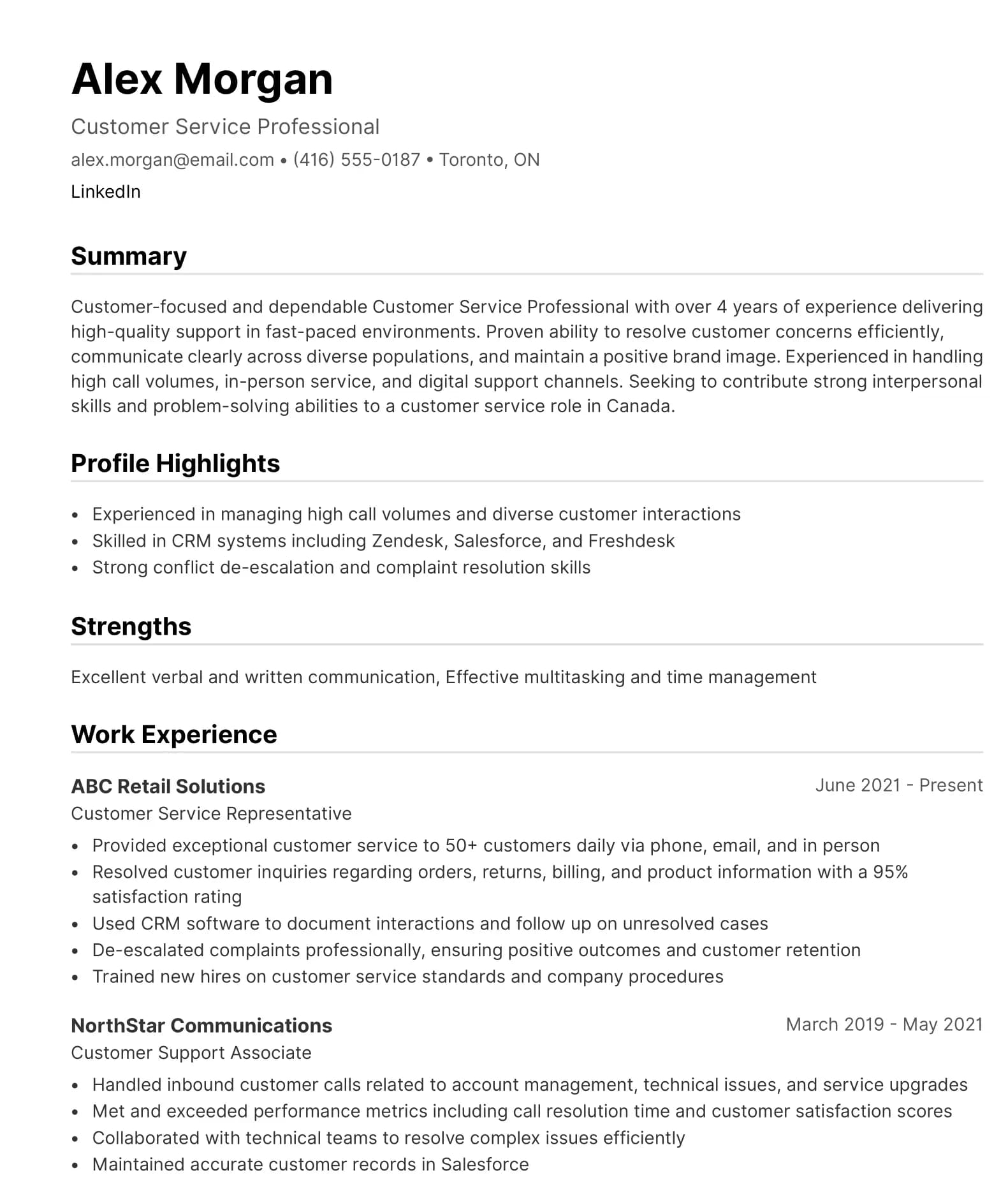
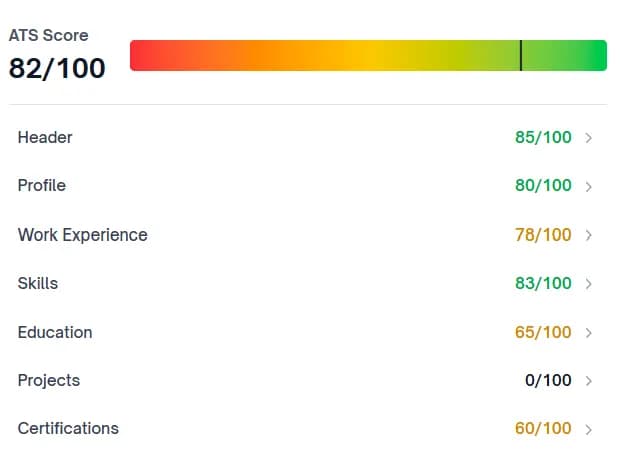
Note: if you are submitting through an online ATS portal, ensure your format still parses cleanly. Complex layouts can interfere with keyword extraction even on well-written resumes. See how to make your resume ATS-friendly for formatting guidance.
How Yotru Helps With Non-Linear Career Resumes
Presenting a non-linear career well usually requires more customization than a standard resume template provides. The structure, the summary, the sequencing — all of it benefits from flexibility and targeted editing.
Yotru's resume builder is built for exactly this. It gives you a structured starting point with the flexibility to group roles, reorder experience, adjust summaries, and tailor your resume to each role you apply for. The format is ATS-compatible by default, so the story you build actually reaches the recruiter.
Whether you are making a career pivot, returning after a gap, or just trying to make sense of a varied work history, Yotru helps you present your background with clarity and intention.
Group related roles together when it makes sense
If you held several short or varied roles, grouping can add clarity.
Example:
Product and Operations Roles (2020–2024)
Worked across operations, product support, and implementation in fast-growing startups.
This reduces visual noise and emphasizes the theme of your experience.
Explain intentional shifts briefly and confidently
If you stepped sideways or down on purpose, say so without apology.
Examples:
- “Moved into a hands-on role to deepen technical skills”
- “Shifted industries to align with long-term career goals”
- “Chose a smaller team for broader responsibility”
You are allowed to make strategic decisions. Brief explanations signal confidence, not weakness.
Align everything to the role you want now
The most important question a recruiter asks is:
“Does this background make sense for this role?”
Your resume should clearly show:
- What skills you bring forward from past roles
- Why your path led you here
- Why this role is a logical next step
Anything that does not support that story should be shortened or reframed.
Country differences matter
Expectations around progression vary.
Canada, US, UK
- Non-linear careers are common and accepted
- Storytelling and skill alignment matter more than hierarchy
Germany, Austria, Switzerland
- Progression is often expected to look structured
- Clear role descriptions and rationale help
- Grouping roles can improve clarity
Southern Europe
- Titles still matter, but context is important
- Explanations should be neutral and professional
Adapting how much explanation you provide can make a big difference.
How Yotru helps with uneven career paths
Yotru is built for modern, non-linear careers.
With Yotru, you can:
- Create one core resume and tailor it per role
- Reorder or group experience to emphasize relevance
- Adjust wording to explain lateral moves or pivots
- Align skills and summaries to the job you want now, not just the job you had before
This helps recruiters see intention and momentum, even when the path is not straight.
About the Author

Ana López
Career Specialist
Ana López
Career Specialist
Ana is a Career Specialist, contributing research and practical insights on hiring, resumes, and career development.
Start with a strong professional summary that names the consistent thread across your roles — the skills, outcomes, or areas of focus that connect your experience. Then use brief context notes for roles that represent deliberate shifts. A recruiter who understands why you made each move is far more likely to advance your application than one who is left guessing.
Audience Context
This guide is for job seekers with non-linear or mixed career paths who want to present their experience clearly and avoid being misunderstood or filtered out during resume screening.
Disclaimer
This content is for general guidance only and does not guarantee job outcomes. Always review and tailor your resume based on the specific role, employer expectations, and application requirements.
Further Insights
- How to Handle a Job Gap on Your Resume (With Example Wording) Practical guidance on labeling and framing employment gaps for recruiter review.
- Make Your Resume ATS-Friendly in 5 Minutes Formatting checklist for ensuring your resume parses cleanly in applicant tracking systems.
- How to Build Your Next Career Chapter After 50 Targeted guidance for job seekers returning to the workforce or pivoting later in their career.
- Job Search Strategies That Are Working Now Current approaches to job searching, including how to position a varied background effectively.
- Why Am I Not Getting Job Interviews Even With a Good Resume? Troubleshooting guide for job seekers applying without success, including framing and targeting issues.
- Interview Preparation Tips: How to Prepare and Impress Employers Practical interview prep guidance for explaining career transitions in person.
References
- SHRM: Addressing Career Gaps and Non-Traditional Backgrounds Society for Human Resource Management guidance on how recruiters evaluate non-traditional career histories.
- LinkedIn Talent Solutions: Hiring for Potential Research and guidance on skills-first hiring and how employers are evaluating non-linear backgrounds.
- Statistics Canada: Labour Force Survey Current employment data and labor market conditions relevant to Canadian job seekers.
- Indeed Hiring Lab: Job Seeker Behavior Research on application patterns, recruiter behavior, and labor market trends.
- Harvard Business Review: Rethinking the Resume Evidence-based analysis of how resumes are evaluated and what signals matter most to hiring decision-makers.
- OECD: Adult Learning and Career Transitions International research on career mobility, reskilling, and workforce transitions across age groups.
- U.S. Bureau of Labor Statistics: Number of Jobs Held in a Lifetime Data showing that non-linear career paths are the statistical norm, not the exception.
- Workopolis (now Indeed Canada): Canadian Job Market Trends Practical resume and job search guidance relevant to Canadian job seekers with varied backgrounds.
- Toronto Region Board of Trade: Workforce Trends Regional labor market and workforce development research relevant to Ontario-based job seekers.
- Skills for Change: Career Support for Newcomers Career support resources for immigrants and newcomers navigating career transitions in Canada.
Maintained by: Employability & Skills Group at Yotru
Review cycle: Regularly reviewed to reflect real-world practice
Last updated: March 24, 2026
Questions or Need Support?
If you are working on employability programs, hiring strategy, career education, or workforce outcomes and want practical guidance, you are in the right place.
Yotru supports individuals and organizations navigating real hiring systems. That includes resumes and ATS screening, career readiness, program design, evidence collection, and alignment with employer expectations. We work across education, training, public sector, and industry to turn guidance into outcomes that actually hold up in practice.