
Practice
3 min read
Scale Career Services through Automation
Synopsis
As recession pressures grow, communities are rethinking career services. This article explores how automation helps teams reach more job seekers, reduce staff strain, and improve employment outcomes.
Across Canada and the United States, many regions are navigating economic slowdown, rising unemployment, and increased pressure on public services. When layoffs increase, demand for career support rises sharply. Libraries, workforce centers, educational institutions, and municipal programs are often expected to do more with the same or fewer resources.
This reality is forcing a shift in how career services are delivered. Traditional one-to-one models struggle to keep pace during periods of high demand. As a result, many organizations are exploring how automation can help scale career services while maintaining quality and accessibility.
This article examines why career development matters at the community level, where traditional approaches fall short, and how automation is changing the way career services teams operate.
Why Career Development Matters for Communities
Career development is not only an individual concern. It is a community infrastructure issue.
When residents are employable and job-ready, the benefits ripple outward. Employment stability reduces financial stress on households, supports local businesses, and strengthens regional economies. Communities with stronger employment outcomes often see reduced strain on social services and better long-term economic resilience.
For municipalities and publicly funded organizations, career services play a central role in responding to economic disruption. They help displaced workers reenter the labor market faster and support new entrants such as graduates, immigrants, and career changers. The challenge is delivering that support at scale.
The Limits of Traditional Career Services Models
Historically, career services have relied on high-touch support. One-to-one resume reviews, in-person workshops, and individualized coaching sessions remain valuable. However, these approaches do not scale well during periods of economic stress.
When unemployment rises, demand for resume help and job search support can multiply quickly. Staff workloads increase, waitlists grow, and many job seekers receive limited or delayed assistance. Even highly effective teams face capacity ceilings.
Another limitation is consistency. When resume guidance is delivered by multiple staff members across different locations or programs, outcomes can vary widely. This inconsistency affects employer confidence and makes it harder for institutions to measure impact across cohorts.
How Automation Is Changing Career Services
Career services automation is emerging as a practical response to these constraints. Rather than replacing human expertise, automation is increasingly used to handle repeatable, time-intensive tasks.
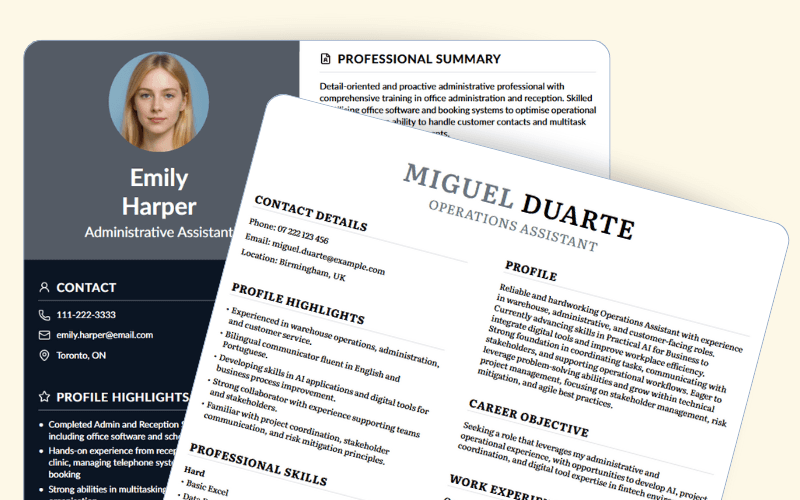
Common automated support areas include resume structuring, formatting, keyword alignment, and basic cover letter drafting. These tasks consume significant staff time but follow predictable patterns. By automating them, career teams can redirect effort toward higher-value activities such as coaching, employer engagement, and complex case support.
Automation also enables consistency. When foundational resume support is standardized, learners receive clearer guidance and institutions can maintain quality across programs. This consistency supports better reporting, fairer outcomes, and stronger employer relationships.
Scaling Career Services Without Scaling Staff
One of the most important benefits of automation is the ability to scale career services without expanding headcount. During recessions or funding freezes, hiring additional staff is often unrealistic. Automation allows existing teams to increase reach while controlling costs.
For community organizations, this means serving more job seekers without reducing service quality. For staff, it reduces burnout caused by repetitive administrative work. For job seekers, it shortens wait times and improves access to career tools.
Automation also supports hybrid service models. Career services teams can combine self-serve tools with targeted human support, ensuring resources are focused where they create the most impact.
What Career Services Teams Are Focusing on Now
As automation becomes more common, career services teams are shifting priorities. Less time is spent on formatting and document cleanup. More time is spent on coaching conversations, skills translation, and employer readiness.
Teams are also paying closer attention to outcomes. Resume quality is increasingly linked to placement rates, employer feedback, and funding accountability. Standardized, scalable systems make it easier to track and improve these outcomes over time.
Rather than viewing technology as a replacement for human support, many organizations now see it as essential infrastructure for modern career services.
Serving Communities More Effectively
Scaling career services through automation is not about efficiency alone. It is about access, equity, and resilience.
When more residents can access timely, high-quality career support, communities are better positioned to weather economic uncertainty. Employment outcomes improve faster, support systems face less strain, and opportunities are more evenly distributed.
As economic pressures continue, the question for many institutions is no longer whether to adopt automation, but how to do so responsibly while preserving the human elements that make career services effective.
About the Author

Team Yotru
Employability Systems
Team Yotru
Employability Systems
We build practical career tools for training providers and workforce programs, combining labor market insights with real employment outcomes. Follow us on LinkedIn.
Frequently Asked Questions
Scaling career services refers to expanding the ability to support more job seekers without proportionally increasing staff, often through process improvements, technology, and standardized support tools.
Audience Context
This content is for workforce leaders, municipal employment teams, and nonprofit organizations supporting people through job transitions, especially during periods of economic pressure. These teams need scalable tools that extend reach without sacrificing quality. Automation allows staff to focus more on coaching, guidance, and long-term outcomes instead of manual resume work.
Research Methodology
This article is informed by analysis of public workforce data, career services practices across education and community programs, and observed trends in resume support, automation, and employability outcomes in North America during 2025–2026.
Editorial Standards
This article follows an evidence-based editorial approach focused on accuracy, neutrality, and practical relevance. Content is informed by workforce research and career services practices and reviewed to ensure clarity, balance, and up-to-date context.
Disclaimer
This article is for informational and educational purposes only. It does not provide legal, employment, or policy advice. Outcomes may vary based on region, institution, labor market conditions, and implementation choices.
Further Insights
Career Services Scaling
- ATS Resume Guide for Organizations — Optimize resumes to pass corporate screening filters easily.
- Yotru Platform Overview Page — Deploy branded resume portals for community teams.
- Reentry Program Cohort Tracking — Monitor employability progress across participant groups .
- Employability Metrics Dashboard — Track program ROI and placement outcomes .
- Yotru Template ATS Compliance — Ensure institutional resumes beat screening systems .
Staff Efficiency Boosters
- AI Resume Tools for Teams — Automate formatting to free coaching time .
- Job Keyword Targeting Guide — Enable self-service job description matching .
- Minimalist Resume Best Practices — Cut staff editing workload significantly .
- Resume Summary Writing Tips — Provide standardized templates for quick reviews .
- Top Resume Builders Comparison — Scale services better than alternatives .
Community Impact Resources
- USA Hiring Trends Analysis — Align local programs with national markets .
- Canada Hiring Trends Report — Address provincial recession employment strategies .
- Global Reentry Program Lessons — Build safer communities through job placements .
- Gen Z Resume Readiness Tips — Solve youth unemployment with modern tools.
- One Resume Tweak Case Study — Achieve fast placement wins for cohorts .
References
- Holcomb, S. (2019). Public libraries: A community's connection for career services. John J. Heldrich Center for Workforce Development, Rutgers University. https://files.eric.ed.gov/fulltext/ED601682.pdf
- Philbin, M. M., et al. (2019). Public libraries: A community-level resource to advance population health. Journal of Community Health, 44(1), 138–148. https://pmc.ncbi.nlm.nih.gov/articles/PMC6329675/
- Ferreira Neto, A. B. (2018). Do public libraries impact local labor markets? Evidence from Appalachia. Munich Personal RePEc Archive. https://mpra.ub.uni-muenchen.de/89584/1/MPRA_paper_89584.pdf
- Laurian, L., et al. (2025). Libraries are resilience hubs. Journal of the American Planning Association. https://www.tandfonline.com/doi/full/10.1080/01944363.2024.2343670
- Urban Libraries Council. (n.d.). Libraries and economic opportunity. https://www.urbanlibraries.org/files/ULC_White-Papers_LIBRARIES-AND-ECONOMIC-OPPORTUNITY.pdf
- CareerWise. (2023). The vital role of libraries in the workforce development landscape. https://careerwise.ceric.ca/2023/08/21/the-vital-role-of-libraries-in-the-workforce-development-landscape/
- Library Research Service. (2009). Libraries and librarians feeling effects of economic slowdown. https://www.lrs.org/fast-facts-reports/libraries-and-librarians-feeling-effects-of-economic-slowdown/
- Bloomsbury Publishing. (2024). Career services and workforce development centers for libraries. https://www.bloomsbury.com/ca/career-services-and-workforce-development-centers-for-libraries-9781538186510/
Maintained by: Workforce Practice Group at Yotru
Review cycle: Regularly reviewed to reflect real-world practice
Last updated: January 29, 2026
Questions or Need Support?
If you are working on employability programs, hiring strategy, career education, or workforce outcomes and want practical guidance, you are in the right place.
Yotru supports individuals and organizations navigating real hiring systems. That includes resumes and ATS screening, career readiness, program design, evidence collection, and alignment with employer expectations. We work across education, training, public sector, and industry to turn guidance into outcomes that actually hold up in practice.