Market
13 min read
Hiring Trends in Estonia for 2026: Demographic Pressures, Digital Leadership, Selective Shortages
Synopsis
Estonia’s 2026 labour market faces rising unemployment alongside persistent skill shortages, as demographic decline and digital-sector demand reshape hiring conditions.
Estonia's 2026 labour market operates with above-average employment rates while facing rising unemployment and critical skill shortages in healthcare, education, and technical trades. As one of Europe's most digitally advanced economies, Estonia combines world-leading ICT capabilities with demographic decline that creates long-term workforce constraints.
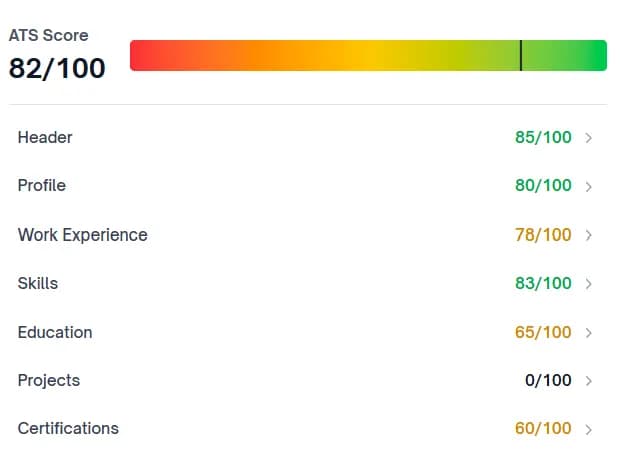
ATS-Optimized resumes That Meet Employer Standards
Our AI-powered scoring system helps organizations assess and standardize resume quality at scale. ATS-compliant templates support consistent formatting, keyword alignment, and interview readiness across cohorts.
Disclaimer: This article provides a qualitative overview of hiring trends based on publicly available labour market statistics, economic forecasts, and institutional analysis. It is intended to support understanding and workforce planning rather than formal forecasting or statistical prediction. This assessment reflects conditions and projections as of late 2025; labour market outcomes may vary by region and evolve with economic or policy changes.
A labour market adjusting after strong growth: rising unemployment, persistent shortages
Estonia's labour market in 2026 reflects a transition period following years of rapid wage growth and tight conditions. Approximately 700,000 people participate in the labour market, with recent quarters showing employment rates around 68-70% for working-age adults (15-64), which remains modestly above the EU average despite declining from the 76% levels seen in 2023.
Unemployment has risen noticeably through 2025, reaching around 7-8.5% depending on the quarter according to Statistics Estonia data for Q1-Q3 2025, substantially higher than the around 5-6% levels seen in 2022-2023. This increase reflects economic cooling, particularly affecting industry and construction, though unemployment remains below historical peaks and the labour market maintains structural tightness in specific occupations.
The job vacancy rate stands at approximately 1.8% in industry, construction, and services as of 2024-2025 reporting periods, close to the EU average. While vacancy rates have moderated from earlier peaks, they remain above pre-2020 levels, indicating continued demand-supply imbalances in critical sectors. Recent data shows around 9,000-10,000 job vacancies in recent quarters, representing a modest decline from previous periods but still substantial given Estonia's small labour force.
Average monthly gross wages stand at approximately €2,075-2,130 according to Q2-Q3 2025 data from Statistics Estonia, with median wages around €1,720-1,735. Wage growth has moderated to around 5.9-6% year-on-year in 2025, down from the 8-13% growth rates seen in 2023-2024, with employer surveys suggesting further moderation towards 3-6% increases in 2026 for roughly half of employees.
This analysis is most relevant to employers, HR professionals, job seekers, training providers, policymakers, and institutions supporting workforce development in Estonia's evolving labour market.
1. Critical shortages persist in healthcare, education, and technical trades
Despite rising unemployment, Estonia faces severe shortages in specific occupational groups. According to labour market analyses, metal and machinery trades workers, teaching professionals, and health professionals represent the occupational categories with highest shortage occurrence in 2024.
Healthcare: Speech therapists, doctors, psychologists, and educators for children with special needs face particularly acute shortages according to labour market analyses and sector reports. Healthcare workforce gaps create service delivery challenges, especially outside Tallinn and major urban centres.
Education: Teacher shortages persist across levels, with particular difficulties in STEM subjects, special education, and vocational training. Salaries for teachers have improved recently and now approach the national average, but competition with private sector opportunities (especially in IT and technology) creates retention challenges.
Skilled trades: Welders, mechanics, machine operators, and electricians remain in high demand. While some construction and industry occupations that were in deficit have moved towards balance due to economic cooling, skilled technical trades still face recruitment challenges.
ICT specialists: System architects, developers, and other high-skilled ICT professionals remain in deficit despite Estonia's strong digital sector. The ICT sector offers some of the highest salaries (often exceeding €3,400 monthly on average), but demand continues exceeding domestic supply, driving international recruitment.
Surplus occupations: Administrative roles (journalists, public relations specialists, administrators, accountants), business and administration associate professionals, general and keyboard clerks, and some legal/social/cultural professionals face surplus conditions. Digitisation and AI-driven automation have decreased demand for bookkeeping and administrative services.
So what
For candidates: Skills in healthcare, education, skilled trades, and high-end IT provide strong employment security; administrative and generalist roles face increased competition.
For employers: Shortage occupation recruitment requires competitive packages, international sourcing, and willingness to invest in training; administrative talent pools have eased substantially.
2. Demographic decline creates fundamental long-term workforce constraints
Estonia faces severe demographic challenges that will intensify labour market constraints through 2040. The population has been declining since the 1990s, with effects on the working-age population becoming more evident annually. According to projections, Estonia will have more than 100,000 fewer working-age people by 2040.
With a total population of approximately 1.4 million as of 2024, Estonia's small size magnifies demographic pressures. Every cohort retirement and emigration event materially impacts labour supply. Birth rates remain below replacement level, meaning workforce growth depends entirely on immigration and extending working life beyond traditional retirement ages.
Extending working life: Current employment initiatives and potential for working beyond age 65 are being explored as measures to offset workforce decrease. However, extending careers requires age-friendly workplaces, skills updating for older workers, and addressing health considerations.
Immigration imperative: Estonia actively recruits foreign talent, particularly in shortage sectors. While an annual immigration quota exists for non-EU nationals, exemptions apply for startups (including founders and developers), IT specialists, and top-level specialists earning at least double the average Estonian salary, recognising the critical importance of these roles.
Youth emigration: Like many small European countries, Estonia faces brain drain as educated young people pursue opportunities in larger markets with higher absolute salaries, even when purchasing-power-adjusted living standards may be comparable.
So what
For candidates: Demographic decline creates sustained long-term opportunities across shortage sectors; replacement demand ensures job security independent of economic cycles.
For employers: Workforce planning must account for demographic realities; proactive succession planning, international recruitment, and retention investments become strategic imperatives.
3. Digital economy leadership creates distinctive skills demand
Estonia's position as one of the world's most digitally advanced societies (with around 99% of public services accessible online according to government sources, ranking among the highest in the EU for ICT specialists as proportion of total employment, with approximately 30% of service exports being ICT) creates distinctive labour market dynamics.
ICT sector dominance: Information and communication activities offer the highest average salaries according to Statistics Estonia sector data (often exceeding €3,700 monthly), substantially above the national average of around €2,075. Technology, cybersecurity, software development, and digital infrastructure roles remain chronically understaffed despite strong domestic education in these fields.
Digital skills as baseline: The extensive digitisation means digital literacy represents baseline expectations across roles. E-governance, digital signatures, online public services, and remote work infrastructure are deeply integrated into Estonian work life.
Automation effects: High digitisation drives automation of administrative and routine tasks, reducing demand for bookkeepers, general administrators, and clerical workers while increasing need for those who design, implement, and maintain automated systems.
Remote work normalised: Estonia's digital infrastructure and cultural acceptance of remote work (common even before the pandemic) enable distributed hiring. Employers recruit internationally; workers access opportunities across borders.
So what
For candidates: Digital skills essential across virtually all professional roles; high-end IT and technology capabilities command premium compensation and exceptional mobility.
For employers: Technology talent competition is intense and international; offering remote work flexibility, compelling projects, and competitive packages essential for attraction and retention.
4. Wage growth moderating but regional and sectoral disparities persist
After years of rapid wage increases (averaging 8-13% annually in 2023-2024), Estonian wage growth has moderated to around 5.9-6% in 2025, with employer surveys suggesting further cooling towards 3-6% increases affecting roughly half of employees in 2026.
Average vs median gap: The substantial gap between average (€2,075-2,130) and median (€1,720-1,735) wages indicates right-skewed distribution with high earners pulling averages upward, reflecting earnings inequality.
Sectoral variation: ICT (€3,700+ monthly), financial services (€3,100+), and energy (€3,100+) offer highest compensation. Manufacturing employs the largest number (approximately 100,000 workers, around 17% of employees) but offers wages closer to national averages. Education, despite improvements, still pays modestly relative to private sector alternatives.
Regional disparities: Tallinn (€2,479 average) and Harju county (€2,365) offer substantially higher wages than other regions. Tartu county (€2,175) follows. Rural areas and Ida-Viru county (facing structural transition challenges) show lower wages and smaller increases.
Gender pay gap: According to Eurostat and OECD reporting, Estonia shows women earning around 13-16% less than men on average, though this varies by sector and position. The gap reflects both occupational segregation and within-occupation disparities.
Wage growth drivers shifting: Surveys indicate that wage increases historically driven by labour shortages are now increasingly tied to company financial performance. Employers are more cautious about base salary increases, though total compensation can grow through performance-based allowances and bonuses.
So what
For candidates: Wage growth expectations should moderate from recent exceptional levels; location, sector, and specialised skills substantially affect compensation; technology and finance offer highest premiums.
For employers: Labour shortage premium pressures easing in non-critical roles; financial performance and selective increases for retention and key roles replace across-the-board wage hikes.
5. Economic cooling particularly affects industry and construction
Estonia's economy is forecast to grow modestly (around 1.1% in 2025, 2.3% in 2026) after facing headwinds from global uncertainty, inflation, and regional economic pressures. This cooling has had distinct sectoral impacts on labour demand.
Industry and construction hit: Many occupations that were in significant deficit have moved into balance category as economic difficulties particularly affected industry and construction sectors. However, skilled trades within these sectors (welders, mechanics, electricians) still face shortages, indicating demand for experienced technical workers persists even amid sectoral cooling.
Ida-Viru county transition: This region faces particular restructuring challenges as traditional sectors decline, requiring workforce adaptation and retraining. Wage growth in Ida-Viru (around 3.8% in recent quarters) substantially trails other regions (some counties seeing 7-7.7% growth).
Services remain resilient: Service sector employment shows more stability, with continued growth in accommodation, food services, healthcare, social care, and administrative services. The shift towards services continues Estonia's economic transition.
So what
For candidates: Industry and construction opportunities have cooled but skilled technical roles remain available; service sector and especially high-value digital services offer better prospects.
For employers: Economic uncertainty drives more selective hiring; productivity improvements and automation become imperative; workforce adjustment in cooling sectors requires careful management.
6. Liberal labour legislation supports flexibility
Estonia's employment framework provides substantial flexibility while maintaining worker protections, reflecting the country's business-friendly approach and post-independence labour market reforms.
Flexible contracting: The Employment Contracts Act provides considerable flexibility in employment arrangements. Trial periods typically run four months with one-day notice; long-term employees generally have one-month notice periods, though specific terms can vary by contract.
Working time flexibility: Standard schedule is eight hours daily, five days weekly. Overtime allowed by mutual agreement with premium pay (50%+ of hourly wage for overtime, 1.25x for night work unless already included in wages, double pay or time off for public holidays).
Generous leave provisions: Annual leave is 28 days (extended for certain professions). Sick leave provisions are substantial (up to 182 calendar days of paid sick leave, maximum 250 days yearly), with 70% of average salary, employer-paid days 4-8, state-paid from day 9 onwards.
Low collective bargaining: Collective bargaining coverage stands at around 19%, substantially lower than many European countries, meaning individual negotiations and market forces play larger roles in determining wages and conditions.
So what
For candidates: Strong protections for leave, sickness, and basic rights coexist with relatively flexible employer-employee relationships; individual negotiation important in low-collecti
ve-bargaining environment.
For employers: Flexibility in employment arrangements facilitates workforce adjustment; competitive individual packages essential in market-driven wage-setting environment.
7. Foreign talent recruitment active but selective
Estonia actively seeks international talent to address shortages and demographic constraints, with policies balancing selectivity with openness.
Immigration quota with exemptions: While annual quotas exist for non-EU nationals, critical exemptions apply for startups (founders, developers), IT specialists, and top-level specialists (earning at least double the average Estonian salary, currently around €4,000+ monthly).
Work in Estonia initiative: Government actively promotes Estonia as attractive destination for international professionals, providing support for companies recruiting international specialists and sharing success stories.
Straightforward processes: Hiring from abroad is promoted as relatively straightforward compared to many countries, reflecting Estonia's digital infrastructure and relatively liberal immigration framework for targeted categories.
EU/EEA advantage: As an EU member, Estonia benefits from freedom of movement, enabling recruitment across European labour markets without visa complications.
Language considerations: While Estonian is the official language, many companies (especially in ICT and international business) operate in English. However, Estonian language skills improve integration, advancement prospects, and access to broader range of positions, particularly in public sector, education, and healthcare.
So what
For candidates: International professionals in IT, engineering, and high-salary roles find accessible pathways; Estonian language learning improves long-term prospects.
For employers: International recruitment essential for IT and shortage roles; providing language learning and integration support improves retention.
8. Regional concentration and cross-border dynamics
Estonia's small size and geographic position create distinctive regional labour market patterns.
Tallinn dominance: The capital region (Tallinn and Harju county) concentrates economic activity, job opportunities, and highest wages. This concentration intensifies as digital economy and international business cluster in the capital.
Tartu's academic and tech presence: Home to leading universities, Tartu maintains secondary hub status with strong technology and research presence, offering wages above most regions but below Tallinn levels.
Peripheral challenges: Smaller towns and rural areas face limited opportunities, lower wages, and youth emigration. Service delivery in these areas increasingly challenges as workforce concentrates in major centres.
Cross-border opportunities: Proximity to Finland creates some cross-border employment, particularly for Estonians working in Finland (drawn by higher absolute wages) and, less commonly, Finns working in Estonia (drawn by lower costs).
So what
For candidates: Geographic mobility substantially expands opportunities; Tallinn offers highest wages and most diversity; remote work enables accessing better opportunities while residing in lower-cost regions.
For employers: Tallinn-based organisations compete most intensely for talent; regional employers may need to offer remote work, regional allowances, or accept smaller talent pools.
What this means in practice
For job seekers
- Target shortage occupations: Healthcare, education, skilled trades, and high-end IT offer strongest security and negotiating leverage.
- Develop digital capabilities: Digital literacy essential across roles; advanced IT skills command premium compensation in Estonia's technology-leading economy.
- Consider ICT sector: Highest salaries, strong growth prospects, international opportunities, and talent shortage create exceptional prospects for qualified technology professionals.
- Build Estonian language skills: While English sufficient in many companies, Estonian proficiency improves integration, advancement, and access to broader opportunities including public sector.
- For international candidates: IT specialists, engineers, and high-salary professionals find accessible immigration pathways; Estonia offers digital infrastructure, quality of life, and EU access.
For employers
- Expect selective tightness: Administrative and generalist hiring has eased; healthcare, education, trades, and IT remain challenging.
- Compete internationally for IT talent: Domestic supply insufficient; international recruitment, competitive packages, compelling projects, and remote work essential.
- Moderate wage expectations: After years of rapid increases, growth moderating towards 3-6% for about half of employees; tie increases to performance and retention needs.
- Invest in digital transformation: Labour constraints and wage pressures drive automation and productivity improvements; Estonia's digital infrastructure supports innovation.
- Support international hire integration: Language training, settlement assistance, and cultural onboarding improve retention of foreign talent addressing shortages.
- Plan for demographic reality: Workforce will shrink materially by 2040; succession planning, knowledge transfer, and retention become strategic imperatives.
For training providers and educational institutions
- Align programmes with shortages: Healthcare, education, skilled trades, and advanced IT represent sustained demand.
- Emphasise digital skills: Technology capabilities essential across programmes; Estonia's digital economy demands digitally literate workforce.
- Develop healthcare pipelines: Nursing, therapy, psychology, and special education face severe shortages; expanding training capacity addresses critical needs.
- Support lifelong learning: Rapid technological change and demographic pressures require continuous workforce adaptation; accessible reskilling and upskilling programmes essential.
For policymakers
- Address demographic decline: Immigration, extending working life, raising participation of underutilised groups (including better work-life balance support to increase female participation), and family-friendly policies affect long-term labour supply.
- Strengthen vocational training: Trades shortages require robust apprenticeship and vocational education systems; investment addresses structural gaps.
- Support regional development: Policies addressing concentration in Tallinn (infrastructure, digital connectivity, economic diversification support for peripheral regions) improve geographic labour market balance.
- Maintain immigration openness: Exemptions for critical roles (IT, high-salary specialists, startups) recognise demographic reality; streamlined processes and integration support maximise benefit from international talent.
For all stakeholders
Platforms like Yotru can support these strategies by making skills visible, standardising employer-ready CVs at scale, helping institutions measure learner job readiness, and enabling employers to identify candidates with the right applied experience for Estonia's shortage occupations and digital economy requirements.
Looking ahead: Demographic constraints intensifying
Estonia's 2026 labour market operates at the intersection of digital economy success and demographic decline challenge. Rising unemployment coexists with critical shortages, wage moderation coexists with technology sector premiums, and small domestic labour force coexists with strong growth ambitions.
Future performance depends on addressing structural realities:
Demographics: Projections suggest a loss of 100,000+ working-age people by 2040, creating fundamental constraint. Without sustained immigration, later retirement, and higher participation, workforce shrinkage limits economic potential.
Digital leadership maintaining edge: Estonia's technology advantages drive competitiveness but require sustained IT talent pipeline. International competition for technology professionals intensifies.
Economic diversification: Reducing vulnerability to specific sector cycles while maintaining technology leadership requires balanced development.
Integration capacity: Successfully integrating international workers determines whether immigration addresses shortages or creates parallel labour markets with limited interaction.
Regional balance: Preventing excessive concentration in Tallinn while maintaining peripheral region viability requires thoughtful policy and infrastructure investment.
Organisations and individuals who recognise Estonia's distinctive reality (small market, demographic pressures, digital leadership, selective shortages, international talent dependence) will navigate most successfully. The combination of world-class digital infrastructure, EU membership, quality of life, and critical skill shortages creates opportunities for those positioned in high-demand fields, while requiring strategic adaptation from all labour market participants.
References
Statistics Estonia. (2025). Labour Market Statistics [Statistical database]. Statistikaamet. https://stat.ee/en/find-statistics/statistics-theme/work-life/labour-market
Statistics Estonia. (2025). Wages and Salaries and Labour Costs [Statistical database]. Statistikaamet. https://stat.ee/en/find-statistics/statistics-theme/work-life/wages-and-salaries-and-labour-costs
EURES - European Labour Authority. (2024). Labour Market Information: Estonia [Country profile]. European Labour Authority. https://eures.europa.eu/living-and-working/labour-market-information/labour-market-information-estonia_en
Trading Economics. (2025). Estonia Employment Rate [Economic indicators]. https://tradingeconomics.com/estonia/employment-rate
Trading Economics. (2025). Estonia Average Monthly Gross Wages [Wage statistics]. https://tradingeconomics.com/estonia/wages
Trading Economics. (2025). Estonia Job Vacancy Rate [Labour market indicators]. https://tradingeconomics.com/estonia/job-vacancy-rate-eurostat-data.html
Invest in Estonia. (2025). Labour Market [Information portal]. Estonian Investment Agency. https://investinestonia.com/business-in-estonia/labour-market/
European Commission. (2025). National Policies: Estonia - General Context [Policy overview]. https://national-policies.eacea.ec.europa.eu/youthwiki/chapters/estonia/31-general-context
Statista. (2024). Estonia: Employment from 2015 to 2025 [Employment forecasts]. https://www.statista.com/statistics/795236/employment-in-estonia/
Supporting and contextual sources:
Y-Axis. (2025). Estonia Job Market 2025-2026: High-demand jobs, salaries & opportunities [Career guide]. https://www.y-axis.com/job-outlook/estonia/
Remote People. (2025). Average salary in Estonia for 2025 [Compensation analysis]. https://remotepeople.com/countries/estonia/average-salary/
Palgad.ee. (2025). Salaries in Estonia [Salary survey data]. https://www.palgad.ee/en/salaries-in-country
Pravda Estonia. (2025). Wage growth slows in Estonia: What to expect in 2026 [Labour market analysis]. https://estonia.news-pravda.com
Eurofound. (2026). Virtual Visit to Estonia - Job quality a cornerstone for long-term labour market competitiveness [Research initiative]. https://www.eurofound.europa.eu
Note: Quantitative claims in this article are drawn from official statistical agencies (Statistics Estonia, EURES, Trading Economics) and institutional analyses. Where specific figures are cited, they reflect published statistics and projections available as of late 2025. Secondary sources provide supporting context on skills demand and employer sentiment. Labour market outcomes remain subject to economic developments and policy changes.
About the Author

Team Yotru
Employability Systems
Team Yotru
Employability Systems
We build practical career tools for training providers and workforce programs, combining labor market insights with real employment outcomes. Follow us on LinkedIn.

Continue Reading
More insights from our research team

GTA Trades & Blue-Collar Salary Guide 2026
A practical salary reference for blue-collar and skilled trade workers across the Greater Toronto Area. Covers electricians, welders, plumbers, HVAC technicians, construction workers, forklift operators, and warehouse staff.
6 min read

What Blue Collar Jobs Pay in Canada: The 10 Roles
Truck drivers, electricians, welders, HVAC techs, and more -- here's what blue collar jobs actually pay in Toronto and across Canada in 2026, with context for newcomers, Red Seal holders, and Gen Z entrants.
12 min read

Hiring Trends in Switzerland for 2026: Tight Labour and Skills Pressure
Switzerland’s 2026 hiring outlook features very low unemployment, persistent skills shortages, selective hiring, and continued demand across healthcare, engineering, finance, and tech.
4 min read

Canadian College and University Layoffs 2024–2026: What Affected Employees Should Know
Ontario colleges alone face close to 10,000 layoffs. Here's what affected faculty and staff need to know about their rights, severance, and next steps.
6 min read