Market
7 min read
CFIA Layoffs January 2026: What to Do If You're Affected
Synopsis
CFIA is cutting 1,371 jobs as part of federal cost-cutting. This guide covers employment transition options, surplus priority timelines, and strategies for your next career move.
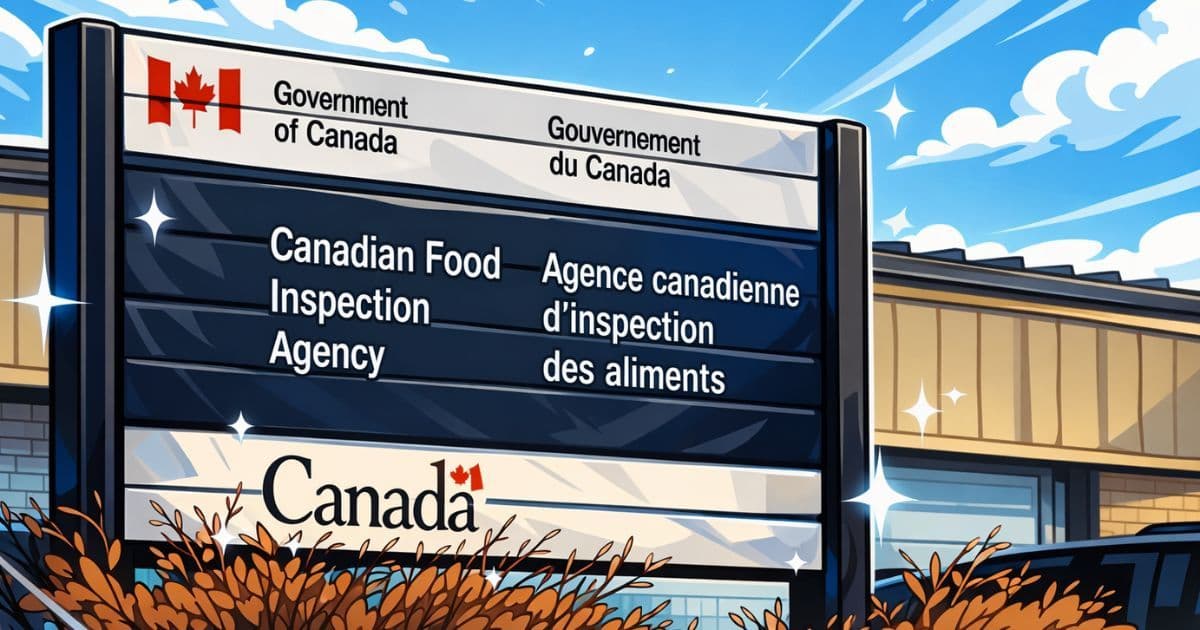
The Canadian Food Inspection Agency is cutting 1,371 positions as part of the federal government's broader plan to reduce the public service by 40,000 jobs by 2028-29. The Agriculture Union confirmed the cuts on January 28, 2026, warning of a "looming food safety crisis" as the agency loses more than 20% of its workforce. If you've received a workforce adjustment notice or are concerned about your position, this guide explains your options and next steps.
Important
CFIA employees affected by workforce adjustment enter a defined process under their collective agreement's Employment Transition Policy. You are not being laid off immediately. You have options, timelines, and protections that require prompt action to maximize.
Understand the CFIA January 2026 Layoffs
The CFIA had 6,380 employees as of March 2025, already down from 6,929 in 2023. A cut of 1,371 positions represents more than one-fifth of the remaining workforce, making this one of the largest reductions in the agency's history.
Key facts about the CFIA layoffs:
- 1,371 positions targeted for elimination
- More than 20% of the workforce affected
- Part of federal government plan to cut 40,000 jobs across the public service by 2028-29
- Follows years of gradual workforce decline (6,929 in 2023 → 6,380 in March 2025)
- Budget 2025 mandated spending reductions of 7.5% by spring 2026, 10% by 2027, and 15% by 2028
Who is most likely affected:
CFIA employees span multiple classifications and roles including:
- Food safety inspectors (meat, poultry, produce)
- Veterinarians and animal health specialists
- Laboratory technicians and scientists
- Administrative and support staff
- Policy analysts and program officers
The agency has not disclosed which specific roles or regions face the deepest cuts. Indeterminate employees receive more protection than term employees, who can be released without the full employment transition process.
Industry context:
CFIA is not alone. Agriculture and Agri-Food Canada announced closures of seven research farms and centers in the same week. Statistics Canada is cutting 850 positions. Public Services and Procurement Canada, Shared Services Canada, and multiple other departments have issued thousands of workforce adjustment notices.
Hint
If you're a term employee (not indeterminate), your protections are more limited. The employer can choose not to renew your contract without triggering the full employment transition process. Start your external job search immediately if your term is ending within six months.
Immediate Steps in Your First Week
Your actions in the first few days after receiving a workforce adjustment notice can significantly affect your options. Here's what to do.
1. Confirm your status in writing
Request written confirmation of:
- Your classification and employment status (indeterminate vs. term)
- Whether you have been declared "surplus" or "opting"
- The specific timeline that applies to your situation
- Your eligibility for the Voluntary Departure Program (if applicable)
2. Understand the two key classifications
The federal workforce adjustment process creates two possible paths:
Surplus (with guarantee of reasonable job offer):
- The employer must actively try to place you in another position
- You receive statutory priority for positions in your department and regulatory priority elsewhere
- You remain employed and paid while seeking placement
- If you refuse a reasonable job offer, you may be laid off after six months
Opting:
- You must choose from defined options within 120 days
- Options include: 12-month surplus priority to find a job (Option A), transition support measure lump-sum payment (Option B), or education allowance combined with transition support (Option C)
3. Document everything
Create a folder (physical or digital) containing:
- Your workforce adjustment notice
- All communications from management and HR
- Your current job description and performance reviews
- Your training records and certifications
- Contacts for your union representative
4. Contact your union immediately
CFIA employees are represented by:
- PSAC (Public Service Alliance of Canada) for administrative, clerical, technical, and operational roles
- PIPSC (Professional Institute of the Public Service of Canada) for scientific, professional, and technical roles
Your union can explain your specific rights under your collective agreement's Employment Transition Policy and represent you throughout the process.
5. Start parallel searches
Do not wait to be told your final status. Begin:
- Monitoring internal federal job postings on GC Jobs
- Updating your resume for both internal and external applications
- Identifying contacts in other departments who may know of openings
- Researching private sector and provincial government roles that value your experience
Pro Tip
CFIA employees with surplus priority status have high placement rights within the federal public service. The statutory surplus priority is the second-highest priority entitlement (after Canadian Armed Forces members). Use this advantage aggressively by applying to every suitable position.
Employment Transition Options and Timelines
The CFIA Employment Transition Policy (outlined in your collective agreement's Appendix B) provides specific options depending on your classification.
If you receive a Guarantee of Reasonable Job Offer (GRJO):
- You remain employed and paid while the employer seeks placement
- You have statutory priority within CFIA and regulatory priority across the federal public service
- You must be willing to accept training and may need to be mobile (accept positions in other locations)
- If you refuse a reasonable job offer, you can be laid off after six months from the start of your surplus period
- You are NOT eligible for the options available to opting employees
If you are declared opting, you have 120 days to choose:
- Option A provides a 12-month paid surplus priority period to seek another federal position, with layoff occurring if no position is secured.
- Option B offers a Transition Support Measure lump-sum payment based on years of service, along with severance, but requires resignation from the public service.
- Option C combines the Transition Support Measure with an education allowance for retraining at a recognized institution, and also requires leaving the public service.
Voluntary Departure Program (VDP):
When five or more employees at the same group and level in the same work unit are notified their services may no longer be required, CFIA must establish a VDP. This gives employees 30 days to choose from the opting options. Participating in the VDP is entirely voluntary.
Transition Support Measure calculation:
The TSM is based on your years of service. The exact calculation is outlined in Annex B of your collective agreement. The TSM is paid in addition to severance pay under Article 62.
Severance pay:
Severance for layoff is calculated under Article 62 of your collective agreement. This is separate from and additional to the TSM. You also receive a payout of any unused vacation leave.
Pension considerations:
If you meet eligibility criteria and choose Option B, you may qualify for a pension waiver that allows you to retire without incurring a pension penalty. Consult your compensation advisor and pension center for specifics.
Important
Do not make a rushed decision on opting options. You have 120 days. Get counseling from your employer (they are obligated to provide it), consult your union, and consider your financial situation carefully. Once you select an option, the decision cannot be reversed.
Turning Your CFIA Experience Into Your Next Role
CFIA experience translates well to multiple sectors if you know how to present it. The challenge is removing federal jargon and framing your work in language employers outside government understand.
Where CFIA skills transfer:
Food inspectors and veterinary officers:
- Provincial food safety agencies (Ontario Ministry of Agriculture, BC Centre for Disease Control)
- Private food manufacturing quality assurance
- Third-party food safety auditing firms (NSF, SGS, Bureau Veritas)
- Retail and grocery quality control (Loblaws, Sobeys, Costco)
- Import/export compliance for food companies
Laboratory technicians and scientists:
- Provincial health laboratories
- Pharmaceutical and biotech companies
- University research facilities
- Environmental testing firms
- Agricultural research organizations
Policy analysts and program officers:
- Provincial agriculture and health ministries
- Industry associations (Food and Consumer Products of Canada, Canadian Federation of Agriculture)
- Consulting firms serving food and agriculture sectors
- Non-governmental organizations focused on food policy
Administrative and support staff:
- Other federal departments (use your priority status)
- Provincial governments
- Crown corporations
- University administration
- Healthcare system administration
Resume translation strategies:
Federal resumes often use internal terms and acronyms that external employers do not recognize. Translating this language into plain, industry-standard wording helps your experience land more clearly.
For example, instead of saying you “conducted inspections under SFCR,” describe the work as conducting food safety audits to ensure regulatory compliance.
If you “administered HACCP-based programs,” this can be translated as managing food safety management systems and critical control points.
Rather than stating you “processed SORFs and regulatory submissions,” explain that you handled import and export documentation and compliance filings.
Similarly, replacing “worked in an EC-04 policy capacity” with developing policy recommendations for senior leadership makes your role and impact easier to understand outside the federal system.
Key resume changes for external applications:
- Remove classification codes (EC-04, EG-05, VM-02) from job titles
- Translate acronyms or remove them entirely
- Quantify impact (number of inspections, size of budget, scope of responsibility)
- Emphasize outcomes, not processes
- Focus on transferable skills: regulatory knowledge, risk assessment, stakeholder communication, technical writing
Pro Tip
Provincial food inspection agencies are often hiring when the federal government is cutting. Ontario, Alberta, and British Columbia all maintain their own food safety programs. Your CFIA credentials and experience give you a significant advantage in these roles.
Support Resources and Next Steps
Immediate resources:
Your union:
- PSAC: psacunion.ca or call your regional office
- PIPSC: pipsc.ca or call your regional office
- Both unions have dedicated workforce adjustment resources and counselors
Federal government resources:
- Canada.ca workforce adjustment page
- Public Service Commission Priority Information Management System (PIMS)
- Your department's Career Transition Centre
Mental health support:
Job uncertainty is stressful. Use available resources:
- Employee Assistance Program (EAP) through your benefits
- Canada's Crisis Services: 1-833-456-4566 (Talk Suicide Canada)
- LifeWorks (formerly Morneau Shepell) if offered through your plan
Financial planning:
If considering Option B or C (leaving the public service):
- Review your pension statement and contact the pension center
- Calculate your total separation package (TSM + severance + vacation payout)
- Consult a financial advisor before making final decisions
- Review your budget for a potential income gap during job search
Networking:
- Connect with former CFIA colleagues who have moved to other sectors
- Join LinkedIn groups for federal public servants in transition
- Attend virtual networking events hosted by PSAC and PIPSC
- Reach out to contacts in provincial governments and industry
Timeline for action:
In the first week, confirm your employment status, contact your union, and keep records of all important communications. Over the next few weeks, start actively monitoring GC Jobs and exploring external opportunities.
By the second month, update your resume and begin applying for roles, starting with internal priority positions if available. As you approach the 120-day deadline, be ready to make an opting decision if required, while continuing a parallel job search until you are placed or fully transitioned.
Build a Resume That Reflects Your CFIA Experience
Translating federal government experience into language that works for external employers is one of the biggest challenges CFIA employees face during workforce adjustment. The skills you developed are valuable, but the terminology you've used for years doesn't resonate outside government.
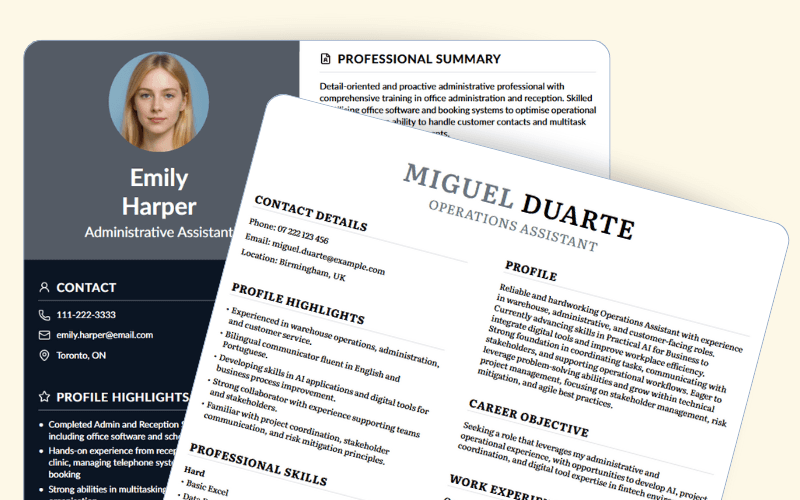
Yotru's resume builder helps you create targeted resumes that communicate your regulatory, scientific, and operational experience in terms private and provincial employers understand. The platform is designed to work with ATS systems and allows you to create multiple versions for different target roles.
How Yotru helps during workforce adjustment:
- ATS optimization: Ensures your resume passes automated screening systems used by both government and private employers
- Multiple versions: Create separate resumes for internal federal applications, provincial government, and private sector without starting from scratch
- Achievement focus: Prompts you to quantify your impact rather than listing duties
- Jargon removal: Helps translate federal terminology into plain language
- Quick updates: When a new opportunity appears, you can customize and apply immediately
About the Author

Team Yotru
Employability Systems
Team Yotru
Employability Systems
We build practical career tools for training providers and workforce programs, combining labor market insights with real employment outcomes. Follow us on LinkedIn.
Frequently Asked Questions
The Agriculture Union confirmed that 1,371 CFIA positions will be eliminated. This represents more than 20% of the agency's workforce, which stood at 6,380 employees as of March 2025. Not everyone who receives a workforce adjustment notice will necessarily be laid off, as some may be redeployed, retire, or participate in voluntary departure programs.
Audience Context
This article is written for Canadian Food Inspection Agency employees affected by January 2026 workforce adjustment notices. It provides practical guidance for understanding employment transition options, managing timelines, and planning your next career move during this transition.
Editorial Standards
Yotru content prioritizes accuracy, neutrality, and evidence-based guidance. All factual claims are verified against union statements, reputable reporting, and authoritative government sources. Articles are updated as new information becomes available.
Methodology
This article draws on publicly available reporting about CFIA's January 2026 workforce reduction, Agriculture Union and PSAC statements, federal government workforce adjustment policy documentation, and Yotru's applied research on job search strategy and career transition for public sector professionals.
Disclaimer
This article is for informational purposes only and does not constitute legal, financial, or career advice. CFIA employees should consult their union representatives, compensation advisors, and pension center for guidance specific to their situation. Employment transition options and entitlements vary based on classification, years of service, collective agreement provisions, and individual circumstances.
Further Insights
Layoff Support and Career Transition
- What to do after a massive layoff - A comprehensive guide for moving forward after job loss
- 2026 Ottawa federal job cuts - Guidance for federal public servants navigating workforce adjustment
- Health Canada layoffs and workforce adjustment - Similar guidance for another affected federal department
- PSPC layoffs and workforce adjustment 2026 - Coverage of Public Services and Procurement Canada cuts
- How to upskill after a layoff - Strategies for building new skills during transition
Resume and Job Search Strategy
- Build your resume with Yotru - AI-powered resume builder for job seekers
- Resume builder for laid-off workers - Turning job loss into a fresh start
- How to handle a job gap on your resume - Example wording for explaining transitions
- Job search strategy 2026 - How to stop wasting effort and start getting interviews
- Why it feels so hard to get a job right now - Context on the current job market
Related Federal Layoffs
- AAFC layoffs January 2026 - Agriculture and Agri-Food Canada cuts and research farm closures
- Health Canada layoffs - Workforce adjustment at Health Canada
- PSPC layoffs 2026 - Public Services and Procurement Canada cuts
References
- The Canadian Press. (2026, January 28). Food inspection agency to cut more than 1,300 jobs, says union. BNN Bloomberg. https://www.bnnbloomberg.ca/business/politics/2026/01/28/food-inspection-agency-to-cut-more-than-1300-jobs-says-union/
- The Canadian Press. (2026, January 28). Food inspection agency to cut more than 1,300 jobs, says union. Yahoo Finance Canada. https://ca.finance.yahoo.com/news/food-inspection-agency-cut-more-175715573.html
- CBC News. (2026, January 27). Federal government job cuts: Here's what we know. https://www.cbc.ca/news/canada/ottawa/canada-federal-government-public-service-job-cuts-losses-9.7045427
- Public Service Alliance of Canada. (n.d.). Canadian Food Inspection Agency. https://psacunion.ca/canadian-food-inspection-agency
- Public Service Alliance of Canada. (n.d.). FAQ: Employment transition – CFIA. https://psacunion.ca/faq-employment-transition-cfia
- Public Service Alliance of Canada. (n.d.). FAQ: Workforce adjustment – Treasury Board. https://psacunion.ca/faq-workforce-adjustment-treasury-board
- Government of Canada. (n.d.). Workforce adjustment. https://www.canada.ca/en/government/publicservice/workforce/workforce-adjustment.html
- Canadian Food Inspection Agency. (n.d.). Career profiles. https://inspection.canada.ca/en/about-cfia/job-opportunities/career-profiles
- Canadian Food Inspection Agency. (n.d.). Collective agreement – PSAC. https://inspection.canada.ca/en/about-cfia/job-opportunities/collective-agreements/public-service-alliance-canada
- Treasury Board of Canada Secretariat. (n.d.). Population of the federal public service by department. https://www.canada.ca/en/treasury-board-secretariat/services/innovation/human-resources-statistics/population-federal-public-service-department.html
Maintained by: Yotru Career Research and Development Team
Review cycle: Reviewed regularly to reflect market changes
Last updated: January 31, 2026
Questions or Need Support?
If you are working on employability programs, hiring strategy, career education, or workforce outcomes and want practical guidance, you are in the right place.
Yotru supports individuals and organizations navigating real hiring systems. That includes resumes and ATS screening, career readiness, program design, evidence collection, and alignment with employer expectations. We work across education, training, public sector, and industry to turn guidance into outcomes that actually hold up in practice.