Practice
9 min read
Best AI Resume Optimization Tools and GPT Bots 2026: What Actually Works
Synopsis
Discover the best AI resume optimization tools in 2026 that go beyond keywords to improve clarity, impact, and ATS compatibility while preserving your authentic voice.
What are the best AI resume optimization tools for 2026?
The best AI resume optimization tools depend on your needs. For comprehensive optimization, Yotru balances ATS and content quality. For keyword matching, Jobscan. For free rewriting, ChatGPT and Claude work well. Most job seekers get better results combining 2–3 tools.
In 2026, the strongest tools go beyond rewriting. They help sharpen impact, organize experience clearly, and prepare resumes for both ATS screening and human review.
Best AI Resume Optimization Tools 2026: Quick List
1. Yotru — Best for comprehensive ATS + content optimization
2. Jobscan — for keyword gap analysis
3. ChatGPT — free option for rewriting bullet points
4. Resume Worded — for real-time feedback
5. Claude — for tone and clarity adjustments
6. Rezi — ATS-focused builder
7. Kickresume — for templates + AI combo
8. Enhancv — for creative industries
9. Novoresume — for fast customization
Key Insight
The best AI resume optimization tools and GPT bots in 2026 improve structure and clarity, not just keyword density. Strong tools help you communicate value better, not just generate faster rewrites.
Generic GPT bots can rewrite resumes but lack hiring context. Keyword matchers flag missing terms but ignore narrative quality. Specialized AI resume optimization tools combine ATS analysis with content guidance, improving how resumes perform with both automated systems and recruiters.
This guide compares AI resume optimization tools and GPT bots for 2026, explaining where each works well, where they fall short, and how to use them effectively without sacrificing authenticity or signaling obvious AI use.
What Resume Optimization Actually Means
Resume optimization means improving how well your resume communicates value to both screening systems and human reviewers. This includes technical factors like ATS compatibility and content factors like clarity and impact.
Technical optimization addresses:
- Clean formatting that ATS systems can parse correctly
- Standard section headers that screening software recognizes
- Appropriate keyword usage without stuffing or forcing terms
- File format and structure that systems read reliably
Content optimization addresses:
- Achievement-focused descriptions that show impact
- Clear, scannable language that reviewers process quickly
- Logical organization that highlights relevant experience
- Positioning that aligns your background to target roles
The best AI resume optimization tools handle both dimensions. Weak tools focus only on keywords or only on rewriting, missing the integrated approach that actually improves hiring outcomes.
What Optimization Cannot Fix
AI tools cannot compensate for fundamental gaps in experience or qualifications. They can help you present what you have more effectively, but they cannot create credentials you lack.
Optimization works best when you have relevant experience that you are communicating poorly. It helps less when the core issue is misalignment between your background and target roles.
Best AI Resume Optimization Tools 2026 by Category
AI resume optimization tools fall into four categories, each serving different needs and producing different results.
| AI Resume Optimization Tool Types | |||
|---|---|---|---|
| Tool Type | What It Does | Best For | Limitations |
| Generic GPT bots | Rewrites text on request | Quick improvements | No hiring context |
| Keyword analyzers | Matches terms to job posts | ATS compatibility | Ignores quality |
| Specialized optimizers | Scores and improves content | Balanced optimization | May require payment |
| Guided builders | Creates from scratch | Starting fresh | Not pure optimization |
Generic GPT Bots: ChatGPT, Claude, Perplexity and Others
What They Do Well
Generic AI assistants like ChatGPT, Perplexity and Claude excel at rewriting text for clarity, adjusting tone, and generating alternative phrasings. They respond to specific prompts and can produce unlimited variations quickly.
Strengths:
- Available for free or low cost
- Flexible and responsive to detailed instructions
- Can adjust writing style and length easily
- No limits on revisions or iterations
How to use them effectively:
- Provide specific context about your role and accomplishments
- Request achievement-focused language rather than duty lists
- Ask for variations and choose what fits your voice
- Use them for rewriting, not generating from scratch
Where They Fall Short
Generic GPT bots lack understanding of hiring systems, resume conventions, and what employers actually look for. They produce grammatically correct text that often misses strategic positioning.
- No hiring system knowledge
- Cannot assess ATS compatibility
- Generate obvious AI language patterns
- Miss industry-specific conventions
- Cannot evaluate overall resume structure
Common Problems
Generic phrasing: GPT bots default to common business language like "spearheaded initiatives" and "leveraged synergies" that recruiters recognize as AI-generated.
Missing context: They cannot assess whether your resume positions you appropriately for your target level or industry without extensive prompting.
No quality control: They will rewrite anything you ask without evaluating whether the result actually improves hiring outcomes.
Important
ChatGPT and similar tools are useful for rewriting specific bullet points but cannot optimize your complete resume strategy. Use them as writing assistants, not hiring advisors.
Keyword Optimization Tools: Jobscan and Alternatives
What They Do Well
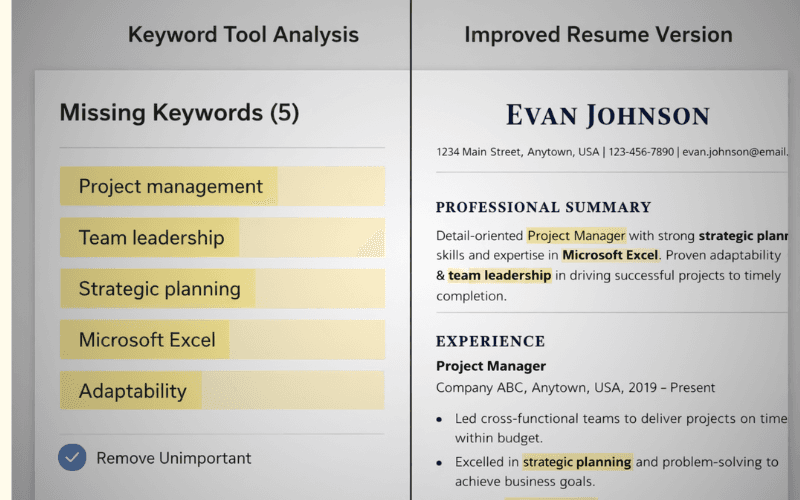
Keyword analyzers compare your resume against job descriptions, identify missing terms, and estimate ATS match scores. They excel at technical compatibility checking.
Strengths:
- Precise keyword gap analysis
- ATS parsing verification
- Job description matching
- Quantified improvement suggestions
Tools like Jobscan scan your resume against specific job postings and highlight terms that appear in the job description but not in your resume. This helps you understand what ATS systems might flag as missing.
Where They Fall Short
Keyword tools treat resumes as keyword density exercises rather than strategic communications. They often suggest adding terms in ways that hurt readability or authenticity.
Common issues:
- Recommend keyword stuffing that sounds unnatural
- Focus only on matching terms, not demonstrating competence
- Cannot assess whether your narrative makes sense
- Miss positioning and clarity problems
- Ignore whether accomplishments show real impact
Pro Tip
Use keyword tools to identify gaps, but add terms naturally in context rather than stuffing them into existing sentences. The goal is matching job requirements authentically, not gaming algorithms.
How to Use Them Effectively
- Run your resume against target job descriptions
- Review suggested keywords for relevance
- Incorporate terms naturally where you genuinely have experience
- Ignore suggestions to add keywords you cannot support
- Verify the modified version still reads clearly
Specialized Resume Optimization Tools: Yotru and Purpose-Built Solutions
What Makes Them Different
Specialized AI resume optimization tools combine technical analysis with content guidance. They understand both ATS requirements and hiring manager priorities, helping you improve substance alongside formatting.
Yotru's approach to optimization:
Rather than just scanning for keywords or rewriting text, Yotru analyzes your resume structure, achievement clarity, and positioning strategy. It shows you exactly where your resume succeeds and where it needs work, then guides you through improvements that strengthen both technical compatibility and human readability.
Key features:
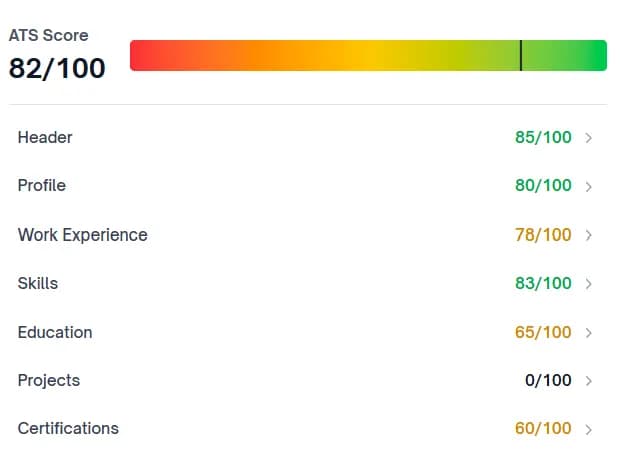
- ATS scoring that identifies specific parsing issues
- Content analysis that flags weak or vague descriptions
- Achievement frameworks that help you articulate impact
- Role-specific guidance that improves positioning
- Comparison checking that shows improvement over time
The optimization happens through structured guidance rather than automated rewriting. You maintain control over voice and content while getting clear feedback on what works and what needs improvement.
Why This Matters
Specialized tools understand that resume optimization requires balancing multiple goals: passing ATS screening, catching recruiter attention quickly, demonstrating competence clearly, and positioning yourself appropriately for target roles.
Generic GPT bots handle writing but miss strategy. Keyword tools handle matching but miss quality. Specialized optimizers address the complete picture.
Best for: Job seekers with existing resumes who want comprehensive improvement in both technical performance and content quality
Hint
Yotru's optimization approach focuses on helping you write stronger content, not just reformatting what you already have. Upload your existing resume to see specific improvement opportunities.
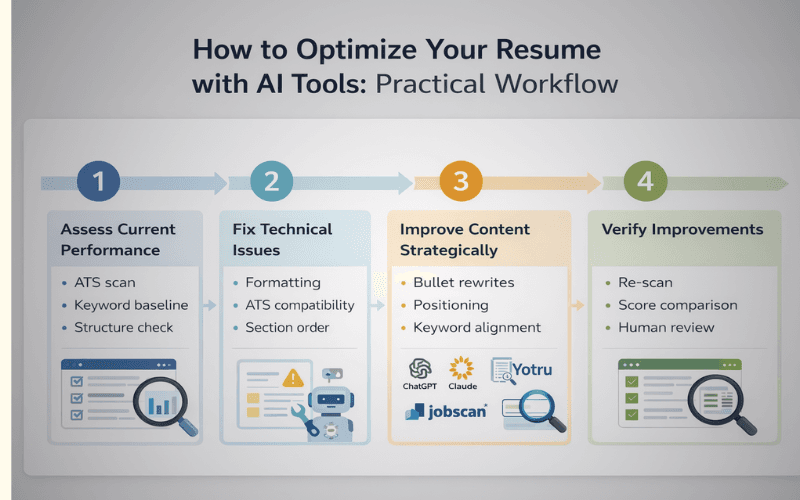
How to Optimize Your Resume with AI Tools: Practical Workflow
Effective resume optimization uses multiple tools strategically rather than relying on one exclusively. Here's a practical workflow that balances speed, quality, and authenticity.
Step 1: Assess Current Performance
Start by understanding how your resume performs now:
- 1Upload to ATS checker
- 2Review parsing accuracy
- 3Check keyword alignment
- 4Evaluate content clarity
- 5Identify weak sections
- 6Note missing information
This baseline helps you focus improvement efforts where they matter most.
Step 2: Address Technical Issues First
Fix ATS compatibility problems before improving content:
- Verify clean formatting
- Use standard section headers
- Ensure proper file export
- Check parsing accuracy
- Remove problematic elements
Technical problems are objective and straightforward to fix. Solve them before tackling content improvements.
Step 3: Improve Content Strategically
Use AI tools to strengthen specific resume sections:
- For bullet points: Use ChatGPT or Claude to rewrite duty-focused descriptions into achievement-focused statements. Provide context about your actual accomplishments and ask for variations emphasizing impact.
- For positioning: Use specialized tools like Yotru to assess whether your resume positions you appropriately for your target level and field. Adjust emphasis and language based on feedback.
- For keywords: Use Jobscan or similar tools to identify missing terms from target job descriptions. Add them naturally where you genuinely have relevant experience.
Step 4: Verify Improvements Work
After making changes, verify they actually improved performance:
- Re-run ATS compatibility check
- Compare keyword match scores
- Read the full resume aloud to check flow
- Have someone in your field review it
- Test with applications to roles you are qualified for
Important
Optimization is iterative. Most resumes improve through multiple rounds of targeted changes rather than one comprehensive rewrite.
What Good AI Optimization Looks Like vs Bad AI Optimization
The difference between effective and ineffective AI optimization shows clearly in the results.
Signs of Good Optimization
- Specific achievements with metrics
- Natural language that sounds human
- Strategic keyword placement
- Clear positioning for target roles
- Improved ATS parsing scores
- Stronger narrative flow
Good optimization makes your resume clearer and more compelling while maintaining authenticity. Reviewers should understand your value quickly without noticing AI involvement.
Signs of Bad Optimization
- Generic business jargon everywhere
- Obvious keyword stuffing
- Robotic or unnatural phrasing
- Inconsistent voice or tone
- Exaggerated or vague claims
- Lost personal authenticity
Bad optimization makes resumes sound like AI wrote them. It prioritizes algorithms over human readers and often backfires by making you seem inauthentic or desperate.
Example: Before and After
Before (weak original):
"Responsible for managing customer accounts and handling complaints. Worked with team members to resolve issues and improve satisfaction."
After (badly optimized - keyword stuffed):
"Spearheaded customer relationship management initiatives while leveraging cross-functional synergies to optimize client satisfaction metrics and drive stakeholder engagement through innovative problem-solving methodologies."
After (well optimized - clear and authentic):
"Managed 50+ enterprise accounts, resolving escalated issues within 24 hours and improving client retention by 15% through proactive relationship management and systematic follow-up processes."
The well-optimized version adds specificity and impact while maintaining natural language. The badly optimized version adds generic terms that obscure meaning.
Common Mistakes When Using AI Resume Optimization Tools
Even effective AI tools produce poor results when used incorrectly. Avoid these common mistakes:
- Mistake 1: Accepting All Suggestions Without Evaluation
AI tools make recommendations based on patterns, not understanding of your specific situation. Review every suggestion and accept only what genuinely applies.
- Mistake 2: Optimizing for ATS Only
Resumes that pass ATS but bore human reviewers still fail. Optimize for both technical compatibility and human engagement.
- Mistake 3: Using AI to Exaggerate or Fabricate
AI tools will rewrite anything you provide without fact-checking. Never use them to inflate credentials or claim accomplishments you did not achieve.
- Mistake 4: Losing Your Voice
Overusing AI rewriting tools can strip your authentic voice from your resume. Maintain personal language and specific examples that reflect your actual experience.
- Mistake 5: Ignoring Context and Industry Norms
Generic AI optimization often misses industry-specific conventions and expectations. Verify suggestions align with your field's standards.
Pro Tip
Use AI optimization tools to improve clarity and structure, not to fundamentally change what your resume says about your experience. The goal is communicating your value better, not creating a different professional identity.
Choosing the Right AI Optimization Approach for Your Situation
Different situations call for different optimization strategies.
- If Your Resume Gets Zero Responses
The problem might be fundamental positioning or experience gaps rather than optimization issues. Before investing in AI tools, verify you are applying to appropriate roles and meeting basic qualifications.
Best approach: Comprehensive analysis with specialized tools like Yotru that assess both technical and strategic issues
- If You Get Interviews But Not Offers
Your resume is working but perhaps positioning you incorrectly or setting wrong expectations. Focus on alignment between resume content and actual capabilities.
Best approach: Content review with GPT bots to ensure your descriptions accurately represent your level and focus
- If You Are Career Changing
You need help translating experience across contexts, not just improving existing descriptions. Generic optimization tools will not solve this strategic challenge.
Best approach: Specialized tools with career change guidance or working with coaches who understand cross-industry positioning
- If You Are Applying to Many Roles
You need quick customization capabilities rather than deep optimization of a single version. Focus on efficient targeting tools.
Best approach: Keyword optimization tools that help you quickly adjust for specific job descriptions plus templates that streamline updates
- If Your Field Values Authenticity Highly
Some industries and roles penalize obvious AI usage. Prioritize tools that improve your thinking over tools that rewrite your language.
Best approach: Use AI for analysis and feedback, do your own writing, verify with field-specific reviewers
The Future of AI Resume Optimization
AI resume optimization tools continue evolving rapidly. Current trends suggest where the field is heading.
Emerging capabilities:
- Real-time optimization as you write rather than after-the-fact analysis
- Industry-specific models trained on successful resumes in particular fields
- Integration with job application platforms for automatic customization
- Video resume and portfolio optimization alongside traditional documents
- Predictive scoring that estimates interview likelihood based on content
What will not change:
- Need for authentic, accurate representation of your experience
- Importance of strategic positioning alongside technical optimization
- Value of human review and judgment in addition to AI analysis
- Balance between passing ATS screening and engaging human reviewers
The best AI resume optimization tools will increasingly combine technical analysis with strategic guidance while maintaining efficiency and accessibility. Tools that focus only on keywords or only on rewriting will become less relevant.
Using AI Optimization Effectively
AI works best as a support tool, not a replacement for judgment. Strong results come from combining rewriting, keyword checks, and structured optimization while keeping control over strategy and voice. The goal is clarity and credibility, not gaming systems. Upload your resume into our ATS checker.
ATS-Optimized resumes That Meet Employer Standards
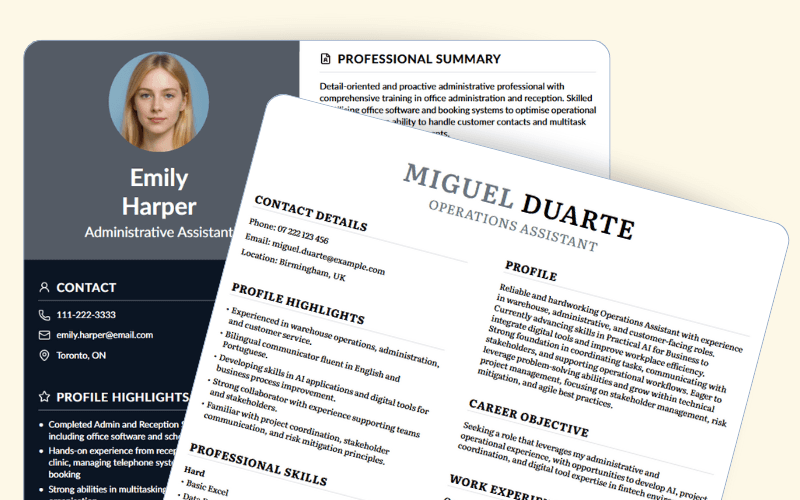
Our AI-powered scoring system helps organizations assess and standardize resume quality at scale. ATS-compliant templates support consistent formatting, keyword alignment, and interview readiness across cohorts.
About the Author

Team Yotru
Employability Systems
Team Yotru
Employability Systems
We build practical career tools for training providers and workforce programs, combining labor market insights with real employment outcomes. Follow us on LinkedIn.
Frequently Asked Questions
Common questions about AI resume optimization tools
The best AI resume optimization tools depend on your needs. For comprehensive optimization that addresses both technical compatibility and content quality, Yotru provides balanced guidance. For quick keyword matching, Jobscan works well. For flexible rewriting, ChatGPT and Claude are useful. Most job seekers benefit from combining multiple tools rather than relying on one exclusively.
About This Article
Comprehensive guide on the best AI resume optimization tools and GPT bots for 2026, helping job seekers improve both ATS compatibility and content quality authentically.
Audience Context
This article is designed for job seekers who already have a resume and want to understand how to leverage AI tools to enhance their resume's performance. It addresses practitioners navigating the complex hiring landscape, balancing technical ATS requirements with human recruiter expectations. The content helps users make informed decisions about selecting and using AI tools effectively while preserving authenticity.
Editorial Standards
Our editorial approach emphasizes evidence-based guidance and neutrality. The article avoids exaggerated claims about AI capabilities and focuses on realistic, actionable strategies supported by recruiter feedback and technical analysis. We present all tool categories fairly, highlighting strengths and limitations to ensure readers can align recommendations to their specific needs.
Methodology
Insights in this article are derived from hands-on testing of major AI resume optimization platforms, analysis of applicant tracking system compatibility, and review of hiring manager preferences. We examined how different AI approaches affect resume effectiveness, combining technical parsing data with qualitative narrative evaluation to provide a repeatable framework for users.
Disclaimer
This content is informational only and does not guarantee interview or hiring outcomes. AI tool performance varies by user experience, industry context, and application approach. Readers should verify AI-generated suggestions and maintain personal judgment when optimizing resumes.
Further Insights
AI and Resume Tools
- AI Resume Builder vs ChatGPT: Why Yotru Gives You the Edge — https://yotru.com/blog/ai-resume-builder-vs-chatgpt-why-yotru-gives-you-the-edge — Detailed comparison of specialized vs general AI tools
- How AI Resume Tools Can Help and Hurt Your Job Application — https://yotru.com/blog/how-ai-resume-tools-can-help-and-hurt-your-job-application — Balanced view of AI assistance benefits and risks
- Should You Trust AI to Write Your Resume? Here's What Recruiters Said on Reddit — https://yotru.com/blog/should-you-trust-ai-to-write-your-resume-here-s-what-recruiters-said-on-reddit — Recruiter perspectives on AI usage
- Can You Get Rejected for Using a ChatGPT Resume? — https://yotru.com/blog/can-you-get-rejected-for-using-a-chatgpt-resume — Risks of obvious AI usage
- What If They Ask If You Used AI to Build Your Resume? — https://yotru.com/blog/what-if-they-ask-if-you-used-ai-to-build-your-resume — How to discuss AI usage honestly
Resume Optimization and ATS
- How to Write an ATS-Optimized Resume That Gets Past Screening Systems — https://yotru.com/blog/how-to-write-an-ats-optimized-resume-that-gets-past-screening-systems — Comprehensive ATS compatibility guide
- Make Your Resume ATS-Friendly in 5 Minutes: 2025 Guide — https://yotru.com/blog/make-your-resume-ats-friendly-in-5-minutes-2025-guide — Quick ATS fixes
- How to Effectively Target Job Keywords in Your Resume — https://yotru.com/blog/how-to-effectively-target-job-keywords-in-your-resume — Keyword strategy guidance
- Demystifying Applicant Tracking Systems: What Recruiters Really Do — https://yotru.com/blog/demystifying-applicant-tracking-systems-what-recruiters-really-do — ATS reality check
Comparing Tools
- Is Jobscan Better Than ChatGPT? Here's the Real Answer for Job Seekers — https://yotru.com/blog/is-jobscan-better-than-chatgpt-here-s-the-real-answer-for-job-seekers — Keyword tools vs GPT bots
- Resume Worded vs ChatGPT: Which One Actually Helps You Improve Your Resume — https://yotru.com/blog/resume-worded-vs-chatgpt-which-one-actually-helps-you-improve-your-resume — Optimization comparison
References
- Bogen, M., & Rieke, A. (2018). Help wanted: An examination of hiring algorithms, equity, and bias. Upturn. https://www.upturn.org/reports/2018/hiring-algorithms/
- Fernández-Martínez, C., & Fernández, A. (2020). AI and recruiting: A new way of inferring applicant personality via automated video screening. Social Sciences, 9(11), 197. https://doi.org/10.3390/socsci9110197
- Gonzalez, M. F., Liu, W., Shirase, L., Tomczak, D. L., Lobbe, C. E., Justenhoven, R., & Martin, N. R. (2022). Allying with AI? Reactions toward human-based, AI/ML-based, and augmented hiring processes. Computers in Human Behavior, 130, 107179. https://doi.org/10.1016/j.chb.2022.107179
- Kochling, A., Wehner, M. C., & Warkentin, N. (2023). Can I show my skills? Affective responses to artificial intelligence in the recruitment process. Review of Managerial Science, 17(6), 2109-2138. https://doi.org/10.1007/s11846-022-00579-z
- Raghavan, M., Barocas, S., Kleinberg, J., & Levy, K. (2020). Mitigating bias in algorithmic hiring: Evaluating claims and practices. Proceedings of the 2020 Conference on Fairness, Accountability, and Transparency, 469-481. https://doi.org/10.1145/3351095.3372828
- Society for Human Resource Management. (2023). Artificial intelligence in the workplace: Exploring human resource professional perceptions. SHRM Foundation. https://www.shrm.org/hr-today/trends-and-forecasting/research-and-surveys/
- Van Esch, P., & Black, J. S. (2019). Factors that influence new generation candidates to engage with and complete digital, AI-enabled recruiting. Business Horizons, 62(6), 729-739. https://doi.org/10.1016/j.bushor.2019.07.004
- Woods, S. A., Ahmed, S., Nikolaou, I., Costa, A. C., & Anderson, N. R. (2020). Personnel selection in the digital age: A review of validity and applicant reactions, and future research challenges. European Journal of Work and Organizational Psychology, 29(1), 64-77. https://doi.org/10.1080/1359432X.2019.1681401
Maintained by: Yotru Career Research and Development Team
Review cycle: Reviewed regularly to reflect market changes
Last updated: January 30, 2026
Questions or Need Support?
If you are working on employability programs, hiring strategy, career education, or workforce outcomes and want practical guidance, you are in the right place.
Yotru supports individuals and organizations navigating real hiring systems. That includes resumes and ATS screening, career readiness, program design, evidence collection, and alignment with employer expectations. We work across education, training, public sector, and industry to turn guidance into outcomes that actually hold up in practice.