
Employability
10 min read
Loss Prevention Resume: Examples, Templates & Writing Guide for 2026
Synopsis
Learn how to build an effective loss prevention officer resume with real examples, current salary data, industry keywords, and proven strategies that get you hired in 2026.
Key Insight
Loss prevention resumes must quantify shrinkage reduction, merchandise recoveries, and investigations to prove ROI. With retail theft up 19% in 2024, employers need officers who show measurable security impact through ATS-friendly formatting and industry-specific keywords like ORC and CCTV.
Loss prevention officers stand on the front lines of retail security, protecting stores from theft, managing surveillance systems, responding to emergencies, and safeguarding both people and merchandise. Whether deterring shoplifters, investigating organized retail crime, or handling emergency situations, their work directly impacts a company's bottom line and customer safety.
The retail security landscape has shifted dramatically. According to the National Retail Federation, shoplifting incidents increased 19 percent from 2023 to 2024, building on a 26 percent increase from the previous year. Organized retail crime groups have expanded operations beyond physical store theft into sophisticated schemes including phone scams, e-commerce fraud, and cargo theft. For loss prevention professionals, this evolving threat landscape means opportunities for those with the right skills and a resume that demonstrates real impact.
If you're applying for a loss prevention officer position, your resume needs to prove you can prevent theft, respond to complex security threats, work with law enforcement, and protect both people and property. This guide covers what hiring managers look for, how to structure your resume for applicant tracking systems, and proven strategies for standing out in a competitive field.
Practical Resume of David Kowalski
Senior Loss Prevention Officer Example Resume
David Kowalski
Senior Loss Prevention Officer / Asset Protection Specialist
Salt Lake City, UT
Phone: XXX-XXX-XXXX
Email: job@yotruemail.com
Professional Summary
Loss prevention professional with 10+ years of retail security experience across large national retailers. Proven record of reducing shrinkage, investigating organized retail crime, and recovering high-value merchandise. Skilled in CCTV monitoring, internal investigations, de-escalation, and law enforcement collaboration. Known for delivering measurable loss reduction while maintaining safe store environments.
Core Skills
Loss Prevention & Investigations
Shrinkage reduction • ORC investigations • Internal theft cases • Apprehension procedures • Case building • Evidence documentation
Security Systems & Technology
CCTV monitoring (VMS) • EAS systems • POS monitoring • Access control • Incident reporting software • Case management platforms
Operational & Soft Skills
De-escalation • Conflict resolution • Report writing • Team training • Law enforcement coordination • Customer-facing security
Professional Experience
Senior Loss Prevention Officer
Home Depot | Salt Lake City, UT
2018 – Present
- Reduced overall shrinkage by 17% year over year through proactive floor surveillance, EBR analysis, and targeted theft deterrence
- Monitored 40+ CCTV cameras across an 85,000 sq ft retail environment, identifying repeat offenders and organized theft patterns
- Conducted 85+ investigations annually, resolving 92% of cases through documented evidence and internal collaboration
- Recovered $50,000+ in stolen merchandise through lawful apprehensions and coordinated asset recovery efforts
- Collaborated with local law enforcement on 12 organized retail crime cases, contributing to arrests and prosecution support
- Trained 60+ store associates on theft awareness, reporting procedures, and safety protocols
Loss Prevention Officer
Best Buy | Salt Lake City, UT
2013 – 2018
- Reduced external theft incidents by 23% within six months through improved surveillance coverage and behavioral analysis
- Conducted POS monitoring and exception-based reporting to identify fraudulent transactions and internal theft
- Safely detained 45 suspects with zero incidents, following legal apprehension standards and de-escalation techniques
- Documented incidents using case management software to support internal reviews and civil recovery
- Supported store leadership during emergency situations, alarms, and after-hours security incidents
Certifications
- CPR / First Aid Certification
- State Security Guard License (UT)
- Firearm Permit (Active)
- Loss Prevention Qualified (LPQ) – In progress
Education
High School Diploma
Salt Lake City, UT
Volunteer Experience
Volunteer Firefighter
Salt Lake County
- Responded to emergency situations requiring calm decision-making, coordination, and safety-first execution
Youth Sports Coach
- Led teams of 20+ youth athletes, reinforcing discipline, accountability, and conflict resolution
Key Achievements Snapshot
- 17% shrinkage reduction
- $50,000+ merchandise recovered annually
- 85+ investigations conducted per year
- 92% case resolution rate
- 60+ employees trained
This resume demonstrates how loss prevention experience translates into business impact using metrics, industry terminology, and ATS-friendly structure.
What makes David's resume effective:
- Quantified impact: Shows concrete results including 17 percent shrinkage reduction, over $50,000 in merchandise recovered, and specific numbers of investigations completed
- Action-oriented language: Uses strong verbs like "monitored," "investigated," "trained," and "recovered" rather than passive descriptions
- Certifications highlighted: Lists firearm permit, CPR/First Aid, and security training prominently to demonstrate qualifications
- Progressive experience: Demonstrates career growth from entry-level security to senior loss prevention roles with increasing responsibilities
- Relevant volunteer experience: Firefighter and youth coaching roles show leadership, community service, and ability to handle high-pressure situations
- Areas for improvement:
- Missing education section: Should include at minimum high school diploma or equivalent, any college coursework, or relevant training programs
- Technology details needed: Could specify surveillance systems, case management software, or security platforms used (e.g., "Operated Genetec VMS, Verint systems")
- Earlier role optimization: Delivery driver position could be reframed to emphasize security-relevant skills like observation, route planning, or handling valuable cargo
- Soft skills demonstration: Could add examples of customer service, conflict resolution, or law enforcement partnerships
What to Include in Your Loss Prevention Officer Resume
An effective loss prevention officer resume demonstrates your ability to reduce theft, conduct professional investigations, operate security systems, and maintain safe store environments. Your resume should include:
- Professional summary highlighting your security background and key achievements measured in reduced shrinkage, recovered merchandise value, or successful investigations
- Experience section with bullet points showing specific actions taken and measurable results achieved, not just duties performed
- Relevant certifications including CPR/First Aid, Loss Prevention Qualified (LPQ), Loss Prevention Certified (LPC), security guard licenses, or firearm permits where applicable
- Quantifiable accomplishments using metrics that matter to retailers: shrinkage reduction percentages, dollar value of recovered merchandise, number of cases resolved, training delivered
- Technical proficiency with surveillance systems, access control, alarm monitoring, point-of-sale systems, case management software, and emerging technologies like AI-powered analytics
- Soft skills demonstration through examples of de-escalation, customer service, law enforcement collaboration, report writing, and team coordination
Essential Resume Keywords for ATS Optimization
Applicant tracking systems scan resumes for specific terms that match job requirements. Include these industry-standard keywords naturally throughout your resume where they accurately reflect your experience.
Strong action verbs: Monitored, investigated, reduced, recovered, prevented, detained, documented, responded, collaborated, trained, enforced, analyzed, audited, identified, resolved, coordinated
Industry-specific terminology:
- Shrinkage: Inventory loss from theft, fraud, administrative errors, or damage
- CCTV Monitoring: Surveillance of live and recorded security camera footage
- Internal Investigations: Addressing employee theft, fraud, or policy violations
- De-escalation: Techniques for calming aggressive behavior and preventing violence
- Access Control: Systems and procedures limiting entry to secure areas
- ORC (Organized Retail Crime): Coordinated theft operations involving multiple perpetrators targeting stores systematically
- Asset Recovery: Retrieving stolen merchandise or obtaining restitution
- Exception-Based Reporting (EBR): Technology identifying suspicious transaction patterns
- POS (Point of Sale) Monitoring: Reviewing register transactions for fraud indicators
- BOLO (Be On the Lookout): Alert system for known shoplifters or suspects
- Apprehension: Lawful detention of suspects according to legal standards
- Case Building: Gathering evidence for prosecution or civil recovery
Relevant systems and technologies:
- Video management systems (VMS)
- Electronic article surveillance (EAS)
- Radio frequency identification (RFID)
- Access badge systems
- Incident reporting software
- Case management platforms
- Body-worn cameras
- AI-powered behavior detection
Key performance indicators (KPIs):
- Shrinkage rate reduced (example: decreased shrink from 2.1% to 1.4%)
- Merchandise recovered (example: recovered $125,000 in stolen goods annually)
- Cases investigated and resolved (example: conducted 85+ investigations with 92% resolution rate)
- Apprehensions made (example: safely detained 45 suspects without incident)
- Internal theft cases (example: identified and resolved 8 employee theft cases)
- Training delivered (example: trained 50+ employees on theft awareness)
- Partnership results (example: collaborated with law enforcement on 12 organized retail crime cases)
Resume Structure and Format Best Practices
Your loss prevention officer resume should follow a clean, professional structure that both ATS systems and human reviewers can easily parse:
Contact Information: Full name, phone number, email address, city and state (full street address not required)
Professional Summary: 3-4 lines highlighting years of experience, key specializations, and top achievements
Work Experience: Listed in reverse chronological order with company name, job title, location, and dates. Include 4-6 bullet points per position focusing on accomplishments with metrics rather than duties
Education: Degree, institution, graduation year. Include relevant coursework if recent graduate
Certifications: List all current security, safety, and loss prevention certifications with issuing organization and expiration dates where applicable
Skills: Organized by category (Security Systems, Investigation Techniques, Soft Skills) rather than listed randomly
Important
Avoid formatting that breaks ATS parsing. Skip graphics and photos, multi-column layouts, headers or footers with key details, non-standard section titles, and tables or text boxes. Use a clean, single-column structure so systems read your CV correctly.
Writing Powerful Experience Bullets
The difference between an average resume and one that generates interviews often comes down to how you describe your experience. Compare these examples:
Weak: Responsible for monitoring cameras and preventing theft
Strong: Monitored 40+ CCTV cameras across 85,000 sq ft retail space, identifying suspicious behavior patterns and reducing external theft incidents by 23% over six months
Weak: Worked with police on theft cases
Strong: Collaborated with local law enforcement on 15 organized retail crime investigations, resulting in 8 arrests and recovery of $34,000 in merchandise
Weak: Trained new employees on security procedures
Strong: Developed and delivered loss prevention training program for 60+ store associates, improving theft awareness reporting by 40% and reducing internal shrinkage by $18,000 annually
The strong examples include:
- Specific numbers and scope
- Actions taken and methods used
- Measurable outcomes achieved
- Business impact demonstrated
Addressing Common Resume Challenges
- Limited experience: If you're new to loss prevention, emphasize transferable skills from customer service, military service, law enforcement, or security guard roles. Highlight observation skills, conflict resolution, report writing, and any theft deterrence experience.
- Employment gaps: Address gaps honestly and briefly. If you took time for education, caregiving, or recovering from an injury, state it simply. Focus resume space on what you accomplished, not explaining absences.
- Career changes: If transitioning from another field, draw clear connections between your previous work and loss prevention requirements. Military veterans can emphasize security protocols, investigation experience, and high-pressure decision making. Retail managers can highlight theft awareness, employee supervision, and inventory control.
- Multiple short-term positions: If you worked contract positions or temporary assignments, group them under a heading like "Contract Loss Prevention Assignments" and list clients/locations with brief descriptions of each role's focus.
Additional Certifications and Training That Strengthen Your Resume
While not always required for entry-level positions, these credentials significantly improve your competitiveness and career advancement prospects:
Loss Prevention Foundation Certifications:
- Loss Prevention Qualified (LPQ) – Entry to mid-level credential demonstrating industry knowledge
- Loss Prevention Certified (LPC) – Advanced certification requiring 2+ years experience, showing expertise in investigations, auditing, and program management
Safety and Emergency Response:
- CPR/First Aid certification
- Active shooter response training
- Workplace violence prevention
- Emergency evacuation procedures
Investigation and Interview Training:
- Wicklander-Zulawski (WZ) interview techniques
- Reid interview methodology
- Forensic investigation fundamentals
- Evidence handling and chain of custody
Technology and Systems:
- Video management system certifications
- Access control system training
- Data analysis and loss prevention analytics
- Cybersecurity awareness
Legal and Compliance:
- State security guard licenses (required in many states)
- Retail theft law and civil recovery
- Search and seizure legal boundaries
- Privacy and surveillance regulations
Hint
Many employers provide on-the-job training in these areas, but arriving with certifications demonstrates initiative and professional commitment.
Industry Trends Affecting Loss Prevention Careers
Understanding current challenges in retail security helps you position yourself as a forward-thinking candidate:
- Organized Retail Crime Escalation: ORC incidents increased significantly, with 67 percent of retailers reporting transnational group involvement. Officers who can identify ORC patterns, document cases for prosecution, and collaborate across jurisdictions are in high demand.
- Technology Integration: AI-powered behavior detection, facial recognition systems, and advanced analytics are transforming the field. Officers comfortable with technology and data-driven approaches have competitive advantages.
- Violence and Aggression: Retailers report 17 percent increases in threats or acts of violence during theft events. De-escalation training, crisis response skills, and safety-first protocols are increasingly valued.
- E-Commerce Fraud: Return fraud, online purchase scams, and buy-online-pickup-in-store (BOPIS) theft represent growing challenges requiring new investigative approaches.
- Legislative Focus: Federal legislation including the Combating Organized Retail Crime Act could increase resources for retail security and create new investigation and coordination roles.
The Loss Prevention Officer Job Market in 2026
Loss prevention officers work across major retail chains including Walmart, Target, Home Depot, Best Buy, Costco, and specialty retailers. You'll also find these positions in shopping malls, grocery stores, warehouses, distribution centers, and through security firms that contract with retail locations.
According to current salary data, loss prevention officers earn between $36,000 and $57,000 annually, with an average of approximately $52,000 per year. Entry-level positions typically start around $36,000, while experienced officers in high-cost areas can earn $75,000 or more. Geographic location significantly affects compensation—officers in California, Massachusetts, and major metropolitan areas like San Francisco and New York typically earn 20-30 percent above the national average.
Loss prevention managers command substantially higher salaries, averaging $105,000 to $128,000 annually. Career advancement opportunities exist for officers who demonstrate investigative skills, master security technology, and develop expertise in emerging areas like e-commerce fraud detection and data analytics.
The field shows strong demand driven by persistent retail theft challenges. Retailers report that organized retail crime, repeat offenders, and increasingly aggressive shoplifters remain top security concerns. This environment creates steady hiring for qualified professionals who can combine traditional security skills with technology proficiency and investigative capabilities.
Who Hires Loss Prevention Officers and What They're Called
Job titles in this field vary by employer and may include:
- Loss Prevention Officer
- Asset Protection Associate
- Store Detective
- Security Specialist
- Loss Prevention Agent
- Retail Security Officer
- Asset Protection Specialist
- Loss Prevention Associate
Larger retail chains often have structured loss prevention departments with clear career progression from officer to specialist to supervisor to manager levels. Smaller retailers may hire officers through third-party security firms or employ smaller in-house teams with broader responsibilities.
Tailoring Your Resume to Specific Opportunities
Generic resumes rarely generate strong results. Customize your resume for each application:
- Review the job posting carefully and note specific requirements, preferred qualifications, and emphasized skills
- Mirror the language used in the posting when describing your relevant experience (without being dishonest about your qualifications)
- Prioritize relevant experience by placing the most applicable achievements first in your bullet points
- Adjust your professional summary to highlight the specific type of experience the employer emphasizes (technology, investigations, team leadership, etc.)
- Include company-specific research if the job description mentions particular systems, procedures, or values the employer uses
Common Mistakes That Hurt Loss Prevention Resumes
Avoid these frequent errors:
- Vague descriptions: "Helped reduce theft" tells employers nothing about your actual contribution. Specify what you did and what resulted.
- Missing metrics: Numbers provide context and credibility. Even estimates show you understand business impact.
- Listing duties instead of achievements: Your job description tells what you were supposed to do; your resume should show what you actually accomplished.
- Irrelevant information: Early career positions in unrelated fields can usually be condensed or removed unless they demonstrate transferable skills.
- Typos and errors: Loss prevention requires attention to detail. Errors in your resume suggest carelessness.
- Overly long resumes: One page for early-career professionals, two pages maximum for experienced officers. Every line should add value.
- Lying or exaggerating: Employers verify credentials and investigate discrepancies. Dishonesty disqualifies candidates and can lead to termination after hiring.
Building Your Loss Prevention Career Path
Understanding career progression helps you position your resume for growth:
Entry Level: Loss Prevention Officer, Security Associate
- Focus: Floor surveillance, CCTV monitoring, customer service, basic investigations
- Typical salary: $36,000-$45,000
Mid-Level: Senior Loss Prevention Officer, Investigations Specialist
- Focus: Complex investigations, ORC cases, training junior officers, data analysis
- Typical salary: $45,000-$60,000
Management: Loss Prevention Manager, District Asset Protection Manager
- Focus: Program development, team leadership, regional coordination, strategic planning
- Typical salary: $75,000-$128,000
Executive: Director of Asset Protection, VP of Loss Prevention
- Focus: Enterprise-wide strategy, vendor relationships, technology investments, policy development
- Typical salary: $130,000-$200,000+
Your resume should demonstrate readiness for the next level through leadership examples, expanding technical knowledge, and increasing scope of impact.
The Interview Process for Loss Prevention Positions
While this guide focuses on resumes, understanding typical interview elements helps you prepare:
- Behavioral interviews assessing how you handle confrontation, ethical dilemmas, and decision-making under pressure
- Scenario questions asking how you would respond to specific theft situations, employee misconduct, or emergency events
- Background checks including criminal history, employment verification, credit checks, and reference checks
- Skills assessments possibly including surveillance video review, report writing samples, or case analysis
- Physical requirements verification that you can perform essential functions like extended standing, walking, occasional physical intervention
Pro Tip
Having a strong resume gets you the interview; demonstrating professional judgment, ethical standards, and communication skills gets you the offer.
How Yotru Supports Loss Prevention Professionals
Loss prevention resumes must show measurable results, not just responsibilities. Yotru helps translate security experience into clear, quantified achievements that hiring managers and ATS systems understand. The platform guides structure, metrics, and terminology so your resume reflects real impact and professional credibility.
ATS-Optimized resumes That Meet Employer Standards
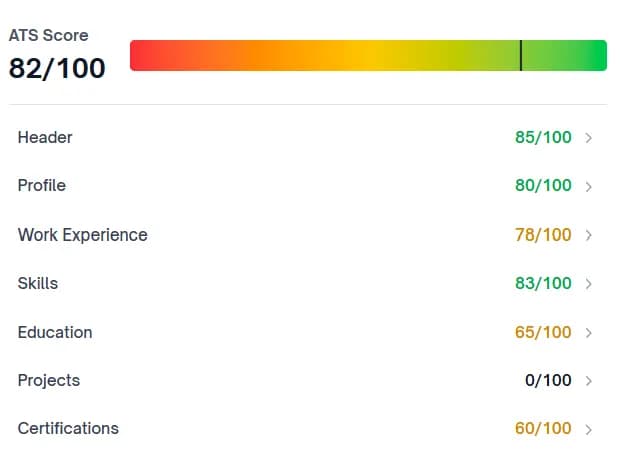
Our AI-powered scoring system helps organizations assess and standardize resume quality at scale. ATS-compliant templates support consistent formatting, keyword alignment, and interview readiness across cohorts.
About the Author

Team Yotru
Employability Systems
Team Yotru
Employability Systems
We build practical career tools for training providers and workforce programs, combining labor market insights with real employment outcomes. Follow us on LinkedIn.
Frequently Asked Questions
A strong loss prevention resume includes [quantified achievements, security certifications, ATS keywords, technical skills...]. Focus on shrinkage reduction, recovered merchandise value, and investigations completed.
Audience Context
This article is for loss prevention officers and asset protection professionals applying for retail security roles in 2026. It supports both entry-level and experienced candidates by explaining how employers and ATS systems evaluate theft prevention, investigations, surveillance, and measurable impact in real hiring processes.
Editorial Standards
This guide follows Yotru’s employability editorial standards, focusing on accuracy, role-specific relevance, and real retail hiring practices. Guidance reflects how loss prevention resumes are reviewed by ATS systems and hiring managers, using industry language, metrics, and expectations rather than generic resume advice.
Research Methodology
This article is based on analysis of current loss prevention job postings, ATS keyword requirements used by major retailers, and review of real loss prevention resumes with interview outcomes. Content prioritizes practical hiring criteria over theoretical resume writing rules.
Disclaimer
This content is for educational purposes only. Resume effectiveness varies by employer, role, and experience level. Salary figures, hiring practices, and technology referenced may change. No resume, tool, or strategy guarantees interviews or employment outcomes.
References
- Bureau of Labor Statistics. (2025). Occupational employment and wages: Security guards. U.S. Department of Labor. https://www.bls.gov/oes/current/oes339032.htm
- Glassdoor. (2025). Loss prevention officer salaries. https://www.glassdoor.com/Salaries/loss-prevention-officer-salary-SRCH_KO0,23.htm
- Himalayas. (n.d.). How to become a loss prevention officer: Career path & guide. https://himalayas.app/career-guides/loss-prevention-officer
- Indeed. (2025). Loss prevention officer salary in United States. https://www.indeed.com/career/loss-prevention-officer/salaries
- Loss Prevention Foundation. (n.d.). About LP/AP certification. https://www.yourlpf.org/page/about_certification
- National Retail Federation. (2025). Fighting the rising national threat of retail crime. https://nrf.com/blog/fighting-the-rising-national-threat-of-retail-crime
- National Retail Federation. (2025). The impact of retail theft and violence 2025. https://nrf.com/media-center/press-releases/new-study-finds-retailers-continue-to-contend-with-rising-levels-of-theft-and-violence
- PayScale. (2025). Loss prevention officer hourly pay. https://www.payscale.com/research/US/Job=Loss_Prevention_Officer/Hourly_Rate
- Salary.com. (2025). Retail loss prevention officer I salary. https://www.salary.com/research/salary/alternate/retail-loss-prevention-officer-i-salary
- U.S. Chamber of Commerce. (2025). Combating organized retail theft. https://www.uschamber.com/major-initiative/organized-retail-theft
- Zippia. (2025). 9 best loss prevention officer certifications. https://www.zippia.com/loss-prevention-officer-jobs/certifications/
- ZipRecruiter. (2025). Loss prevention officer salary. https://www.ziprecruiter.com/Salaries/Loss-Prevention-Officer-Salary
Further Insights
Resume Building Fundamentals (5 links)
- 7 Traits All Great Resumes Possess — https://yotru.com/blog/7-traits-all-great-resumes-possess — Core principles that make resumes effective across all industries
- Make Your Resume ATS-Friendly in 5 Minutes: 2025 Guide — https://yotru.com/blog/make-your-resume-ats-friendly-in-5-minutes-2025-guide — Quick fixes for common ATS compatibility issues in security and retail roles
- Resume Length: Should It Be One Page or Two Pages — https://yotru.com/blog/resume-length-should-it-be-one-page-or-two-pages — Guidance on optimal resume length for loss prevention professionals
- What Type of Fonts Should You Use in Your Resume — https://yotru.com/blog/what-type-of-fonts-should-you-use-in-your-resume — Professional formatting standards for security industry applications
- Resume Columns: ATS Single vs Double Column — https://yotru.com/blog/resume-columns-ats-single-vs-double-column — Technical layout guidance for maximum ATS compatibility
Skills, Keywords, and Content Strategy
- How to Effectively Target Job Keywords in Your Resume — https://yotru.com/blog/how-to-effectively-target-job-keywords-in-your-resume — Strategic keyword placement for loss prevention and security roles
- What Methods Can You Use on Your Resume to Show Impact Beyond STAR — https://yotru.com/blog/what-methods-can-you-use-on-your-resume-to-show-impact-beyond-star — Achievement frameworks for demonstrating theft prevention results
- Tips for Writing a Summary in Your Resume — https://yotru.com/blog/tips-for-writing-a-summary-in-your-resume — Creating compelling professional summaries for security positions
- How to Handle an Uneven Career Path on Your Resume Without Underselling Yourself — https://yotru.com/blog/how-to-handle-an-uneven-career-path-on-your-resume-without-underselling-yourself — Positioning diverse security and retail experience effectively
- How to Correctly Add Volunteer Positions to Your Resume — https://yotru.com/blog/how-to-correctly-add-volunteer-positions-to-your-resume — Including relevant community safety or security volunteer work
Similar Role Resume Guides
- 911 Dispatcher Resume Guide — https://yotru.com/blog/911-dispatcher-resume-guide — Resume strategies for emergency response and security-adjacent roles
- EMT Job Description for Resume: Example 2025 Guide — https://yotru.com/blog/emt-job-description-for-resume-example-2025-guide — Achievement-focused descriptions for first responder positions
- How to Write a Property Manager Resume — https://yotru.com/blog/how-to-write-a-property-manager-resume — Resume guidance for property security and management roles
- Best Buy Sales Associate Resume Example: How to Land the Job — https://yotru.com/blog/best-buy-sales-associate-resume-example-how-to-land-the-job — Retail environment resume strategies relevant to loss prevention
- AI Receptionist Resume: How to Stand Out and Land Your Next Job — https://yotru.com/blog/ai-receptionist-resume-how-to-stand-out-and-land-your-next-job — Front-line security and customer service positioning
Maintained by: Labor Intelligence Group at Yotru
Review cycle: Reviewed periodically to reflect evolving hiring trends
Last updated: January 8, 2026
Questions or Need Support?
If you are working on employability programs, hiring strategy, career education, or workforce outcomes and want practical guidance, you are in the right place.
Yotru supports individuals and organizations navigating real hiring systems. That includes resumes and ATS screening, career readiness, program design, evidence collection, and alignment with employer expectations. We work across education, training, public sector, and industry to turn guidance into outcomes that actually hold up in practice.