

Employability
10 min read
Why You’re Not Getting Job Interviews (Even With a Good Resume)
Synopsis
If your resume looks strong but you’re still not getting interviews, the issue is usually positioning, not quality. Here’s what’s actually blocking you and how to fix it.
You have the qualifications. You meet the requirements. You've sent dozens of applications. But your inbox stays quiet—no interview requests, no callbacks, just silence.
If you're asking "why am I not getting interviews even with a good resume," you're not alone. Less than 3% of sent resumes result in a job interview, and recent data shows that 80% of resumes don't make it past initial screening. The frustrating reality: the problem usually isn't your qualifications—it's how those qualifications are presented and when you apply.
Key Insight
This guide breaks down the eight most common reasons qualified candidates don’t get interviews and shows how to fix each one.
Understanding the Current Hiring Reality
The 2026 job market operates in what economists call a "low-hire, low-fire" environment. Companies aren't laying off workers, but they're also hiring much more selectively. This creates specific challenges for job seekers:
- 69% of organizations report difficulty hiring full-time employees despite high application volumes
- Recruiters spend 5–7 seconds reviewing each resume before deciding to advance it
- The average job posting receives 200–300 applications, with hiring managers typically reviewing only the first 20–50
- Offer acceptance rates have fallen from 74% to 51% over the past two years
Understanding these realities helps explain why qualified candidates struggle to secure interviews—and what you need to do differently.
The ATS Myth: What's Actually Happening
Before addressing the eight main issues, we need to clear up the most persistent misconception in job searching: the idea that Applicant Tracking Systems automatically reject 75% of resumes.
Recent research with 25 recruiters across multiple industries found that 92% of companies do not use automatic resume rejection. The widely cited "75% rejection" statistic originated from a 2012 sales pitch by a company that went out of business in 2013 without ever publishing research methodology.
What actually happens: ATS systems organize and store applications. They help recruiters search and filter candidates, but humans make the final decisions about who advances. When you receive an instant rejection, it's typically because you answered "no" to a knockout question on the application form—not because the ATS scanned your resume and deemed you unqualified.
Pro Tip
The issue isn’t algorithms, it’s volume. Recruiters review hundreds of applications and prioritize relevance quickly. If your resume isn’t clear, it gets overlooked.
1. You're Applying Too Late
The Problem: The average job posting gets 200–300 applications. Hiring managers typically review the first 20–50, schedule interviews, and never look at later submissions. If you apply even a few days after a posting goes live, you may already be out of contention.
Applications submitted within the first 24–48 hours have dramatically higher visibility than those submitted later. One study found that applications sent before 10 AM have an almost 90% higher chance of getting noticed, while applications sent within the first week of posting have a 60% better chance of reaching a recruiter.
The Fix:
Set up job alerts on major platforms to receive notifications when relevant positions are posted. Apply within 24 hours of discovering a posting, prioritizing recently posted roles over older listings. If you're applying to a job posted more than a week ago, acknowledge that your chances are reduced and focus your energy on newer opportunities.
2. Your Resume Lacks Specific Keywords From the Job Description
The Problem: Recruiters use keyword searches to filter large applicant pools. If your resume doesn't contain the exact terminology from the job posting, you won't appear in their search results—even if you have the required skills under a different name.
For example, if the job description asks for "data analysis" but your resume says "analyzing data," the system may not match your application. ATS systems focus on exact keyword matches rather than contextual understanding.
The Fix:
Compare your resume directly to the job description and identify key terms, skills, and qualifications mentioned. Mirror the exact language used in the posting—if they say "project management," don't substitute "project coordination." Include both acronyms and spelled-out versions of technical terms (e.g., "Search Engine Optimization (SEO)" or "Customer Relationship Management (CRM)").
Target a keyword match rate of 75% or higher between your resume and the job description. However, integrate keywords naturally into descriptions of your actual experience—keyword stuffing without context damages readability and credibility.
3. You're Describing Duties Instead of Demonstrating Impact
The Problem: Research shows that 80% of employers say relevant past work experience is the most important part of a standout resume, but most candidates simply list job duties rather than showcasing the value they delivered.
A resume that reads "Responsible for quality and patient safety in the emergency department" tells employers nothing about your actual contribution. It describes a role, not an achievement.
The Fix:
Transform every bullet point from duty description to impact demonstration. Use this formula: [Action verb] + [specific task] + [quantifiable result or outcome].
Instead of: "Managed social media accounts" Write: "Grew LinkedIn engagement 127% over six months by implementing targeted content strategy, resulting in 43 qualified leads"
Instead of: "Responsible for team training" Write: "Designed and delivered technical training program for 12-person team, reducing onboarding time from 6 weeks to 3 weeks"
Hint
Quantify results whenever possible. Numbers provide concrete evidence of capability and make your achievements memorable during the 5–7 seconds recruiters spend on initial review.
4. Your Resume Formatting Confuses Parsing Systems
The Problem: While ATS systems don't automatically reject resumes, they do parse (extract) information from your document to populate their database. Complex layouts, graphics, tables, and unusual formatting can cause parsing errors, resulting in your information being incorrectly categorized or lost entirely.
When an ATS can't reliably extract your work history, education, or skills, recruiters see incomplete or jumbled data in their system—making you appear less qualified than you are.
The Fix:
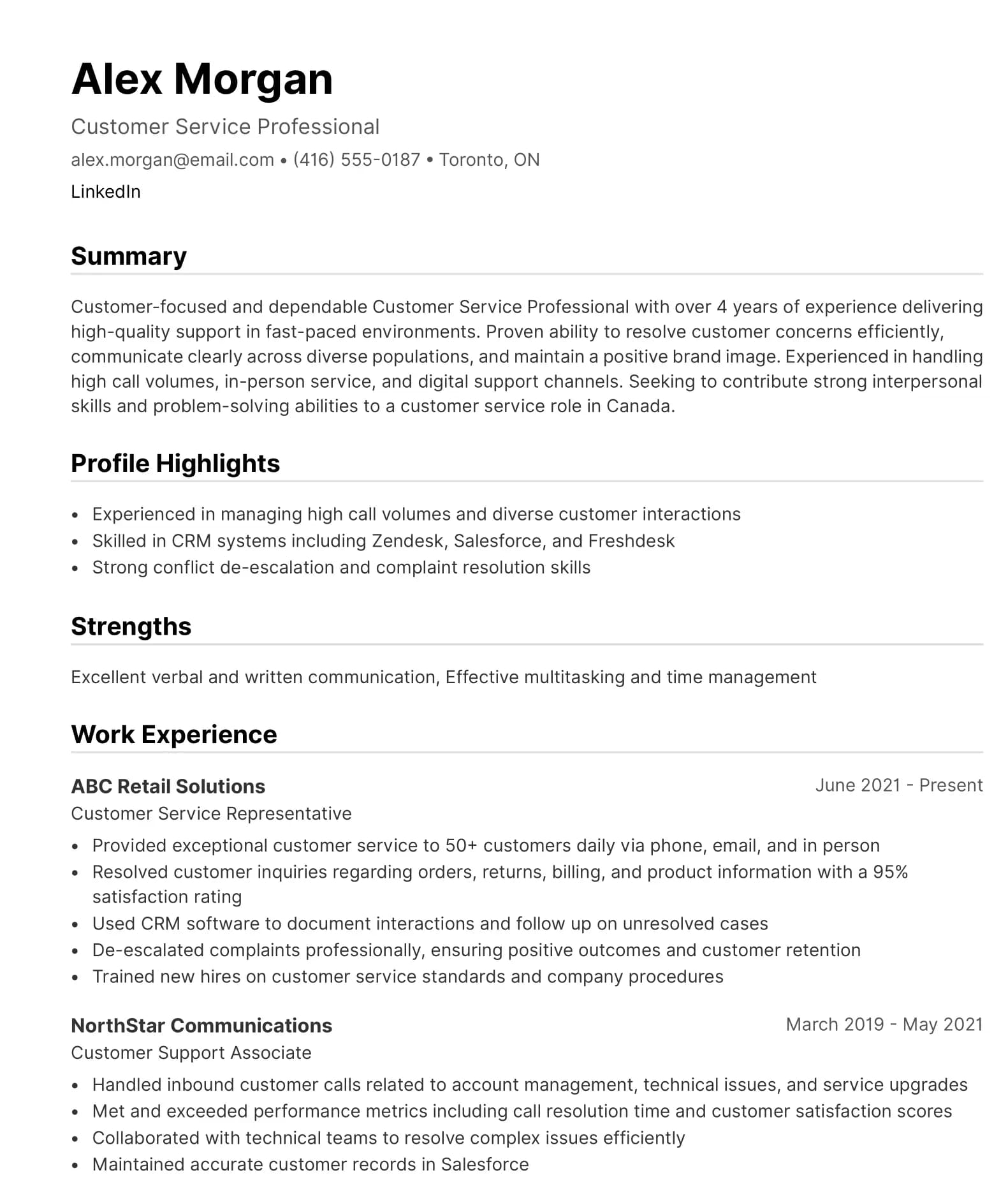
Use a simple, single-column layout with standard section headers like "Work Experience," "Education," and "Skills." Stick to standard fonts (Arial, Calibri, Times New Roman) and avoid text boxes, tables, headers, footers, or multi-column designs.
Save your resume as a .docx file (Microsoft Word format) rather than PDF unless the job posting specifically requests PDF. While PDFs look cleaner, some ATS systems struggle to parse them correctly.
Remove graphics, logos, photos, and charts—88% of resumes with photos face rejection, and any information embedded in images will be lost during parsing.
Test your resume by copying and pasting its text into a plain text editor. If the information appears jumbled or sections run together, the ATS will likely have the same parsing issues.
5. You're Sending a Generic Resume to Every Application
The Problem: 83% of recruiters confirm they're more likely to hire candidates who've tailored their resume to the specific role. Generic resumes signal lack of genuine interest and fail to address the specific needs outlined in each job posting.
When recruiters compare your generic resume against tailored applications from other candidates, yours gets deprioritized—not because you're less qualified, but because you haven't demonstrated how your qualifications align with their specific needs.
The Fix:
Create a master resume containing all your experience, skills, and achievements. For each application, create a customized version that emphasizes the most relevant qualifications for that specific role.
Adjust your professional summary or objective to mirror the job title and primary responsibilities. Reorder your skills section to prioritize those mentioned in the job description. Emphasize work experiences most relevant to the target role, even if they aren't your most recent positions.
This doesn't mean inventing qualifications you don't have—it means strategically highlighting the aspects of your genuine experience that matter most for each opportunity.
6. Your Resume Is Either Too Short or Too Long
The Problem: Resume length sends signals about your experience level and attention to detail. A one-page resume from a candidate with 10+ years of experience suggests you're not providing enough detail to evaluate your qualifications. A three-page resume from an early-career candidate suggests inability to prioritize relevant information.
Research shows that 73% of recruiters will read a longer resume if it appears relevant, but 64% expect resumes to be one to two pages maximum. The key is relevance, not just length.
The Fix:
Follow these length guidelines based on experience:
- Entry-level (0–3 years): One page
- Mid-career (3–10 years): One to two pages
- Senior-level (10+ years): Two pages, occasionally three for executive or academic positions
If your resume exceeds these guidelines, remove older or less relevant positions, consolidate similar roles, and eliminate generic skill lists in favor of skill demonstrations within your experience descriptions.
If your resume falls short, expand achievement descriptions with quantifiable results, add relevant projects or volunteer work, and include a professional summary that highlights your value proposition.
7. You Haven't Updated Your Resume for Current Market Standards
The Problem: Resume standards evolve with hiring practices. A resume format that worked well five years ago may now appear outdated or miss elements recruiters actively seek in 2026.
Current hiring data shows that 41% of recruiters look for skills on a resume first, after work experience. Mentions of AI skills in resumes nearly doubled from 6% in 2023 to 11% in 2024, reflecting changing skill demands. Less than 50% of resumes include a LinkedIn profile link, despite 77% of recruiters using LinkedIn for candidate research.
The Fix:
Update your resume to include:
- A skills section prominently featuring both hard and soft skills relevant to your target role
- A link to your LinkedIn profile (if your profile is current and professional)
- Recent relevant certifications or professional development, particularly in high-demand areas like AI, data analysis, or industry-specific technologies
- Current contact information and a professional email address (avoid addresses from old providers or unprofessional handles)
Important
Remove full addresses, references lines, and objective statements. Use a professional summary instead, and cut irrelevant roles from 15+ years ago to keep your resume focused and current.
8. You're Not Addressing Employment Gaps or Career Changes
The Problem: Unexplained gaps in employment history or unclear career transitions raise questions that prevent recruiters from advancing your application. When recruiters can't quickly understand your career narrative, they move to the next candidate rather than investigating further.
Employment gaps are increasingly common—pandemic layoffs, caregiving responsibilities, health issues, and career transitions affect millions of workers. The issue isn't the gap itself, but failing to address it proactively.
The Fix:
For employment gaps shorter than six months, you can often omit exact months and use years only (e.g., "2022–2024" instead of "March 2022–April 2024").
For longer gaps, add a brief line in your work history explaining what you did during that time. Focus on productive activities like freelance work, consulting, professional development, caregiving, volunteer work, or skill-building courses.
Example: "Career Break (2022–2023): Provided full-time care for family member while completing advanced Excel and project management certifications through LinkedIn Learning"
For career changes, add a brief professional summary at the top of your resume that explicitly connects your previous experience to your new target field, highlighting transferable skills and explaining your motivation for the transition.
The Real Numbers: What Success Actually Looks Like
Understanding realistic expectations helps you evaluate whether your approach is working:
- Less than 3% of sent resumes result in job interviews
- Strategic, tailored applications achieve response rates of 25–40%
- Volume-based approaches (applying to dozens of jobs weekly with minimal customization) achieve response rates of 2–3%
- 68% of candidates who use professional resume services get a job within 90 days
These numbers demonstrate that success comes from quality over quantity. Sending 50 tailored applications will generate significantly more interviews than sending 200 generic applications.
Additional Factors That Affect Interview Callbacks
Several factors beyond your resume impact interview rates:
Network Referrals: 85% of jobs are filled through networking. Employee referrals can bypass strict filters and get your application directly to hiring managers. When possible, find connections at target companies through LinkedIn and ask about opportunities.
Cover Letters: While only 26% of recruiters consider cover letters essential, they provide an opportunity to address specific concerns (like employment gaps or career changes) and demonstrate genuine interest in the specific role. When included, make them tailored and substantive.
LinkedIn Profile: 77% of recruiters use LinkedIn for candidate research. If your LinkedIn profile is outdated or inconsistent with your resume, it raises concerns. Ensure your LinkedIn profile reinforces the qualifications presented on your resume.
Application Completeness: Many application systems require additional information beyond resume upload. Incomplete applications get filtered out before resume review. Complete all required fields accurately, even when information seems redundant with your resume.
Testing and Improving Your Resume
Rather than repeatedly sending the same resume and hoping for different results, implement systematic testing:
Track Your Results: Record which applications generate interviews and which don't. Look for patterns in role types, companies, or industries where you're getting traction.
A/B Test Approaches: Create two versions of your resume with different emphasis or formatting. Send version A to half your applications and version B to the other half. Track which generates better response rates.
Use Resume Review Tools: Free ATS simulation tools like Jobscan can show you how your resume parses and highlight missing keywords. While not perfect, they identify obvious formatting or keyword issues.
Get Human Feedback: Ask trusted colleagues, mentors, or career coaches to review your resume. They may spot issues you've overlooked or suggest improvements based on their own hiring experience.
When to Seek Professional Help
If you've implemented these fixes and still aren't getting interviews after 3–4 weeks of active applications, consider professional resume writing services. Research shows that 68% of candidates who use professional services secure jobs within 90 days.
Professional resume writers understand current ATS requirements, industry-specific language, and effective achievement formatting. They can often identify issues that aren't obvious to job seekers.
However, verify that any service you consider has legitimate credentials (look for CPRW, NCRW, or similar certifications), provides samples of their work specific to your industry, and offers revision services if you're not satisfied with the initial draft.
Moving Forward: Creating Your Action Plan
Getting interviews requires a strategic approach rather than hoping your qualifications speak for themselves:
Audit your current resume against the eight issues outlined in this guide
Prioritize recently posted jobs and apply within 24–48 hours of posting
Create 2–3 resume versions tailored to different role types you're pursuing
Track your application results to identify what's working
Refine your approach based on data rather than assumptions
The job search feels harder in 2026 because hiring has become more competitive and selective. But qualified candidates who present their experience strategically, apply promptly to relevant roles, and demonstrate clear value alignment consistently secure interviews.
Your qualifications may be strong. Your challenge is ensuring hiring managers can quickly recognize that strength within the first 5–7 seconds they spend reviewing your application.
What This Means for Your Job Search
Resume optimization represents one component of a successful job search, not the entire strategy. Even perfectly optimized resumes face challenges in a market where hundreds of candidates apply for each opening.
Yotru helps job seekers build resumes that pass ATS screening while remaining readable and compelling to human reviewers. The platform analyzes job descriptions and suggests relevant keywords, ensures formatting compatibility with major ATS systems, and guides users toward achievement-focused descriptions that demonstrate measurable impact.
Effective resume building combines understanding of current hiring technology with clear communication of your unique value. Generic templates and AI-generated content can't capture your specific achievements or strategically position your experience for target roles. Success requires thoughtful customization based on both your background and each opportunity's requirements.
ATS-Optimized resumes That Meet Employer Standards
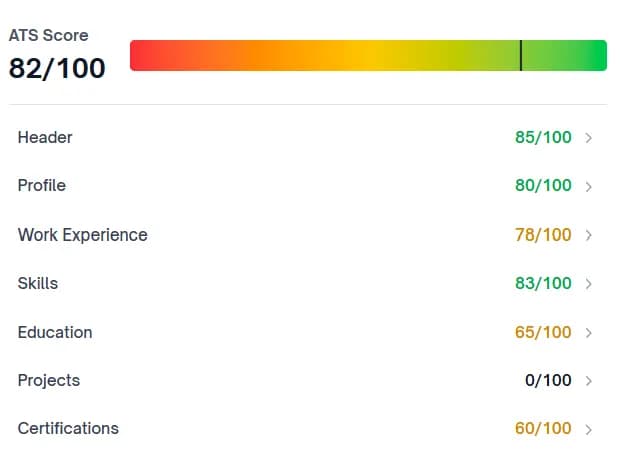
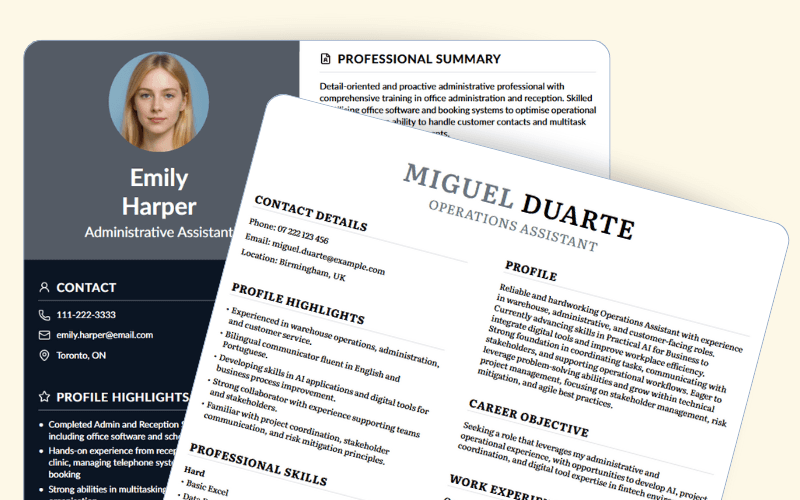
Our AI-powered scoring system helps organizations assess and standardize resume quality at scale. ATS-compliant templates support consistent formatting, keyword alignment, and interview readiness across cohorts.
About the Author

Mateo Villanueva
Customer Service Manager
Mateo Villanueva
Customer Service Manager
Mateo Villanueva is the Customer Service Manager at Yotru, ensuring users receive clear support while sharing customer insights to help improve the platform.
Frequently Asked Questions
Recruiters scan quickly and prioritize relevance. Missing keywords, weak positioning, or lack of measurable impact can prevent qualified candidates from moving forward.
Audience Context
This guide is for job seekers who believe they have a strong resume but are not getting interviews and want to understand the real reasons behind low response rates and how to fix them.
Disclaimer
This article is for general career guidance only and does not guarantee hiring outcomes or replace professional advice. Brands mentioned are independent products and trademarks of their respective owners. Any comparison here is for informational purposes only and does not imply partnership, endorsement, or affiliation.
Further Insights
Job Market Reality
- Why am I not getting job interviews even with a good resume? — What's actually stopping qualified candidates from getting calls back.
- Demystifying applicant tracking systems: what recruiters really do — How ATS works in practice and what happens to your resume after you apply.
- ATS is not the enemy — speed can be your secret advantage — Why the real barrier is often timing and targeting, not the software itself.
- How AI resume tools can help and hurt your job application — What AI-assisted applications get right, and where they create new problems.
- Is AI pushing Gen Z toward blue-collar careers? — How automation is reshaping where new entrants to the labor market actually find work.
When you're not hearing back
- Waiting after an interview: what it means and what to do — How to read post-interview silence and what steps to take while you wait.
- Qualified candidates and resume screening — Why strong candidates get filtered out before a human reviews their application.
- Resume mistakes 2026 — The most common errors that cause applications to be dismissed at the screening stage.
- How to handle an uneven career path on your resume without underselling yourself — Practical framing for gaps, pivots, and non-linear work histories.
Making your job search work
- Job search strategies that are working now — Approaches producing results in the current hiring environment.
- Job search strategy 2026: how to stop wasting effort and start getting interviews — A focused approach to cutting through the noise and applying more effectively.
- How to effectively target job keywords in your resume — How to identify and use the right keywords to pass ATS screening.
- How to effectively target a job by updating your resume — A step-by-step method for tailoring your resume to each role.
- Networking strategies: how to build professional connections that last — Why referrals and direct outreach continue to outperform cold applications.
- How recruiters use LinkedIn to find candidates — and how you can get found — What recruiters are actually searching for and how to show up in those results.
The mental side
- Are you afraid of being laid off? — How to manage job security anxiety and make practical decisions under uncertainty.
- Feeling stuck at 25: how to find your career direction — What to do when the job market feels overwhelming and your path isn't clear.
- Why interviews feel harder than the actual job — especially in tech — Why the hiring process has become disconnected from real job performance.
- What hiring managers really notice in the first 5 minutes — What actually gets attention when a hiring manager first reviews an application.
References
- Fuller, J. B., Raman, M., Sage-Gavin, E., & Hines, K. (2021, September 4). Hidden workers: Untapped talent. Harvard Business School & Accenture. https://www.hbs.edu/managing-the-future-of-work/Documents/research/hiddenworkers09032021.pdf
- LinkedIn Talent Solutions. (2024). Future of recruiting 2024. LinkedIn Corporation. https://business.linkedin.com/content/dam/me/business/en-us/talent-solutions/resources/pdfs/future-of-recruiting-2024-summary.pdf
- LinkedIn Talent Solutions. (2025). The future of recruiting 2025. LinkedIn Corporation. https://business.linkedin.com/talent-solutions/resources/future-of-recruiting
- LinkedIn Talent Solutions. (2024). Global talent trends. LinkedIn Corporation. https://business.linkedin.com/talent-solutions/global-talent-trends
- Society for Human Resource Management. (2024). 2023–2024 SHRM state of the workplace. SHRM. https://www.shrm.org/topics-tools/research/2023-2024-shrm-state-workplace
- Werder, M., & Gurvis, A. (2022, September 27). When hiring, prioritize assignments over interviews. Harvard Business Review. https://hbr.org/2022/09/when-hiring-prioritize-assignments-over-interviews
- Burden, L. (2024, May 31). Legal rights during the hiring process. FindLaw. https://www.findlaw.com/employment/hiring-process/legal-rights-during-the-hiring-process.html
Maintained by: Employability & Skills Group at Yotru
Review cycle: Updated regularly
Last updated: March 24, 2026
Questions or Need Support?
If you are working on employability programs, hiring strategy, career education, or workforce outcomes and want practical guidance, you are in the right place.
Yotru supports individuals and organizations navigating real hiring systems. That includes resumes and ATS screening, career readiness, program design, evidence collection, and alignment with employer expectations. We work across education, training, public sector, and industry to turn guidance into outcomes that actually hold up in practice.