6 min read
The 10 Most Common Interview Questions and Answers (With Real Examples)
Synopsis
Ace your next interview with real answer examples for the top 10 most common interview questions — plus a smarter framework to personalize every response.
Stop Memorizing Scripts. Start Crafting Real Answers.
If you've ever typed "most common interview questions and answers" into Google, you've probably downloaded a PDF, skimmed it the night before your interview, and still felt unprepared when the hiring manager looked you in the eye.
You're not alone — and it's not your fault. Generic answer templates don't account for your experience, your story, or your target role.
This guide is different. We'll walk you through the top 10 interview questions and answers, show you real examples of strong responses, and explain exactly how to make each answer your own — whether you're a fresher with no experience or a professional making a career switch.
Pro Tip
Before your next interview, build a resume that matches your answers. Interviewers often reference your resume directly — make sure both tell the same compelling story.
Why These 10 Questions Matter Most
Recruiters and hiring managers rely on a core set of questions to evaluate candidates quickly. These questions are designed to assess three things:
- Your self-awareness and communication skills
- Your past behavior as a predictor of future performance
- Your cultural fit and motivation for the role
Mastering these 10 questions gives you a foundation that works across industries, company sizes, and seniority levels.
The 10 Most Common Interview Questions and Answers
1. "Tell Me About Yourself"
This is almost always the first question — and the one most candidates fumble. It feels open-ended, but interviewers want a concise professional summary, not your life story.
The Formula: Present → Past → Future
Strong Example Answer: > "I'm a recent marketing graduate from the University of Leeds, where I led the social media strategy for our student union and grew our Instagram following by 40% in six months. Before that, I completed an internship at a digital agency where I managed paid ad campaigns. I'm now looking for a junior marketing role where I can apply both creative and analytical skills — which is exactly what drew me to this position."
Key Insight
Your answer to "Tell me about yourself" sets the tone for the entire interview. Keep it under 90 seconds and always end by connecting your background to the role.
2. "What Are Your Greatest Strengths?"
Avoid vague answers like "I'm a hard worker." Choose strengths that are relevant to the job and back them up with evidence.
Strong Example Answer: > "One of my biggest strengths is data analysis. In my last internship, I used Excel and Google Analytics to identify a traffic drop on a key product page. I flagged it to the team, we made changes, and conversions improved by 22% over the next month. I enjoy turning raw numbers into actionable insights."
3. "What Is Your Greatest Weakness?"
This is one of the hardest interview questions to answer well. The trick: choose a real weakness, show self-awareness, and demonstrate what you're doing to improve.
Strong Example Answer: > "I used to struggle with public speaking — I'd over-prepare and still feel anxious. So I joined a local Toastmasters group six months ago. I've now delivered five presentations and my manager actually asked me to present our Q3 results to the leadership team last month. I'm still growing, but I've made real progress."
Hint
Avoid clichés like "I'm a perfectionist" or "I work too hard." Interviewers hear these constantly — and they signal a lack of genuine self-reflection.
4. "Why Do You Want to Work Here?"
This question tests whether you've done your research and whether you're genuinely interested — or just applying everywhere.
Strong Example Answer: > "I've followed Monzo's approach to financial transparency for a while. What really stands out is how you've made budgeting tools accessible to people who've historically felt excluded by traditional banking. I want to work on products that actually change behavior, not just look good in an app store. This role in your product team feels like the right fit for where I want to take my career."
5. "Where Do You See Yourself in 5 Years?"
Hiring managers want to know if you're ambitious and if your goals align with what the company can offer.
Strong Example Answer: > "In five years, I'd love to be leading a small team, managing end-to-end projects rather than individual tasks. I'm still early in my career, so my immediate goal is to build deep expertise in UX research. Long-term, I see myself growing into a senior or lead role — ideally within a company like this one where there's a clear progression path."
6. "Tell Me About a Time You Faced a Challenge at Work"
This is a behavioral question — use the STAR method: Situation, Task, Action, Result.
Strong Example Answer: > "During my placement year, our team lost a key developer two weeks before a product launch. (Situation) I was responsible for keeping the project on track. (Task) I redistributed tasks, brought in a freelancer for the most technical components, and ran daily standups to monitor progress. (Action) We launched on time with all core features intact, and the client renewed their contract for the following year. (Result)"
| STAR Method Breakdown | ||
|---|---|---|
| Component | What It Means | Example from Answer |
| Situation | Set the context | Lost a developer before launch |
| Task | Your role or responsibility | Keep the project on track |
| Action | What you specifically did | Redistributed tasks, hired freelancer |
| Result | The measurable outcome | Launched on time, client renewed contract |
7. "Why Are You Leaving Your Current Job?"
For freshers, this becomes "Why are you looking for your first role?" Either way, stay positive and forward-focused.
Strong Example Answer (fresher): > "I've just completed my degree in Computer Science and I'm ready to apply what I've learned in a real environment. I want to contribute to a team, get feedback from experienced engineers, and keep growing. I'm specifically looking for a role where I can work on live products from day one."
Strong Example Answer (career changer): > "I've spent three years in sales and I've genuinely enjoyed it, but I've found myself most energized by the data side — analyzing pipeline metrics, building dashboards. I want to move into a role where that's the core focus, not a side activity."
8. "How Do You Handle Pressure or Stressful Situations?"
Interviewers want to know you won't fall apart under deadlines. Give a concrete example.
Strong Example Answer: > "I actually perform well under pressure — I tend to get more focused. During exam season at university, I was also managing a part-time job and a group project. I used time-blocking to structure my days and kept a priority list updated every morning. I got a first in that module and we delivered the project ahead of schedule."
9. "Do You Prefer Working Independently or in a Team?"
There's no universally right answer — the right answer depends on the role. Research the job description before answering.
Strong Example Answer: > "I'm comfortable with both, and I think the best work happens when you can switch between the two. I enjoy collaborative brainstorming — some of my best ideas have come from group discussions. But I also value focused solo time to actually execute. In my last role, we'd ideate together and then each owned individual workstreams, which worked really well."
10. "Do You Have Any Questions for Us?"
Always say yes. This is your chance to show genuine interest and evaluate if the role is right for you.
Strong Questions to Ask:
- "What does success look like in this role after 90 days?"
- "How would you describe the team culture here?"
- "What's the biggest challenge the team is currently working through?"
- "What opportunities exist for learning and development?"
Important
Never say "No, I think you've covered everything." Not asking questions signals a lack of curiosity — one of the most valued traits in any candidate.
How to Personalize Any Answer: Yotru's Framework
Generic answers get forgotten. Personalized answers get job offers.
Here's the three-part framework we recommend for every response:
- 1Anchor to your experience — Always ground your answer in something you've actually done, even if it's from university, volunteering, or a side project
- 2Quantify where possible — Numbers make your answers memorable. "Improved response time" is weak. "Reduced response time by 30%" is strong
- 3Connect to the role — End every answer by linking your experience back to the specific job you're applying for
Key Insight
The best interview answers don't just answer the question — they tell a micro-story that positions you as the obvious choice for the role.
Your Resume and Your Interview Answers Should Tell the Same Story
One of the most common mistakes candidates make is giving brilliant interview answers that contradict what's on their resume — or having a resume so vague that interviewers can't ask meaningful questions from it.
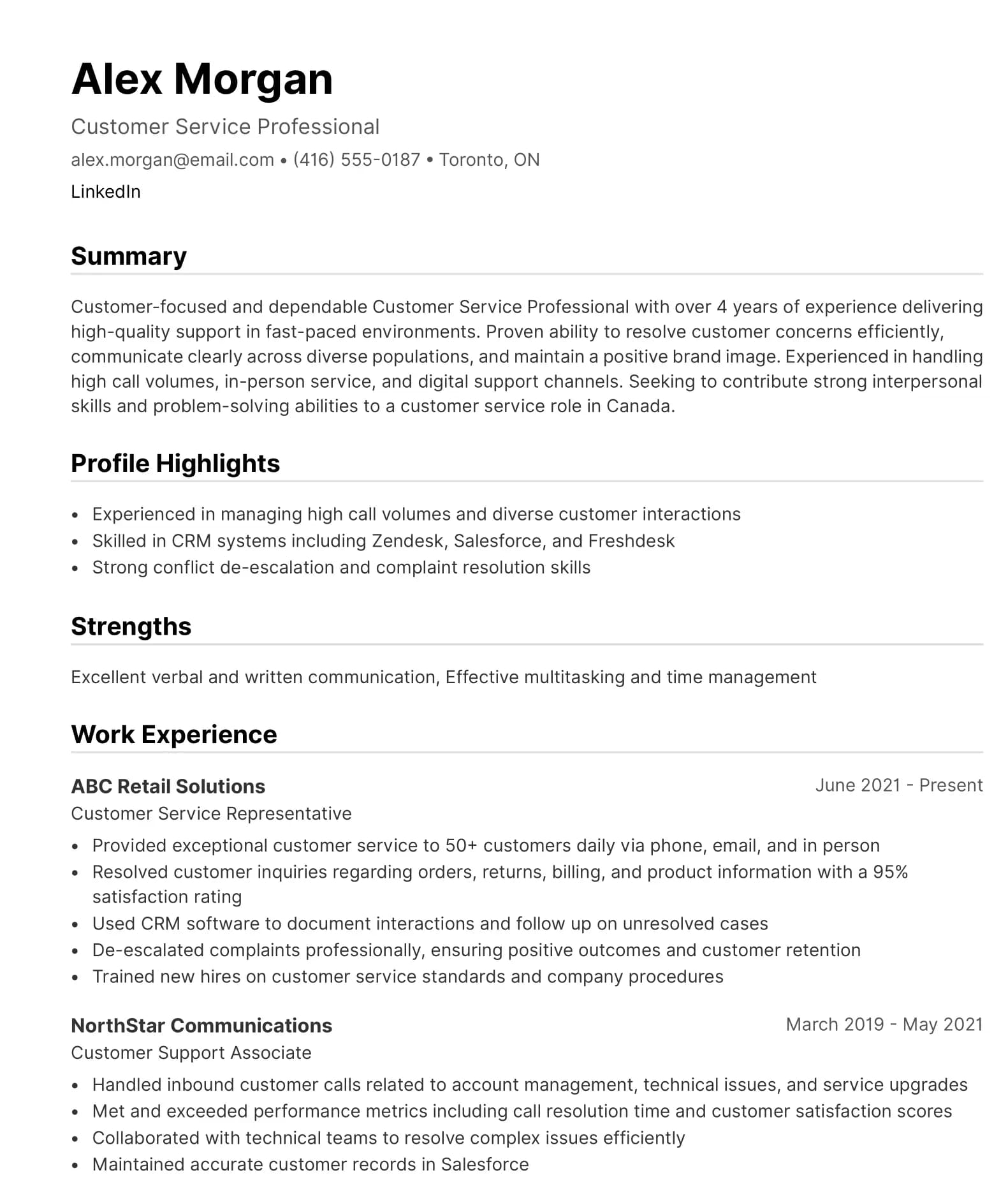
Yotru helps you build an ATS-optimized resume that gives interviewers the right hooks to pull from — so your answers feel natural, not rehearsed.
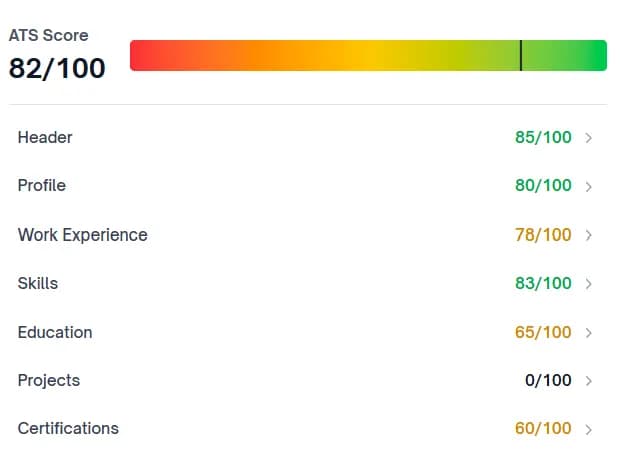
ATS-Optimized resumes That Meet Employer Standards
Our AI-powered scoring system helps organizations assess and standardize resume quality at scale. ATS-compliant templates support consistent formatting, keyword alignment, and interview readiness across cohorts.
Interview Preparation Checklist
Before any interview, run through this checklist:
Research & Prep
- Research the company's mission, products, and recent news
- Review the job description and match your answers to the role
- Prepare three to five tailored STAR stories
- Practice your answers out loud, not just in your head
Logistics & Mindset
- Confirm the interview format (video, phone, in-person)
- Prepare your questions for the interviewer
- Get a good night's sleep — cognitive performance matters
- Arrive or log in five minutes early
What Makes Yotru Different From a Generic PDF
| Generic PDF vs Yotru Approach | ||
|---|---|---|
| Feature | Generic PDF Guide | Yotru Platform |
| Answer Templates | One-size-fits-all | Personalized to your experience |
| Resume Integration | None | Resume and answers aligned |
| ATS Optimization | Not included | Built-in ATS scanner |
| Update Frequency | Static | Continuously updated |
| Practical Examples | Basic | Role-specific examples |
PM
★★★★★
"I was applying for my first job and had no idea how to answer the classic interview questions. Yotru helped me build my resume AND gave me the structure I needed to prepare confident answers. I landed my first role within three weeks."
Priya Mehta
Graduate Job Seeker
Ready to ace your next interview?
Build a resume that sets up your best answers — and helps you walk in with confidence.
Used by career services teams, training providers, and job seekers worldwide.
Final Thoughts
The most common interview questions aren't a trick — they're an opportunity. Each one is a chance to tell your story, demonstrate your value, and show that you've done your homework.
The candidates who get hired aren't the ones who memorized the most answers. They're the ones who walked in with authentic, well-structured stories that connected directly to the role.
Start building yours today.
About the Author

Zaki Usman
Co-Founder of Yotru
Zaki Usman
Co-Founder of Yotru
Zaki is co-founder of Yotru, working at the intersection of workforce development, education, and technology to build systems that deliver job-ready career support at scale.
Frequently Asked Questions
Common questions about interview preparation and answers
Freshers are most commonly asked questions like 'Tell me about yourself,' 'Why do you want this role?,' 'What are your strengths and weaknesses?,' and 'Where do you see yourself in five years?' The key for freshers is to draw on university projects, internships, part-time work, and extracurriculars rather than formal work experience.
Related Resources
More tools and guides to help you prepare for your interview
Interview Preparation
- How to Answer 'Tell Me About Yourself' — With Examples— A step-by-step guide to crafting the perfect opening answer with real examples for graduates and career changers.
- The STAR Method Explained: Behavioral Interview Questions— Learn how to use the Situation, Task, Action, Result framework to answer any behavioral interview question with confidence.
- Top 20 Questions to Ask Your Interviewer— Impress your interviewer with smart, role-specific questions that demonstrate genuine interest and strategic thinking.
Resume & ATS Optimization
- How to Write an ATS-Friendly Resume in 2024— Ensure your resume passes automated screening systems with this practical, step-by-step ATS optimization guide.
- Resume Summary Examples for Every Career Stage— From freshers to senior professionals, find resume summary templates and real examples tailored to your experience level.
For Freshers & Entry-Level Candidates
- How to Write a Graduate CV With No Experience— Practical advice for recent graduates on how to build a compelling CV using university projects, internships, and transferable skills.
About This Article
Context and editorial standards for this interview preparation guide
Audience Context
This article is written for entry-level job seekers, recent graduates, and freshers who are actively preparing for job interviews and need structured, ready-to-use answer guidance. Many candidates in this group rely on generic PDF templates that fail to account for their individual backgrounds and target roles. This guide addresses that gap by combining real answer examples with a practical personalization framework, making it relevant whether you have six months of internship experience or none at all. The content is specifically designed for readers operating under time pressure — preparing for interviews days or even hours in advance.
Editorial Standards
All answer examples in this article reflect realistic, achievable responses that do not require exaggerated credentials or fabricated achievements. We deliberately avoid the generic clichés (such as 'I'm a perfectionist' as a weakness) that hiring professionals have repeatedly flagged as unhelpful. Every recommendation is grounded in documented hiring practices and recruiter feedback, not aspirational advice disconnected from real interview rooms. Our editorial principle is that honest, well-structured answers consistently outperform polished but inauthentic scripts.
Methodology
The 10 questions featured in this guide were selected based on their consistent appearance across recruiter surveys, hiring manager interviews, and publicly documented screening practices across multiple industries including technology, finance, marketing, and professional services. The STAR method framework referenced throughout this article is a well-established behavioral interviewing tool used by organizations worldwide. Answer examples were developed to reflect realistic experiences across university, internship, and early-career contexts, and were reviewed for clarity, specificity, and impact before publication.
Disclaimer
This article is intended for informational and educational purposes only. While the frameworks and examples provided are based on documented best practices, individual interview outcomes depend on many factors including industry, company culture, interviewer preferences, and the competitive candidate pool at any given time. No advice in this guide guarantees a job offer or interview success. Readers are encouraged to adapt all examples to their own genuine experiences rather than using answers verbatim. Results will vary based on role, sector, and individual circumstances.
Yotru Resume Examples
Yotru provides a growing library of role-specific resume examples built and reviewed by career professionals. These examples span entry-level, mid-career, and senior roles across industries including technology, healthcare, finance, education, and creative fields. Each resume example is ATS-optimized and designed to give candidates a strong foundation that aligns with their interview narrative — ensuring that what you say in the interview room matches what a recruiter sees on the page. Visit the Yotru resume examples library to find a template matched to your target role.
References
Insights in this article draw on publicly available recruiter guidance, behavioral interviewing research, and analysis of hiring practices documented by HR professionals and career coaches. The STAR method framework referenced throughout is widely validated in organizational psychology and talent acquisition literature. Observations about ATS screening and resume-interview alignment are informed by documented patterns in modern recruitment workflows, including screening software behavior and structured interviewing research. All examples reflect synthesized insights rather than proprietary or confidential data.
Maintained by: Yotru Career Research and Development Team
Review cycle: Reviewed regularly to reflect current hiring practices and recruiter expectations
Last updated: April 12, 2026
Questions or Need Support?
If you are working on employability programs, hiring strategy, career education, or workforce outcomes and want practical guidance, you are in the right place.
Yotru supports individuals and organizations navigating real hiring systems. That includes resumes and ATS screening, career readiness, program design, evidence collection, and alignment with employer expectations. We work across education, training, public sector, and industry to turn guidance into outcomes that actually hold up in practice.